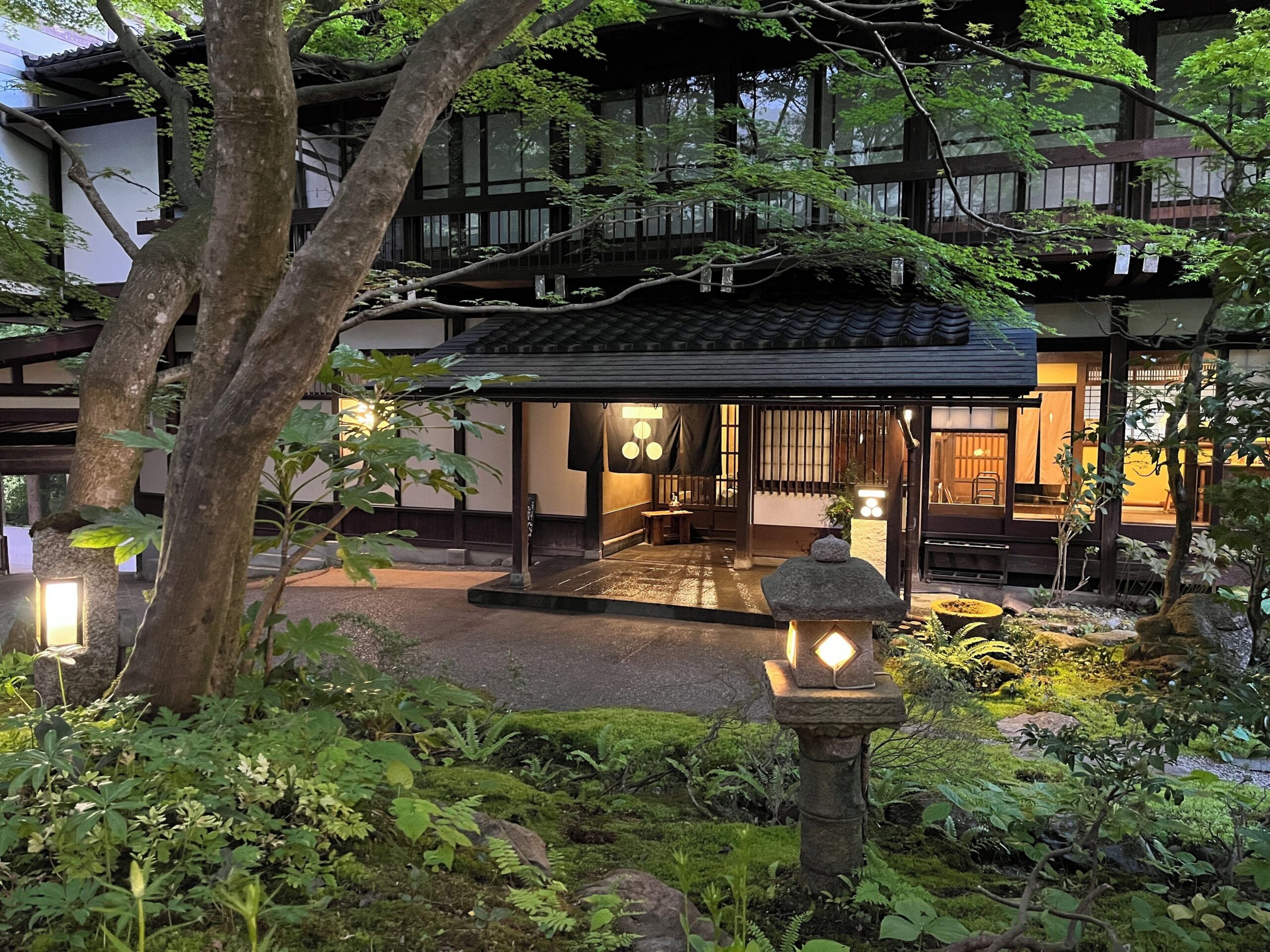
Beside the cedar-lined approach to Shirayama Hime Shrine stands Wataya, a small culinary ryokan in the Tsurugi district of Hakusan.
Each of its six guest rooms has an irori hearth. River fish are skewered and set around the charcoal, mountain vegetables and Kaga produce enter the meal with the season, and water descending from Mount Hakusan runs through the cooking, drinking water, and bath. Dinner and the night that follows belong to the same fire.
This is a stay rooted in the foothills south of Kanazawa: in the forest of the shrine, the water of the Tedori River system, and a family of innkeepers who have served food here across seven generations.
Seven Generations from the Tedori River to the Shrine Forest
Wataya was founded in 1865, the first year of the Keio era. The business began near the Tedori River. After repeated flooding, the fourth-generation proprietor moved it to the present site beside Shirayama Hime Shrine. The current proprietor is the seventh generation.
That history is carried by the building as much as by a written date. Tatami rooms, alcoves, wooden corridors, stairs, and hearth-side dining spaces form the setting in which the inn still serves its meals. Its character comes from a house used for hospitality over time, with the meal and architecture carrying the same family history.
Shirayama Hime Shrine is the head shrine of Hakusan worship across Japan. Its approach and mature trees begin close to the ryokan, placing an evening meal and an early walk through the shrine grounds within the same landscape.
One Irori Hearth in Each of the Six Rooms
Wataya has six guest rooms, and every room contains an irori. The hearth is part of the kitchen’s work: skewered ayu or iwana are positioned around the charcoal and cooked slowly as the meal unfolds.
The preparation therefore continues beyond the kitchen door. Guests see the fish beside the fire while bowls, vegetables, and other dishes arrive in sequence. The room becomes both dining space and the place from which the night begins.
Tatami, the low hearth, and the pace of dinner define the rooms. Wi-Fi is available throughout the property, while evenings remain centred on the hearth, conversation, and the quiet of the shrine forest.
Ayu, Iwana, and the Changing Food of Mount Hakusan
From summer into autumn, ayu from the Tedori River system becomes a central presence at the hearth. As the season advances, the size, fat, and character of the fish change. Outside the ayu season, iwana appears as grilled fish and may also be prepared for kotsuzake, in which hot sake is poured over its roasted bones.
The wider pantry belongs to the same mountains and river basin. Gori and trout, wild plants, mushrooms, and Kaga vegetables can enter the menu according to season and supply. Wataya also works with what it calls Hakusan-style game cuisine, using ingredients such as bear, deer, wild boar, and pheasant when available.
These ingredients are not a fixed checklist promised at every dinner. The menu follows the calendar and the day’s procurement. Wataya announces the start of its ayu dishes and other seasonal changes through the news section of its official website.
Hakusan Water from the Stockpot to the Bath
Groundwater from Mount Hakusan is used throughout Wataya for cooking, rice, drinking water, and bathing. Rich in calcium, this hard water is part of the taste of the inn’s stocks and dishes.
The bath is filled with cold spring water drawn from the Hakusan and Tedori groundwater system and heated for bathing. The same water that shapes dinner therefore continues into another part of the stay. Fire and water are not themes added to the experience; they are the working elements of the kitchen, hearth, and bath.
When Evening Settles over Shirayama Hime Shrine
A night at Wataya is paced around dinner. Charcoal is prepared in the room, river fish are set beside the heat, and the meal advances with the ingredients of the season. When the final dishes are cleared, the evening simply continues inside the same wooden inn.
By morning, the approach to Shirayama Hime Shrine is nearby. The shrine forest, water flowing toward the Tedori River, and the food preserved by a seven-generation culinary ryokan meet within a remarkably small area. That closeness gives Wataya its particular place in Ishikawa.
Planning the Journey to Tsurugi
From Kanazawa Station, the public-transport journey requires two transfers before reaching Tsurugi Station on the Hokuriku Railroad Ishikawa Line. The official guidance gives a fastest journey of about 45 minutes, while some connections take around one hour and ten minutes.
Wataya is approximately five minutes by taxi from Tsurugi Station. Taxis do not normally wait at the station, so an advance reservation is needed. Because local taxi availability is limited, the ryokan also recommends travelling by rental car. Driving from the Kanazawa Station area takes about 30 minutes under normal conditions.
Final check-in is at 6:00 p.m., with the last dinner starting at 6:30 p.m.; checkout is at 10:00 a.m. Tuesday is the regular closing day, although the current calendar should be checked before travel.
The wooden building has stairs and changes in floor level, with no elevator. Bathrooms and toilets are shared facilities located on each floor, and guest rooms do not have televisions. Travellers who would like to discuss mobility or room arrangements can contact the ryokan before reserving.
For property details, seasonal information, and contact arrangements, see the official Wataya website.
A Hakusan Night Held Together by Fire and Water
At Wataya, dinner is not an amenity attached to the room. It is the structure of the stay.
River fish are cooked beside the charcoal in each of the six rooms. Mountain plants, Kaga vegetables, and game move through the menu with the season. Hakusan groundwater runs from the kitchen to the bath, while the forest of Shirayama Hime Shrine begins just beyond the inn.
Waiting beside the hearth, eating in the room where the fish is grilled, and remaining overnight within the same house reveals the continuing purpose of a Japanese culinary ryokan. At Wataya, that purpose is inseparable from the water and food of the Hakusan foothills.
For a contrasting city stay, see our guide to six luxury hotels and ryotei ryokan in Kanazawa.