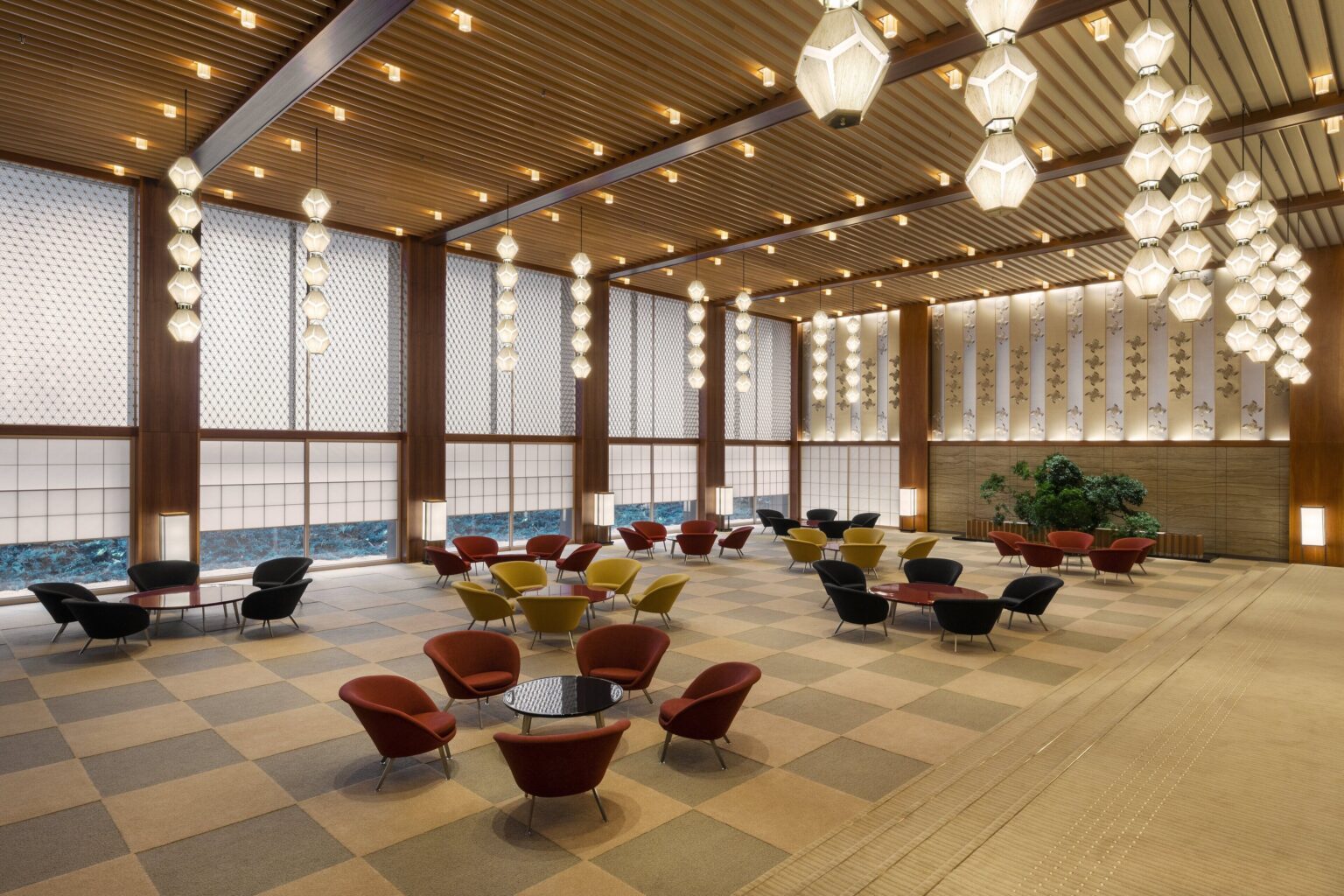
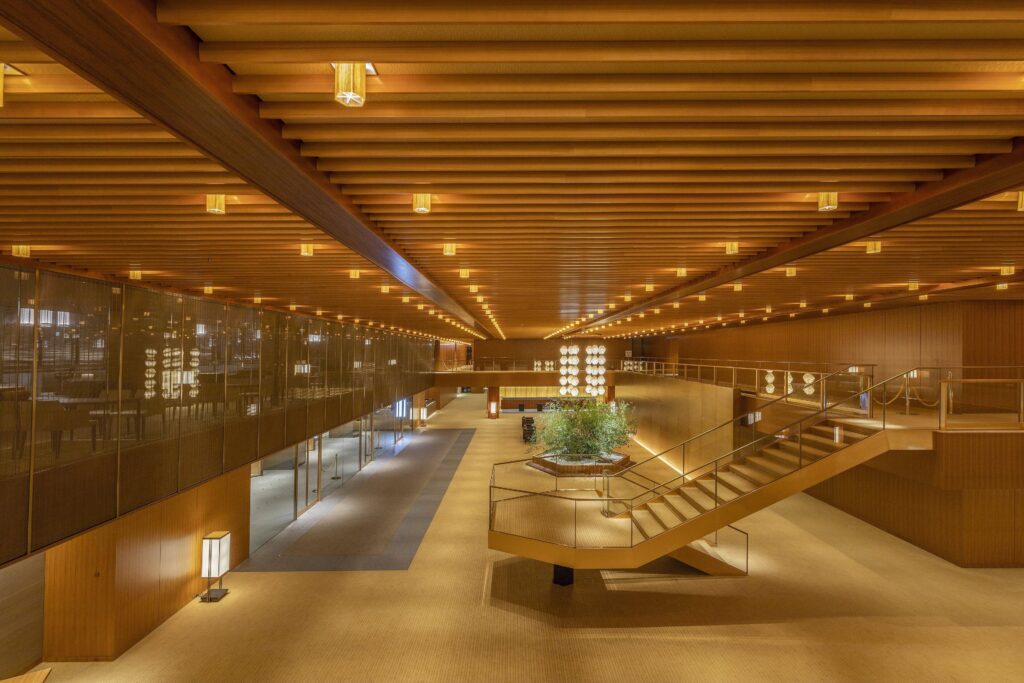
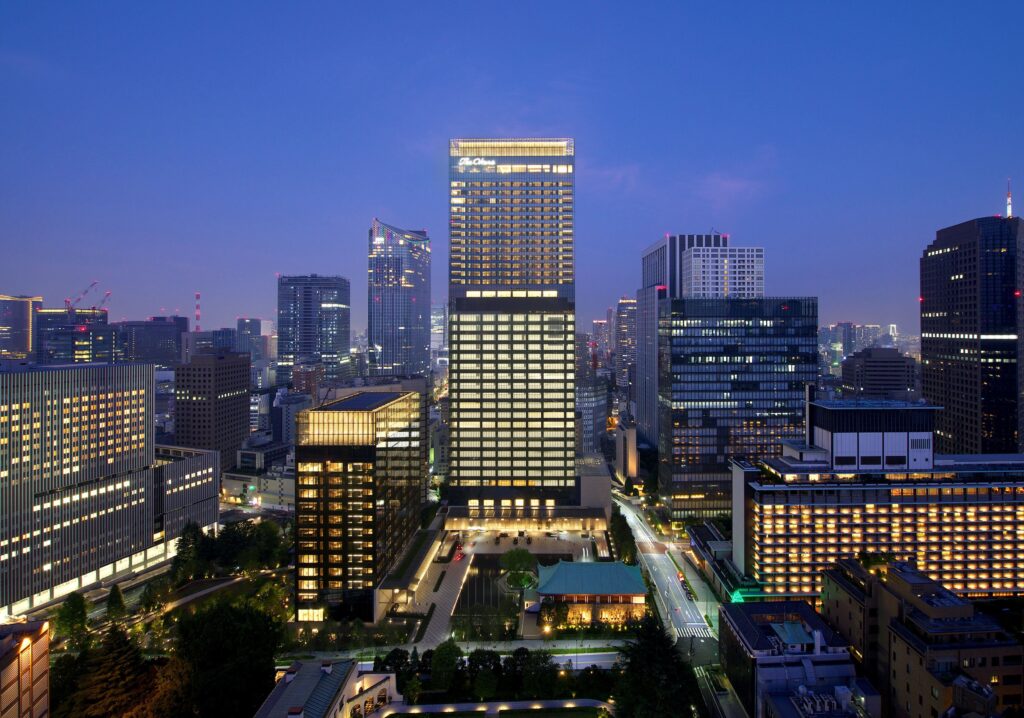
The Okura Tokyo opened in September 2019 on the Toranomon site where Hotel Okura Tokyo first welcomed guests in 1962. On the fifth floor of the Prestige Tower, its main lobby follows the celebrated room designed by Yoshiro Taniguchi for the original hotel, reconstructed under the direction of his son, Yoshio Taniguchi.
Gold-panelled lanterns hang above lacquered tables and chairs arranged like plum blossoms. Light enters through oma-shoji latticework; a world clock places Japan at the centre of its map. Before the lift reaches a guest room or the evening moves to dinner, the hotel introduces itself through the proportions and details of Japanese modernism.
Booking Snapshot
- Best for
- Travellers drawn to Japanese modernist design, substantial city rooms and a hotel with dining and wellness under one roof
- Building choice
- Heritage Wing for lower-rise privacy and in-room bathing features; Prestige Tower for high-floor Tokyo views
- Room distinction
- Heritage Rooms measure 53–63 sqm; Prestige Rooms begin at 48 sqm, with Bath with a View offered only in named categories
- Club access
- Available with eligible Club Floor and Heritage Wing reservations; confirm the exact booked plan
- Pool
- A heated 25-metre, five-lane indoor pool on the 27th floor, subject to current access conditions
- Access
- About five minutes on foot from Toranomon Hills Station’s A2a exit
Check current rooms and rates at The Okura Tokyo →(Paid link)
In This Guide
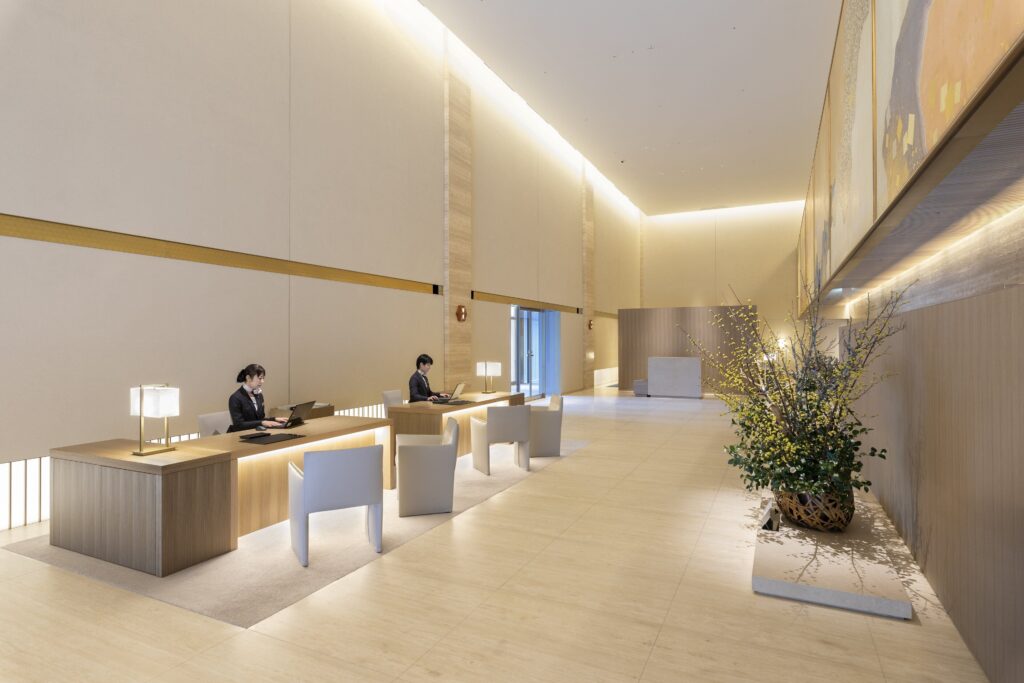
The Main Lobby, Reconstructed in Detail
The suspended Okura Lanterns draw on ornamental beads from Japan’s Kofun period. Each is formed from five strings of five pentagonal plates, their gold-coloured surfaces changing with the daylight and the lobby’s carefully adjusted illumination.
Below them, five chairs curve around each lacquered table in the form of a plum blossom. The seating sits within sunken, carpeted areas that soften sound without enclosing the room. The central tree is a species native to Japan, while the stones around it came from the original lobby and are of a protected type that is no longer quarried.
The world clock is equally exacting. Tiny sailing ships cross its face, and Japan occupies the centre of the globe. A Nishijin brocade tapestry and the geometric lattice of the screens continue the same measured relationship between craft, light and open space.
From the Lobby to 508 Rooms
The hotel has 508 rooms: 140 in the Heritage Wing and 368 in the Prestige Tower. The room name therefore matters at the time of booking, as it determines not only the layout but also the part of the hotel in which the stay unfolds.
Heritage Rooms measure 53 to 63 square metres within the 17-storey Heritage Wing. The official room descriptions include steam saunas and jetted baths, bringing bathing and unhurried private time into the room itself. Elsewhere in the wing, the lobby draws on the form of a tokonoma alcove. Its mural of the Thirty-Six Immortals of Poetry incorporates panels that once adorned the original hotel’s Heian Room.
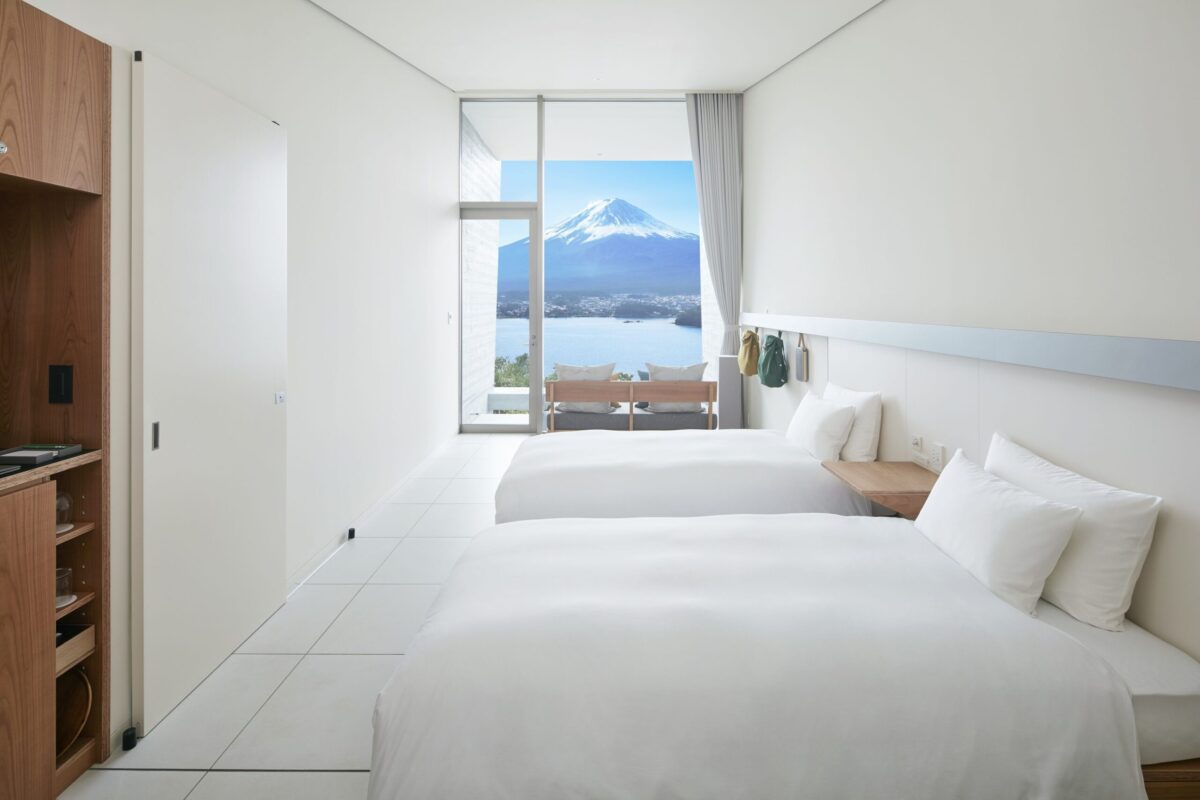
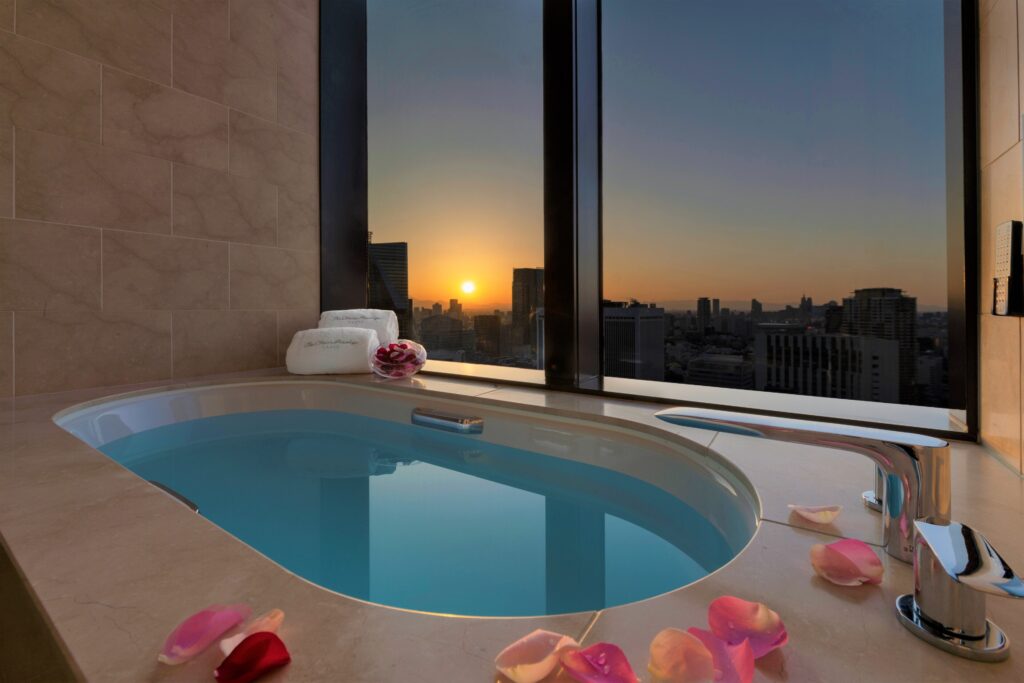
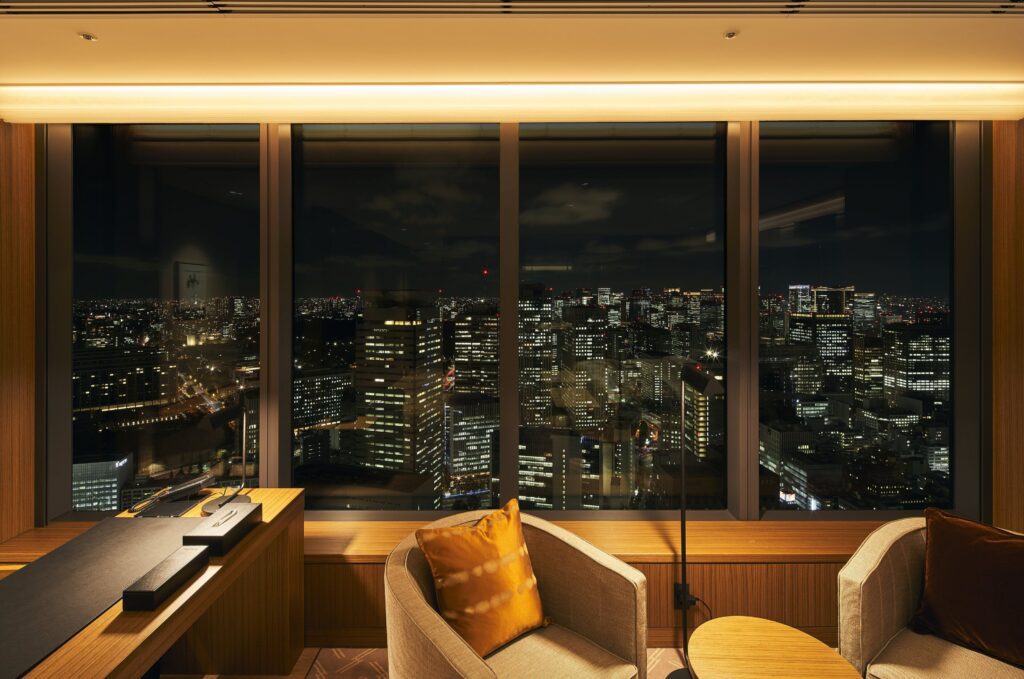
Prestige Rooms begin at 48 square metres on floors 28 to 36. Wide windows bring the Tokyo skyline into the bedroom, while Bath with a View categories place the deep tub beside the glass. Club rooms occupy floors 37 to 40. The 37th-floor Club Lounge is available to eligible Club Floor and Heritage Wing reservations; access depends on the booked plan.
| Choice | Character | Room distinction | Club access | Best for |
|---|---|---|---|---|
| Heritage Room | Lower-rise Heritage Wing | 53–63 sqm; official descriptions include a steam sauna and jetted bath | Selected eligible plans only; verify the reservation | Private bathing features and a quieter wing |
| Prestige Room | High-floor Prestige Tower | From 48 sqm on floors 28–36 | Not automatic | Tokyo views without paying for Club Floor benefits |
| Bath with a View | Named Prestige categories | Deep tub beside the window; confirm the exact category | Not automatic; check the booked plan | Guests making the bathroom view part of the stay |
| Club Room | Floors 37–40 | High-floor setting with eligible Club benefits | Confirm inclusion in the exact rate | Guests who will use the lounge during the day and evening |
Compare Heritage, Prestige and Club options on Expedia →(Paid link)
Yamazato Below, Sazanka Above the City
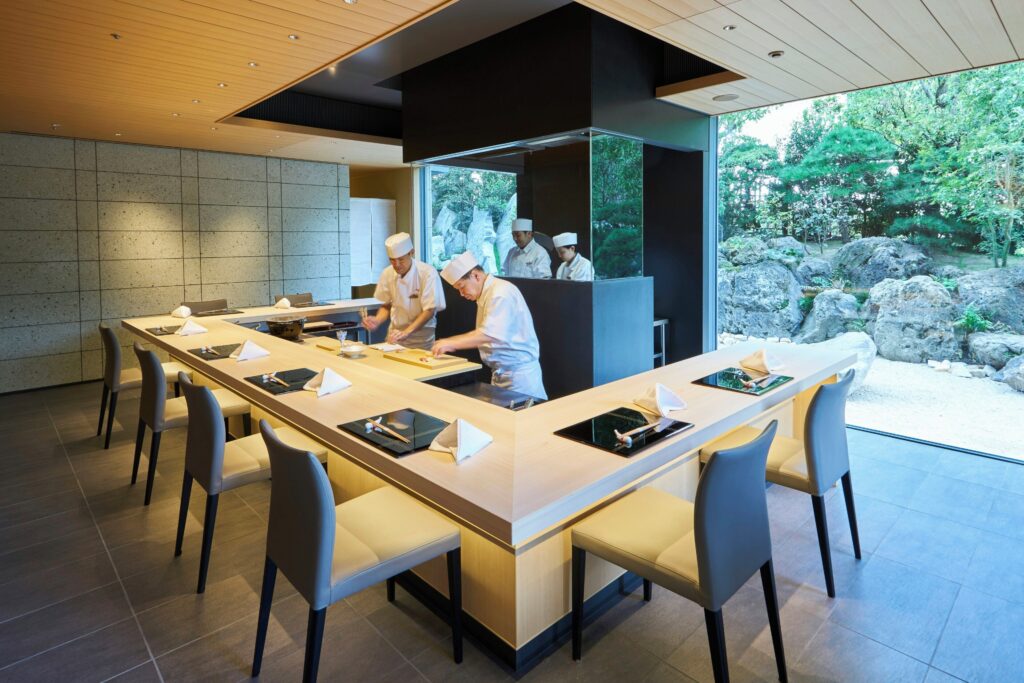
Yamazato occupies the fourth floor of the Heritage Wing. Japanese fine dining, a sushi counter, a kappo counter and a tea ceremony room sit within the same restaurant, allowing an evening to move from seasonal cuisine into some of the hotel’s most traditional interiors.
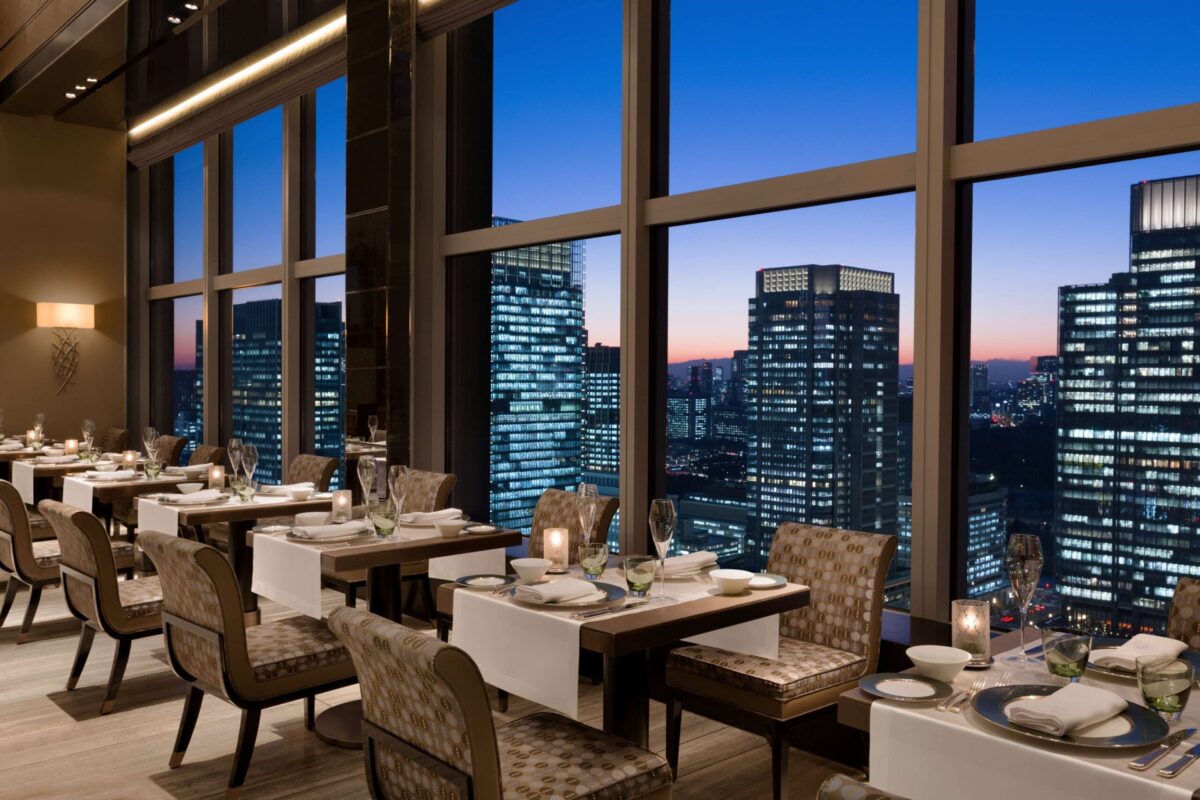
At the top of the Prestige Tower, Sazanka places wagyu beef and seasonal seafood on the teppan with the city spread beyond the counter. Nouvelle Epoque carries forward the hotel’s French culinary tradition with Japanese ingredients, while Toh-Ka-Lin serves Cantonese cuisine amid decorative references to Qing-dynasty porcelain.
Orchid serves breakfast and an all-day menu beside a terrace. Later, Orchid Bar brings the darker wood and intimate scale of a classic hotel bar, while Starlight on the 41st floor accompanies cocktails and Champagne with a broad Tokyo view. Dining can remain inside the hotel without repeating the same room or pace.
A 25-Metre Pool on the 27th Floor
Okura Fitness & Spa occupies the 27th floor of the Prestige Tower. Its heated indoor pool measures 25 metres and spans five lanes, with natural light and city views along the water. The fitness area looks across Tokyo from windows on every side.
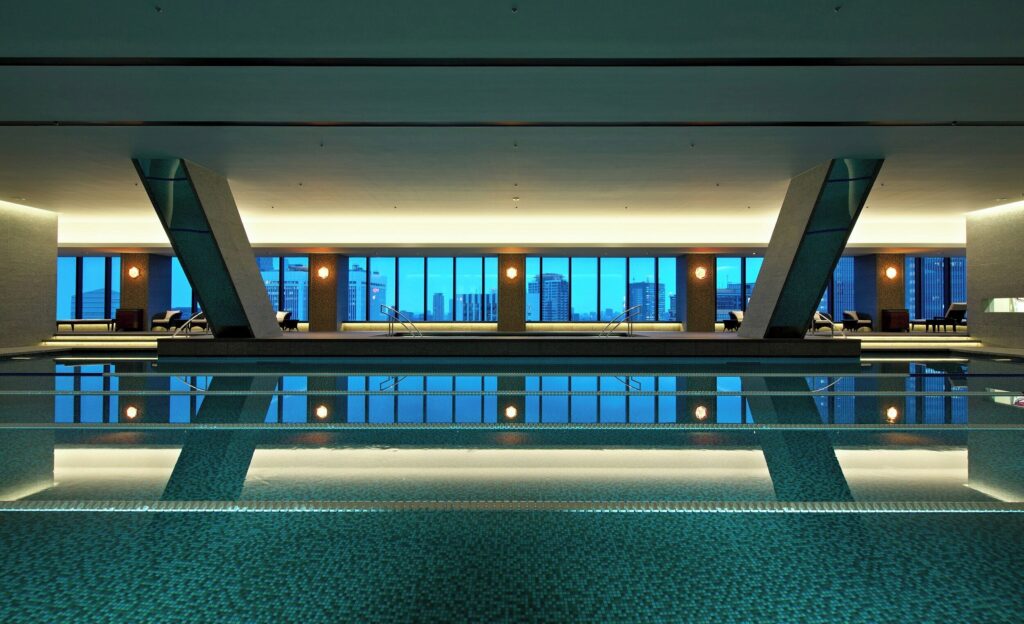
Dry and steam saunas, a carbonated spring and relaxation spaces extend the bathing sequence beyond the pool. The spa has seven private treatment rooms, with current treatments drawing on Japanese fragrance, sake lees and rice bran as well as an international facial-care line. Staying guests may use the gym and pool without an additional visitor fee, subject to the hotel’s current age and access conditions.
Five Minutes from Toranomon Hills Station
The address is 2-10-4 Toranomon, Minato City. The hotel lists a walk of about five minutes from Toranomon Hills Station’s A2a exit. Toranomon Station and Tameike-sanno Station are each about ten minutes away, while Roppongi-itchome Station is about seven minutes on foot.
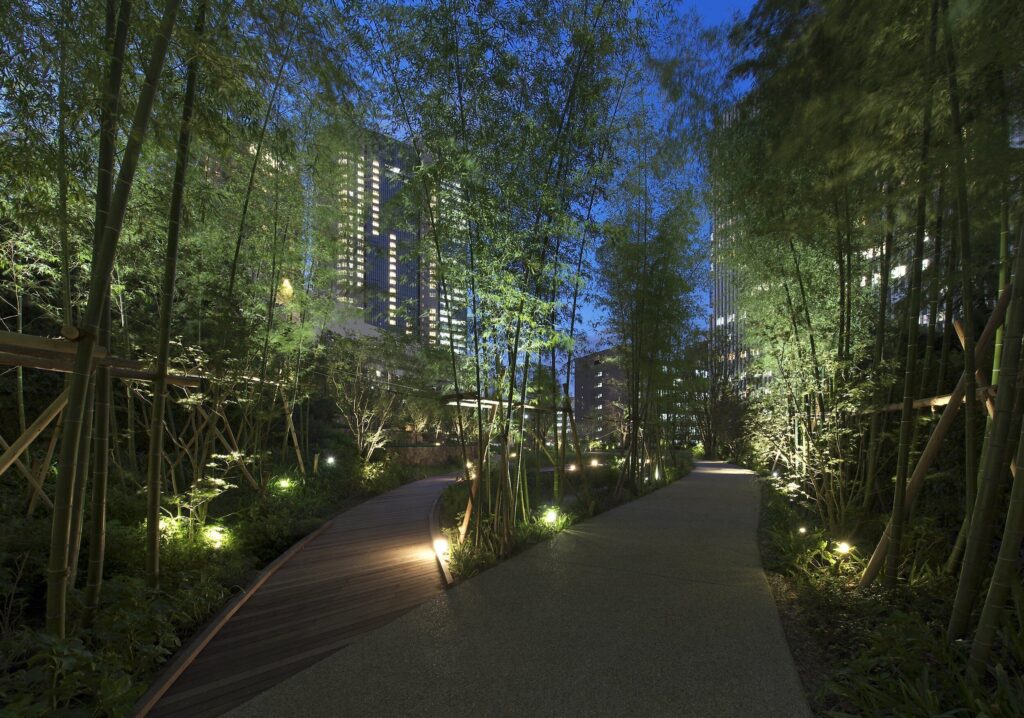
The Okura Museum of Art stands at the edge of the hotel grounds, and the 1.3-hectare Okura Garden opens green space between the buildings and the surrounding business district. A morning can begin with the garden and museum before continuing into Toranomon; the return brings the fifth-floor lobby into view again.
Evening Beneath the Okura Lanterns
As daylight recedes, the gold panels of the Okura Lanterns become more distinct above the lobby. The lacquered tables remain encircled by five chairs; the world clock, leaf-patterned screens and original stones hold their measured positions around the room. These were the details chosen for Hotel Okura Tokyo in 1962 and reconstructed for its return to Toranomon in 2019.
Booking verdict: Choose the Heritage Wing when in-room bathing features and a lower-rise atmosphere matter most; choose the Prestige Tower for height and broad Tokyo views. A Club category earns its premium only when the lounge will be used, and access should be confirmed in the exact reservation.
View availability and booking conditions at The Okura Tokyo →(Paid link)