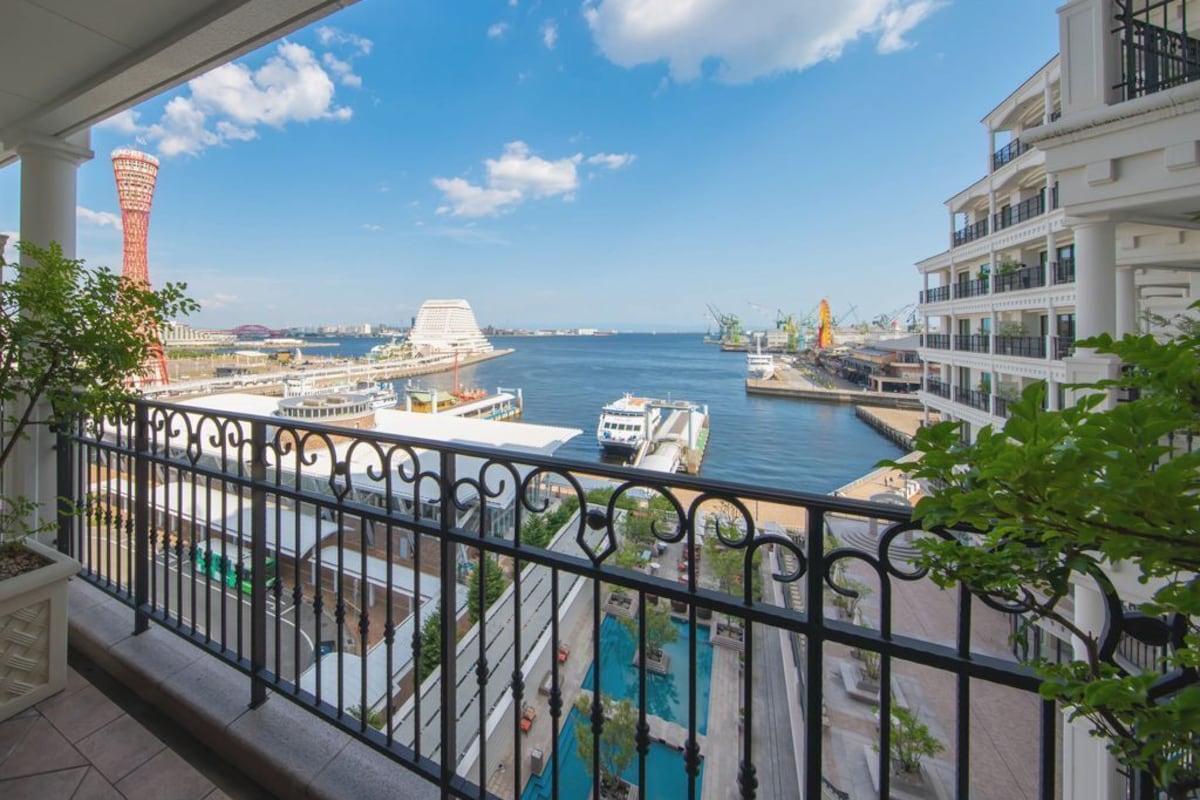
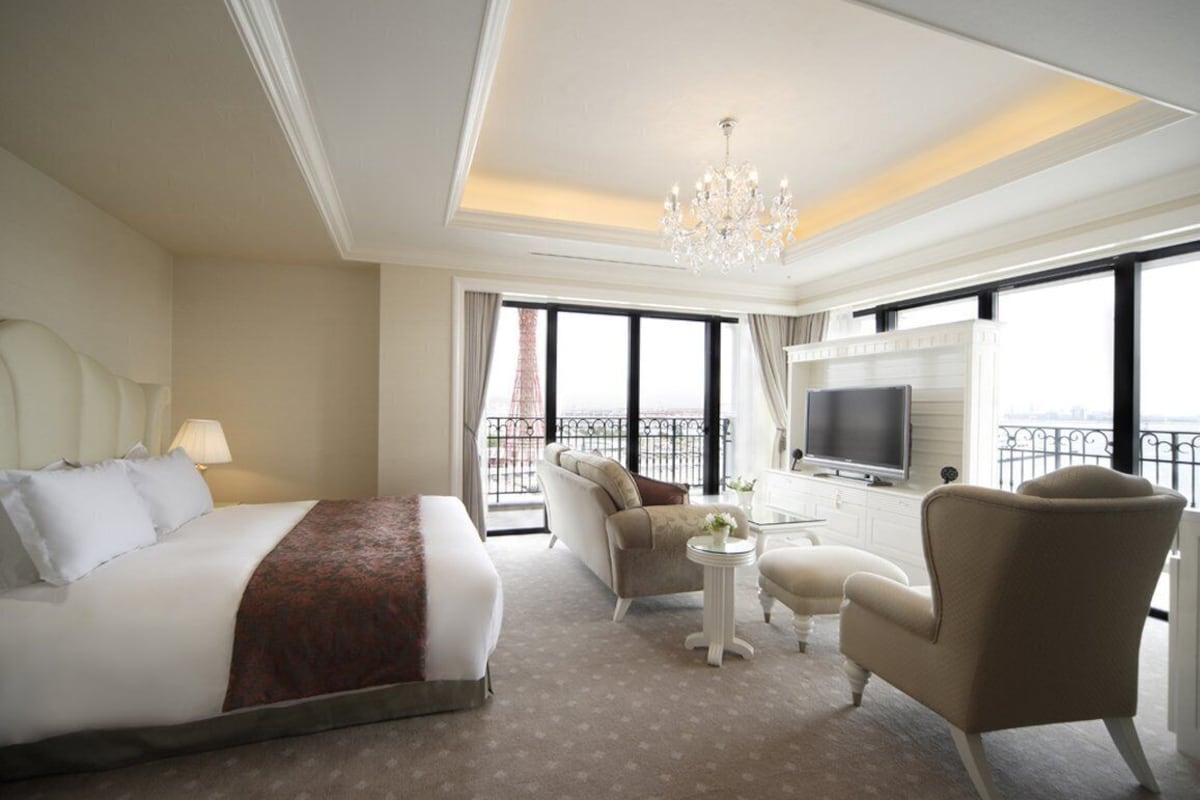
Kobe has always understood the romance of arrival by water. Mountains rise close behind the city, ships move across the harbour, and the evening lights gather around the bay with an ease that feels almost theatrical. Hotel La Suite Kobe Harborland places its guests directly inside that scene. Every one of its 70 rooms has an ocean-view terrace, and every room offers at least 70 square metres when the interior and terrace are considered together. The result is not simply a spacious city hotel, but a private place from which to watch Kobe change from afternoon blue to illuminated night.
The hotel is especially persuasive when the room is treated as part of the occasion. Breakfast can arrive by room service; a furnished terrace extends the living space toward the port; large jetted baths give the evening a leisurely rhythm; and noon checkout allows the following morning to unfold without haste. For an anniversary, a birthday or a first visit to Kobe, the strongest itinerary may be the simplest one: arrive early enough to see the harbour in daylight, dine well, return to the terrace after dark, and keep breakfast within the privacy of the room.
The short answer: who should book Hotel La Suite Kobe?
Hotel La Suite Kobe Harborland is designed for travellers who want generosity of space, a private outdoor terrace and a harbour view without leaving the centre of the city. It suits couples particularly well, but the appeal is broader than romance alone. Travellers who dislike compact urban rooms will appreciate the scale; those who value an unhurried morning can order breakfast to the room; and guests arriving from Osaka or Kyoto can turn a single night in Kobe into a self-contained waterfront retreat.
It is also an intelligent choice for a celebratory stay because the room continues to feel special after the city’s attractions have closed. The terrace, bath and night view do not require a reservation or a journey across town. This matters in a destination where the illuminated port is one of the pleasures of the evening. The room does not merely hold luggage between excursions: it keeps the most recognisable face of Kobe in view.
Prospective guests should nevertheless read the exact room description carefully. Every room has an ocean-view terrace, but the relationship between bath and view varies by category. A terrace facing the harbour should not be interpreted as a promise that every bathtub has the same outlook. Floor, bed configuration, bath design and total area are the details that determine how the stay will feel.
Why the ocean-view terrace is the heart of the hotel
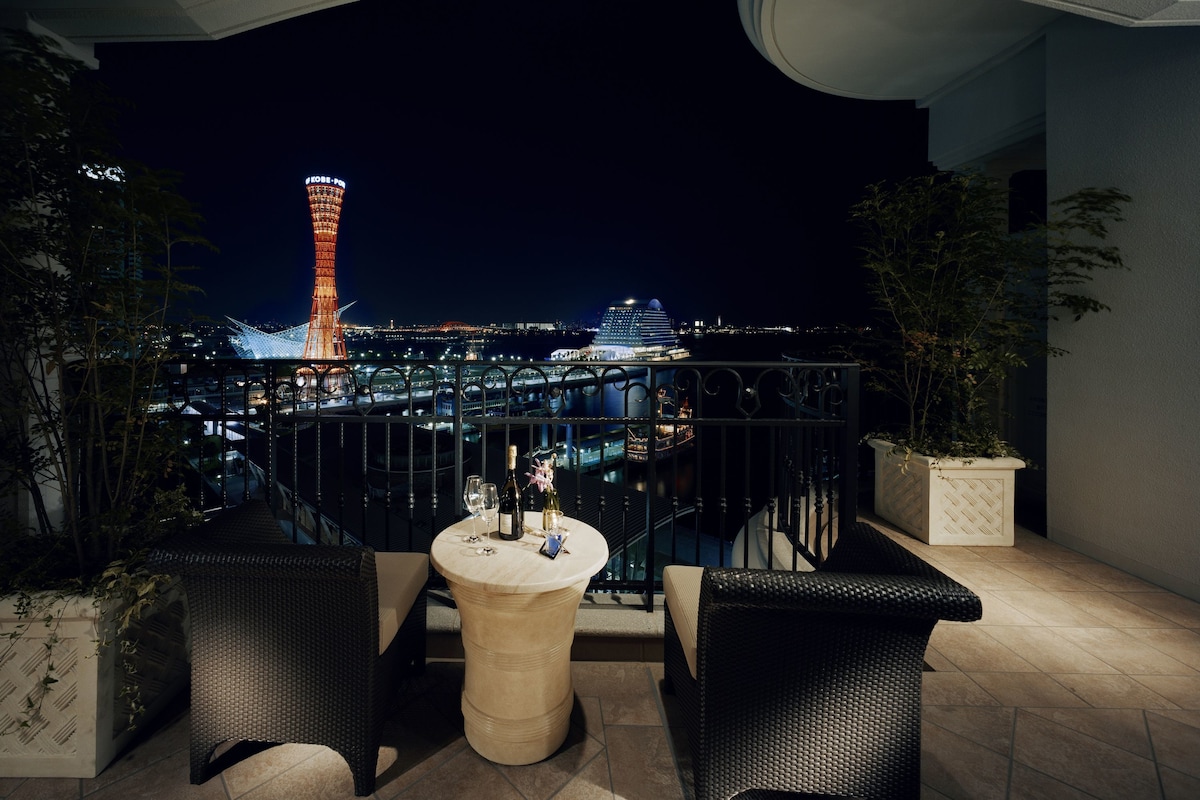
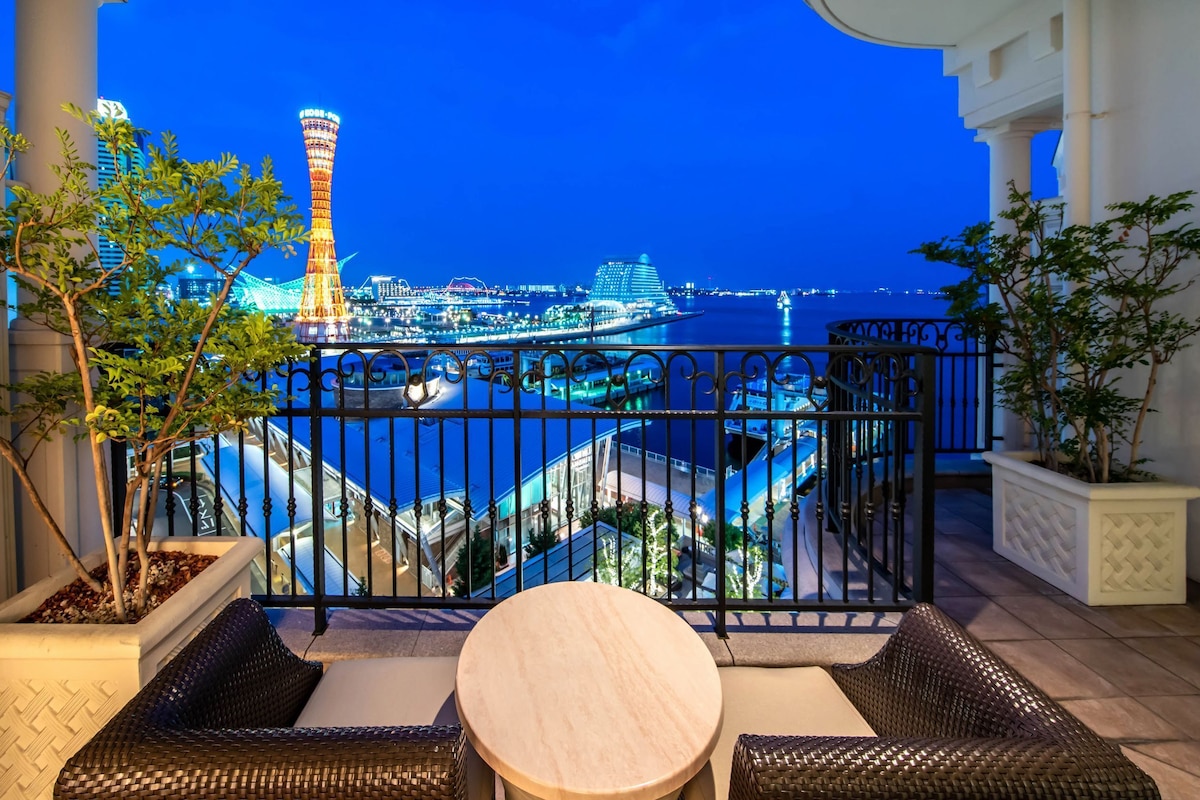
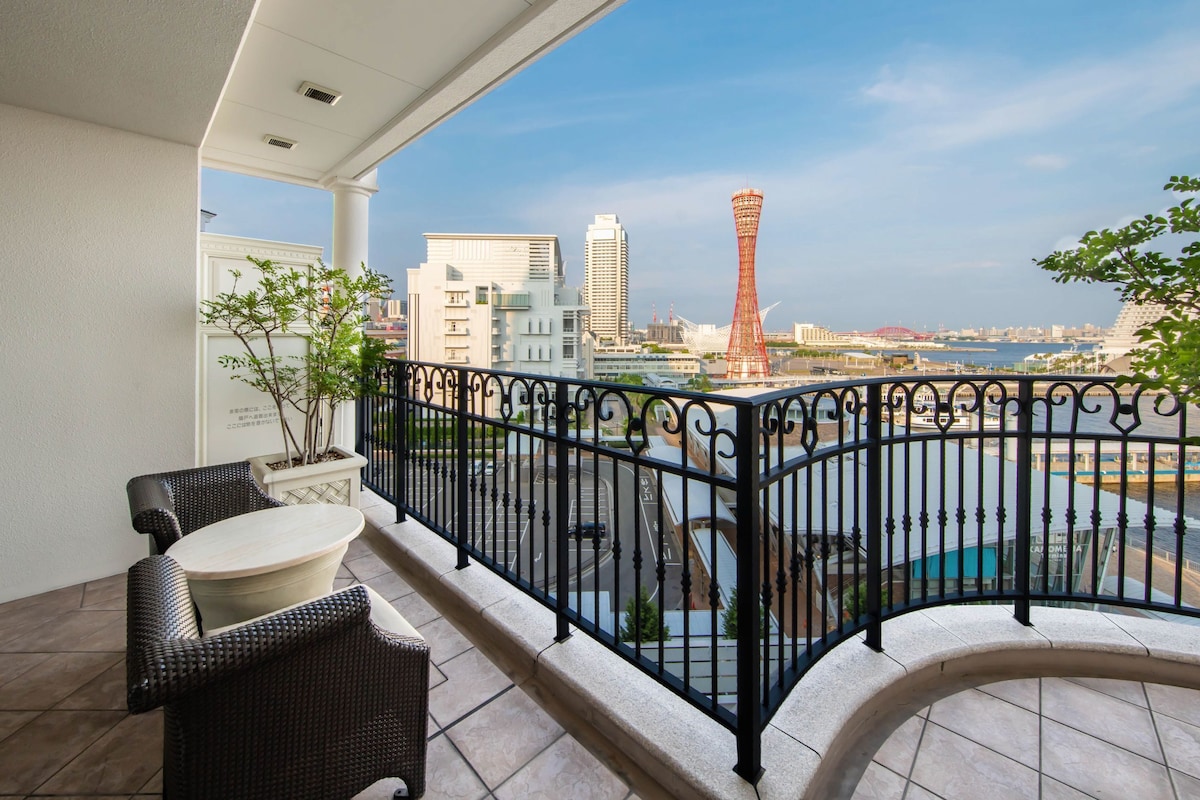
Many city hotels possess a view; fewer give guests a genuine outdoor room from which to inhabit it. At La Suite, the terrace changes the proportions of the stay. A morning coffee has fresh air and a horizon. Late afternoon has the movement of boats below. After dinner, Kobe Port Tower and the surrounding waterfront become part of the room’s atmosphere rather than a sight glimpsed through sealed glass.
The terrace is also the feature shared across all room categories, which makes the hotel’s promise unusually clear. The most modest category does not surrender the essential experience. Higher floors and larger suites intensify the sense of space, while corner layouts and extensive terraces create a more dramatic occasion, but every guest is invited into the harbour setting.
Weather naturally changes how the terrace is used. On a mild evening it may become the centre of the stay; in rain or summer humidity, the view remains present from inside. This is why room orientation and window placement matter nearly as much as the furniture outdoors. The hotel’s strongest rooms allow the harbour to stay visible from the sitting area, bed or bath, so the sense of place survives even when the doors remain closed.
Luxurious Floor or Executive Floor: how the stay changes
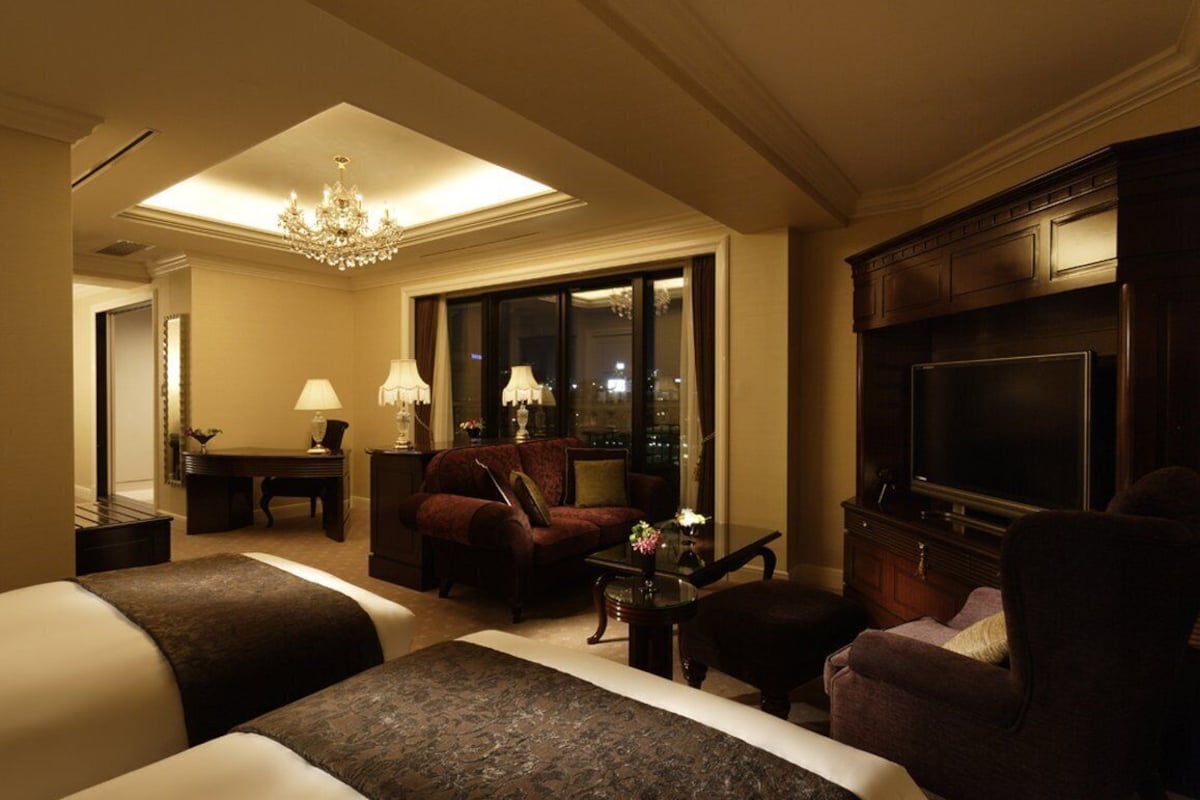
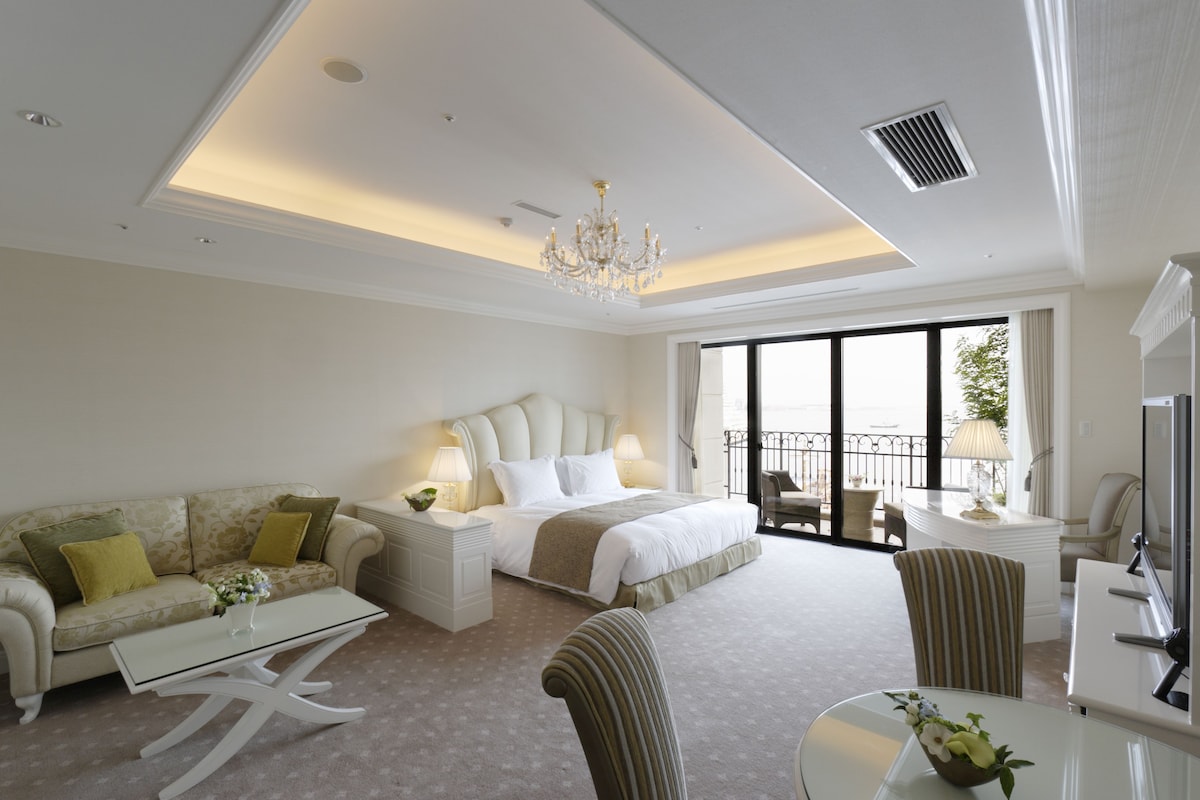
The Luxurious Floor occupies levels four to six, while Executive rooms rise through floors seven to ten. Both retain the hotel’s central vocabulary of generous dimensions, furnished terraces, neutral interiors, chandeliers, substantial beds and large bathing spaces. The decision is therefore less about access to a separate club lounge and more about height, outlook, precise layout and the room privileges attached to the selected rate.
A Luxurious Floor room already provides the defining La Suite experience. It is a persuasive choice when the priority is a broad terrace, a large room and enough budget left for dinner or another night in Kobe. Executive Floor rooms place the same waterfront scene higher above the port. That elevation can give the illuminated harbour a wider presence, particularly for guests who expect to spend the evening in the room.
Expedia may display several names—Moderate, Elegant, Precious, Superior, Deluxe and corner configurations—alongside bed and floor information. Match those names to the hotel’s own category description before payment. A poetic room name is less useful than four practical facts: the floor, the interior area, the terrace area and whether the bath is specifically described as a view bath. Those details protect the experience the guest is actually trying to reserve.
The bathing experience: jetted tubs, view baths and an important distinction
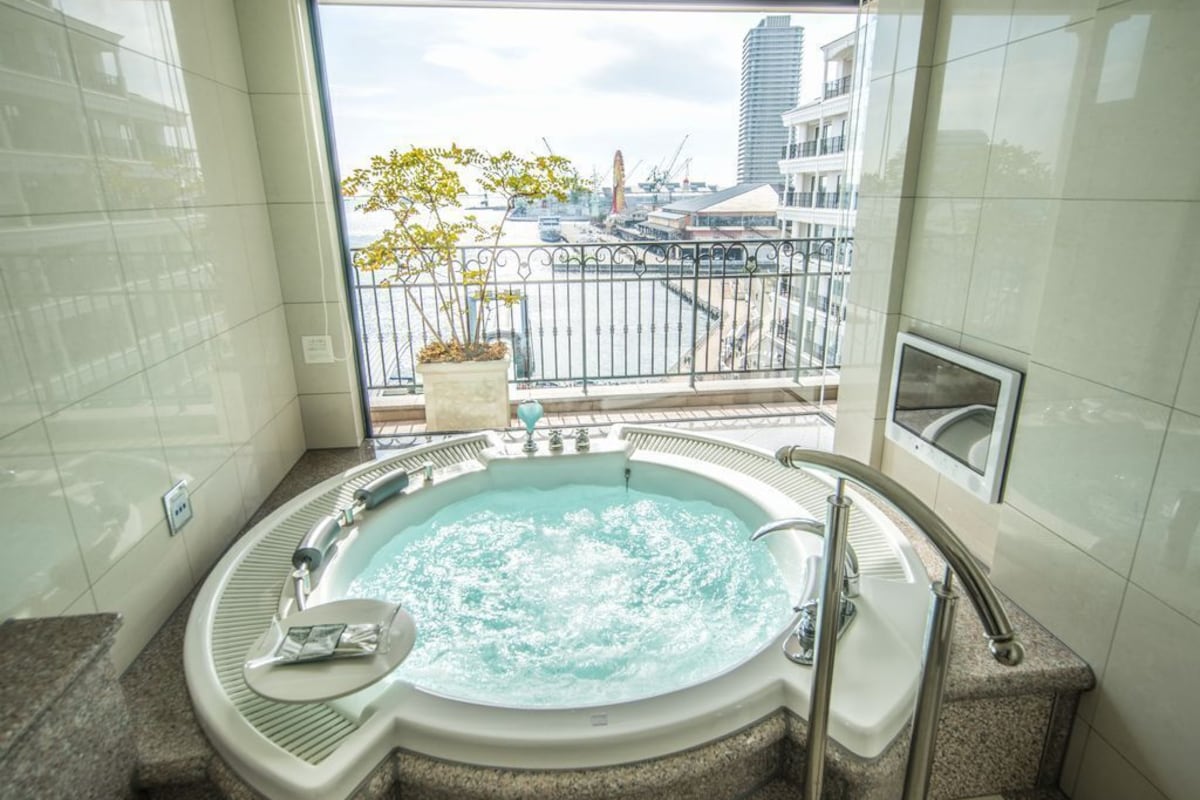
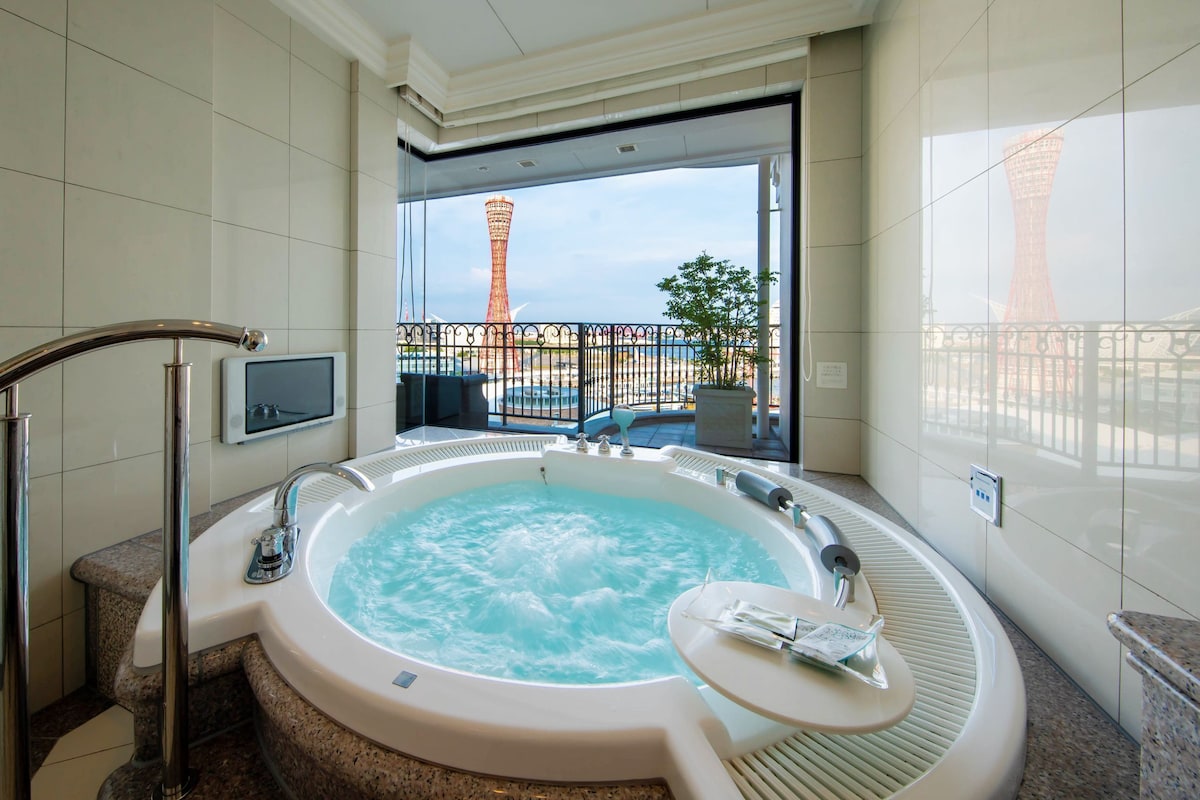
Bathing is one of La Suite’s signatures. Rooms include large jetted tubs, bath televisions and carefully considered amenities, creating a private ritual that feels unusually expansive for a city stay. In selected categories, the bath is positioned to take in the port. These view-bath rooms are the natural choice when the image of soaking beside the Kobe skyline is central to the reservation.
The distinction must be made with care: an ocean-view terrace does not automatically mean an ocean-view bath. Some room layouts place the bath further inside. That does not make the bathing space small or incidental, but it changes the scene. Guests drawn by photographs of a circular tub beside harbour windows should confirm that their exact Expedia room name and description include the relevant view-bath wording.
This is also where photographs should serve as evidence rather than decoration. Check that the room photo, bed type, floor and bathroom image belong to the same category. If the reservation is for an important occasion, a brief confirmation with the hotel can remove uncertainty about a feature that may define the evening.
When a suite becomes the purpose of the journey
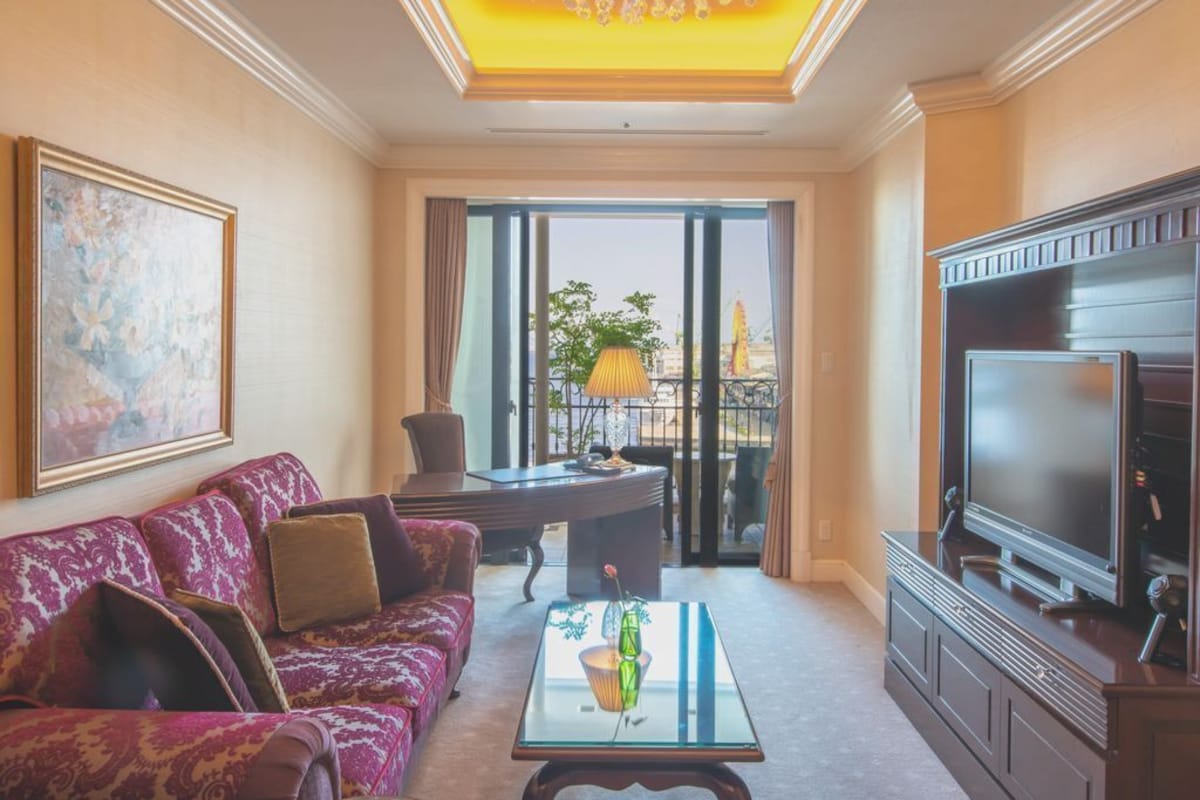
La Suite’s largest accommodations are conceived for time spent in private. The Grace Suite combines 101 square metres indoors with a 68-square-metre terrace, while the top La Reine Suite extends to 114 square metres inside and a 100-square-metre terrace. At this scale, the terrace is no longer an amenity attached to a bedroom; it becomes a waterfront salon in its own right.
The suite decision makes sense when the celebration and the room are inseparable. A proposal, milestone birthday or quiet family occasion benefits from separate living space, a dining table and a terrace large enough to create several moods across the day. In-room treatment possibilities and selected suite privileges can deepen that sense of retreat, though inclusions should always be checked against the exact plan.
For many stays, the great virtue of a suite is not grandeur but continuity. There is no need to leave the view in order to find somewhere comfortable to talk, dine or open a bottle. The harbour remains present from the living area into the late evening, and the following morning begins in the same calm setting.
Breakfast by room service: the morning the hotel is built for
Breakfast is one of the clearest reasons to choose a breakfast-inclusive rate. Guests on eligible plans can select a Western or Japanese breakfast and have it delivered to the room. This is not merely convenient. It preserves the privacy and visual continuity that make La Suite distinctive. There is no need to trade the terrace and harbour for a busy breakfast room just as the morning light reaches the water.
A room-service breakfast also changes the practical value of the terrace. In pleasant weather, it becomes the setting for the first meal of the day; at other times, the table by the windows keeps the harbour close. Combined with noon checkout, breakfast can be allowed to take its time. The final morning feels like a real part of the stay rather than a hurried interval before departure.
Check that breakfast is included in the selected Expedia plan, and review delivery arrangements after booking. Room-only prices may initially appear attractive, but breakfast in the room is unusually aligned with the character of this hotel. For a short celebratory stay, it can be one of the inclusions most worth securing.
Dinner at Le Cœur Kobe or Teppanyaki Kokoro
The hotel’s two principal restaurants interpret Hyogo through different forms. Restaurant Le Cœur Kobe serves French cuisine under a high ceiling with garden and ocean views, drawing on local produce and pairing it with an extensive wine and champagne selection. Teppanyaki Kokoro brings the cooking closer, with chefs preparing Kobe beef, other Hyogo beef, seafood and vegetables at an ocean-view counter.
Le Cœur suits an evening that should unfold as a formal course, with conversation given as much space as the food. Kokoro makes the ingredients and cooking performance more immediate. Neither should be left to chance on an important date: reserve ahead, review the dress code and note the restaurants’ age policies if travelling with children. Current official guidance distinguishes the main dining room, private-room arrangements and the youngest age groups.
The 24-hour room-service menu creates a third possibility. Guests who have booked the hotel primarily for privacy may prefer to keep dinner or a late plate within the room. The most coherent choice is the one that supports the purpose of the night: restaurant theatre downstairs, or the port lights and terrace upstairs.
Spa La Chère: useful, but not a shared couples’ facility
Spa and Esthetic La Chère is a women-only facility on the second floor. It includes carbonated bathing, a low-temperature nanomist sauna, a rain-mist shower and an esthetic salon. For a solo female traveller or a celebratory trip in which one guest would enjoy a treatment, it can add a restorative interval before dinner.
Couples should understand the arrangement before imagining a shared spa afternoon. The spa is restricted to women aged 12 and above, and current official guidance asks guests with tattoos or other body art to refrain from using it. Access or treatment privileges can also vary by room and plan. Verify what is included and reserve treatments early if the spa is important to the stay.
Harborland location: what is genuinely within reach
The hotel stands at the edge of Kobe Harborland, within an easy walk of Kobe Port Tower, Meriken Park and the waterfront promenades. JR Kobe Station is around ten minutes on foot, while Minato-Motomachi Station is closer. Sannomiya and Shin-Kobe are simple taxi journeys, making the hotel workable both as a one-night escape from Osaka and as the waterfront chapter of a longer Kansai trip.
The location is particularly graceful at dusk. Guests can walk through Meriken Park, watch the harbour lights appear and return to a room that holds the same view from above. There is no need to overfill the itinerary. Kitano, Nankinmachi and Kobe’s museums can occupy the day, but the hours around sunset belong naturally to the hotel.
Parking is available for a nightly charge, while travellers arriving by rail can manage comfortably without a car. From Kobe Airport, a taxi is the simplest direct approach; from Kansai or Itami, airport limousine services to Sannomiya followed by a taxi keep the transfer straightforward. As always, allow extra time around flights and busy weekends.
One night or two? Shaping the stay around the room
One night can be entirely satisfying when arrival is early and departure remains unhurried. Check in at three, walk the waterfront, return before sunset, dine, and preserve the following morning for breakfast in the room. Noon checkout gives this compact plan a completeness that many city stays lack.
Two nights suit travellers who want the room to coexist with a fuller experience of Kobe. The middle day can take in Kitano, a museum, a sake-brewery visit or shopping around Motomachi, while both evenings return to the terrace. A second night also makes a spa treatment or a longer dinner easier to accommodate without sacrificing the harbour hours.
The hotel does not require a long stay to reveal itself, but it does reward careful timing. Avoid arriving after dark if this is a first visit. Seeing the harbour move from day to night explains the terrace more eloquently than any list of amenities.
What to know before booking
- Every room has an ocean-view terrace: this is the hotel’s shared promise across all 70 rooms.
- Room and terrace together begin above 70 square metres: check the separate interior and terrace measurements for the exact category.
- Do not assume every bath has a harbour view: reserve a category specifically described as a view bath when that feature matters.
- Breakfast inclusion matters: only eligible breakfast plans include room-service breakfast; confirm the meal terms on Expedia.
- Check-in and checkout: standard times are 3:00 p.m. and noon, subject to the selected plan.
- Spa restrictions: La Chère is women-only, for guests aged 12 and above, with current tattoo restrictions.
- Restaurant planning: reserve dinner for important dates and review dress codes and child age policies in advance.
- Smoking policy: the building interior is non-smoking; consult the hotel’s current guidance concerning terraces and designated areas.
Final verdict
Hotel La Suite Kobe Harborland is at its finest when luxury is understood as time kept private. The generous room, the terrace, the harbour and the late morning all work toward the same idea: Kobe should not merely be seen, but watched slowly from a place of one’s own.
The strongest reservation is therefore the one made with a clear picture of the desired hours. Choose the floor and bath for the evening you want, include breakfast if an unhurried morning matters, and arrive before sunset. The city will provide the light; the hotel provides the frame.