Check The Ritz-Carlton, Tokyo rates and availability on Expedia →(Paid link)
Quick Answer: Who The Ritz-Carlton, Tokyo Is Best For
The Ritz-Carlton, Tokyo occupies nine floors, from the 45th to the 53rd, of the signature tower at Tokyo Midtown. The lobby and restaurants are on the 45th floor, the spa is on the 46th, and guest rooms start on the 47th floor. The hotel connects directly to Roppongi Station via an underground passage from Exit 8, so you can reach the lobby without opening an umbrella even on a rainy day. That kind of direct access is rare among Tokyo’s luxury hotels.
- Even the entry-level Deluxe rooms are 52 square metres, among the largest standard rooms in the city, and every room is on a high floor
- The Club Lounge on the 52nd and 53rd floors isn’t complimentary even for Marriott Bonvoy Platinum Elite members
- Seven restaurants and bars operate on site, including the one-Michelin-starred Héritage by Kei Kobayashi
- The spa on the 46th floor has a 20-metre indoor pool, saunas, a cold plunge, and a hot bath, all free for hotel guests
- The hotel is a common choice for anniversaries, birthdays, and proposals
This hotel suits proposals, anniversaries, a Tokyo-style luxury stay in its own right, or simply not wanting to lose time getting around the city. That said, because the experience is built around staying within the property, it may feel a bit contained if what you’re after is wandering old, narrow backstreets. For that, Azabu-Juban is about a 15-minute walk away: a shopping street with roots going back to the Edo period, lined with taiyaki shops, soba restaurants, and small cafés, offering a different, more old-town atmosphere than Roppongi.
Check rates and availability on Expedia →(Paid link)
Rooms: Space From 52 Square Metres, and Views That Shift by Floor
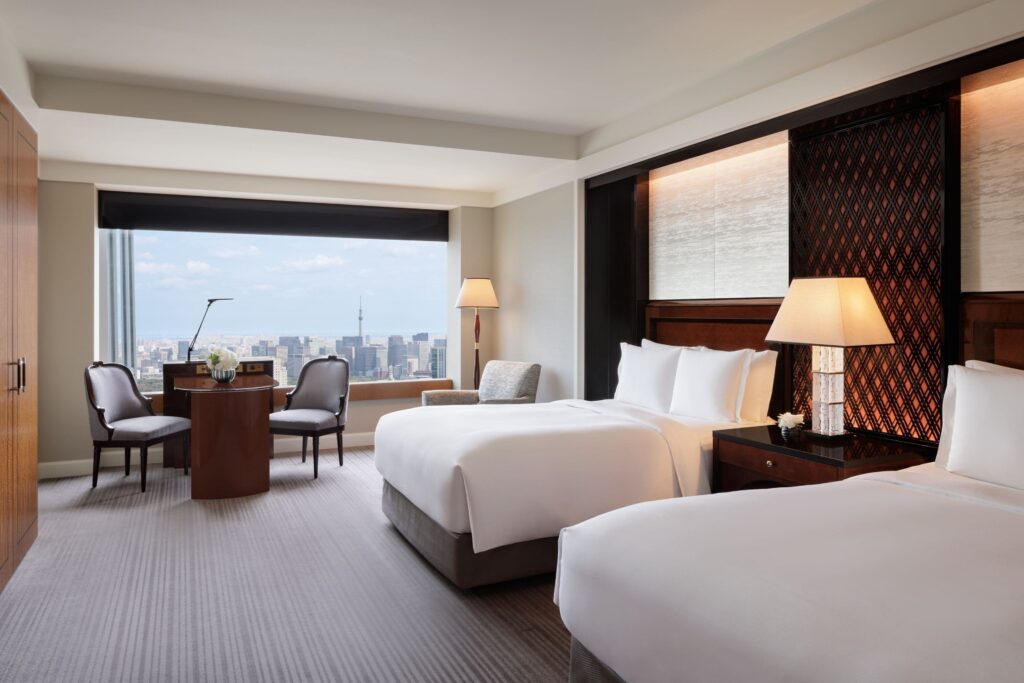
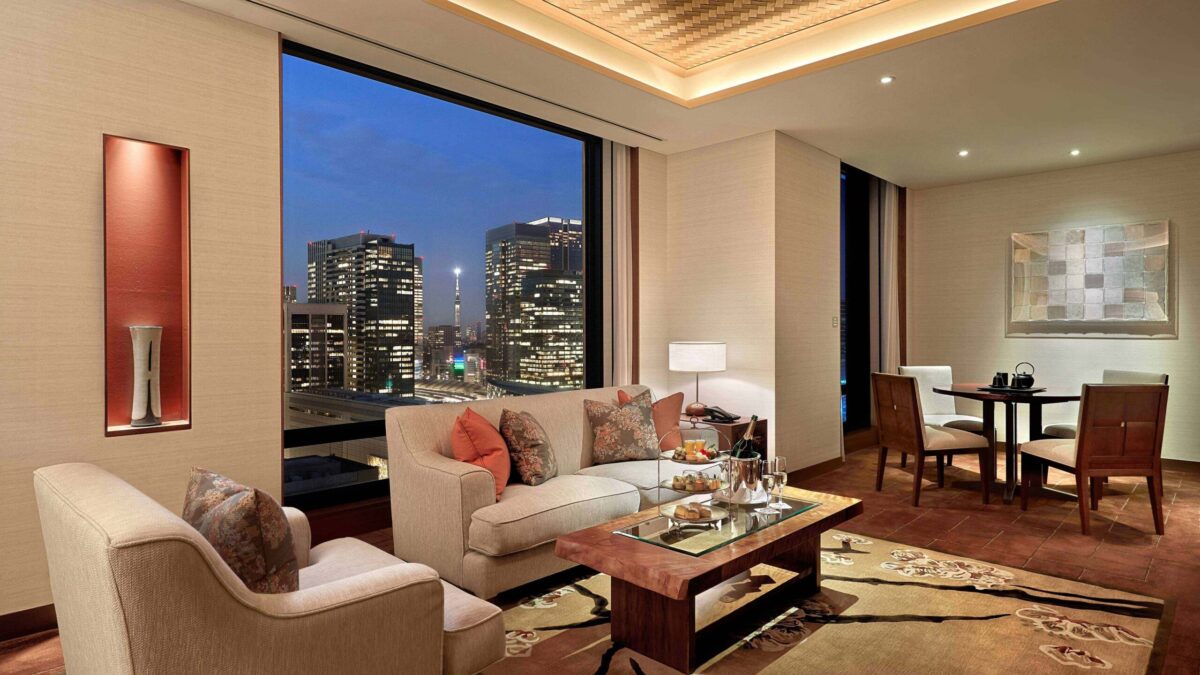
Guest rooms occupy the 47th through 53rd floors, with 245 rooms in total. Even the standard Deluxe category runs 52 square metres, among the largest standard rooms in Tokyo. Entering the room, large windows open onto the skyline, and the interiors mix Japanese and Western elements: a work desk finished with washi paper and Nishijin textiles, and a bed with a side lamp made using traditional craft techniques. Bathrooms are finished in marble, and many rooms separate a deep soaking tub, an independent shower stall, and a separate toilet.
The 80-square-metre Executive Suite is a corner room, with the bathroom and living room flanking the bedroom, which has a king-size bed (182cm x 203cm). The Premier Executive Suite, also 80 square metres, has a window in the bathroom, letting you take in views toward the Imperial Palace grounds or the Odaiba area from the bathtub. Not every room has a windowed bathroom, so if soaking in the tub with a view matters to you, it’s worth specifying this room type when you book.
A step above, the roughly 120-square-metre Carlton Suite has a large window facing the living room that opens onto a panoramic view, and the bedroom has windows on two sides. It looks out toward the National Stadium, Yoyogi Park, and Shinjuku Gyoen, and on nights when there’s a game at Jingu Stadium in summer, fireworks are visible from this angle. The bathroom has marble finishes, two sinks, a bathtub with a bath pillow, and a separate shower room with a rain shower. The Ritz-Carlton Suite, at 300 square metres, is the top room category, with panoramic views from the 53rd floor, two bathrooms, and separate living and dining areas.
Staying on the Club Floor, the 52nd and 53rd floors, gives you access to the dedicated Club Lounge. What makes that more than a simple upgrade is covered in the next section.
Breaking down the room categories: the 47th through 50th floors include eight Carlton Suites (about 120 square metres) on the east and west corners, and two Japanese Carlton Suites (about 100 square metres, each with one tatami room). The Club Floor, on the 52nd and 53rd floors, has 52 Club Deluxe rooms with Club Lounge access, and the top category is a single 300-square-metre Ritz-Carlton Suite. The view depends on which direction your room faces: northwest-facing rooms look out over the greenery of Yoyogi and the high-rises of west Shinjuku, with Mount Fuji visible on clear days, while southeast-facing rooms look toward the Imperial Palace area, Tokyo Bay, and Odaiba. You usually can’t choose a direction when booking, so if this matters to you, calling the hotel directly ahead of time is worth doing.
The Club Lounge: Why It’s Called “A Hotel Within a Hotel”
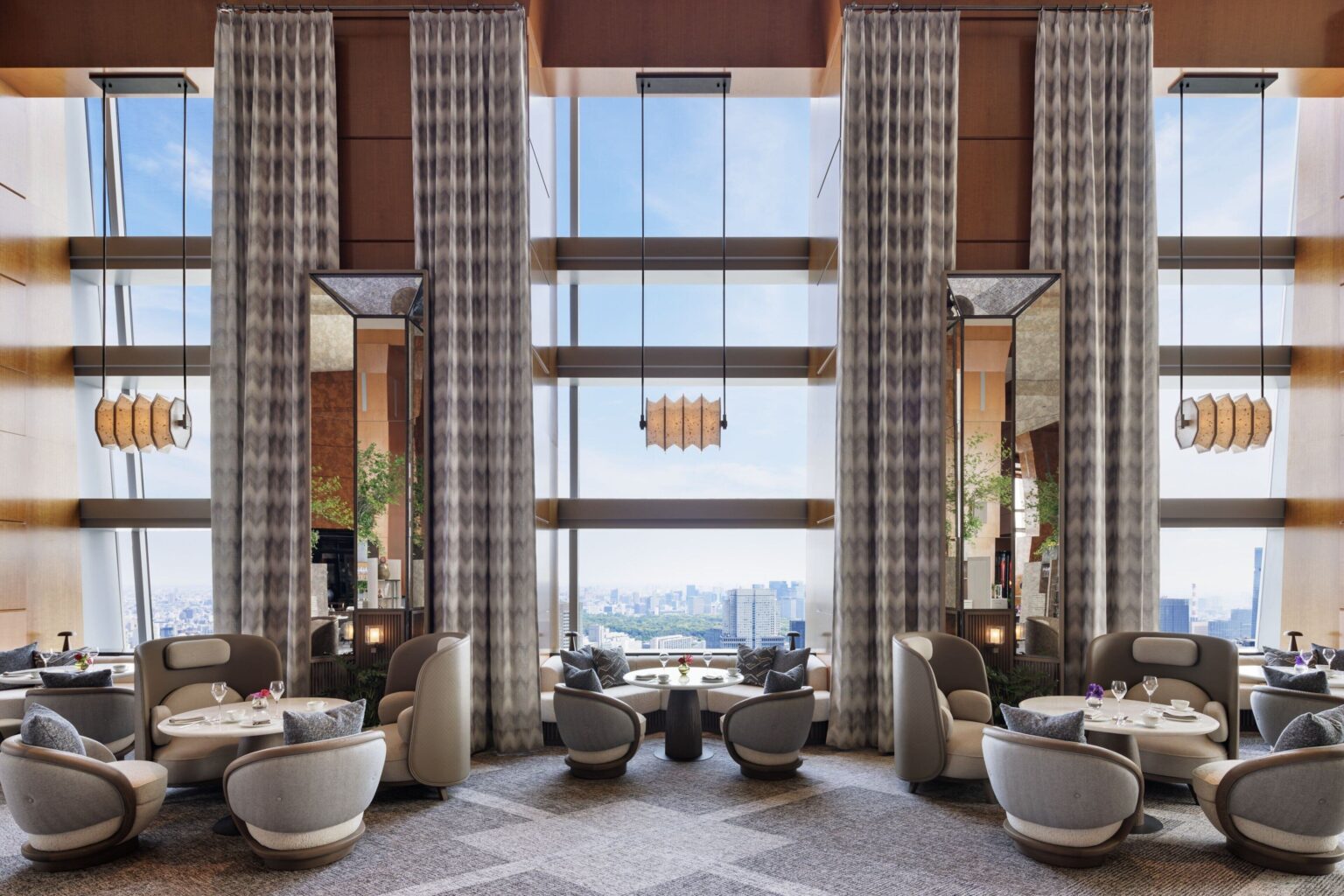
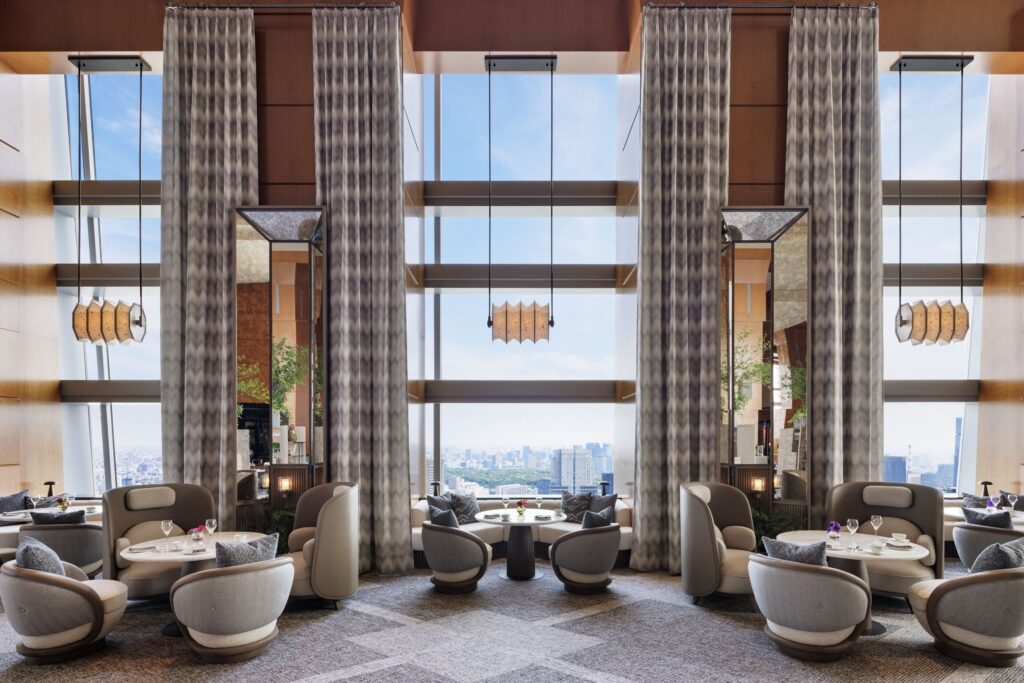
The Ritz-Carlton Club Lounge, accessible only to guests staying on the Club Floor (the 52nd and 53rd floors), is divided into four distinct spaces with a dedicated concierge on hand. Five food presentations are served daily: breakfast (7:00–10:30), a light lunch (11:30–13:30), afternoon tea (14:30–16:30), pre-dinner hors d’oeuvres (17:30–19:30, limited to one hour), and sweets and cordials (20:00–22:00, last order 21:20). Children can join until 19:30; confirm the current child-access policy when booking.
Most Marriott properties offer complimentary Club Lounge access to Platinum Elite members and above, but this hotel is an exception: even Platinum Elite members don’t get free access. In other words, the Club Lounge experience is reserved specifically for guests who book a Club Floor room. Whether this matters to you should shape how you choose your room.
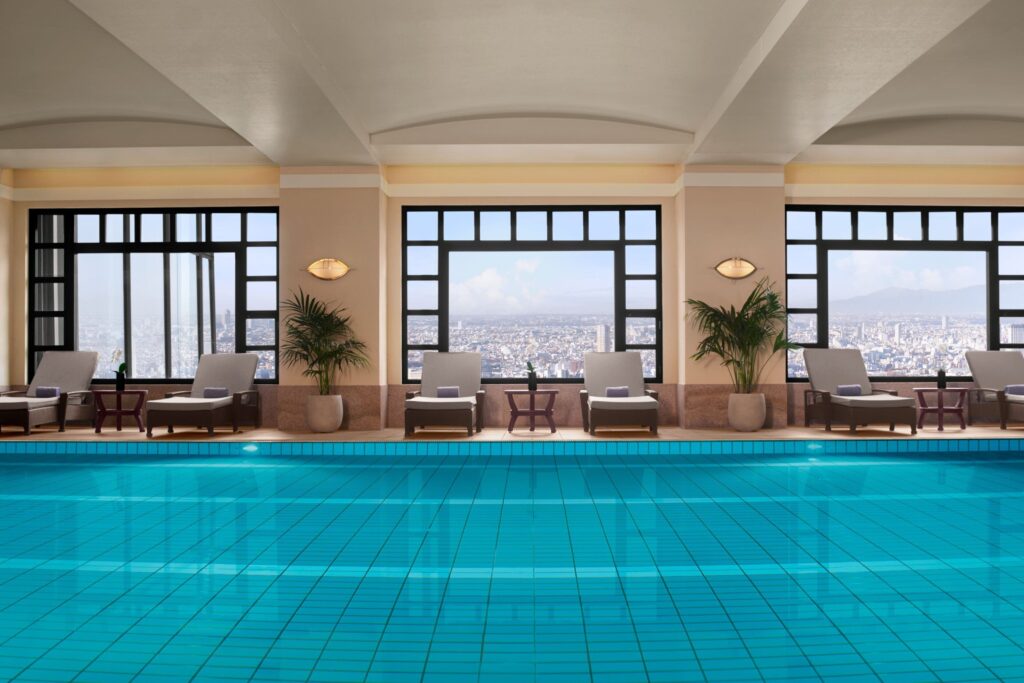
The spa and fitness facilities on the 46th floor are another highlight for guests. A 20-metre indoor pool, a 200-square-metre fitness studio, and a Heat Experience area with a hot bath, cold plunge, and dry and steam saunas are all free for guests and members during their stay. The indoor pool is open to children ages 4 to 15 with a guardian present, though the Heat Experience and the rest of the spa are limited to guests 16 and older. Evenings often coincide with sunset toward Mount Fuji, so if you want to avoid the busiest stretch, a morning visit to the pool is a good bet.
Alongside the spa, bath amenities from the French fragrance house Diptyque, and a lobby that wraps you in scent the moment you step off the elevator on the 45th floor, add to the character of the place. Live music often plays in the Lobby Lounge, and visiting during afternoon tea hours gives a fuller sense of how the space is designed. For anyone planning a wedding or a celebration, the hotel also offers venues separate from its guest rooms, including a chapel with Swarovski crystal-adorned windows, a Grand Ballroom lit by Italian chandeliers, and a terrace overlooking Hinokicho Park — worth looking into if an anniversary stay might extend into something bigger.
Check availability for Club Floor rooms on Expedia →(Paid link)
Dining: Three Restaurants on the 45th Floor, and a Michelin-Starred French Table
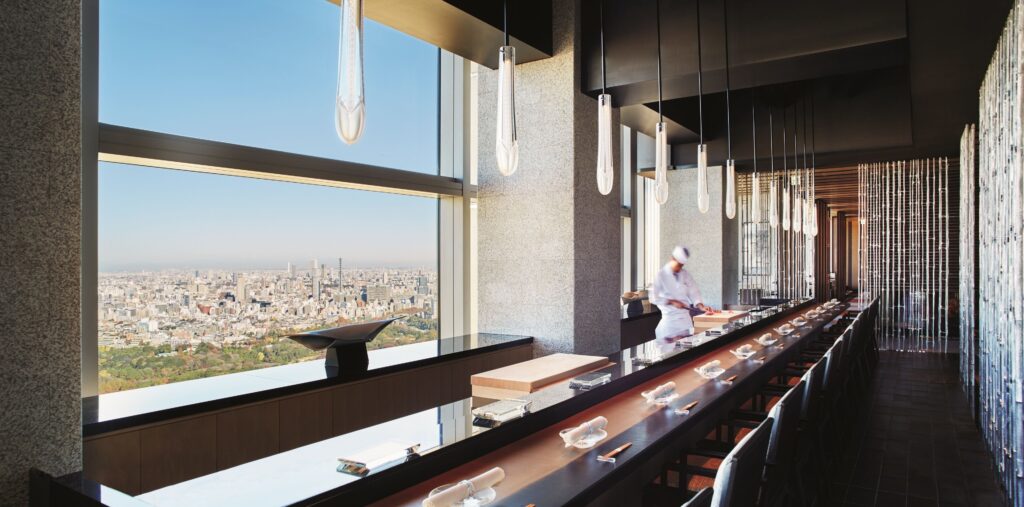
The hotel has seven restaurants and bars in total. Three of them, Hinokizaka, Héritage by Kei Kobayashi, and Towers, are clustered on the 45th floor.
Hinokizaka, the Japanese restaurant, is divided into four areas: kaiseki, sushi, tempura, and teppanyaki. The sushi, tempura, and teppanyaki sections each have their own counter, there’s a six-seat chef’s table, and a private room called Kuroshoan, built from a relocated old farmhouse from Gifu. Lunch courses vary by season and day; check the current menu before visiting. From the counter seats in the kaiseki area, the view of the Shinjuku skyline sits directly ahead.
Héritage by Kei Kobayashi, the French restaurant, is run by chef Kei Kobayashi, who holds three Michelin stars in Paris and opened his first Tokyo restaurant here in January 2024. It has since earned one Michelin star. True to the concept announced when the hotel unveiled it, the menu pairs the finest Japanese ingredients with French technique, marking a real shift in direction from Azur 45, the restaurant that previously occupied the space.
Breakfast is served at Towers (45th floor, 7:00–10:30). The spread includes freshly baked pastries made in-house, a trolley service for adding seasonal fruit and yogurt toppings, a spread of green salad and cold cuts, and Eggs Benedict, which is also one of the regular menu staples. The kitchen sources mainly domestic vegetables and seasonal fish, and uses free-range eggs, reflecting a sourcing policy that takes environmental impact into account.
Beyond these three, the hotel has The Lobby Lounge, where live music accompanies afternoon tea and cocktails; The Bar on the 45th floor, with floor-to-ceiling windows; La Boutique, for chocolate and pastries; and Nina at The Ritz-Carlton, Tokyo, a patisserie for French sweets. In-room dining runs 24 hours, so arriving late at night shouldn’t leave you without options.
Self-parking and valet parking are available for a fee; check the hotel’s current parking terms before arrival.
Location and Access: The Strength of a Direct Connection to Roppongi Station
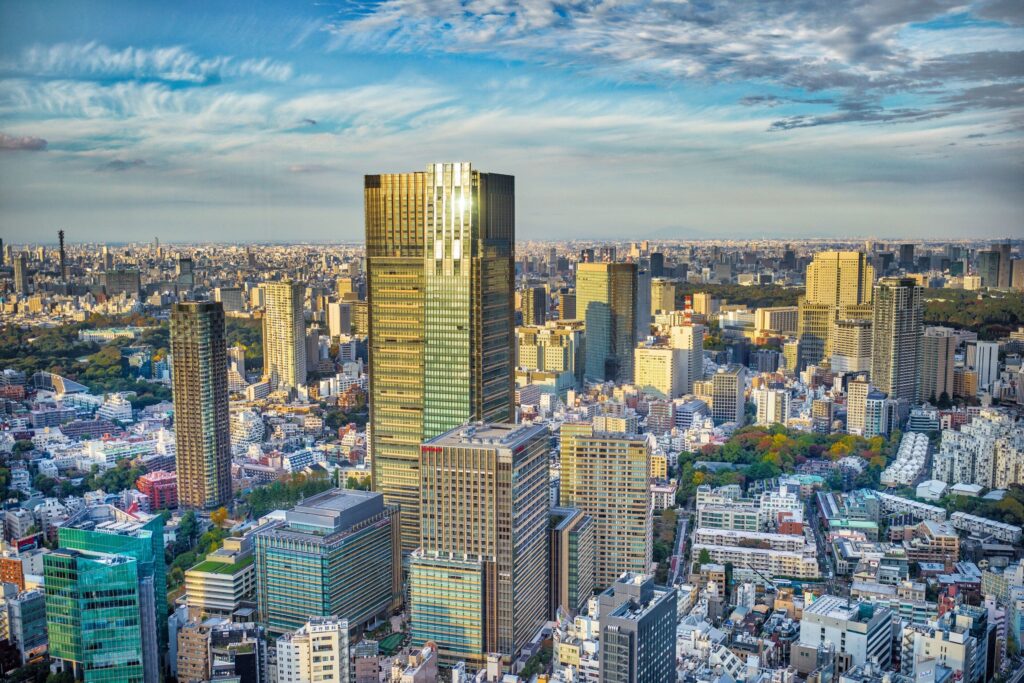
The nearest stations are Roppongi, served by the Toei Oedo Line and the Tokyo Metro Hibiya Line, connected via an underground passage from Oedo Line Exit 8. If you’re coming from the Hibiya Line, Exit 4a leads to the same underground passage that connects to Exit 8, so you can still reach the hotel without stepping outside. Nogizaka Station on the Chiyoda Line is about a 3-minute walk, and Roppongi-itchome Station on the Namboku Line is about 8 minutes.
From the airport, Haneda takes about 40 minutes via the Tokyo Monorail and the Toei Oedo Line. From Narita, the Narita Express to Tokyo Station followed by a taxi is one option, or a direct taxi from Narita, which runs about 90 minutes. The hotel also offers paid airport transfers by BMW i7. Worth considering if you’re traveling with a lot of luggage, though a regular taxi or limousine bus will also get you there without trouble.
Tokyo Midtown, where the hotel sits, is itself a complex that includes the Suntory Museum of Art, Design Hub, and 4 hectares of green space, large enough that you could shop and visit museums without ever leaving the property. Roppongi Hills’ observation deck and the Mori Art Museum are also within walking distance, making this a workable base for anyone exploring the Roppongi and Akasaka area.
If you’re arriving by Shinkansen, from Tokyo Station take the Marunouchi Line to Kasumigaseki, transfer to the Hibiya Line, and it’s about 30 minutes to Roppongi Station. From Shinagawa Station, take the JR Yamanote or Keihin-Tohoku Line to Hamamatsucho, then transfer to the Toei Oedo Line, also about 30 minutes. A taxi from either station takes roughly the same amount of time, so whether you take the train or a taxi comes down to how much luggage you have and how crowded the trains are. The hotel also has parking on site, so arriving by car isn’t a problem either.
Nearby Hot Springs: If You Want the Real Thing
The hotel itself doesn’t have a natural hot spring, but the Heat Experience on the 46th floor, with its hot bath, cold plunge, and dry and steam saunas, is free during your stay and covers the “soak and reset” need for most guests. If you’d still like to try a Japanese-style bath, Shimizu-yu, a public bathhouse in the Minami-Aoyama area, is a short trip from Roppongi Station. It offers day use and a different, more old-fashioned atmosphere than the hotel’s own spa. Note that Shimizu-yu doesn’t admit guests with visible tattoos, so if that applies to you, the hotel’s own Heat Experience is the more reliable option.
Weather: What to Keep in Mind on the Higher Floors
Because rooms start on the 47th floor, clear days give you views as far as Mount Fuji, the Imperial Palace outer gardens, and Tokyo Bay, but the same room can look very different on a cloudy or rainy day. If Mount Fuji is the point of the stay, winter’s dry, clear days are the safer bet. Summer’s higher humidity tends to haze the view, so it may be worth planning around indoor comfort rather than the skyline during that season.
Since Roppongi Station connects directly underground and the hotel has its own pool and fitness facilities, there’s little reason for weather to narrow your options even without stepping outside. A rainy forecast shouldn’t require rethinking your plans.
At over 200 metres above ground, you may notice the sound of wind or a slight sway in the building on days with typhoons or strong winds forecast. If the view is the point of your stay, it’s worth checking the wind forecast as well as the weather forecast, to avoid a gap between expectation and reality. On the other hand, even during the most intense midsummer sun, you’ll barely feel the heat through the windows, which is one advantage of being this high up.
Who This Hotel Suits
For anyone marking an anniversary or planning a proposal, a Club Floor room or a Carlton Suite is worth considering. For business travel, the central Roppongi/Akasaka location paired with solid airport access makes it easy to fit around meetings or international conferences. Families will find it workable too: the pool allows children with a guardian, and kids can join the Club Lounge until 19:30, which makes it manageable with children from preschool through elementary age. On the other hand, travelers who’d rather explore on foot than settle into a hotel, or who are working with a tighter budget, may find better value elsewhere in the Roppongi area.
For visitors from abroad, English-language signage throughout the property, multiple transfer options from the airport, and a location in Roppongi, an area that stays lively well into the night, combine to make this an easy choice for anyone who wants to be based somewhere central without worrying about getting around. It’s also a solid pick for a first trip to Tokyo, where minimizing transit stress matters.
Enjoying Each Season
In spring, Hinokicho Park and the area around Nogizaka, both within walking distance, offer cherry blossoms. In summer, fireworks from night games at Jingu Stadium are sometimes visible from the windows of the Carlton Suite, weather and schedule permitting. Autumn brings gradually clearer air, improving the odds of a Mount Fuji view. Winter has the highest share of clear days, with Mount Fuji and Tokyo Tower visible more reliably, and the Christmas season brings lobby decorations along with limited-time year-end packages that include breakfast and spa discounts. Past year-end packages have combined a room stay with breakfast, hotel credit, spa benefits, and tickets to the ice rink at Tokyo Midtown, tying the stay to what’s happening around the neighborhood rather than just the room itself. Matching the time of year to what you’re looking for tends to pay off.
How It Compares to Other Hotels
| Hotel | Rooms / Standard Size | Location | Notable For |
|---|---|---|---|
| The Ritz-Carlton, Tokyo | 245 rooms (standard from 52 m²) | Roppongi / Tokyo Midtown (direct station access) | Seven restaurants, a Club Lounge, a Club Floor closed even to Platinum Elite members |
| Aman Tokyo | 84 rooms (standard from 71 m²) | Otemachi (direct station access) | A smaller room count for a ryokan-like quiet, deep soaking tubs, an expansive spa |
| Park Hyatt Tokyo | 177 rooms (standard from 55 m², renovated December 2025) | Shinjuku, Shinjuku Park Tower | Every room on the 42nd floor or above, night views familiar from film, New York Grill |
| Four Seasons Hotel Tokyo at Otemachi | About 190 rooms (varies by room type) | Otemachi (walking distance from Tokyo Station) | Views toward the Imperial Palace, rooms with balconies facing Wadakura Fountain Park |
There isn’t a huge gap in how you’d spend your time or what the views offer, but if the range of restaurants and the Club Lounge system matter to you, The Ritz-Carlton, Tokyo has a slight edge. If a smaller, quieter property is more your style, Aman Tokyo fits better; for Shinjuku and its night views, Park Hyatt Tokyo; for a view toward the Imperial Palace, Four Seasons Hotel Tokyo at Otemachi.
Location also factors into the choice. Aman Tokyo and Four Seasons Hotel Tokyo at Otemachi, both in the Otemachi area, sit within walking distance of Tokyo Station and carry the calmer feel of a business district. Park Hyatt Tokyo, in Shinjuku, is close to the energy of Kabukicho as well as the station. The Ritz-Carlton, Tokyo’s Roppongi location, by contrast, has no shortage of restaurants and bars open late, making it a workable base for anyone who wants a second stop after dinner or plans to visit Roppongi Hills and the National Art Center.
Compare rates and availability on Expedia →(Paid link)
Booking Tips
Rates vary by date, season, and room category. Compare current room-only and breakfast-inclusive options before booking. If you’re booking a Club-level room, it’s worth confirming Club Lounge hours and the policy on children in advance, so you know what to expect on arrival.
If you have specific preferences, like a windowed bathroom or a Mount Fuji view from a high floor, checking the room description page for window placement and orientation before booking helps avoid surprises on arrival.
To manage crowds, avoid the Club Lounge during its busiest stretch, early evening into the night, and use it in the morning or early afternoon instead. The route from the underground parking to the lobby isn’t always easy to follow, so if you’re arriving by car, asking the bell staff for directions makes it smoother. Checking in earlier in the day, rather than during the evening arrival rush, is another way to skip the busiest moment at the front desk.
Final Verdict
The Ritz-Carlton, Tokyo answers a specific need: spending less time getting around the city, and more time in a hotel that gives you everything you need without leaving. The combination of direct access to Roppongi Station, rooms starting at a generous 52 square metres, and a Club Lounge system found nowhere else in Tokyo gives it a distinct position among the city’s luxury hotels. If you’re planning a stay for a special occasion, checking availability on the Club Floor is a good place to start.
Check availability on Expedia →(Paid link)