Shinjuku changes within a few minutes’ walk. Department stores and office towers frame the east side of the station; closer to Kabukicho, cinema marquees, giant screens and restaurant signs fill the view. Audiences head towards a performance, diners spill back onto the pavement, and the colours grow brighter after sunset.
BELLUSTAR TOKYO stands in the middle of Kabukicho, one of Tokyo’s best-known entertainment districts.
At street level, cinemas, music, restaurants and bars are close at hand. Back in the guest room, the streets crossed earlier become part of a broad Tokyo panorama. A single night can hold both pleasures: joining Shinjuku’s evening crowds and looking back across the city from a private window.
Inside the hotel, regional Japanese produce shapes the restaurant menus, domestic fruit and spirits appear at the bar, and contemporary art, Japanese woodworking and natural materials add quieter points of focus. The appeal comes from this sequence of experiences: the energy of Kabukicho, close attention to food and craft, then an expansive city view at the end of the night.
Make Kabukicho the Base for a Tokyo Evening
Kabukicho gathers cinemas, theatres, live-music venues, restaurants and bars into a compact part of Shinjuku. Daytime crowds come for films and shopping; towards evening, people arrive for dinner and performances, and the streets remain active deep into the night.
Staying here opens up an evening on foot. Dinner can be followed by a film, a performance by a drink, or a cocktail in the hotel by a walk through the district. The night need not be planned around a final train across Tokyo.
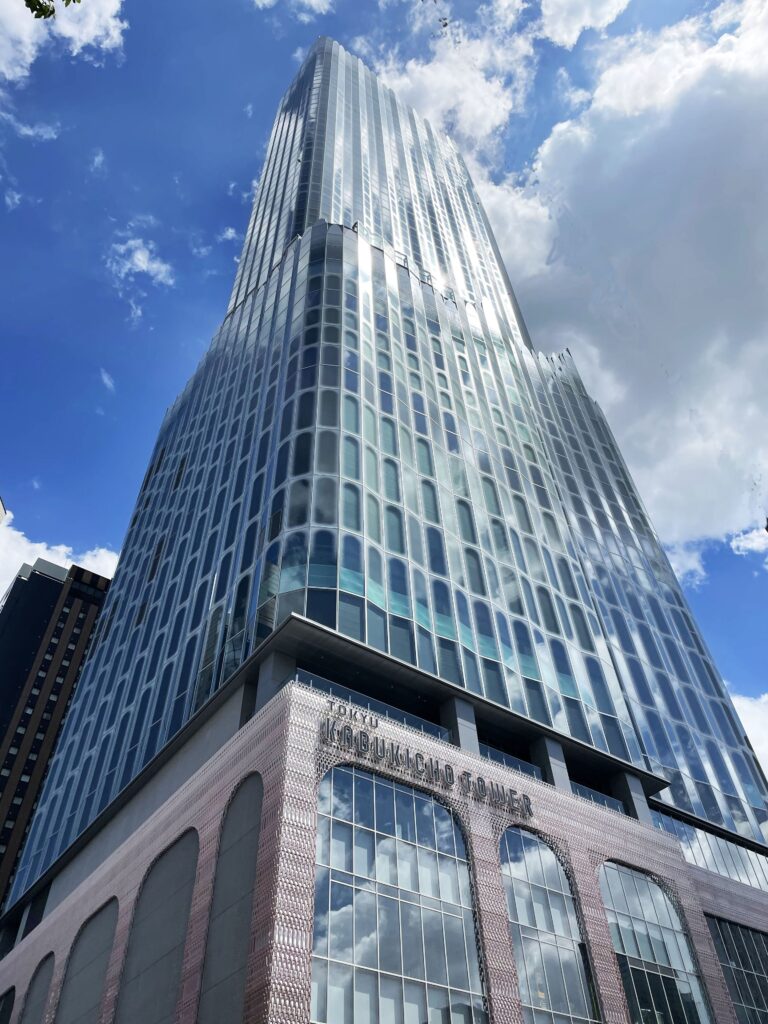
Tokyu Kabukicho Tower houses a theatre, cinema, live hall and restaurants beneath the hotel, giving the building a full programme of its own. Yuko Nagayama & Associates designed the tower’s exterior. Repeated curves rise through its glass and cladding, catching daylight and artificial light differently through the day. Its silhouette is easy to recognise among Shinjuku’s rectilinear towers.
Seibu-Shinjuku Station is immediately nearby, while JR Shinjuku, Shinjuku-nishiguchi and Shinjuku-sanchome stations are all within walking distance. This keeps other Tokyo districts accessible during the day and makes it easy to return to Kabukicho for dinner or a show.
Walk towards Shinjuku-sanchome and two worthwhile stops extend the day without changing neighbourhoods. Isetan Shinjuku brings fashion, beauty and one of Tokyo’s most rewarding department-store food halls together under one roof. Purchases can be dropped at the hotel before the evening begins.
Nearby Hanazono Shrine has long served as a guardian shrine of Shinjuku. Office buildings and restaurants surround its torii, shrine buildings and trees, revealing a layer of local history within the contemporary entertainment district. Shopping at Isetan, a visit to Hanazono Shrine, sunset from the room and an evening performance can all fit naturally into one day.
Airport limousine buses also serve the front of Tokyu Kabukicho Tower from Haneda and Narita. When the timetable suits the flight, this can reduce the distance spent moving luggage through a major station.
Kabukicho remains busy and brightly lit late into the night. Travellers who want that energy to be part of their Tokyo visit gain the clearest value from this address.
From the Colours of the Street to Art and Craft
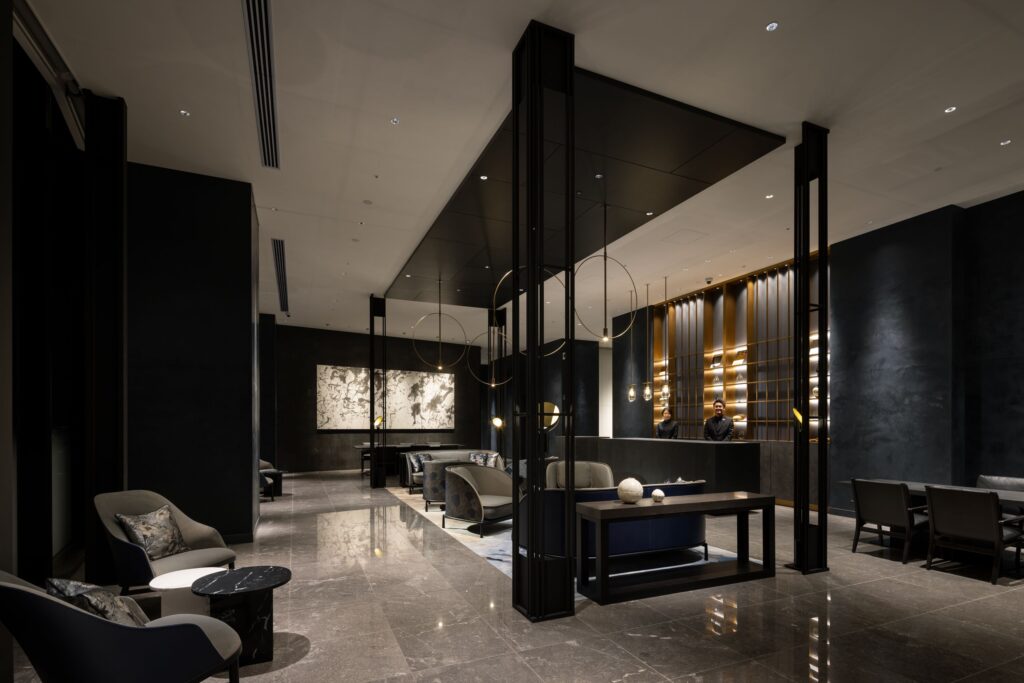
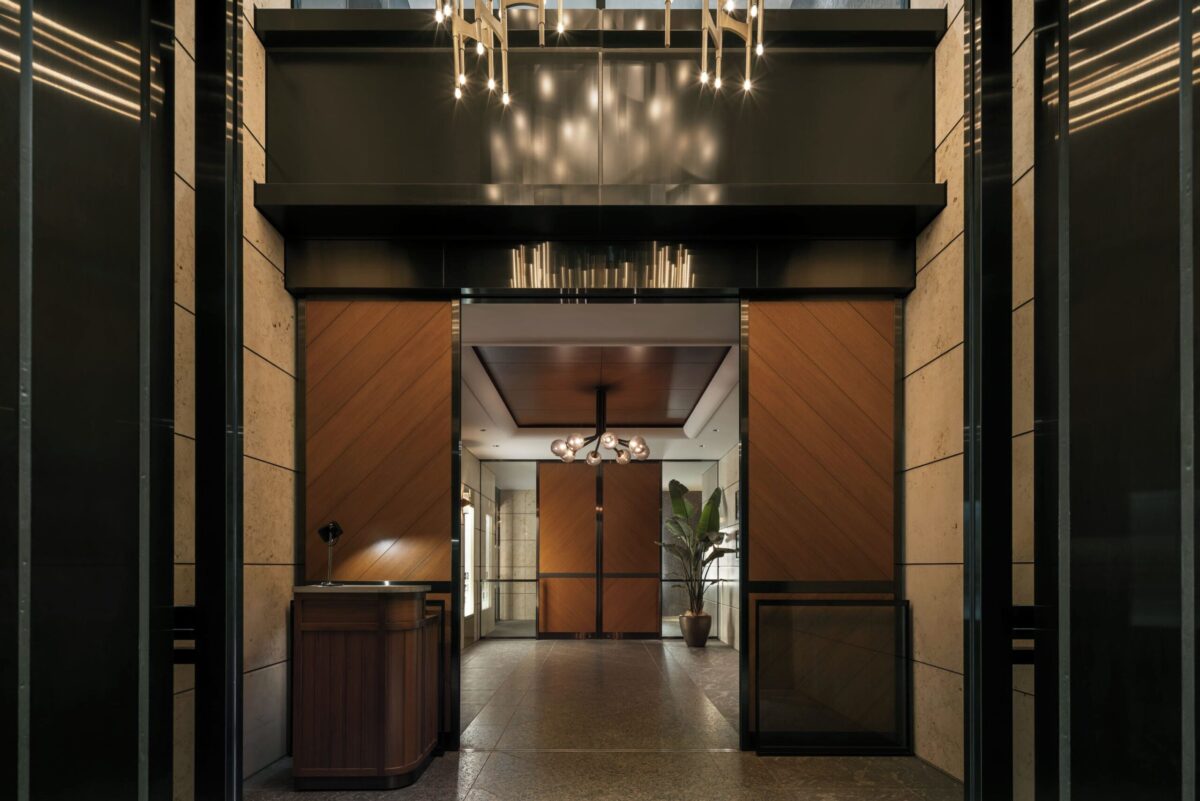
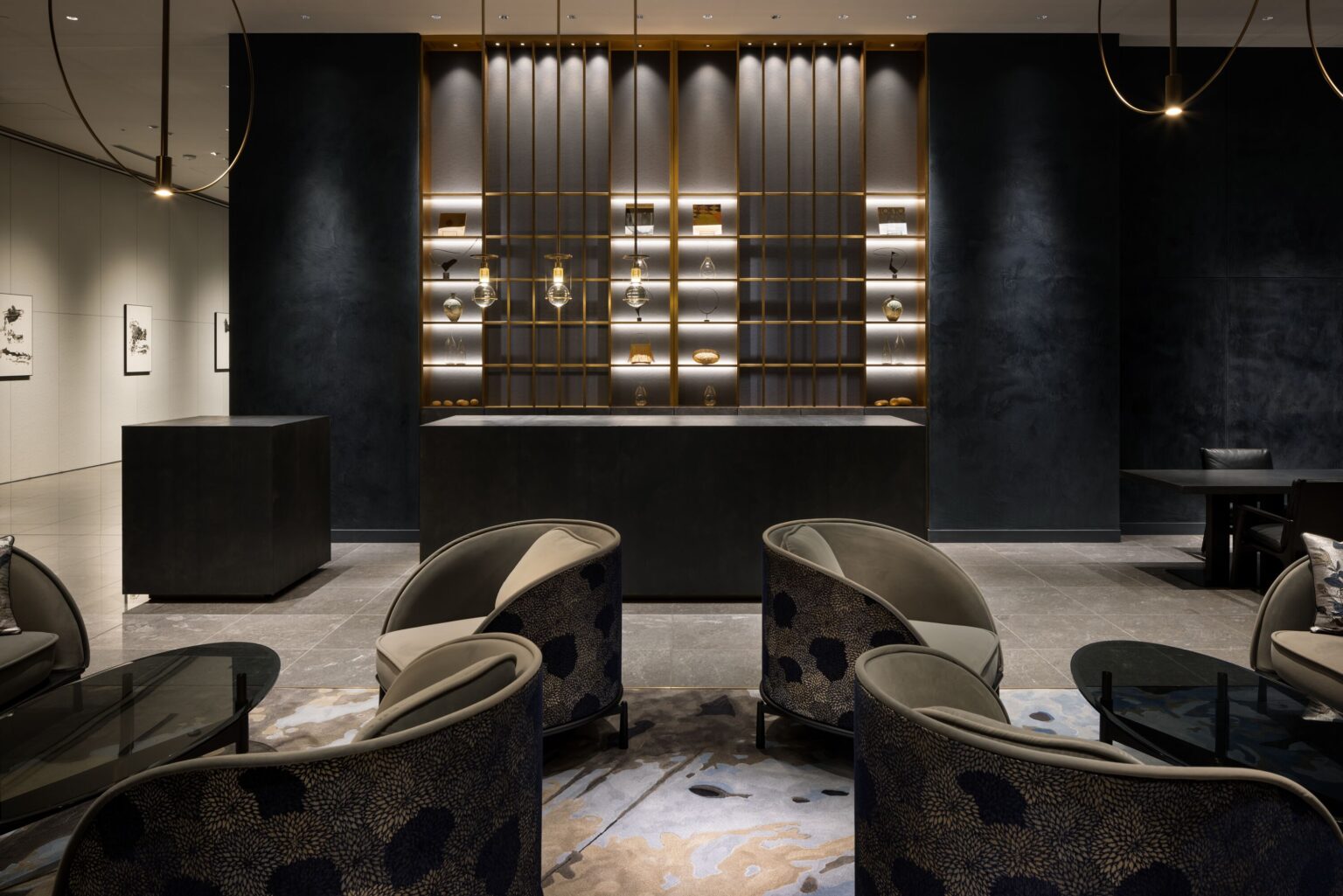
The transition from the tower entrance to the hotel lobby brings a deliberate change of visual pace. Black sets the background; fine gold lines, illuminated craft objects and works of art draw attention at closer range. Upholstery and carpets carry motifs inspired by flowers and the natural world.
Kabukicho communicates through large screens and signs designed to be read from across the street. The hotel reduces the palette and shifts attention to light, furniture lines, woven textures and the shapes of individual objects. That change is felt during the journey from the entrance to the guest room.
The tower contains a 97-room hotel, keeping the accommodation more intimate than the scale of the building suggests. Its name combines the Latin word “bellus,” meaning beautiful, with “star”; the identity uses a golden spiral and star motif. Light and celestial imagery suit a hotel whose strongest visual connection is the city after dark.
Works displayed in the lobby and public areas, Japanese woodworking and carefully directed lighting give the interior its own visual memory alongside the skyline. Moving through the hotel rewards attention to materials at close range.
Let the Seven-Metre Window Lead the Room
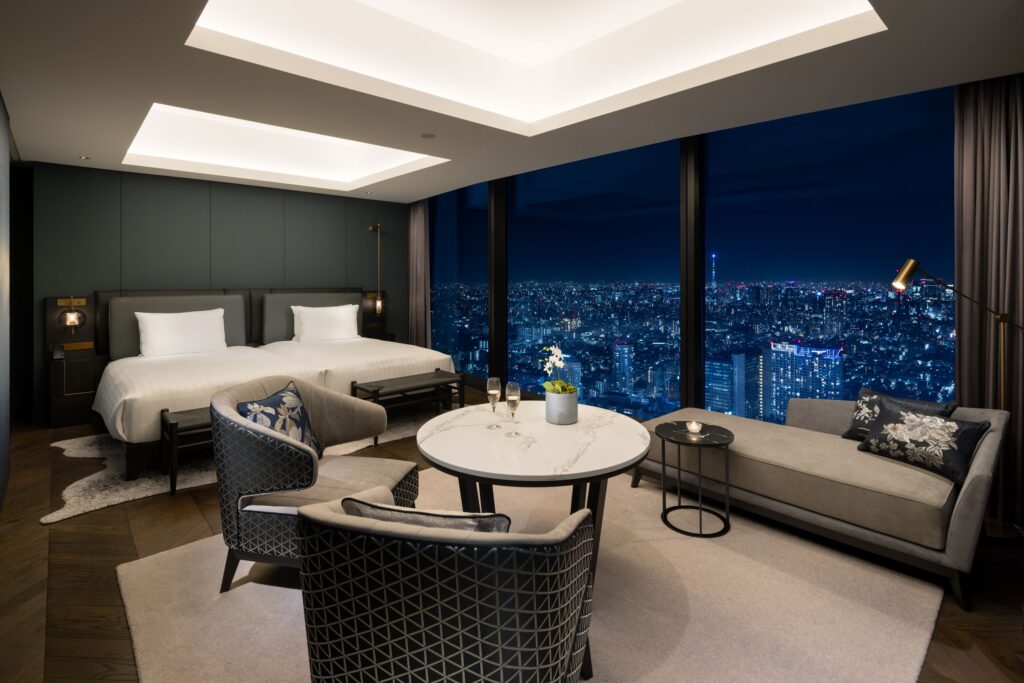
In the guest rooms, the window claims attention before the furniture or decoration. The hotel describes it as approximately seven metres wide. It occupies enough of the wall to turn Tokyo into the room’s main visual element.
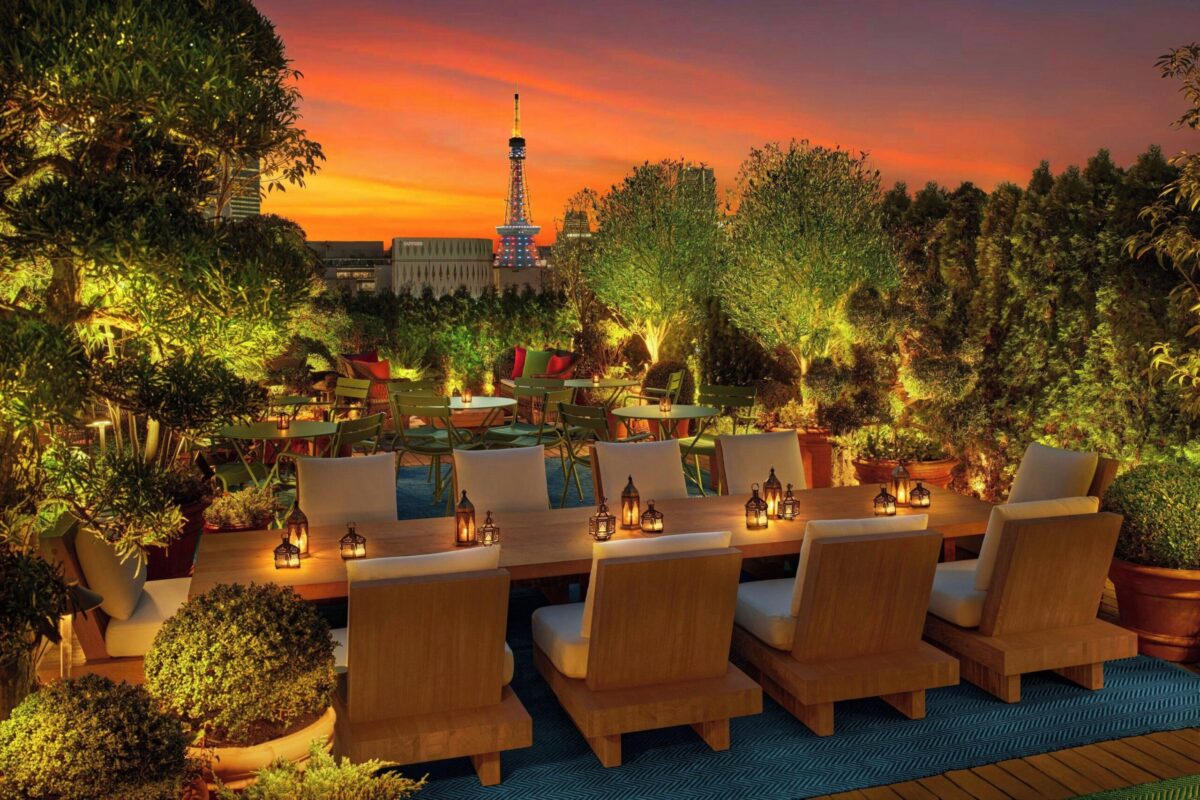
During the day, Shinjuku’s buildings overlap into the distance. Roads and railway lines run between towers and lower neighbourhoods, showing how many different urban scales coexist in Tokyo. Towards sunset, the outline of the buildings darkens as colour spreads across the sky. Signs, car lights and windows then convert the ground-level city into moving points and lines.
Morning reveals another composition. Roads, tracks and building forms become clear again; in good weather the view opens towards the horizon, while rain brings moving cloud and reflections on wet streets.
Grey, black and natural wood form a restrained interior background. Japanese patterns appear in cushions and woven details. This limited palette keeps the view prominent without stripping the room of texture.
The entry Studio King measures 41–48 square metres and includes a king bed, deep soaking tub, rain shower, large wardrobe and 55-inch smart television. There is room to open luggage and organise clothes for several days, a practical advantage in a city stay built around frequent outings.
Orientation changes the streets, landmarks and direction of light visible from the room. Guests making the view a priority can ask about direction and room position when booking. A bathtub is part of the Studio King specification, though the relationship between tub and window varies; compare the photographs and floor plan if a window-side bath is essential.
Turn the Guest-Room Window into a Private Table
In-room dining lets the skyline remain part of dinner. Service is divided across breakfast, daytime and late-night menus, making a meal in the room possible after an evening out.
The hotel’s restaurants combine cooking, art, furniture and service. In the room, the emphasis moves to the window and the guests’ own pace. Curtains can stay open as the sky darkens and the lights below begin to appear.
On an arrival day, drinks or a light meal can accompany sunset. After a film or performance in Kabukicho, the late-night menu allows the day to end with the city still in view. Breakfast offers a quieter counterpart: traffic and trains begin to move, buildings open, and Tokyo’s everyday rhythm replaces the spectacle of the night.
Menus, service periods and order cut-offs may change, so check the current in-room information on the day of use.
Five Sky Private Villas, Five Ways to Frame Tokyo
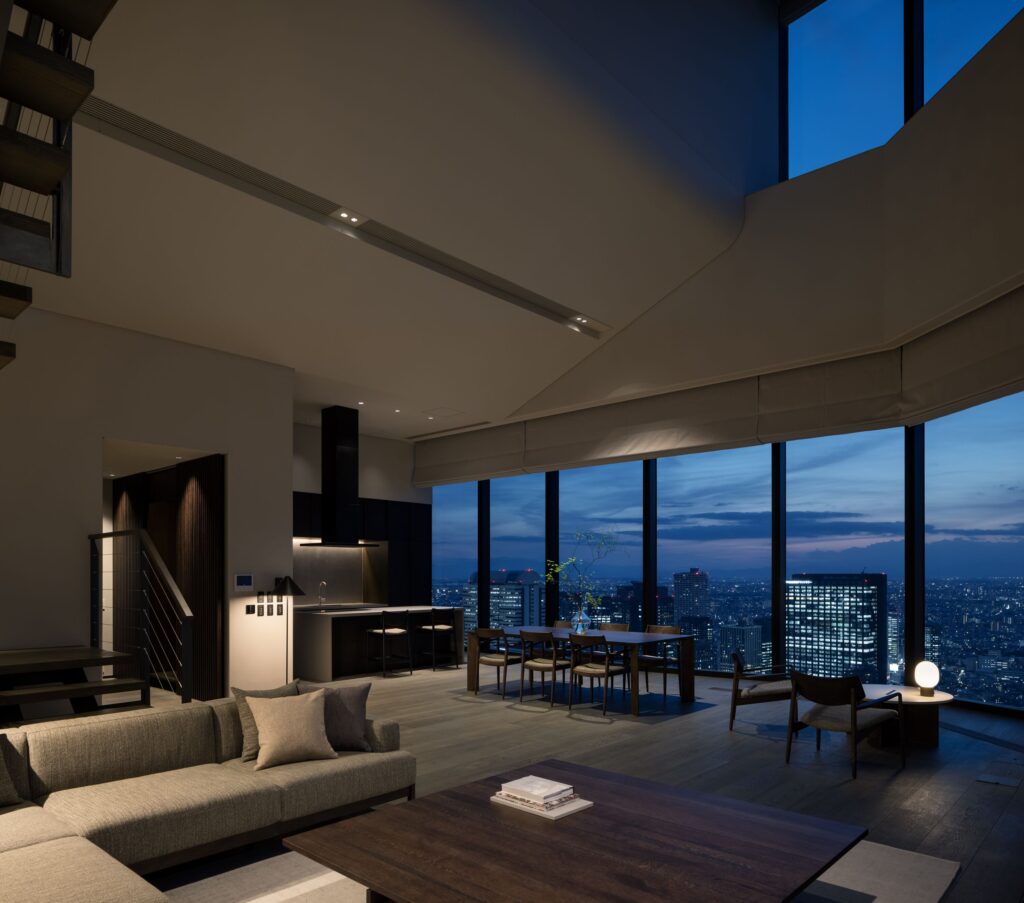
At the top of the hotel, five Sky Private Villas take their names from hana, tori, kaze, tsuki and ten—flower, bird, wind, moon and sky.
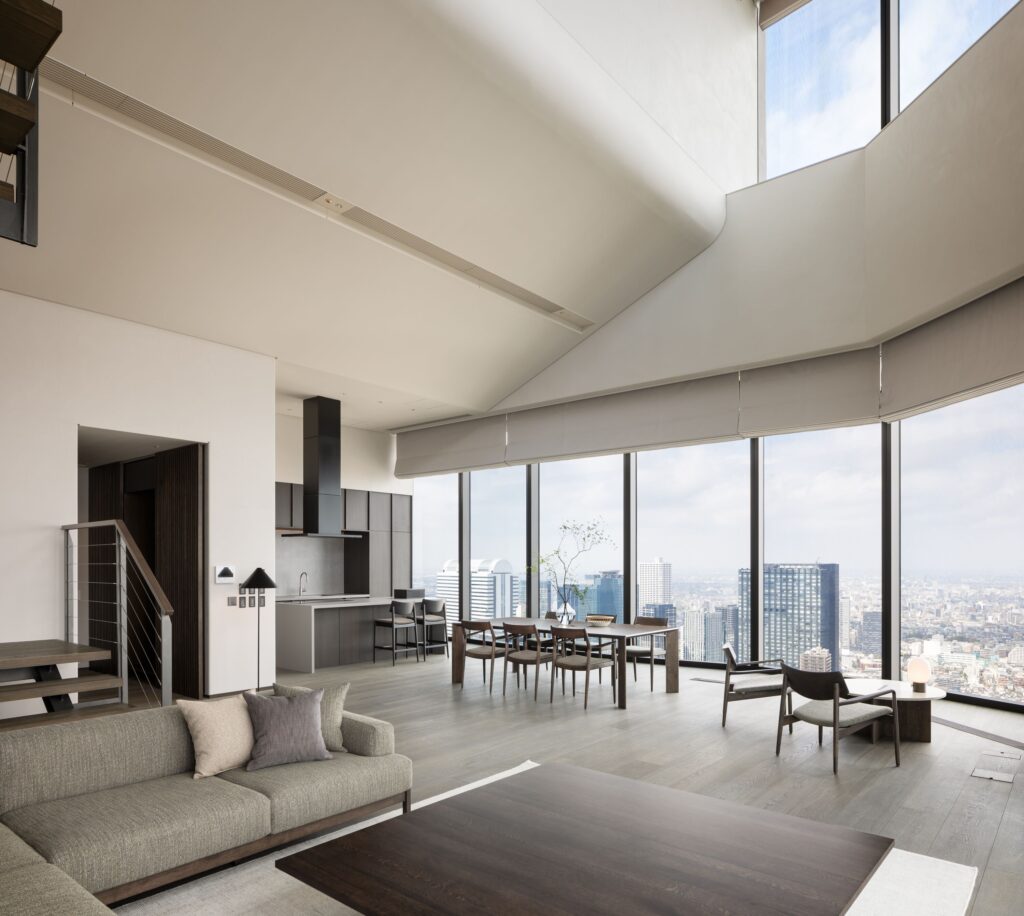
These penthouses extend the hotel’s relationship with the view through larger living areas and windows. Some open in several directions; some use a duplex plan. Moving between bedroom, dining area, living room and stairs changes the angle from which Tokyo is seen.
Dedicated lounge access and butler service distinguish the villas from standard accommodation. The category supports a stay in which arrival, meals and time inside the hotel take a larger share of the itinerary.
The wide window and city panorama remain central in regular rooms. The villas show the hotel’s idea at its most expansive; studios and suites translate it into smaller, more practical plans. Compare floor area, bed configuration, orientation, lounge access and service inclusions separately, then match the category to the amount of time planned inside the hotel.
Taste Japan’s Regions Against the Tokyo Skyline
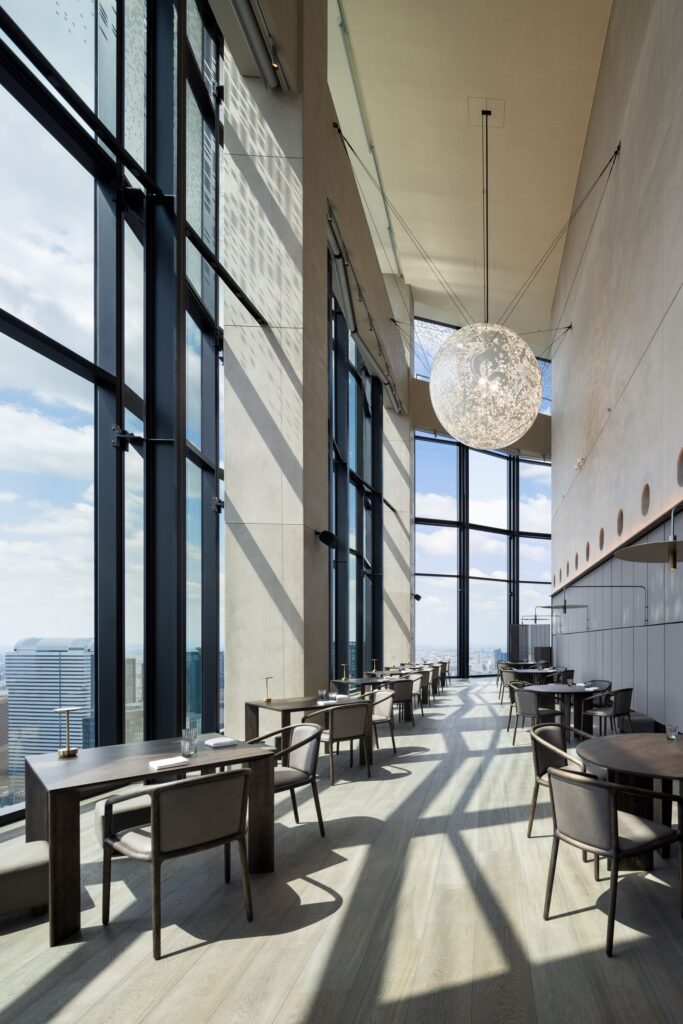
The food at BELLUSTAR TOKYO looks beyond the capital to regions across Japan. Restaurant Bellustar works with ingredients and tableware selected from different parts of the country. French technique provides the structure, while vegetables, seafood, meat and fermented elements express a particular place and season.
Tokyo fills the windows as the plate narrows attention to one producer or region. That movement—from a vast city to a specific landscape represented through food—is one of the restaurant’s most distinctive qualities.
Tableware adds the culture and handwork of its place of origin to the dish. Flavour, presentation and vessel are considered together, allowing a course to suggest a future journey or recall somewhere already visited.
The dining room rises to approximately 13 metres. A work by Shinji Ohmaki changes with natural and artificial light, giving the room a different presence by day and night. Karimoku Case furniture uses slender lines and warm wood, leaving visual space for the windows, art and plates.
The result gives the eye several places to rest: Tokyo outside, the artwork overhead, crafted furniture at hand and the next dish on the table. The scenery supports the meal without carrying it alone.
Choose a Different Rhythm at the Bar, Teppan or Sushi Counter
Bar Bellustar uses fruit, vegetables and herbs from Japanese farms alongside domestic craft spirits. The city supplies the backdrop; the aroma and flavour in the glass come from identifiable Japanese ingredients.
On weekends and holidays when the bar opens in the afternoon, a seat can follow the change from daylight to sunset and night. Arriving while blue remains in the sky makes the gradual appearance of the city lights part of the drink.
The ten-seat Teppan “Ten-yu” brings wagyu and seasonal ingredients close to the guest. After looking across the breadth of Tokyo, attention returns to the iron plate: the cook’s hands, the sound of searing and the aroma rising from the counter. A distant panorama and immediate cooking unfold in the same seat.
At Sushi “JIN-È,” the meal progresses across a counter with the chef’s work in clear view. Restaurant Bellustar, the bar, teppan and sushi each set a different distance from the ingredients and the person preparing them. One suits a long celebratory course, another sunset drinks, another the sound and fragrance of cooking at close range.
Seats, opening days and service times vary. Once travel dates are fixed, check the current schedule early enough to coordinate sunset in the room, dinner and any performance in Kabukicho.
Rest Between Shinjuku Outings
After Kabukicho’s light and sound, SPA sunya offers a place to settle. Its name derives from the Sanskrit word for emptiness, and treatments draw on natural materials and seasonal elements from Japan.
The regional idea that appears in the restaurant continues here through ingredients, aromas and touch. A treatment needs its own reservation and time in the itinerary; late afternoon after arrival, the end of a day outside, or the hours before departure each create a different rhythm.
The guest lounge provides coffee, tea and soft drinks, with canned beer added after 5 p.m. It works as a brief pause before going out, between plans, or before returning to the room. That small practical freedom is useful on a day spent walking and attending events.
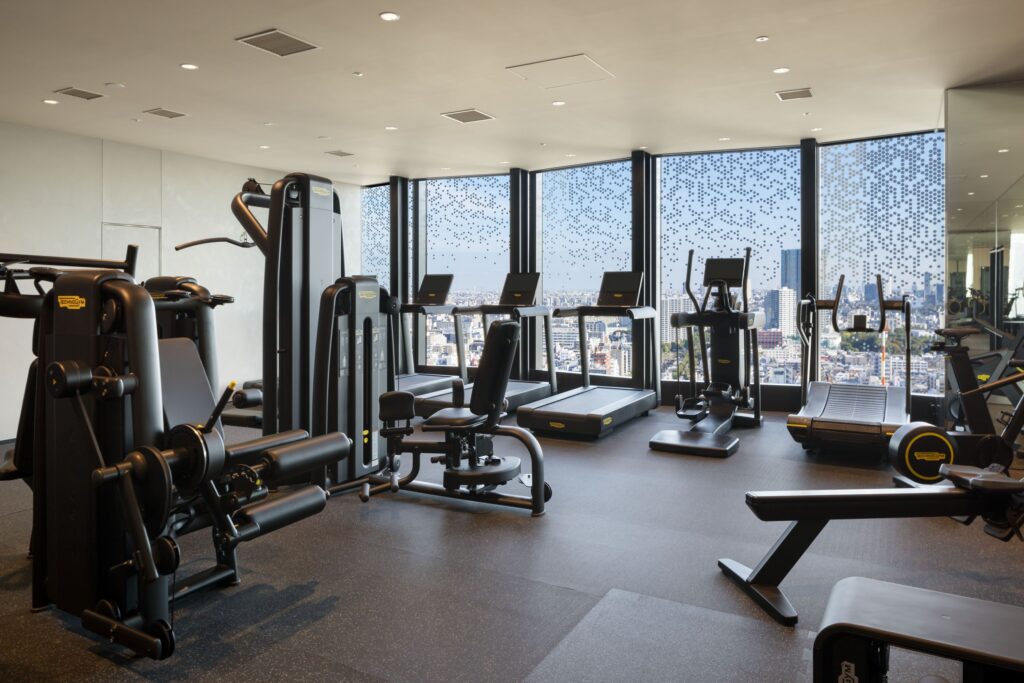
The guest gym is open 24 hours. Cardiovascular and training equipment faces the city, allowing exercise early in the morning or after returning at night.
Build One Night from Sunset to Morning
Arrival time determines how much of the changing view becomes part of the stay. Check in before late afternoon and the same window can show full daylight, sunset and the illuminated city. Leaving time to unpack and watch the sky change before dinner keeps the view from becoming a brief glimpse between plans.
Dinner can remain in the hotel with regional Japanese ingredients, or move down to the streets of Kabukicho. A hotel dinner can be followed by a film or drink outside. A meal in the district can end at Bar Bellustar with the city stretched beyond the glass.
For a concert or performance, luggage can be left before the event and the room reached on foot afterwards. There is less pressure to rush for a crowded train, and the transition from the venue to the hotel preserves the mood of the evening.
Back in the room, finding the streets and buildings crossed earlier connects the map of Shinjuku with the view. Morning then replaces illuminated signs with the visible structure of roads, railways and towers.
A satisfying stay gives separate time to the street, a meal, the window and a pause at the spa or lounge. Each setting contributes something different to the night.
Fit Shopping, a Shrine and a Performance into Shinjuku
A day in Shinjuku becomes easy to organise when each part of the district serves a clear purpose. Morning or early afternoon can begin around Shinjuku-sanchome at Isetan Shinjuku. Fashion, cosmetics and food share one address, and the basement food halls are especially useful for sweets, sake, prepared dishes and gifts.
Hanazono Shrine makes a meaningful stop before or after shopping. The red shrine buildings and trees preserve the history of Shinjuku within a landscape of towers and entertainment venues.
Returning to the hotel in the afternoon allows shopping bags to be put away before the night begins. A rest in the room and sunset at the window can then lead into the theatre, cinema, live hall or nearby restaurants.
The next morning, Shinjuku Gyoen can add gardens and trees to the itinerary. Opening hours and closure days vary by season, so check the current schedule. The contrast between Kabukicho at night and the garden in daylight shows the breadth of environments contained within Shinjuku.
Keep Shinjuku Enjoyable When the Weather Changes
Tokyu Kabukicho Tower places a cinema, theatre, live hall and restaurants in the same building as the hotel. During rain or intense summer heat, plans can shift indoors with little travel between them.
An arrival day might combine check-in, a film, dinner and a return to the room. On a performance day, the room can remain a comfortable base until doors open, then receive guests again for a drink and the night view after the show.
Isetan and Hanazono Shrine can be moved to the clearer part of the day. Keeping both indoor and outdoor possibilities within Shinjuku makes the order flexible. It also helps first-time visitors avoid repeated crossings of the station and gives tired travellers a nearby place to leave purchases or rest.
Check These Details Before Selecting a Room
Compare floor area, bed arrangement, orientation and included services. Studio King suits guests who prefer one large bed and open floor space; twin categories serve travellers who want separate beds. Suites add a living area for longer conversations or meals in the room.
Only selected categories accept an extra bed, so parties of three and families should confirm capacity room by room. Children under 12 may share existing bedding without an additional accommodation charge, up to two children per room under the hotel’s stated conditions. Cot availability, children’s breakfast charges and extra-bed fees depend on category and plan.
Check-in begins at 3 p.m. and check-out is at noon. That later departure gives time for breakfast, the morning view or a final Shinjuku walk. The property is non-smoking apart from designated areas.
Service charges, consumption tax and Tokyo accommodation tax affect the final cost, while cancellation terms vary by rate. Compare the displayed total and change deadline before booking. Also review the walking route from the station and the locations of any restaurants or venues planned for the evening.
Experience Kabukicho from Above
BELLUSTAR TOKYO makes it possible to give both the hotel and Shinjuku meaningful time in a short stay. Shop at Isetan and visit Hanazono Shrine during the day, return to leave bags, watch sunset from the room, then walk to dinner or a performance. After the show, come back on foot and see the same district spread across the window.
The room provides space to rest; the restaurant, bar, art and spa reward time inside; Kabukicho supplies cinema, music, food and nightlife outside. Every part belongs to the same compact itinerary.
Staying in the middle of one of Tokyo’s defining entertainment districts and seeing it from above gives BELLUSTAR TOKYO its identity. Here, Shinjuku itself becomes the reason for the stay.
Check availability and rates for BELLUSTAR TOKYO →(Paid link)
Compare Luxury Hotels Across Tokyo
Continue planning with Japan Luxury Stay’s guides and hotel reviews:
Luxury Hotel Guides in Japan
mesm Tokyo Review
Kimpton Shinjuku Tokyo Review
The Aoyama Grand Hotel Review
Aman Tokyo Review
The Peninsula Tokyo Review
The Ritz-Carlton Tokyo Review
Mandarin Oriental Tokyo Review
Shangri-La Tokyo Review
Andaz Tokyo Review