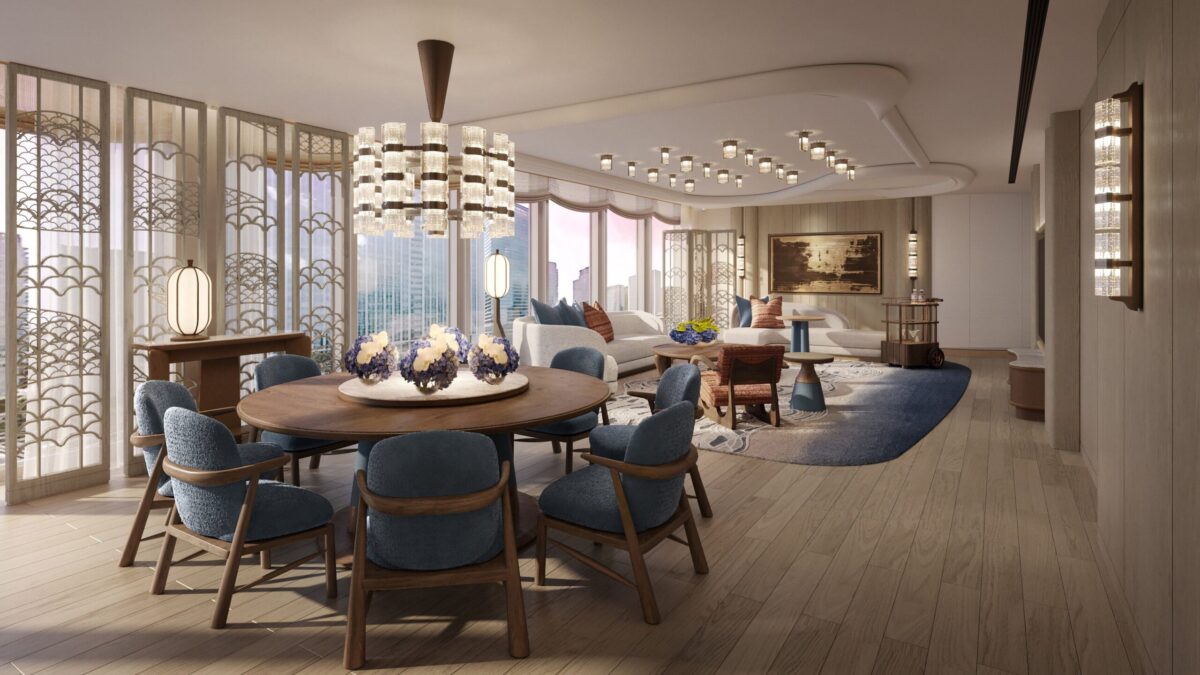
There are Tokyo hotels that announce themselves through height, spectacle or a famous shopping address. The Capitol Hotel Tokyu is quieter. It stands in Nagatacho, beside the wooded precincts of Hie Shrine and close to the institutions of government, yet its interiors soften that formal setting with timber, stone, paper-like screens and carefully framed light. The effect is composed rather than ceremonial: a modern Japanese city hotel that understands the value of leaving space around things.
That calm is supported by unusually generous proportions. The hotel has 251 rooms, including 14 suites, and even the entry Deluxe categories begin at 44.8 square metres. Direct underground connections to Tameike-sanno and Kokkai-gijidomae stations make the address more practical than its hushed atmosphere first suggests. A 20-metre indoor pool, serious dining and the 27th-floor Capitol Lounge SaRyoh allow a stay to feel complete without turning the hotel into an enclosed resort.
The reservation nevertheless rewards close reading. A standard room does not include club-lounge access; the direction of the view varies; low-floor Garden and Sanno suites offer greenery rather than height; and the fitness club has firm age rules. The hotel is most persuasive when these distinctions are chosen deliberately. It suits travellers who want space, discretion and transport efficiency, not those who expect nightlife outside the door or an identical Imperial Palace outlook from every room.
Booking Snapshot
- Best for
- Couples, business travellers and families who value spacious rooms, quiet Japanese design and direct subway access.
- Room decision
- Deluxe starts at 44.8 sqm; Premier adds space and selected three-person layouts; Club rooms and suites add SaRyoh lounge access.
- View
- Direction matters. Selected rooms face Hie Shrine greenery or the government district; no single landmark outlook is guaranteed across every category.
- Breakfast
- Origami offers buffet and set choices, while club guests have lounge options; inclusion depends on the booked rate.
- Pool
- A 20-metre indoor pool is complimentary for staying guests; ages 13–17 require parental supervision and children under 13 cannot use it.
- Access
- Directly connected underground to four Tokyo Metro lines via Tameike-sanno and Kokkai-gijidomae stations.
Check current rooms and rate conditions on Expedia →(Paid link)
In this guide
The Booking Decision
Book The Capitol Hotel Tokyu when quietness should be part of the luxury. The hotel is central without feeling exposed to the city, and polished without relying on conspicuous ornament. It works particularly well for a Tokyo itinerary that combines meetings, museums, formal dinners or palace-area walks with the desire to return to a room that feels genuinely spacious.
The standard Deluxe room is not a compromise in size. At 44.8 square metres, it already provides the scale many travellers seek in a premium Tokyo stay. The more important questions are occupancy, outlook and access to SaRyoh. A couple spending most of the day outside may find Deluxe entirely sufficient. A third guest makes the extra-bed-compatible Premier categories more practical. Club becomes worthwhile when breakfast, evening refreshments and a quiet 27th-floor refuge will be used rather than merely admired.
The hotel is less suited to travellers who want restaurants and late-night streets immediately outside the lobby. Nagatacho becomes subdued after office hours. Ginza, Akasaka, Shibuya and other districts are easy to reach by subway or taxi, but they are destinations rather than extensions of the hotel doorstep. Similarly, families with young children should not book on the assumption that the indoor pool is open to every age.
Japanese Restraint in Nagatacho
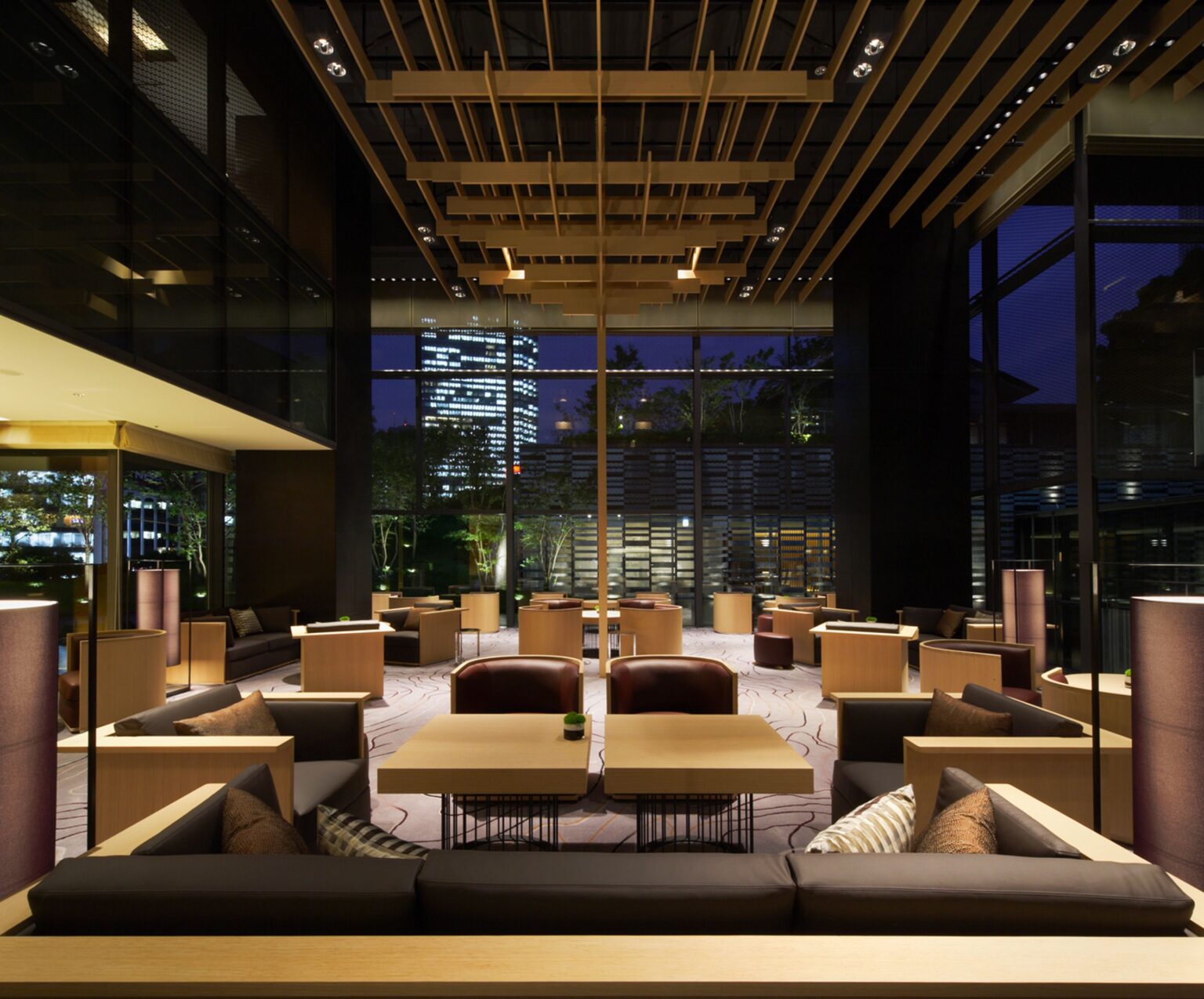
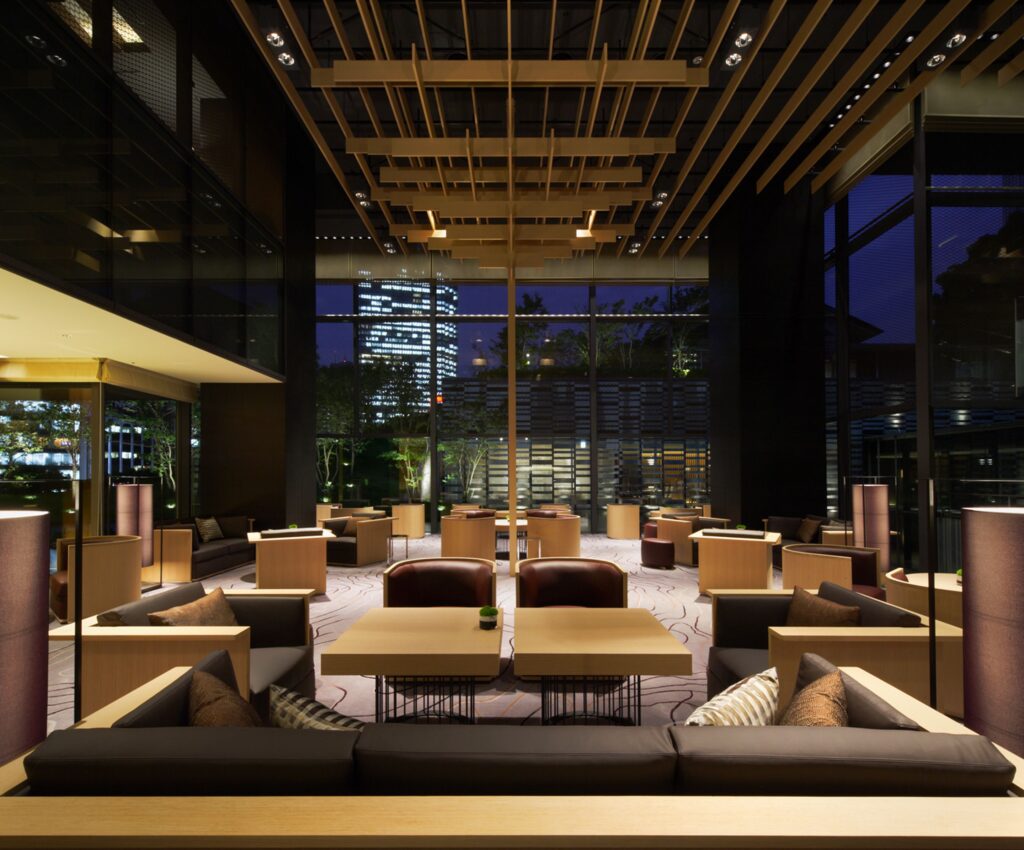
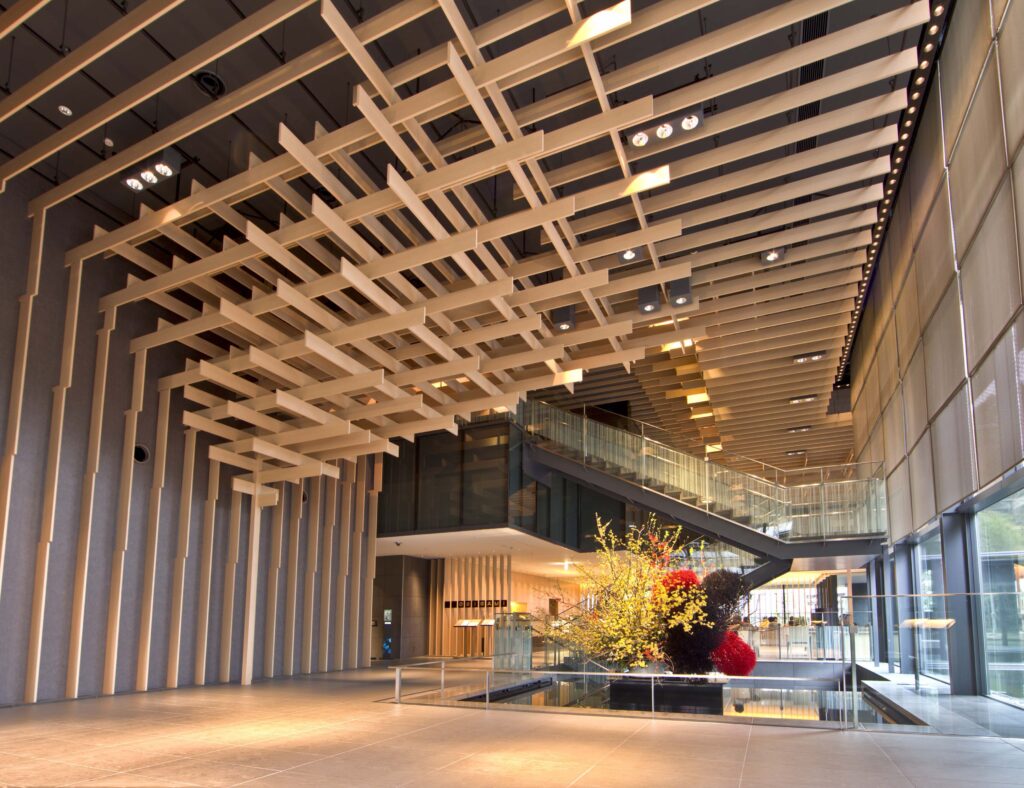
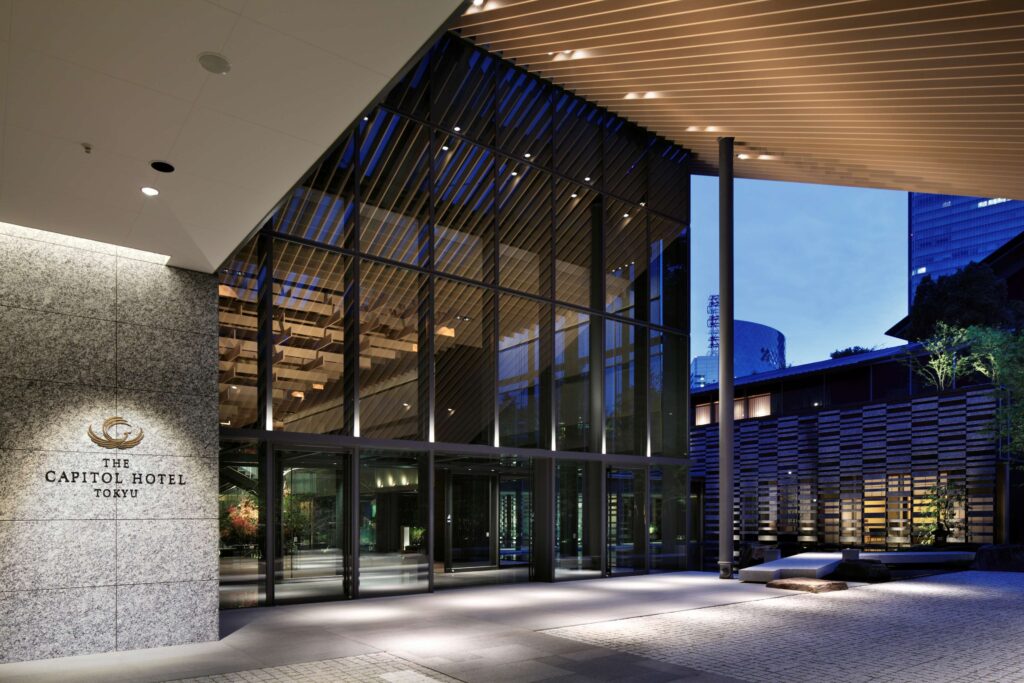
The current hotel opened in 2010 on a site with a longer hospitality history. Its architecture, designed by Kengo Kuma, does not reproduce a traditional inn. Instead, Japanese references are translated into a metropolitan vocabulary: strong horizontal lines, natural materials, controlled views and transitions that feel more important than decoration. The lobby sits above the street, allowing arrival to unfold gradually rather than delivering the whole room at once.
This composure distinguishes the hotel from Tokyo properties built primarily around a panoramic lobby. The Capitol certainly has height and city views, but its identity is also grounded in the adjacent Sanno landscape. Hie Shrine and its trees bring an older rhythm into an administrative district, while water and planting around the hotel temper the surrounding towers.
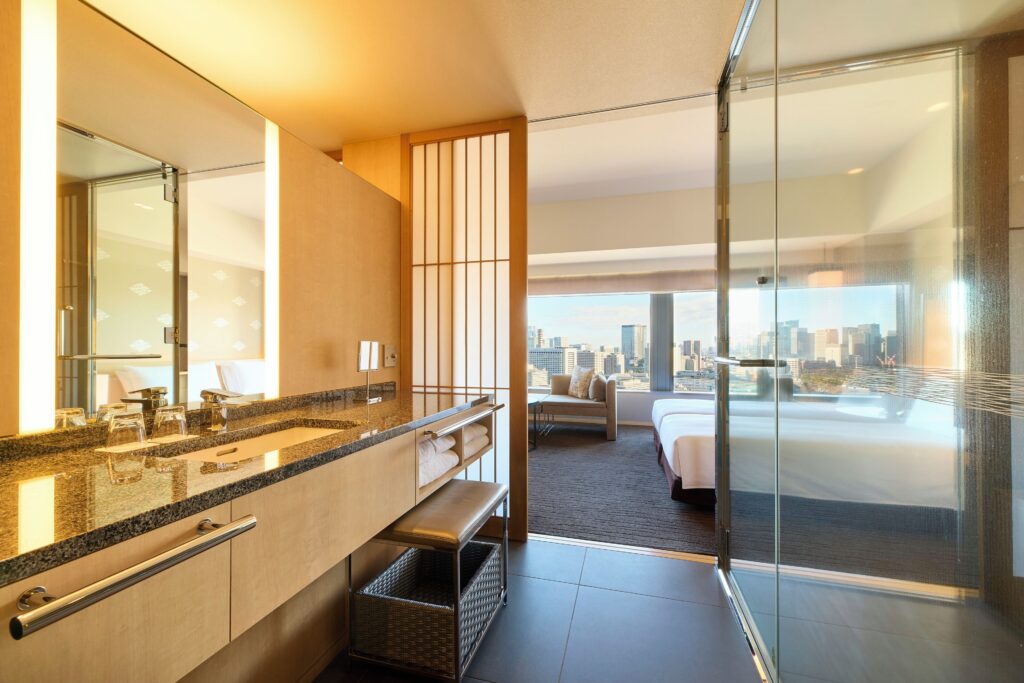
Inside the guest rooms, the same idea becomes functional. Sliding partitions allow the bathroom and sleeping area to feel connected or separate, while warm wood and pale surfaces keep the generous floor area from becoming cold. The aesthetic is neither ryokan imitation nor anonymous international minimalism. It is a city hotel’s interpretation of Japanese proportion and privacy.
Choosing a Room or Suite
The room list becomes easier to understand when divided by purpose. Deluxe is the spacious base category. Premier is the practical upgrade for more floor area or a third occupant. Club repeats several familiar layouts on the upper floors and adds lounge privileges. Suites range from a compact high-floor Junior Suite to low-floor garden-facing residences and the expansive Capitol Suite.
| Category | Space and occupancy | Best reason to choose it | Confirm before booking |
|---|---|---|---|
| Deluxe King / Hollywood Twin | 44.8 sqm; floors 18–26 for King and 18–24 for Twin; one or two guests | The hotel’s design and generous base-room size without paying for lounge access | Bed type, floor, view wording and breakfast inclusion; no extra bed |
| Premier Corner King / Twin | 57.8 sqm; floors 18–26; up to three with an extra bed | Corner proportions and a practical option for three travellers | Exact occupancy, extra-bed setup and room direction |
| Premier King | 63.5 sqm; floors 18–26; up to three with an extra bed | Substantially more room without moving into the club tier | Floor, layout, third-person charge and rate inclusions |
| Club Deluxe | Approximately 44.9 sqm; upper club floors; king or Hollywood twin | SaRyoh access and high-floor positioning without suite space | The listing explicitly includes club-lounge access |
| Club Premier | Approximately 59.3–64.5 sqm; floors 27–29 | More floor area combined with lounge privileges | The Club Premier Corner Twin is on the Hie Shrine side rather than the National Diet Building side |
| Junior / Executive Suite | 64.5 sqm on the 29th floor or 104.7 sqm on floors 27–29 | A high-floor suite plus SaRyoh access | Exact suite type, outlook, occupancy and included benefits |
| Garden / Sanno Suite | 105.5–123.8 sqm or 184.6 sqm; located on the 5th floor | A residential sense of space and a relationship with the garden and Sanno Forest | These are low-floor garden experiences, not high-rise skyline suites |
| Capitol Suite | 223.4 sqm; 29th floor | The hotel’s largest and most complete private setting | Availability, occupancy and current inclusions |
For two adults, Deluxe King or Hollywood Twin is the rational starting point. The choice should follow sleeping preference rather than an expectation that Twin is automatically larger. Premier becomes meaningful when an extra bed is required or when additional open space will improve a longer stay. Guests with mobility needs can also ask about the Universal Corner Twin, which the hotel lists on selected floors.
A suite should be chosen for how the space will be used. Executive Suite is the clearer conventional suite upgrade, with room to live as well as sleep. Garden and Sanno suites offer a different proposition entirely: their lower position trades skyline height for proximity to greenery and a more private, residential mood. That distinction is too important to leave to the word “suite” alone.
Compare room size, occupancy and club access on Expedia →(Paid link)
Views, Floors and Room Direction
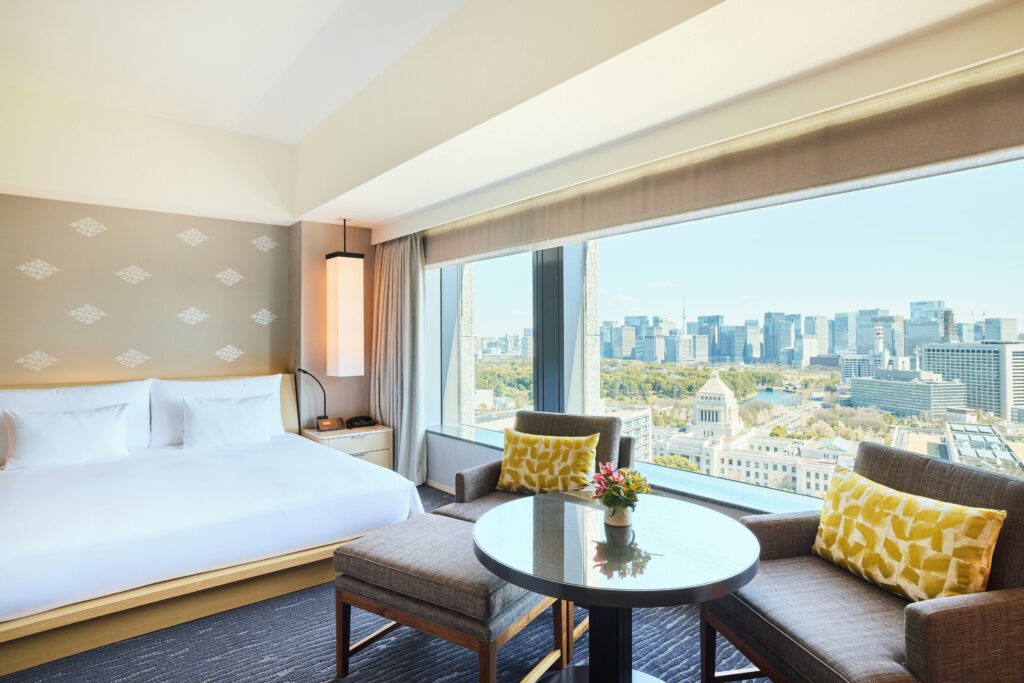
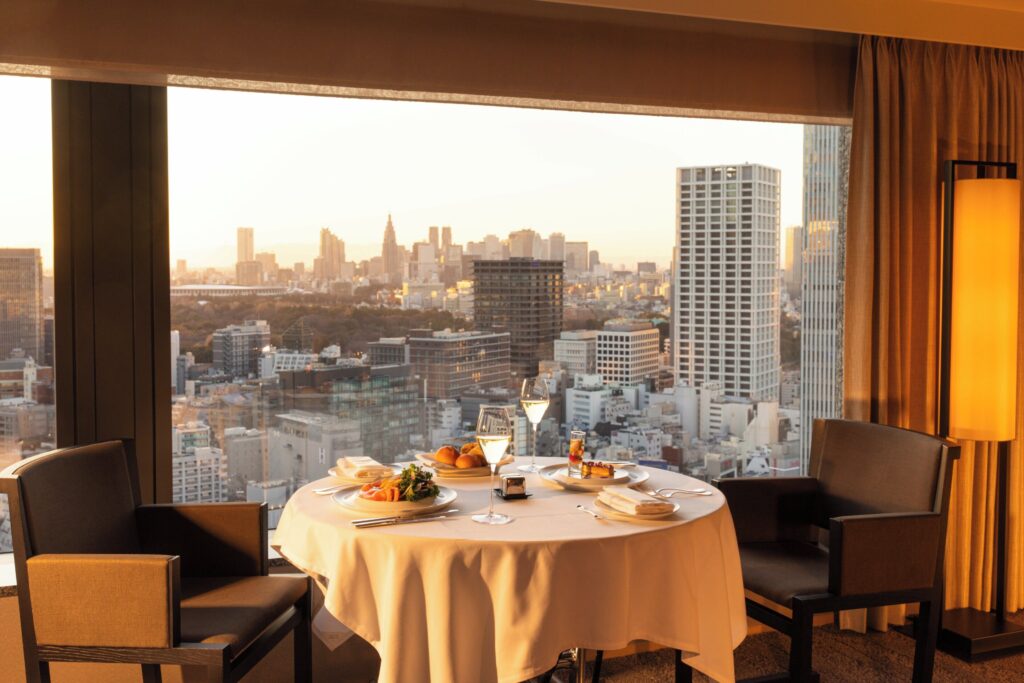
The hotel’s upper rooms can open toward the National Diet Building, the Imperial Palace area and the larger Tokyo skyline, while another side looks toward Hie Shrine and its canopy. These are distinct moods. The government-district view feels precise and metropolitan; the shrine side introduces more immediate greenery into the frame.
Neither should be promised across the entire inventory. Category, floor and direction all matter, and room requests remain subject to availability. In particular, the Club Premier Corner Twin is listed only on the Hie Shrine side. Guests who care more about trees than distant city lights may consider that a strength, but it should not be booked in expectation of the National Diet Building outlook.
The safest method is to compare the complete category name and photographs on Expedia, then contact the hotel with a preferred direction. Treat the preference as a request rather than a guarantee. Garden and Sanno suites should be approached differently again: their appeal lies in closeness to the landscaped setting, not in occupying the highest floors.
The Capitol Lounge SaRyoh
SaRyoh occupies the 27th floor and is reserved principally for guests booked into club-floor rooms and suites. Its windows frame the National Diet Building, the Imperial Palace area and the evening city, giving the lounge a more open urban perspective than the hotel’s restrained lobby.
The service typically moves through the day from breakfast to refreshments and evening drinks, but hours and presentations are operational details rather than permanent room features. The hotel’s current notices should be checked for the travel date. After 5:00 p.m., admission is limited to guests aged 13 and over under the current policy, an important distinction for families choosing a club room.
Club is valuable when the lounge becomes part of the daily rhythm: breakfast without descending to the main restaurant, a pause between appointments, or a drink before dinner. It is less compelling if the itinerary keeps everyone away from the hotel throughout service hours. Ordinary room bookings should never be assumed to include access. The hotel may permit limited paid visitors under current rules, but that is not equivalent to automatic lounge entitlement.
Breakfast and Dining
Breakfast at All Day Dining Origami is designed to accommodate different mornings rather than impose a single ritual. The current offering includes a buffet and set choices, including Japanese, American, continental, children’s and vegan options. Breakfast is not included in every room plan, and the restaurant does not generally take breakfast reservations, so the rate conditions matter more than the hotel’s category.
Guests with SaRyoh access may have the choice of lounge breakfast or Origami under the current operation. The difference is one of atmosphere as much as food: the lounge is quieter and tied to club service, while Origami offers the broader main-restaurant setting. A Japanese breakfast may be served through Suiren depending on current arrangements. Because venues and service styles can change, travellers with a strong preference should confirm the latest details close to arrival.
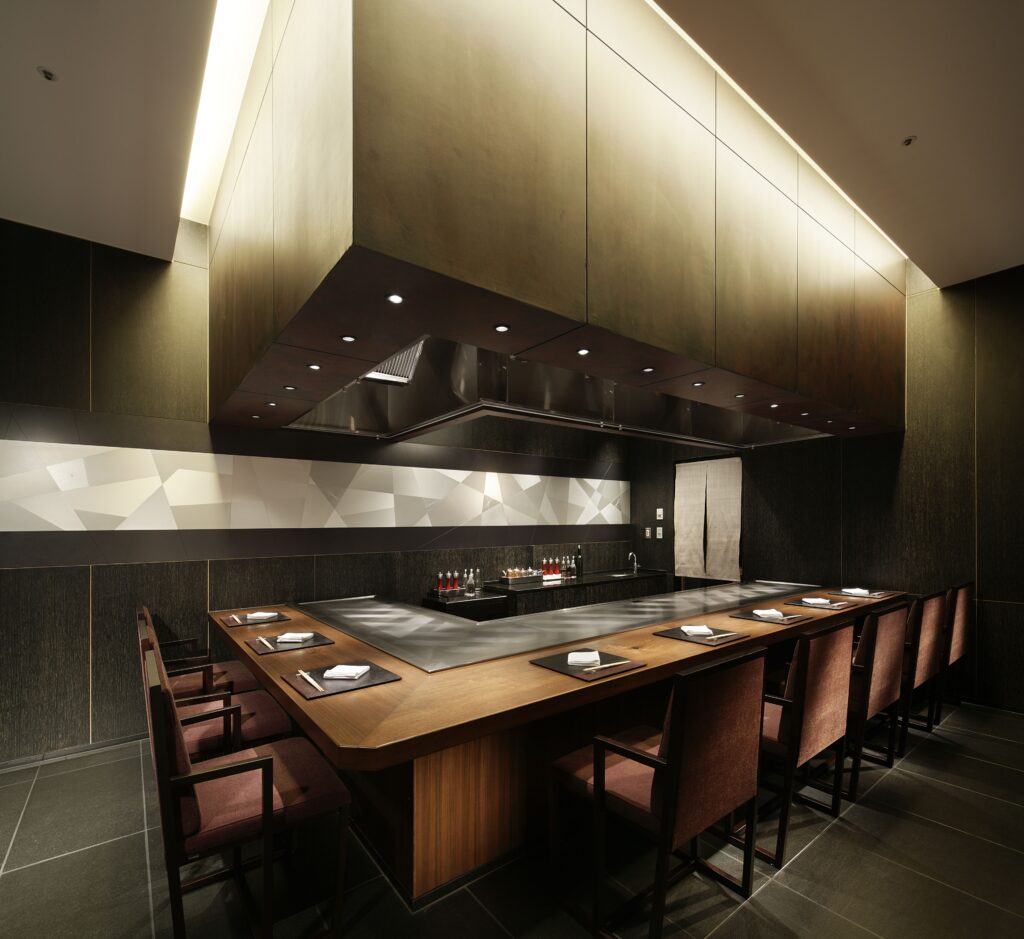
Beyond breakfast, Suiren brings kaiseki, sushi and teppanyaki under one Japanese restaurant; Star Hill focuses on Chinese cuisine; Origami continues through the day; Lounge Origami and The Capitol Bar provide less formal spaces for tea or drinks. The dining identity also reaches back to the site’s history and the former Hoshigaoka Saryo, associated with the connoisseur Kitaoji Rosanjin. That heritage is most persuasive when understood as context, not as a promise that every meal recreates the past.
For a short stay, reserve the dinner that matters rather than trying to sample everything. Suiren suits an evening centred on Japanese craft and seasonality. Star Hill offers a different formality. Origami is useful when arrival time is uncertain or the day needs flexibility. Restaurant closing days, dress expectations, menus and last orders change; verify them for the intended date.
Pool, Gym and Spa
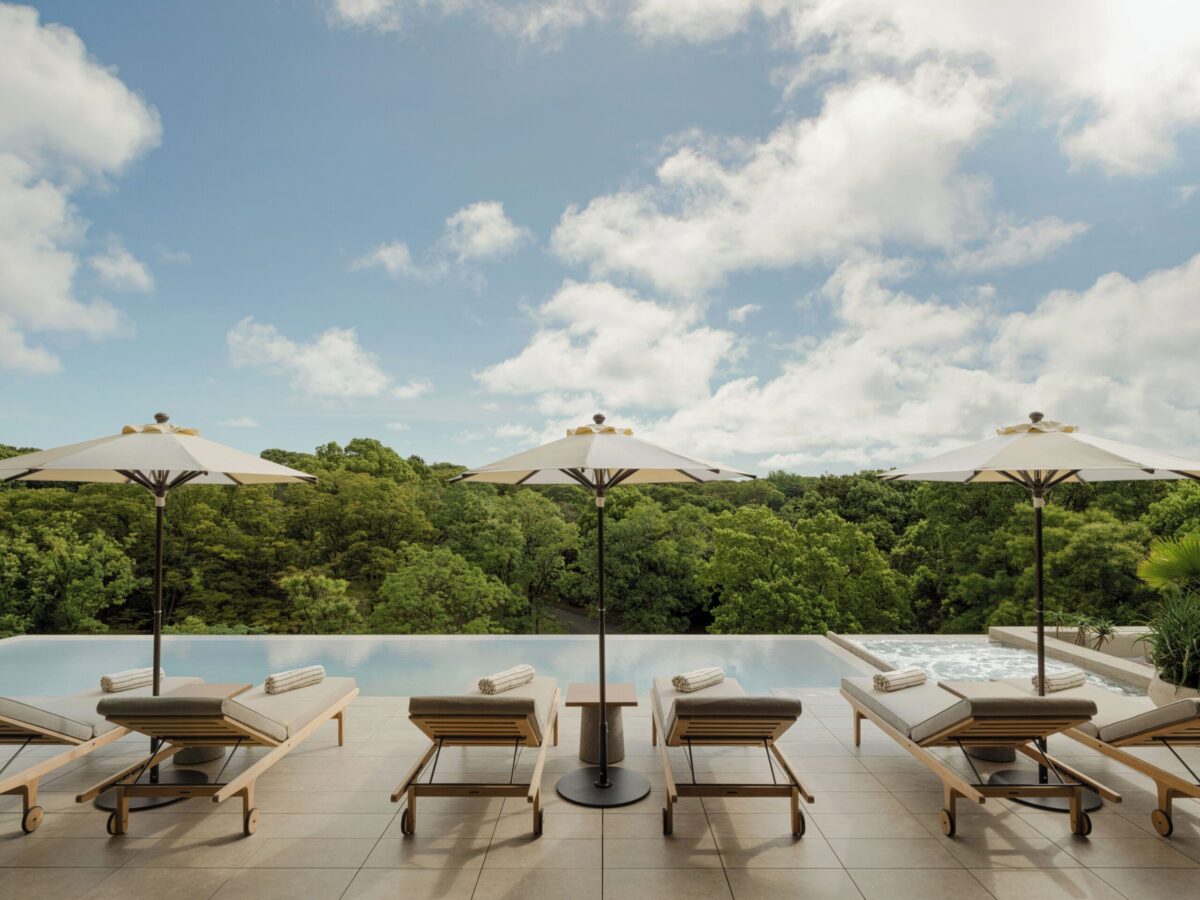
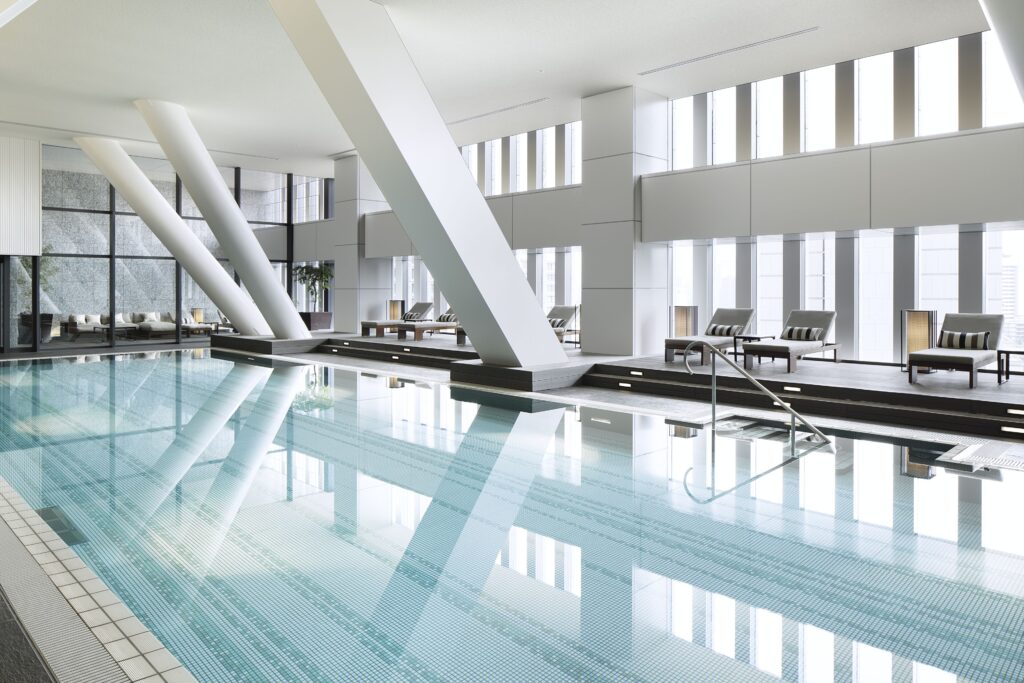
The fitness club occupies the 14th and 15th floors and includes a gym, a 20-metre indoor heated pool, a Jacuzzi and relaxation facilities. The pool has three lanes, one reserved for walking, and a depth of approximately 1.2 metres. This is a composed urban fitness pool, not a resort pool designed around children’s play.
Staying guests may use the gym and pool without an additional fee under the current policy. The wider fitness club is normally restricted to adults aged 18 and above, while guests aged 13 to 17 may use the pool area only with parental supervision. Children under 13 cannot use it. Swimming caps are required, and tattoo rules should be confirmed directly if relevant.
The locker-room relaxation area, including baths, rest beds and gender-specific sauna facilities, is a separate paid facility for ordinary room guests under the current operation. Guests in suites and club-floor rooms receive complimentary access. This distinction prevents a common booking misunderstanding: “pool included” does not mean every element of the relaxation area is included with every rate.
Carju Rajah Tiado, the hotel spa, should also be treated separately from the complimentary fitness facilities. Treatments require reservations and additional payment. If wellness is central to the stay, check both treatment availability and any maintenance closure before selecting non-refundable dates.
Hie Shrine, the Imperial Palace Area and Access
The hotel stands at 2-10-3 Nagatacho, beside Hie Shrine and close to Japan’s political institutions. This is a calm, purposeful part of Tokyo. The immediate streets do not offer the density of cafés and boutiques found in Ginza or Aoyama, yet the setting has its own visual character: shrine greenery, official architecture and moments of surprising stillness.
The transport advantage is unusually concrete. The hotel connects underground through the Tokyu Capitol Tower to Exit 6 for Tameike-sanno Station on the Namboku and Ginza lines, and Kokkai-gijidomae Station on the Chiyoda and Marunouchi lines. Four lines place a broad section of Tokyo within straightforward reach, while the covered approach is particularly welcome in rain or summer heat.
Guests using a stroller or wheelchair should not assume that every station route is equally convenient. The hotel’s access guidance points to the elevator at Tameike-sanno Exit 7, followed by a short street-level approach; it cautions that the elevator route from Kokkai-gijidomae Exit 2 includes a steep downhill section. Confirm the easiest current route before arrival.
Tokyo Station is roughly ten minutes away by car in ordinary conditions, though traffic can alter that estimate. Airport transport requires another check. The Narita limousine-bus journey is listed as variable, while direct Haneda limousine-bus service has been suspended in current hotel guidance. A hired car, taxi or rail connection may therefore be the more dependable plan for Haneda.
The Imperial Palace area is nearby and visible from selected hotel directions, but the hotel should not be presented as though every room overlooks its gardens. Hie Shrine is the more immediate neighbour. Together, shrine and government district create an address that feels distinctly Tokyo: old sacred ground, modern institutions and an efficient transport network held in unusually close balance.
Families and Connecting Rooms
Families benefit first from room size. Premier Corner and Premier King categories can accommodate up to three with an extra bed, subject to the booked plan. For four or five guests, the hotel lists connecting arrangements combining two rooms, with a total area around 102.6 square metres in selected configurations. These should be booked as confirmed connecting accommodation rather than requested casually after reserving two unrelated rooms.
The strongest family decision points are not decorative. Confirm the exact maximum occupancy shown by Expedia, whether an extra bed and breakfast for the child are included, and whether the rooms connect internally. A Hollywood Twin is a bed arrangement, not a guarantee of space for an additional bed. The Premier categories are the more useful starting point when three people need to share one room.
Pool and club-lounge rules may shape the choice more than room size. Children under 13 cannot use the pool, and those aged 13 to 17 require parental supervision. SaRyoh restricts access after 5:00 p.m. to ages 13 and over under the current policy. A club premium is therefore less valuable to a family that cannot use the evening service together.
On the positive side, the direct underground station link reduces weather exposure, and Origami’s varied breakfast formats are easier for mixed preferences than a single fixed menu. The hotel can suit older children and multigenerational travel very well; it simply should not be mistaken for a family resort.
One Night or Two?
One night can be satisfying when the room itself is the focus. Arrive early enough to see Hie Shrine or the surrounding district, use the pool before dinner, reserve one hotel restaurant, and leave the following morning after breakfast. A club room becomes more convincing on this schedule only if arrival allows time for the lounge.
Two nights allow the hotel’s quieter strengths to emerge. The first day can remain close to Nagatacho and Akasaka; the second can use the four subway lines for Ginza, Otemachi, Omotesando or another part of Tokyo. There is also time to distinguish a formal dinner from a simple evening drink rather than compressing every facility into a single itinerary.
For a business visit, the answer may be determined by meetings rather than leisure. Even then, the large room and direct rail access make a second night practical. For a first visit to Tokyo built around dawn-to-late-night sightseeing, the hotel may function mainly as an elegant base, and the premium for club access or a large suite deserves more scrutiny.
Before You Book
Match the category, not only the photograph. Confirm the complete room name, square metres, bed type, maximum occupancy and view wording. Similar interiors can conceal meaningful differences in floor, corner position and lounge access.
Do not assume an Imperial Palace view. Outlook changes by direction and floor. Selected rooms face Hie Shrine, the National Diet Building or the broader skyline; requests are not guarantees.
Check that club access is explicit. SaRyoh is attached to club-floor rooms and suites, not automatically to every reservation. Families should also note the evening age restriction.
Read the breakfast line in the rate. Breakfast is not universally included. Compare the total value of room-only and breakfast-inclusive plans, especially for multiple guests.
Separate pool access from the relaxation area. The pool and gym are complimentary for hotel guests under current rules, but the locker-room baths and sauna area carry a fee for ordinary room guests. Suites and club-floor stays receive different access.
Plan for children by age. The pool is unavailable to children under 13; ages 13–17 need parental supervision. Connecting rooms and extra beds must be confirmed in the actual reservation.
Recheck operational details. Lounge presentations, restaurant days, spa appointments, maintenance and airport transport can change. Confirm anything essential with the hotel before the cancellation deadline.
Final Verdict
The Capitol Hotel Tokyu succeeds through alignment rather than spectacle. The space of the rooms, the measured Japanese design, the neighbouring shrine greenery and the underground transport connection all serve the same idea: central Tokyo made calmer and easier to inhabit.
Its strongest booking is not automatically the largest. Deluxe gives two guests an unusually generous foundation. Premier solves occupancy and space. Club earns its premium when SaRyoh will genuinely structure the day. Garden and Sanno suites exchange height for intimacy with the landscape, while the high-floor suites return the emphasis to the city.
Choose it for discretion, room size and access; look elsewhere if the priority is nightlife at the door, a young-child pool or a guaranteed palace panorama. With the room direction, lounge entitlement and family rules understood in advance, this becomes one of Tokyo’s most assured luxury stays—quiet not because it lacks character, but because its character does not need to insist.
View current availability at The Capitol Hotel Tokyu on Expedia →(Paid link)