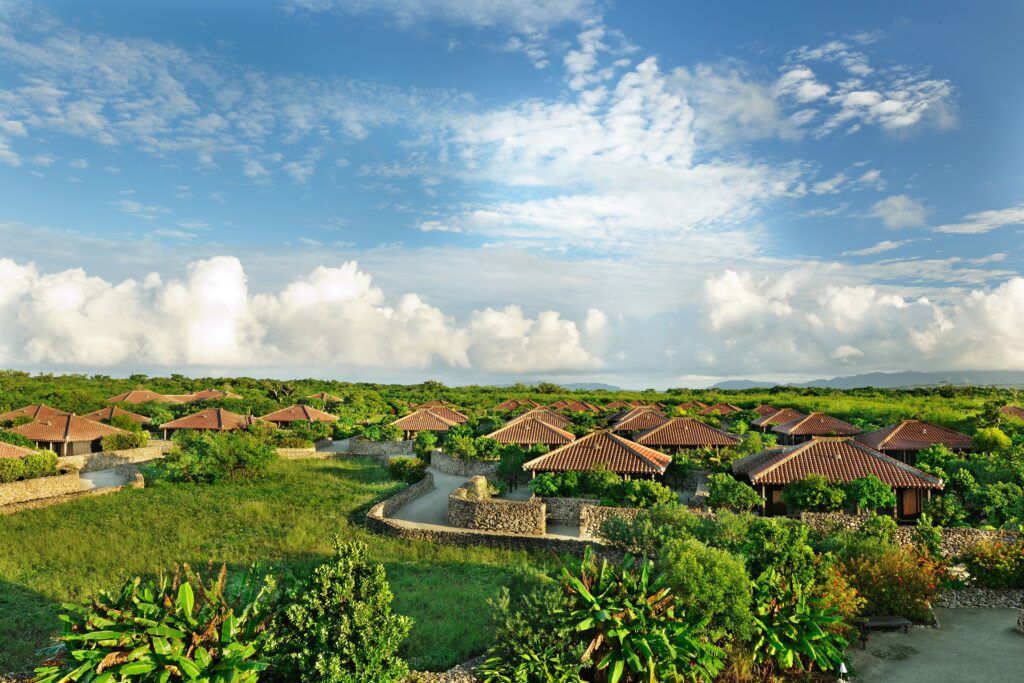
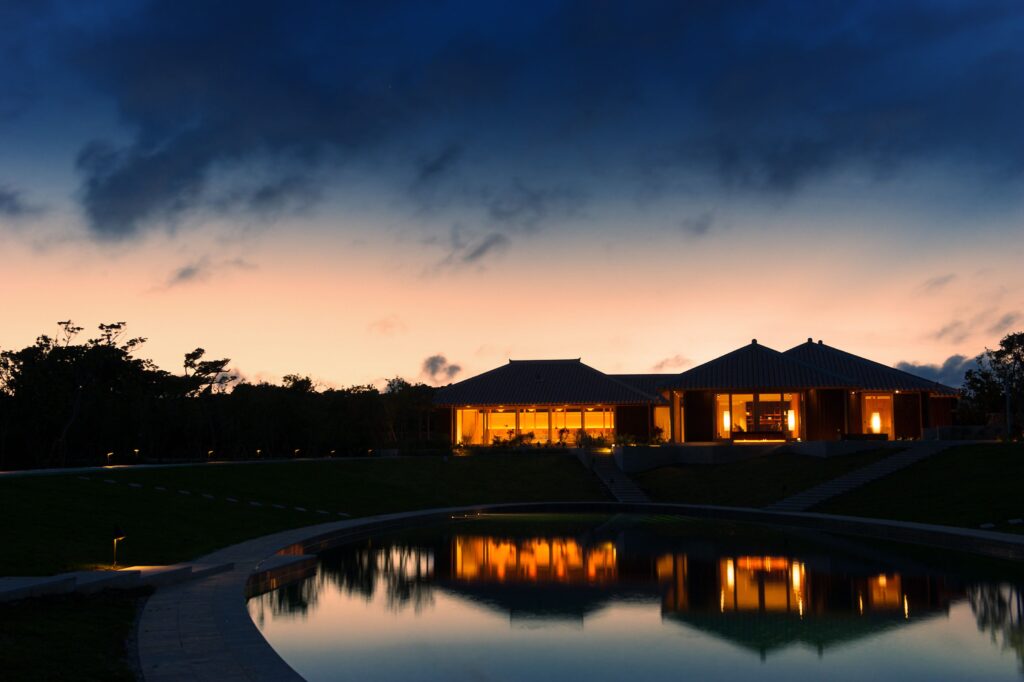
Around ten minutes by ferry from Ishigaki Port, Taketomi Island holds a landscape of low red-tile roofs, white-sand lanes and coral-stone walls. HOSHINOYA Taketomi Island does not place a conventional resort tower beside that scenery. It arranges all 48 guest rooms as individual, single-storey villas within a settlement of its own, following the island’s landscape guidelines and opening each house to the southern wind.
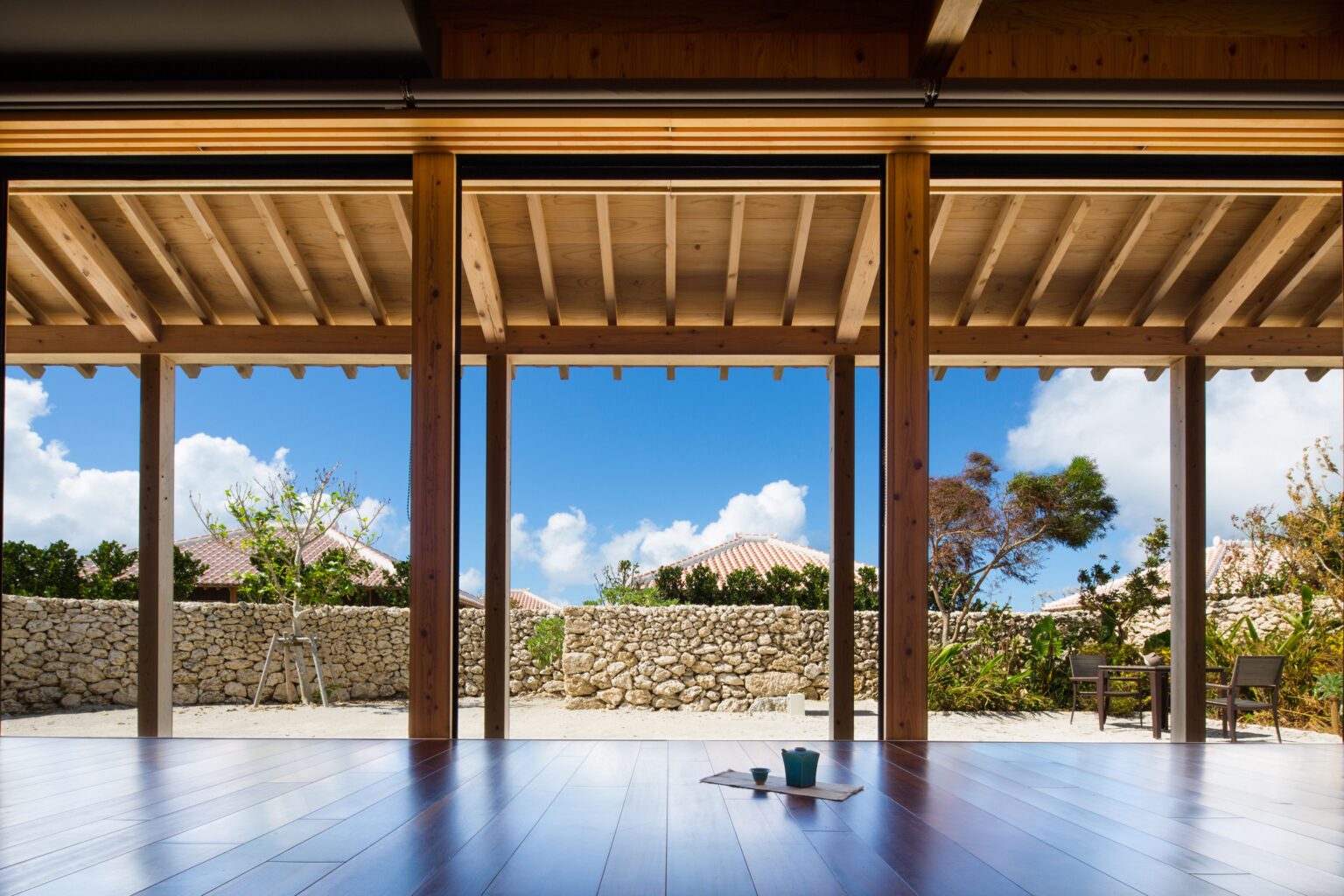
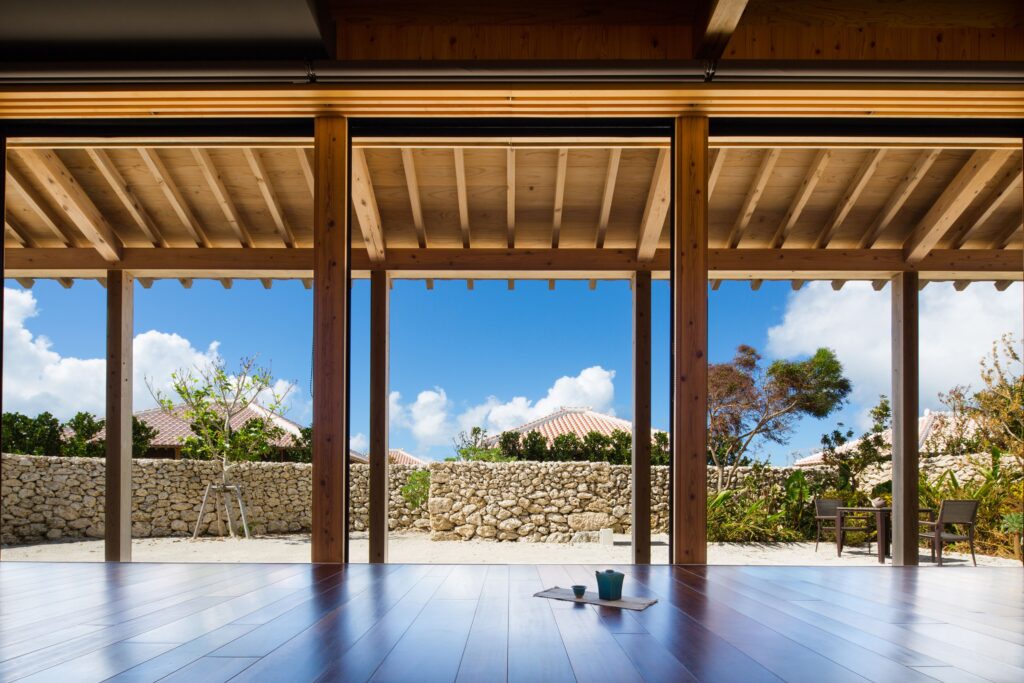
The result is a stay defined less by an uninterrupted ocean panorama than by the feeling of living within a private village. A white-sand garden lies beyond the glass doors; fukugi trees and limestone walls temper the wind; the pool reflects the sky at the centre of the property. Yaeyama ingredients, island crafts and the ferry journey make the location tangible rather than decorative.
That distinction is also the booking decision. This is a high-value island stay that rewards guests who allow time for the villa, meals and Taketomi itself. It is less convincing as a hurried overnight inserted between flights, or for travellers expecting every room to face an open sea. The strongest reservation begins with the right villa, a realistic ferry plan and at least two nights on the island.
Booking Snapshot
- Best for
- Couples, quiet solo travellers and small families who want a private villa and enough time to experience Taketomi beyond a day trip.
- Villa choice
- Choose Zuki for up to three guests, Gajoni for a king bed and distinctive central bath, or Kyangi for twin beds and a Ryukyu-tatami room.
- View
- The villas look into private white-sand gardens and the resort’s village landscape; do not book on the assumption of a direct ocean panorama.
- Dining
- Meals are generally separate from accommodation. Reserve the preferred dinner and breakfast once the room booking is confirmed.
- Arrival
- Travel via Ishigaki Port to Taketomi Port, then take the hotel’s ten-minute shuttle, which meets arriving ferries without advance reservation.
- Recommended stay
- Two nights are the practical minimum; three allow weather, island exploration and resort time to coexist more gracefully.
Check HOSHINOYA Taketomi Island dates and current villa availability on Expedia(Paid link)
In this guide
The Booking Decision
Choose HOSHINOYA Taketomi Island when the island setting is intended to shape the whole stay. The resort provides comfort, privacy and a polished dining programme, but its identity comes from details that remain specific to Taketomi: the low roofline, limestone walls known as gukku, coral-sand gardens, protective hinpun screens and the passage of air through the rooms. The pleasure lies in noticing how these elements change from morning to evening, not in moving quickly through a list of facilities.
The resort suits an itinerary with deliberate pauses. Breakfast can be followed by a village visit or time at Kondoi Beach; the hottest hours can belong to the villa or shaded pool terrace; dinner returns the focus to ingredients from the Yaeyama Islands. A 24-hour heated pool and a private spa building add freedom, yet neither turns the property into a large activity resort. The atmosphere remains quiet and dispersed.
Look elsewhere if a direct beach-front room, lively nightlife or frictionless road access is essential. Taketomi has no airport, and the last part of the journey depends on a ferry. The villas face their own gardens rather than guaranteeing open-water views. Those limitations are not defects hidden behind the design; they are part of the island geography that gives the stay its unusual calm.
From Taketomi Port to a Village of Red-Tile Roofs
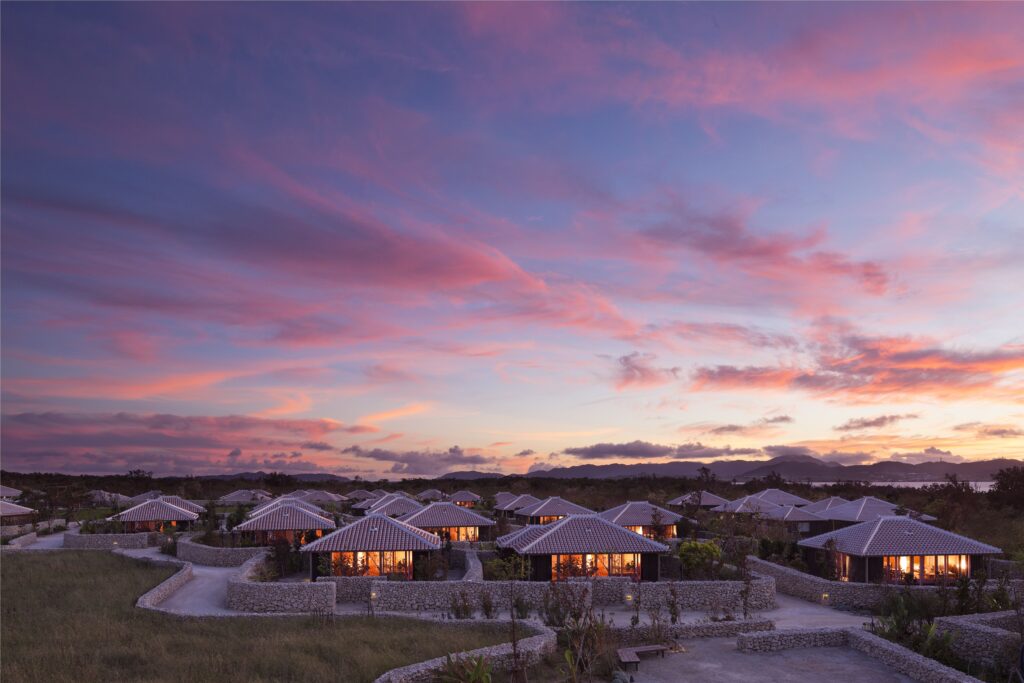
HOSHINOYA Taketomi Island opened in 2012 on the eastern side of the island. Its lanes are edged with white sand, tropical planting and walls of Ryukyu limestone. Every guest room occupies a separate wooden house beneath a red-tile roof, watched over by its own shisa. The plan follows Taketomi’s preference for low buildings and sheltered gardens without claiming that the resort is an untouched historic village.
That distinction matters. Taketomi’s established settlement has its own homes, customs and daily life; the resort is a contemporary interpretation built according to the island’s landscape framework. A hinpun screen turns the approach before the interior is revealed. Fukugi trees provide shelter. Openings on the north and south sides create a route for the paikaji, the southern wind associated with good fortune.
Choosing Zuki, Gajoni or Kyangi
The resort has three villa categories, and the most useful distinction is not prestige but how the room will be shared. Zuki is the flexible choice for one to three guests. Its Western-style interior measures approximately 59 to 66 square metres, making it the practical answer for a small family or three adults who confirm the exact bedding arrangement attached to their booking.
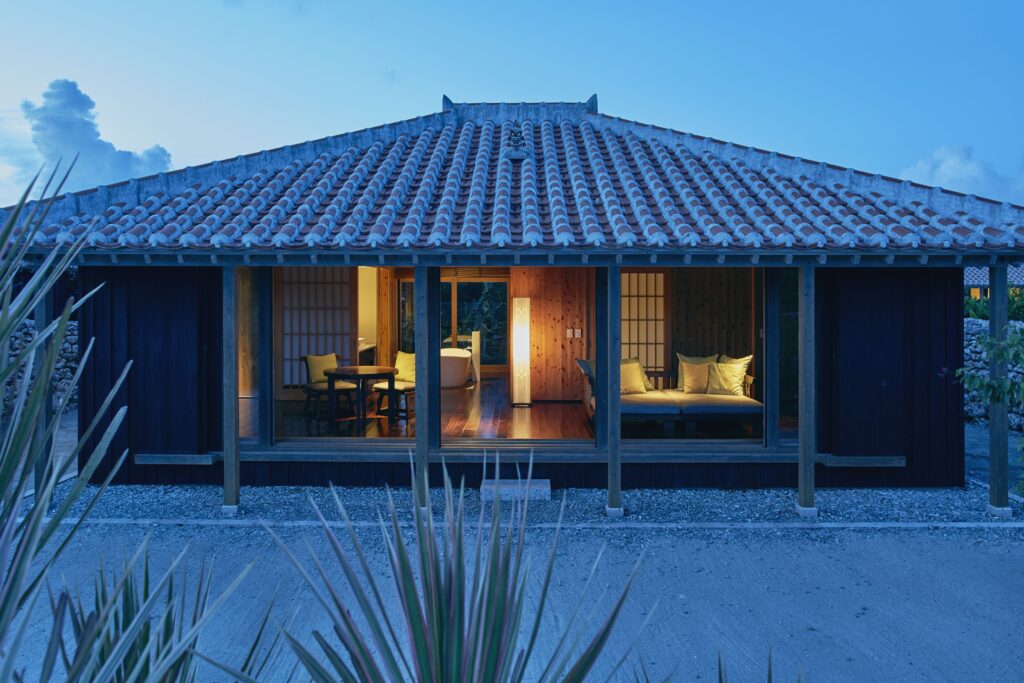
Gajoni measures 59 square metres and is designed for up to two guests with a king bed. Its broad wooden living area and large white bath placed toward the centre give bathing a stronger visual role. Kyangi is the smallest at 53 square metres, also for up to two, with twin beds and a Japanese room finished in Ryukyu tatami. Couples should therefore choose between one shared king and a more open bathing composition, or separate beds and the softer texture of a tatami room.
Including the garden, each villa occupies a plot of roughly 260 to 300 square metres. That number describes privacy around the house, not interior floor area. Expedia room names and photographs should be read carefully so that a large plot is not mistaken for a 260-square-metre room. The official maximum occupancy is one to three guests across the property, and children under 12 may share existing bedding only within the stated room capacity.
| Villa | Layout and occupancy | Best suited to |
|---|---|---|
| Zuki | Western-style triple villa; about 59–66 sqm; one to three guests. | Small families or parties of three after confirming the exact beds. |
| Gajoni | King villa; 59 sqm; one or two guests; large central bath. | Couples who prefer one king bed and a bathing-led room design. |
| Kyangi | Twin villa with a Ryukyu-tatami room; 53 sqm; one or two guests. | Friends or couples wanting separate beds and a Japanese-style sitting space. |
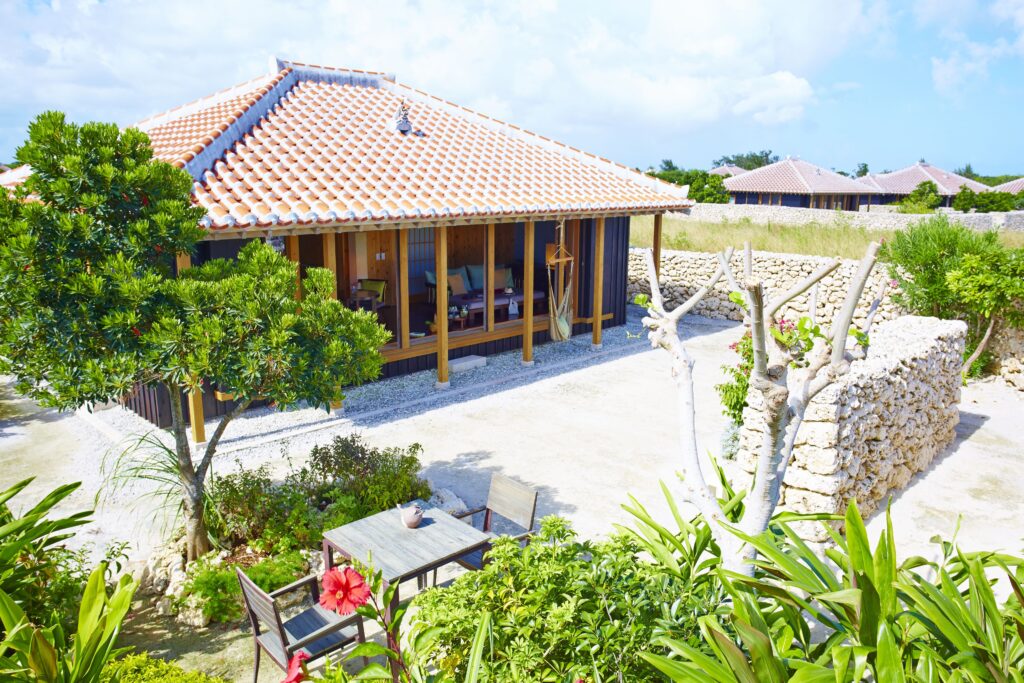
The view is intentionally inward. Gardens, stone walls, neighbouring roofs and subtropical planting create the room’s horizon; the sea is experienced elsewhere on the property and around the island. Guests who understand that before booking are more likely to value the privacy. Those expecting a balcony suspended above turquoise water should choose by a different premise.
Compare current HOSHINOYA Taketomi Island villa listings and rate conditions on Expedia(Paid link)
A 46-Metre Pool, Island Beaches and a Separate Spa
The oval pool measures 46 metres and sits in a shallow, bowl-like landscape away from the view of the surrounding village. Its dark floor reflects the sky, while a gentle slope allows both swimming and unhurried time in the shallows. The water is heated according to the season, and the resort lists the pool as available around the clock throughout the year, subject to maintenance notices.
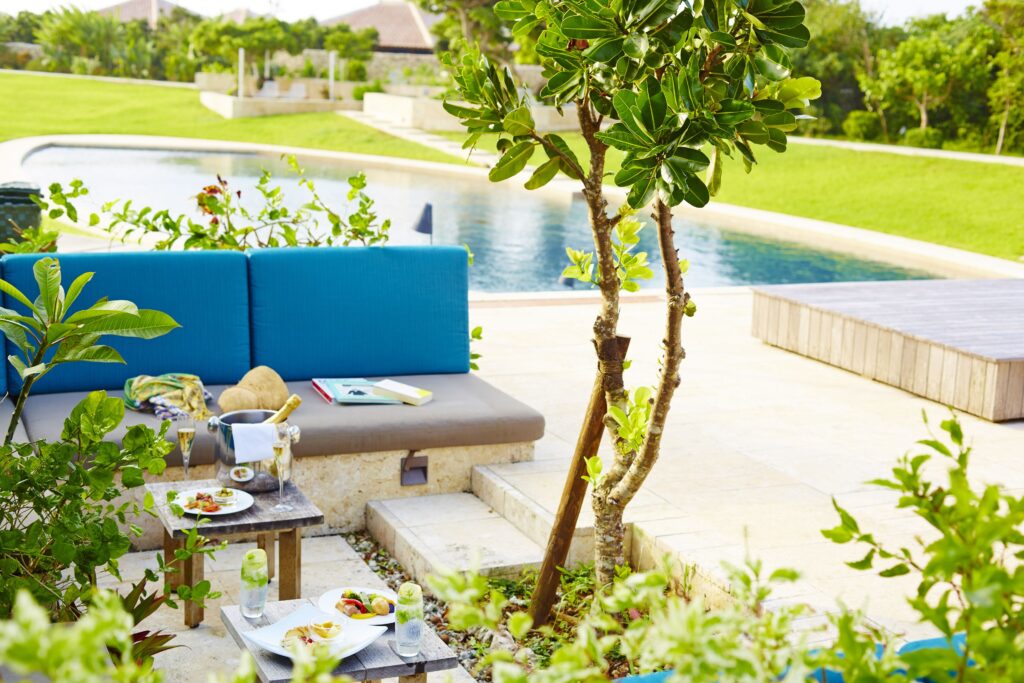
Aiyaru Beach lies along the quieter eastern coast near the resort, while Kondoi and Kaiji beaches offer different scenery elsewhere on Taketomi. Beach conditions, tides and transport vary, and the resort should not be described as a stay with a groomed private swimming beach outside every villa. The sea is close, but the pool, village landscape and island excursions carry equal weight.
The spa occupies a separate building enclosed by higher stone walls. Current treatments use island-inspired aromatic elements and are intended for guests aged 18 and over. A preferred appointment should be reserved ahead, particularly when the stay is short. This is a treatment spa, not a reason to imply that the villas contain private onsen or that the resort offers a traditional communal hot-spring bath.
Yaeyama at Dinner and Three Ways to Begin the Morning
Dining is not incidental here because leaving the resort for every meal adds transport and timing to an already layered island itinerary. The Island Terroir dinner applies French technique to ingredients from across the Yaeyama Islands. Its interest lies in locality rather than a generic tasting-menu format: produce, seafood, herbs and preserved flavours are used to express the climate and food culture of the archipelago.
Shimakaji offers a more flexible à-la-carte route through Okinawan dishes. A hot pot scented with local island herbs may also be delivered to the villa during designated periods. The exact seasonal menu, operating days and reservation deadlines should be checked after accommodation is secured; the in-room option should not be treated as automatically available on every date.
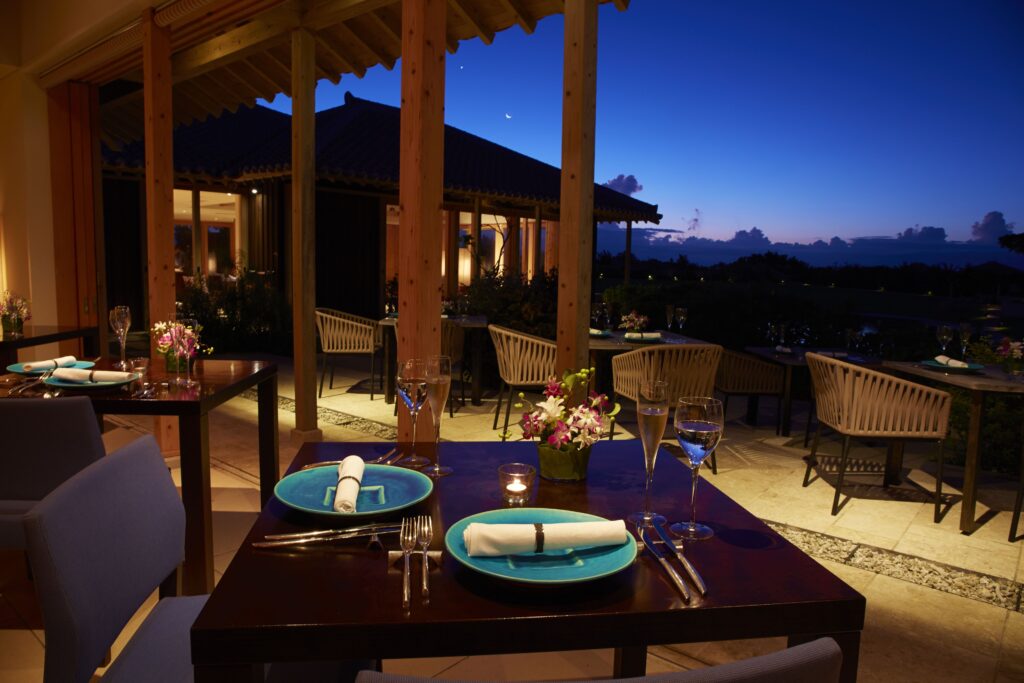
The current breakfast programme offers three choices: an arrangement of nine Okinawan small plates, a soft-tofu congee and a seafood breakfast centred on bouillabaisse. Reservation is required by the previous day. Breakfast and dinner are not safe assumptions within every Expedia rate, so compare the total stay rather than the room price alone.
Dietary needs deserve early attention. The official dining guidance warns that the signature course cannot accommodate certain allergies or ingredient preferences. Travellers with a medical allergy, strict vegetarian diet or other essential restriction should contact the property before committing to a dining-led stay. A beautiful menu has little value if its conditions do not fit the guest.
Island Time Beyond the Villa
The resort’s programme can connect the stay with the working culture and natural rhythms of Taketomi. Depending on season and schedule, activities may include water-buffalo carriage rides, a sail in a traditional wooden sabani, stargazing, craft sessions and food-related experiences. Some are included, while others carry a substantial additional cost or require booking well in advance.
The best approach is restraint. One carefully chosen activity often leaves a stronger impression than a timetable crowded with departures. A morning in the village, an afternoon beside the pool and dinner at the resort already form a complete day. Marine programmes depend on age, health and weather; cultural activities may operate only on selected dates. Confirm conditions rather than building the trip around an example found in an older itinerary.
Building the Ferry Journey into the Stay
HOSHINOYA Taketomi Island is reached through Ishigaki. New Ishigaki Airport to Ishigaki Port Remote Island Terminal takes approximately 30 to 45 minutes by taxi or local bus. From Ishigaki Port, ferries operated by Yaeyama Kanko Ferry and Anei Kanko reach Taketomi Port in about ten minutes. The hotel’s exclusive shuttle waits for arriving ferries and completes the final ten-minute transfer without advance reservation.
The simplicity of those three stages should not encourage a tight connection. Wind and waves can cancel late services, and the official access guidance recommends boarding a ferry departing by 5:00 p.m. Check-in is listed from 3:00 to 6:00 p.m. A morning flight to Ishigaki and a comfortable margin at the port are more elegant than planning the last possible ferry.
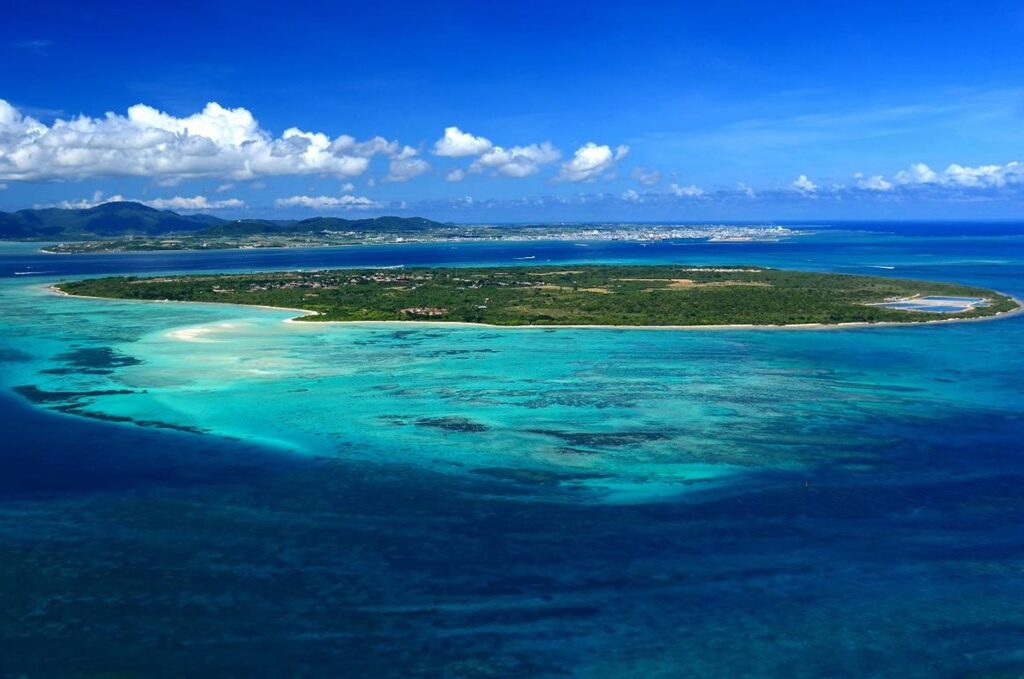
Departure deserves equal care. Check-out is at noon, but the day’s ferry operation should be checked before leaving the resort. International travellers should also remember that Taketomi Port is not the airport: the return still requires the ferry, a transfer across Ishigaki and time for airport procedures.
Two Nights, Three Nights and the Typhoon Season
Two nights are the practical minimum. They allow one full day between the arriving and departing ferries, enough for the village, beach or pool and one planned dinner without making every choice compete for the same hours. A single night can work, but only with an early arrival and limited ambitions; any transport disruption takes a disproportionate share of the stay.
Three nights are better for travellers who want both Taketomi and the resort. One day can belong to the island’s settlement and beaches, another to the villa, spa, activity or pool. The extra night also creates a modest buffer for weather, though no itinerary can remove the effect of a serious storm.
From early summer into autumn, typhoons can affect flights, ferries and activities. The official hotel site may offer special typhoon terms for eligible direct bookings during a stated period, but those terms should not be assumed to apply to an Expedia reservation. Read the cancellation and disruption policy attached to the exact rate, consider appropriate travel insurance and keep the final island transfer conservative.
Who Should Book—and Who May Prefer Another Stay
The resort is most persuasive for couples who value privacy and cultural context over a conspicuous suite, solo travellers comfortable with a quiet island rhythm, and small families able to use the three-person Zuki villa. It also suits guests who see the ferry as part of the journey and who are prepared to reserve meals rather than rely on spontaneous choice.
It is less suited to travellers requiring nightlife, immediate access to a broad restaurant district, a guaranteed ocean view from the room or a private pool attached to the villa. Guests with a rigid, connection-heavy itinerary may find the ferry dependence stressful. Those expecting an all-inclusive rate should also look closely: dining, spa treatments and many activities can sit outside the accommodation price.
Families should enter every child’s age accurately and confirm bedding. The official policy allows children under 12 to share existing bedding only within the villa’s maximum occupancy. Zuki is the only category designed for up to three guests; Gajoni and Kyangi accommodate up to two. The pool and playroom add flexibility, while individual activities retain their own age and health requirements.
Before You Book
- Read the complete villa name. Zuki, Gajoni and Kyangi differ in beds, occupancy and room character, not merely price.
- Do not assume an ocean view. The private garden and red-tile village form the principal outlook from the villas.
- Enter every guest accurately. Bed sharing for children under 12 remains subject to the maximum occupancy.
- Reserve meals after the room. Signature dinner and breakfast require advance arrangements, and inclusions vary by rate.
- Confirm dietary suitability early. Some menus cannot accommodate particular allergies or ingredient restrictions.
- Protect the ferry connection. Use a morning flight where possible and aim for a ferry departing Ishigaki by 5:00 p.m.
- Check weather and cancellation terms. Direct-booking typhoon provisions do not automatically govern an Expedia rate.
- Budget beyond the villa. Dining, spa treatments and many activities may be charged separately.
A Villa Stay Shaped by Taketomi, Not Placed Upon It
HOSHINOYA Taketomi Island earns its distinction through the relationship between house and island. The villa receives the southern wind; the garden repeats the white sand beyond the resort; limestone walls provide privacy without making the room feel detached from its surroundings. The pool, cuisine and activities continue that idea in different forms.
Choose the villa by bedding and atmosphere, reserve the meals that matter, and give the ferry journey a generous margin. Most importantly, leave enough time for the resort to become more than accommodation. Two nights reveal its outline; three allow the pace of Taketomi to settle more fully into the stay.
View current HOSHINOYA Taketomi Island rates and booking conditions on Expedia(Paid link)