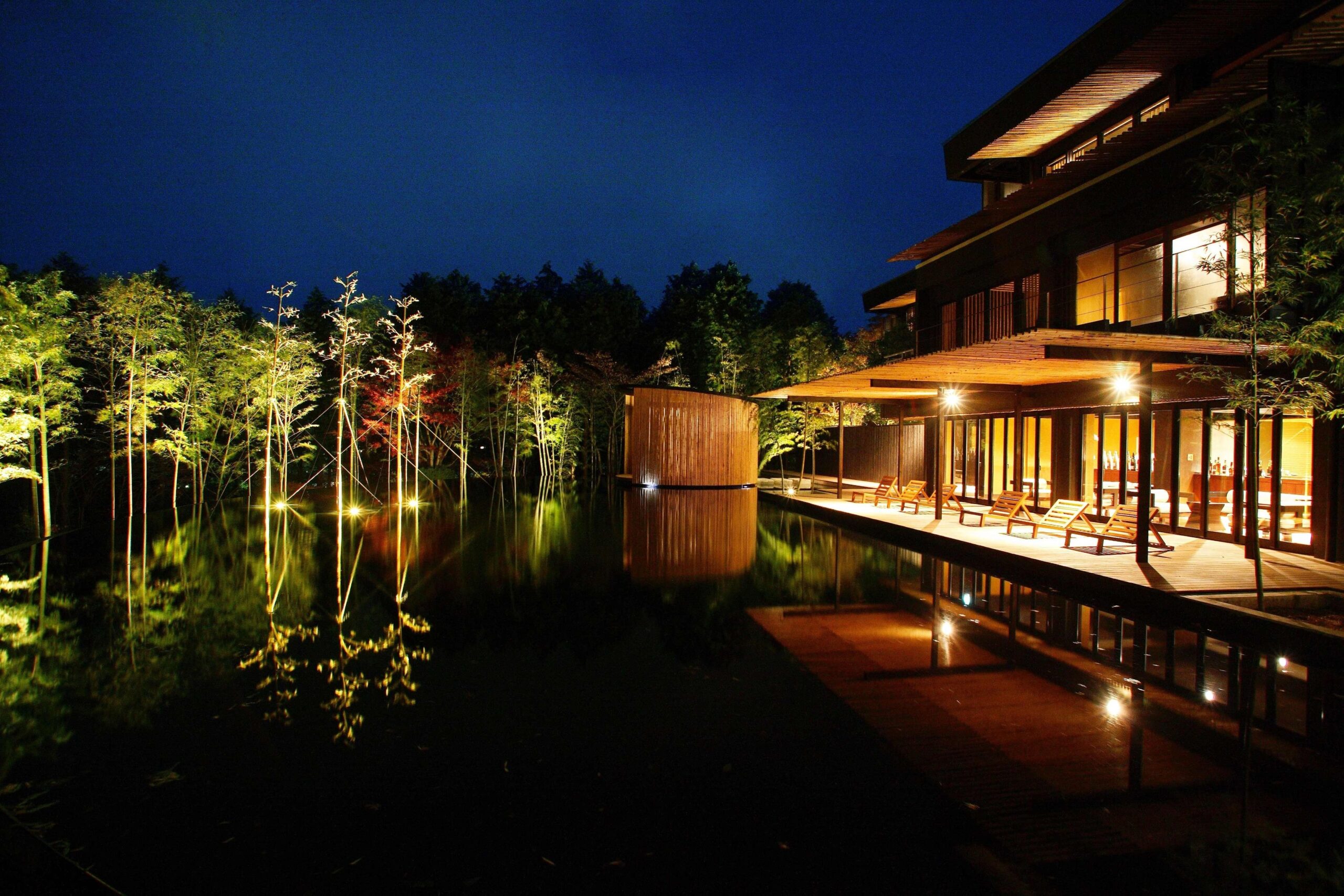
Kinnotake Sengokuhara is a nine-room ryokan built around a very private interpretation of Hakone: an open-air hot-spring bath in every guest room, seasonal Kyo Kaiseki served without leaving the room, and interiors that refer to the Tale of the Bamboo Cutter without turning the stay into theatre. It is not a sprawling resort, nor a traditional inn whose social life gathers around a communal bath. The room itself is the destination.
That distinction makes the booking decision unusually specific. Guests who want to bathe together in complete privacy and linger over dinner in their own suite will understand the appeal immediately. Travellers who prefer a large public onsen, several restaurants or a central base beside Hakone-Yumoto Station should consider carefully whether this quieter Sengokuhara rhythm suits the journey.
Booking Snapshot
- Best for
- Couples and adult travellers who want the onsen, dinner and evening to unfold in one private room
- Rooms
- Nine individually designed room types, from 78 to 136 square metres
- Private onsen
- Every room has its own open-air bath supplied with natural, free-flowing hot-spring water
- Room choice
- Choose first between a flat layout and a maisonette, then consider the bath setting, outlook and smoking designation
- Dining
- Seasonal Kyo Kaiseki and Japanese breakfast are served in the room on meal-inclusive plans
- Age and access
- Expedia lists stays for guests aged 12 and above; confirm age eligibility before booking with children. Daigatake bus stop is approximately a three-minute walk away
Check current Kinnotake Sengokuhara rooms and rates on Expedia →(Paid link)
In this guide
The Booking Decision
Book Kinnotake Sengokuhara for the privacy rather than for a checklist of resort facilities. There are only nine rooms, each different, and the essential elements of the stay are placed behind one door. The bath is always available. Dinner arrives in the room when included in the plan. Even breakfast can begin without crossing a public dining room. For an anniversary, honeymoon or quiet pause between busier days in Japan, that contained quality is the point.
The trade-off is equally important. This is not the address to choose for a lively lobby, a selection of restaurants or the ritual of moving through a grand public bathhouse. Sengokuhara is also removed from the railway arrival points of Hakone-Yumoto and Odawara. The journey is manageable, but dinner timings and the final bus or car transfer need more thought than they would at a station hotel.
The strongest reservation is therefore one in which the room type, meal plan and arrival time have all been chosen deliberately. A lower-priced room is not a diminished version of the core experience: it still includes a private open-air onsen. The premium is earned through layout, scale, bath position and, in the highest categories, additional privileges rather than through access to the hot spring itself.
Nine Rooms, Each with Its Own Open-Air Onsen
Kinnotake Sengokuhara has nine named room types: Mikado, Hime, Sora, Hikari, Kirameki, Hibiki, Kaze, Shizuku and Yoi. Their stated total areas run from 89 to 136 square metres; in rooms with separately measured terraces, the enclosed guest-room portions run from 78 to 90 square metres. The names matter because they describe genuinely different plans rather than small variations of one standard room.
Mikado is the largest at 136 square metres and uses a maisonette plan. Hime is the highest flat-layout category, with a 90-square-metre interior within a total area of 131 square metres and both an open-air onsen and an indoor bath. Sora is the most vertical composition: five levels across three floors, culminating in a rooftop open-air bath and a broad terrace. Its drama is appealing, but so is the need to be comfortable with repeated stairs.
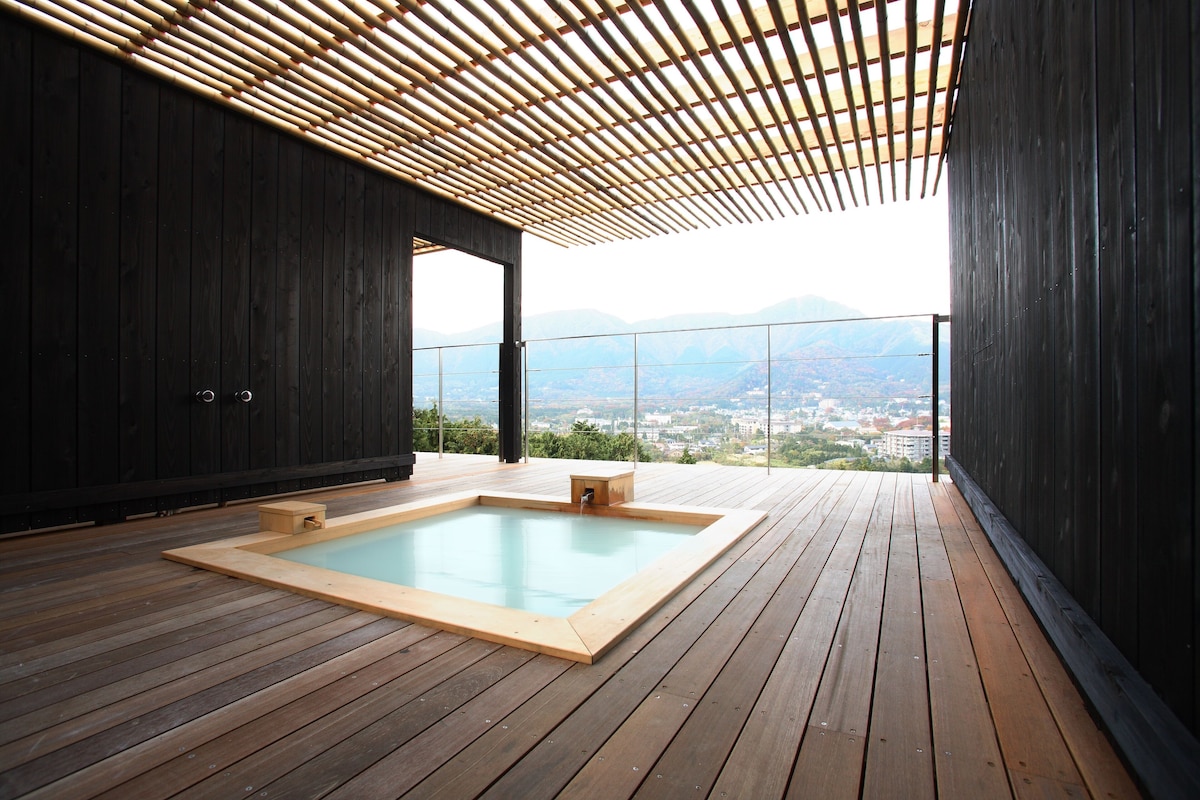
Among the flat rooms, Hikari offers an 89-square-metre interior and can accommodate up to four guests; Kirameki pairs an 83-square-metre room with a private garden; Hibiki places the bedroom and tatami room around the open-air bath; and Kaze is an 87-square-metre room with a terrace. Shizuku and Yoi are maisonettes arranged between the basement and first floor, with their bedroom, shower and cloudy-water open-air bath on the lower level. Their protected quality can feel secluded, although they are not the choice for someone who dislikes stairs or wants the broadest outlook.
How to Choose the Right Room
| Room choice | Layout and scale | Best considered for | Point to check |
|---|---|---|---|
| Mikado or Hime | Top suites; 136 sqm maisonette or 131 sqm total flat suite | A celebratory stay where extra space and current premium privileges will be used | Confirm the benefits attached to the Expedia rate; Mikado includes stairs |
| Sora | 122 sqm total; five levels across three floors | A couple prioritising a rooftop bath and a more theatrical vertical plan | Multiple stairs and a current smoking-room designation |
| Hikari, Kirameki, Hibiki | Flat layouts with distinct arrangements | Guests who want the private onsen experience without a split-level room | Hikari has the larger stated capacity; garden, tatami and bath settings differ |
| Kaze | 102 sqm total flat room | A couple wanting a flat plan and terrace | One of the two rooms currently designated for smoking |
| Shizuku or Yoi | 96 or 95 sqm total; B1–1F maisonettes | A more enclosed, private atmosphere with a lower-level bath | Stairs and a less elevated outlook than the rooftop categories |
For many couples, the most useful choice is not automatically the largest room. A flat plan removes stairs from the evening and keeps the bedroom, dining space and bath closer together. Sora is selected for its rooftop bath and unusual architecture; Mikado for scale and ceremony; Hime for a top-category experience without a maisonette; Kirameki for its garden; and Shizuku or Yoi for a deeply enclosed sense of retreat.
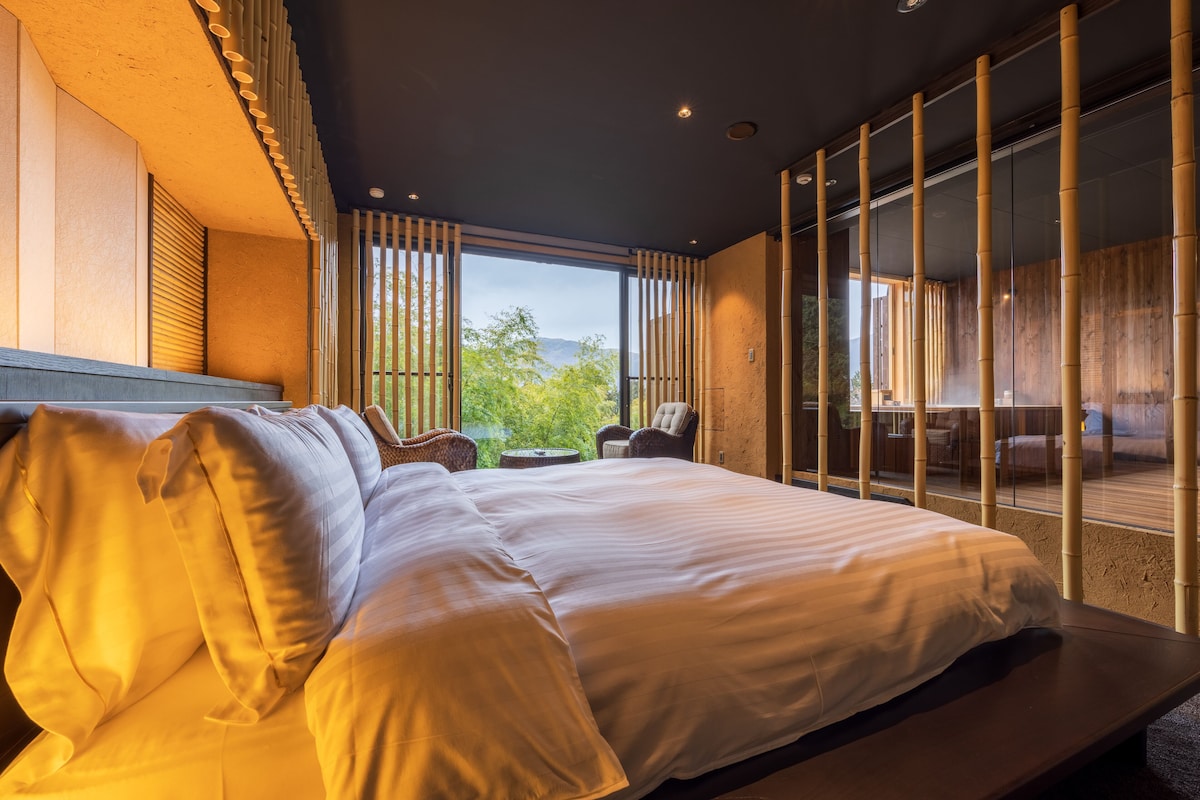
Smoking designation is now a practical dividing line. Following the property’s 2026 change, Sora and Kaze are the smoking rooms, while Mikado, Hime, Kirameki, Hibiki, Yoi, Shizuku and Hikari are designated non-smoking. Older listings may still carry legacy wording, so sensitive guests should verify the complete room name shown for their dates.
Compare current Kinnotake Sengokuhara room types on Expedia →(Paid link)
Bamboo, Water and the Quiet of the Room
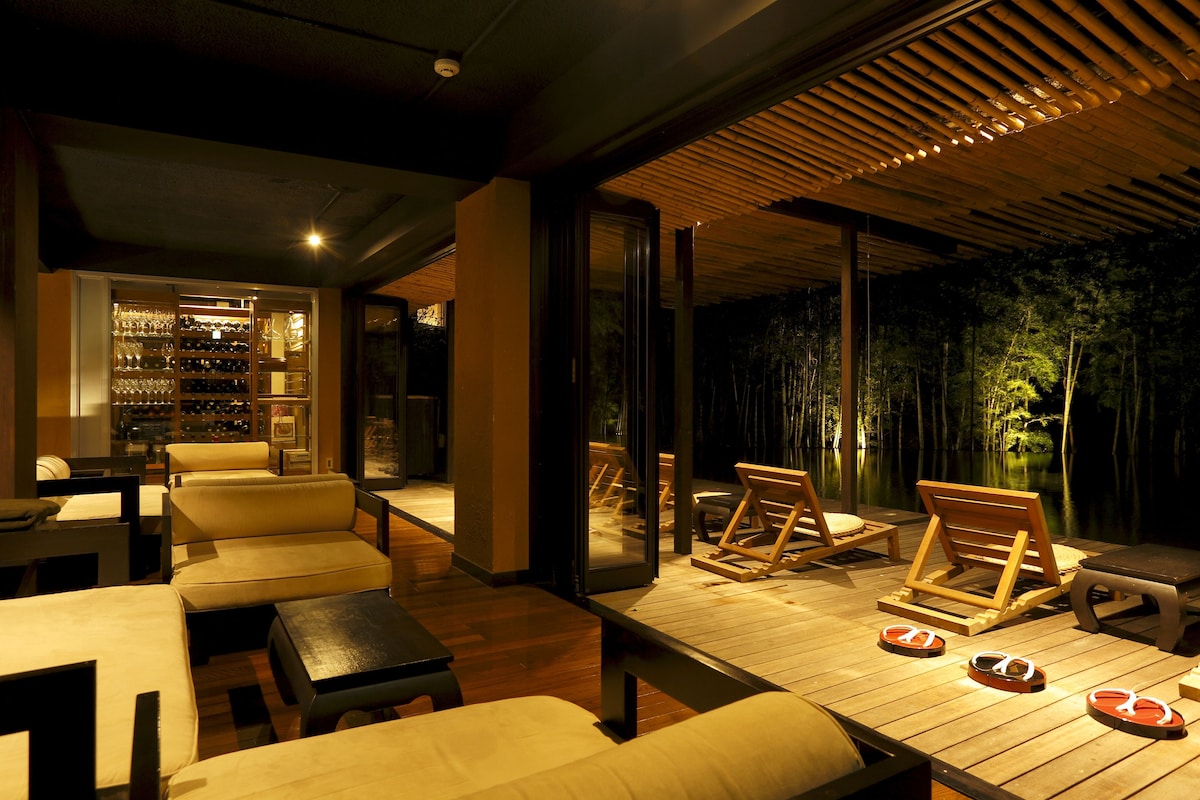
The ryokan takes its imaginative language from the Tale of the Bamboo Cutter. Bamboo, shadow and water establish the mood on arrival, while the reflecting pool lends the entrance a sense of suspension after dark. The design is contemporary rather than historically preserved; its purpose is to draw attention inward and make the transition from the road to the room feel complete.
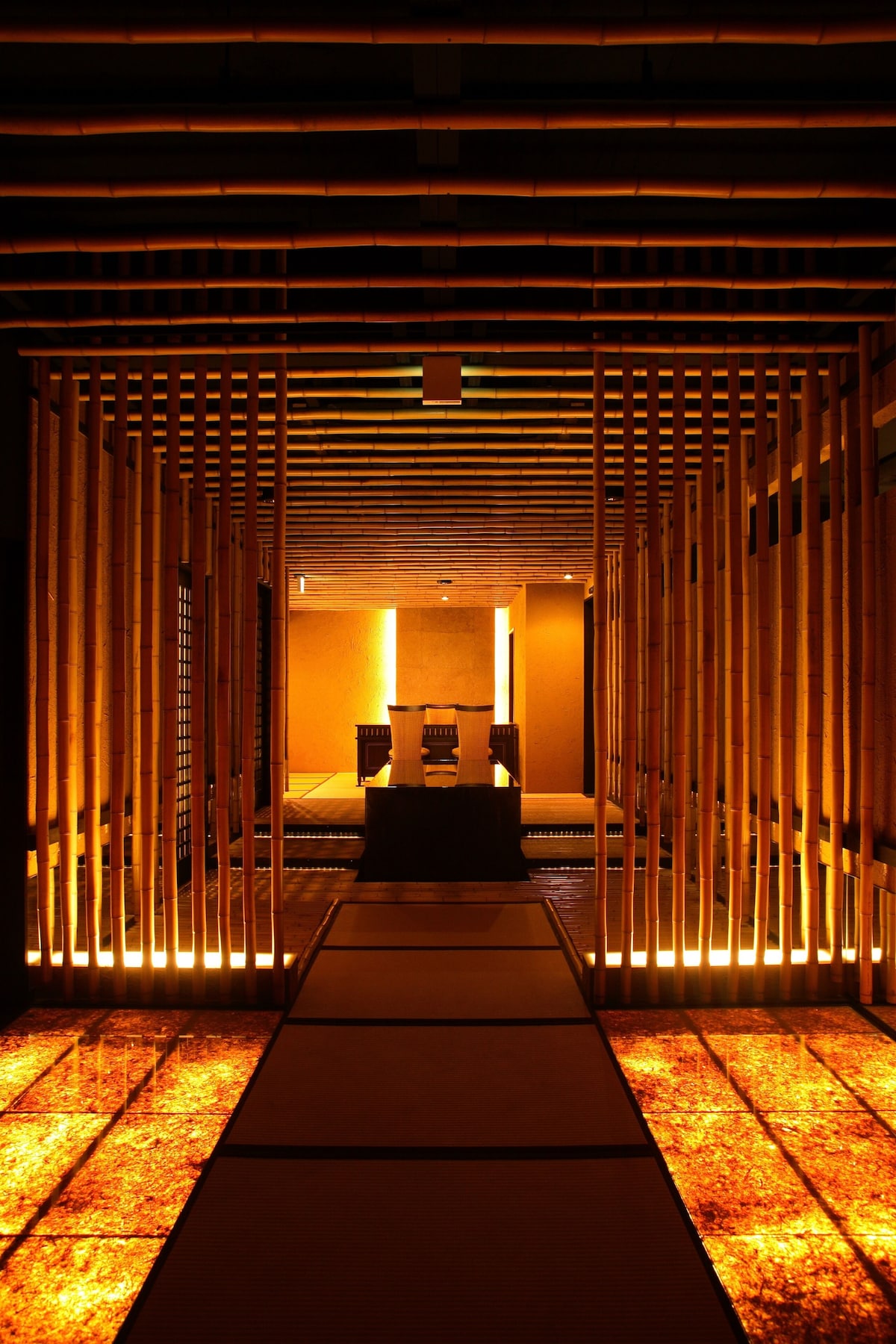
With only nine rooms, shared space is intentionally limited. Bar Bamboo is the principal communal setting, and a private annex extends over the reflecting pool. Yet the architecture continually leads back to the suite. This matters when judging value: the guest who plans to leave after check-in and return only to sleep will use less of what Kinnotake is selling than the guest who arrives early enough to bathe before dinner.
The Private Onsen Is the Centre of the Stay
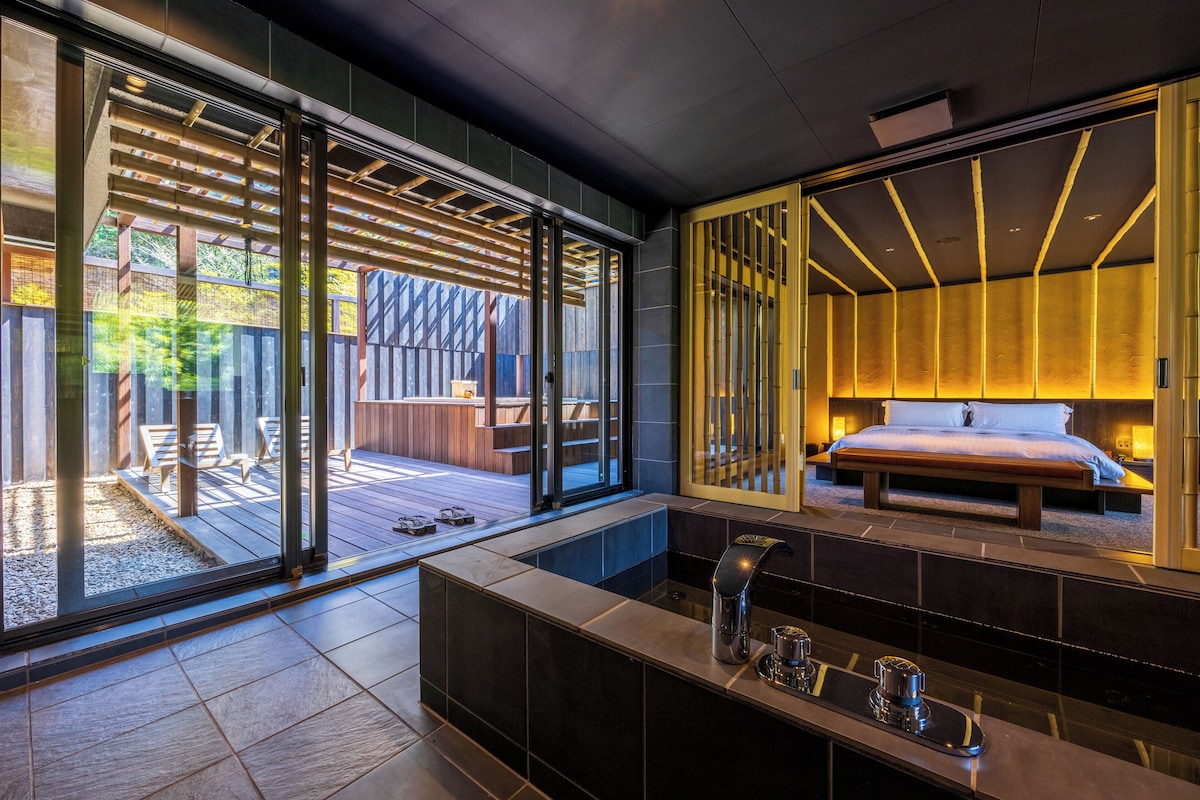
Every room has an open-air bath filled with natural, free-flowing hot-spring water. There is no need to reserve a bathing hour or negotiate a shared space. The pleasure is repetition: a first bath after arrival, another after dinner, and one more in the quieter light of morning.
The experience still differs from room to room. Sora’s bath is on the rooftop; Kirameki turns towards a private garden; Shizuku and Yoi place the bath on the lower level; Hime adds an indoor bath. Photographs should therefore be read as room-specific rather than as a general promise of identical views, bath shapes or degrees of openness. When the bath setting is the reason for booking, match the image to the exact named room.
Guests new to onsen should also remember that the bath is for soaking after washing, even when it is private. The advantage here is freedom from a public bathing schedule, not a different approach to the water itself.
Kyo Kaiseki, Served in the Room
Kinnotake’s seasonal Kyo Kaiseki is served in the privacy of the guest room on dinner-inclusive plans. The progression of small dishes, seasonal ingredients and composed presentation gives the evening its structure without breaking the seclusion established by the bath. Breakfast is Japanese in style and is likewise served in the room when included.
This makes the meal plan a more important decision than it might be at a city hotel. The standard dinner-and-breakfast arrangement creates the most coherent one-night stay: arrive, bathe, dine, sleep and return to the water before breakfast. A breakfast-only plan offers more freedom, but Sengokuhara is not a district where every dinner option sits immediately outside the door. Anyone choosing it should make an evening plan before arrival.
Dinner is offered in set seating periods, which can change. A late arrival may therefore affect the meal, and dietary requests should be communicated as early as possible rather than introduced at the table. Mikado and Hime currently carry additional dining and minibar benefits on the official offering, but travellers booking through Expedia should confirm that the same inclusions appear in the selected rate.
Arriving in Sengokuhara
Kinnotake sits near the Daigatake bus stop in Sengokuhara, approximately a three-minute walk uphill from the stop. The official route uses the Hakone Tozan bus bound for Togendai: roughly 30 minutes from Hakone-Yumoto or 50 minutes from Odawara under ordinary conditions. Traffic, weather and holiday congestion can lengthen a Hakone journey, so an arrival built around dinner should retain a sensible margin.
The resort can arrange a paid limousine from Odawara Station, Hakone-Yumoto Station and other specified points. It is not a complimentary station shuttle, requires advance reservation and remains subject to availability. Guests arriving by car have access to nine complimentary parking spaces, matching the small scale of the property.
Sengokuhara’s pampas-grass fields are within walking distance, and the district places museums and northern Hakone landscapes within reach. Even so, Kinnotake works best when sightseeing does not consume the entire afternoon. Standard check-in is 3:00 p.m. and check-out 11:00 a.m.; the current official benefits for Mikado and Hime extend those times, but the booked rate should confirm them.
One Night or Two?
One night is enough to understand the essential experience if arrival is early and the booking includes dinner and breakfast. The room, bath and meal are designed to form a complete sequence, and adding sightseeing after check-in can dilute the very privacy for which the premium is paid.
Two nights make sense for a guest who wants one day of almost complete retreat or a slower exploration of Sengokuhara between baths. Consecutive-stay housekeeping choices and any associated benefits should be confirmed directly, as programmes and eligible credits can change. The second night should be selected because the room will be enjoyed, not because a long list of on-site facilities demands more time.
Who Kinnotake Sengokuhara Suits
Kinnotake is most persuasive for couples celebrating something quietly; travellers uncomfortable with communal bathing who still want natural hot-spring water; and guests who see a long in-room dinner as part of the destination. Expedia and the property’s English website list stays for guests aged 12 and above; families should check the age guidance below before booking.
It is less suitable for travellers who want several restaurants and active public facilities, or who plan to arrive late and leave early. Guests with limited mobility should avoid assuming that every large room is convenient: several signature categories are maisonettes, and Sora is particularly vertical. A flat room can be the more luxurious decision when ease matters.
Before You Book
- Property name: Confirm that the reservation is for Kinnotake Sengokuhara, not Kinnotake Tonosawa or Kinnotake Saryo.
- Age: Expedia and the property’s English website list a minimum guest age of 12. The Japanese website asks guests travelling with children aged 12 or younger to enquire. If your party includes a child in this age range, confirm eligibility with the property and Expedia before booking; do not assume that an exception is available.
- Room layout: Check whether the named room is flat or a maisonette. Sora spans several levels, while Shizuku and Yoi connect the basement and first floor.
- Bath and view: Every room has a private open-air onsen, but bath position, outlook and degree of enclosure differ.
- Smoking: Sora and Kaze are currently designated smoking rooms; verify the Expedia room description if this is important.
- Meals: Confirm whether dinner and breakfast are included. Breakfast-only rates do not include the signature kaiseki dinner.
- Arrival: Allow time for the bus or paid transfer and for the selected dinner seating. Standard check-in is 3:00 p.m.
- Cancellation: The standard policy, holiday periods and prepaid offers differ. Read the payment and cancellation terms attached to the exact Expedia rate before confirming.
A Private Hakone Evening, Chosen Room by Room
Kinnotake Sengokuhara is compelling because its promise is narrow and carefully sustained. Nine rooms, nine private open-air baths, in-room kaiseki and the bamboo-lined stillness of the building create a stay with very little need to be elsewhere. The atmosphere is refined, but the practical choice between a rooftop bath, a garden, a flat plan and a lower-level maisonette matters more than abstract ideas of category.
Choose the exact named room with care, arrive early enough to inhabit it, and include dinner if the complete ryokan sequence is what you seek. Under those conditions, privacy is not merely an amenity at Kinnotake; it is the architecture of the entire night.
View current Kinnotake Sengokuhara availability on Expedia →(Paid link)
Planning a wider luxury journey through Japan?
Explore all of our curated hotel guides here → Luxury Hotel Guides in Japan
Related Hakone Luxury Ryokan Reviews
Hakone Ginyu Review
Gen Hakone Review
Gora Kadan Review
Fufu Hakone Review
Best Luxury Ryokan in Hakone for a Refined Onsen Escape
Wishing you a wonderful stay at Kinnotake Sengokuhara and lasting memories of Hakone.

