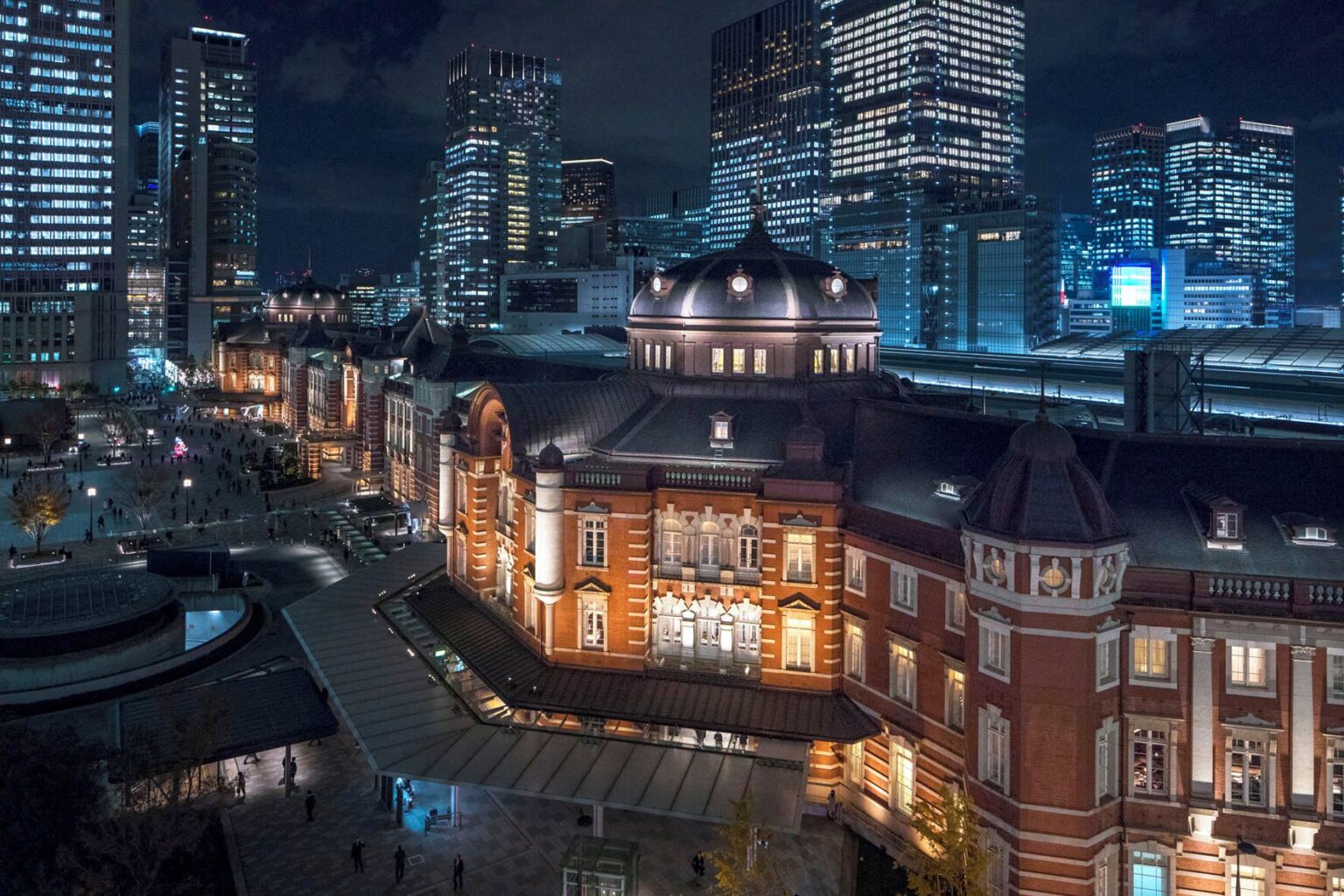
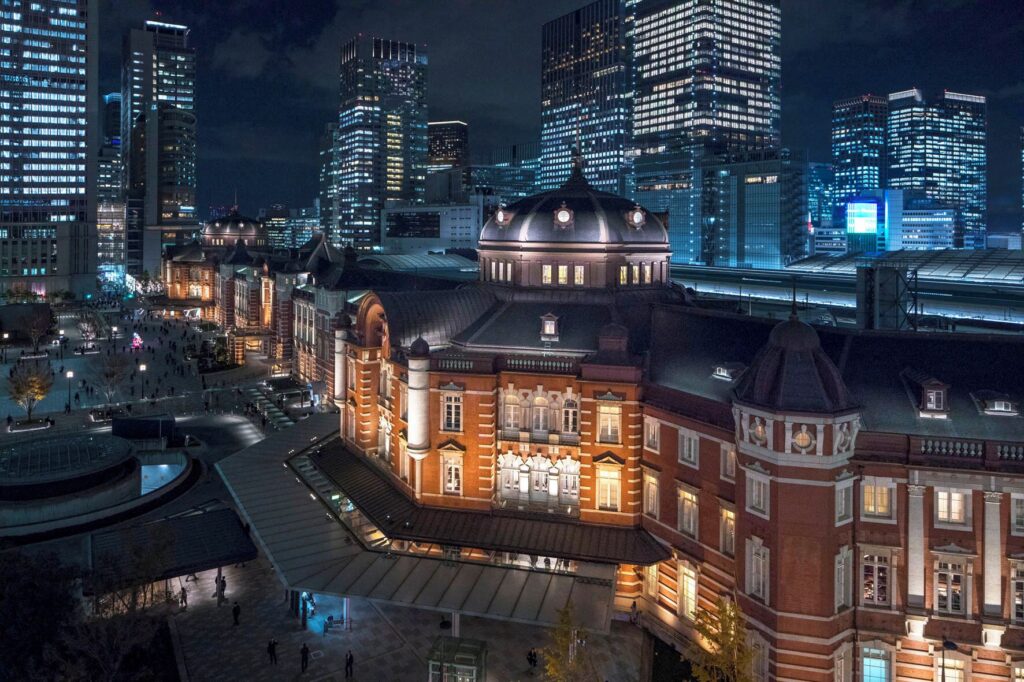
Look up beneath the dome at Tokyo Station’s Marunouchi South Exit and zodiac figures and reliefs circle the ceiling. The windows above them belong to The Tokyo Station Hotel.
Commuters and travelers see the dome from below. Guests in a Dome Side room look across it from a window, with the restored interior of the Marunouchi Station Building becoming part of the view.
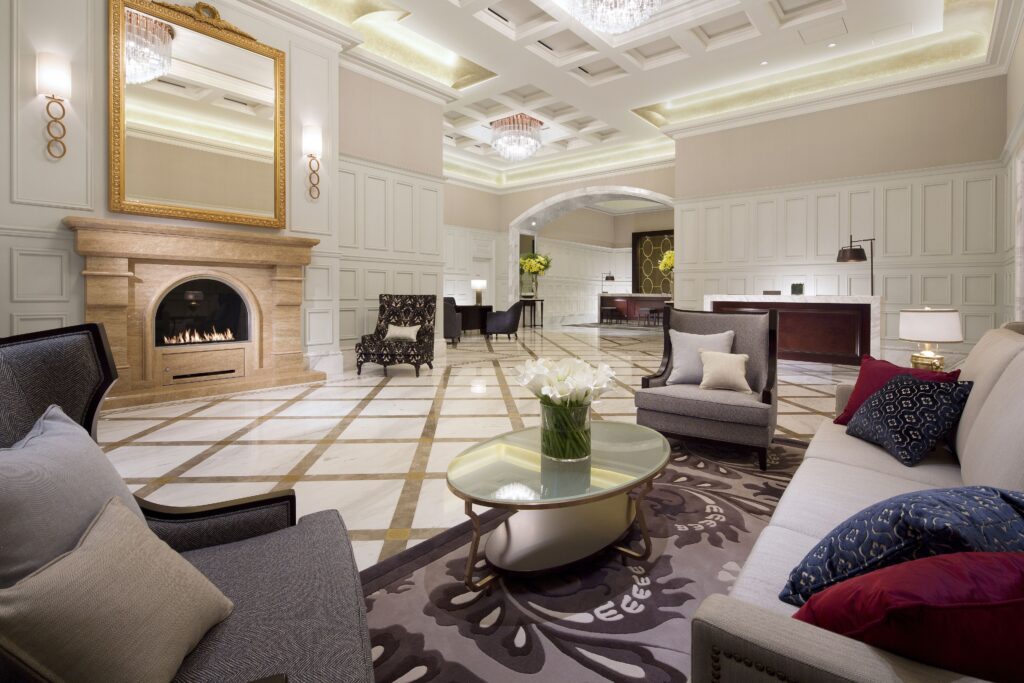
The hotel stretches across the second to fourth floors of the long red-brick station building. Some rooms face Marunouchi Station Square and Gyoko-dori Avenue, others follow the domes, and the maisonettes fit beneath the roofline. The position within the building gives each of the 150 rooms its own outlook and plan.
Check Inside Tokyo Station’s Marunouchi Building rates and availability on Expedia →(Paid link)
Guest-room windows above the ticket gates
The octagonal domes at the north and south ends of Tokyo Station are defining spaces within the Marunouchi Station Building. Dome Side rooms follow their outer curve. From a room with an approximately four-metre ceiling, guests look across the restored reliefs and the people passing below.
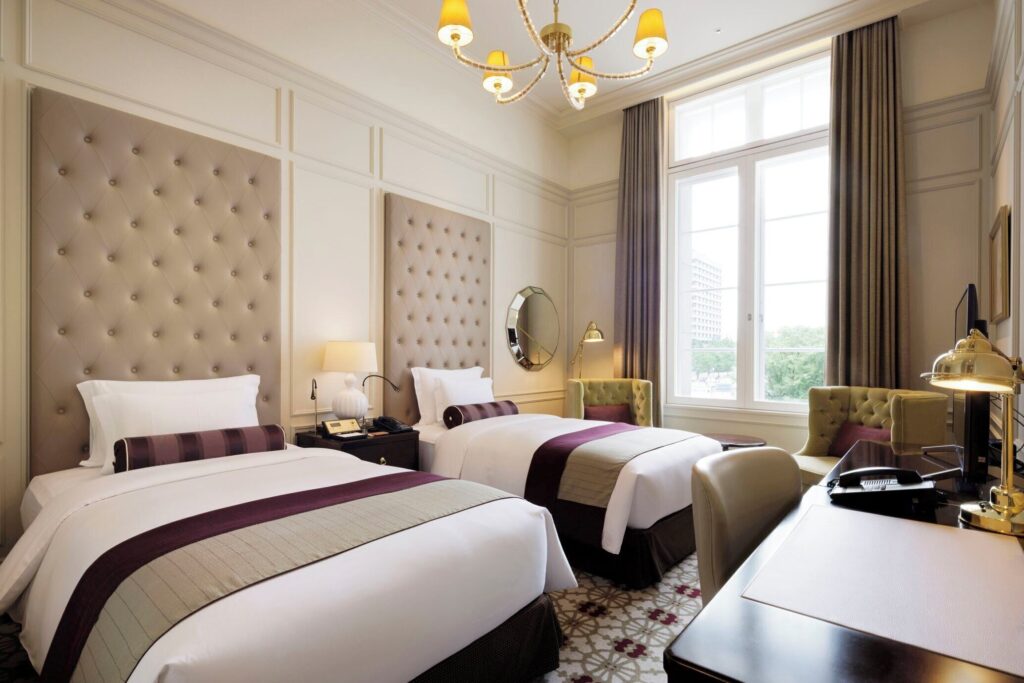
For a view over Marunouchi, consider a Palace View room. These rooms occupy the central portion of the hotel, with tall windows overlooking the station square and Gyoko-dori Avenue, which runs toward the Imperial Palace. Palace Side rooms also face Marunouchi, with a choice of locations and sizes.
In a maisonette, the living area and bedroom are arranged on separate levels. South Wing rooms occupy the station’s southern end, while City View rooms have plans shaped by the building itself. According to the hotel, ceiling heights are approximately 3.7 metres on the second floor, three metres on the third floor, and four metres in Dome Side rooms. The high ceilings and tall windows retain the scale of the original station building.
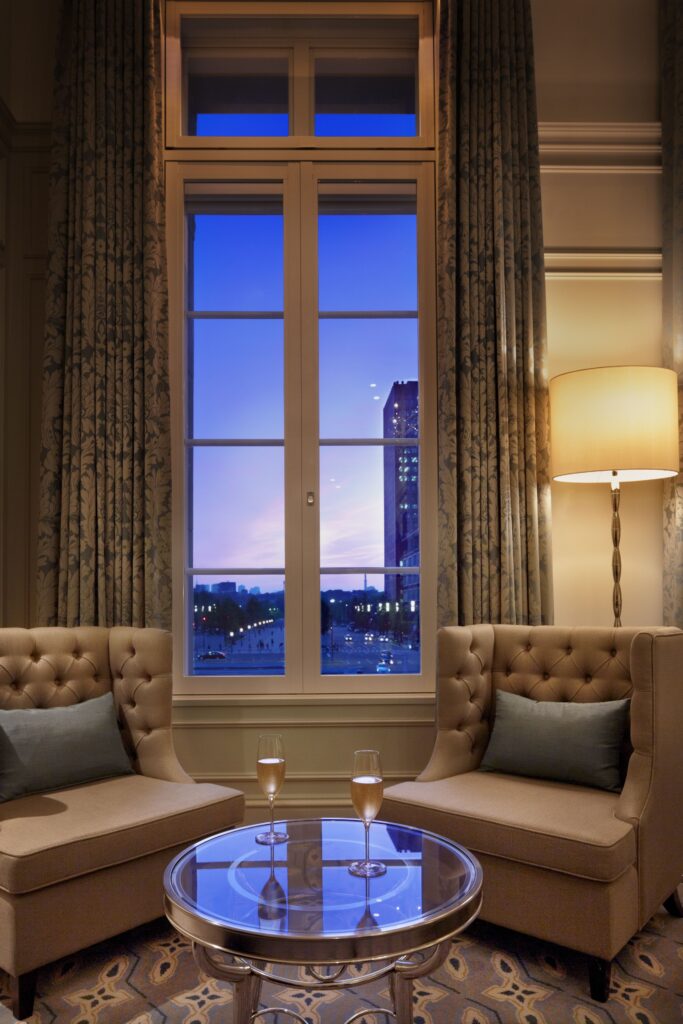
When booking, check the room category as well as the bed type. Dome Side rooms face the station interior; Palace View rooms look toward the station square and Gyoko-dori Avenue. Each category frames a different part of Tokyo Station.
See available Inside Tokyo Station’s Marunouchi Building room plans on Expedia →(Paid link)
Breakfast at the Atrium, high beneath the central roof
Above the guest-room floors, at the highest point of the station’s central section, is the Atrium, a breakfast venue reserved for hotel guests. For the 2012 reopening, the hotel converted a previously unused part of the roof space.
The room covers more than 400 square metres, with a ceiling reaching nine metres at its highest point. Tables sit beneath skylights. The buffet presents more than 100 Japanese and Western items, including egg dishes, breads, hot dishes, Japanese breakfast staples, and small plates.
Breakfast is served high in a part of the station unseen from the lobby or ticket gates. The setting, as much as the breadth of the buffet, gives the Atrium its character.
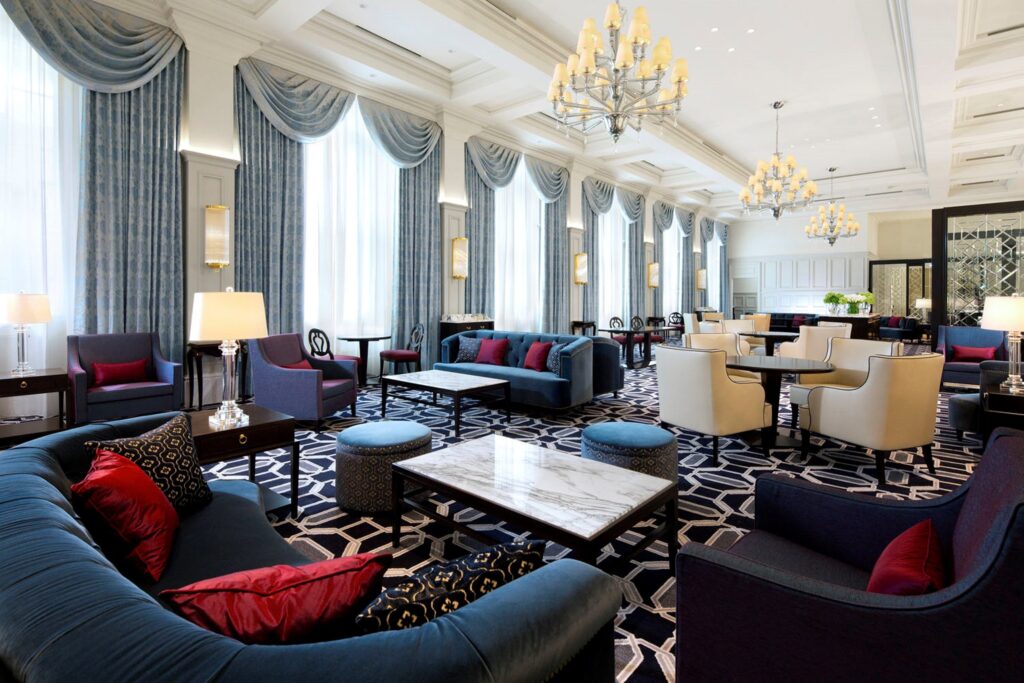
Set breakfast in the first-floor Lobby Lounge and in-room dining are also available. If breakfast in the Atrium is part of your plans, confirm that it is included in the rate when booking.
Check current Inside Tokyo Station’s Marunouchi Building availability on Expedia →(Paid link)
The chef-turned-manager behind the hotel’s beef stew
The hotel’s culinary history reaches back to Takeshiro Ioki. After serving as head chef at Seiyoken, he became the hotel’s third general manager.
Ioki guided the hotel’s chef in creating its beef stew. The recipe was adapted for the 2012 reopening and is now served as the “Traditional Beef Stew” at Bar & Cafe Camellia.
At the main dining room, Blanc Rouge, the executive chef turns seafood, meat, and produce selected from across Japan into French courses.
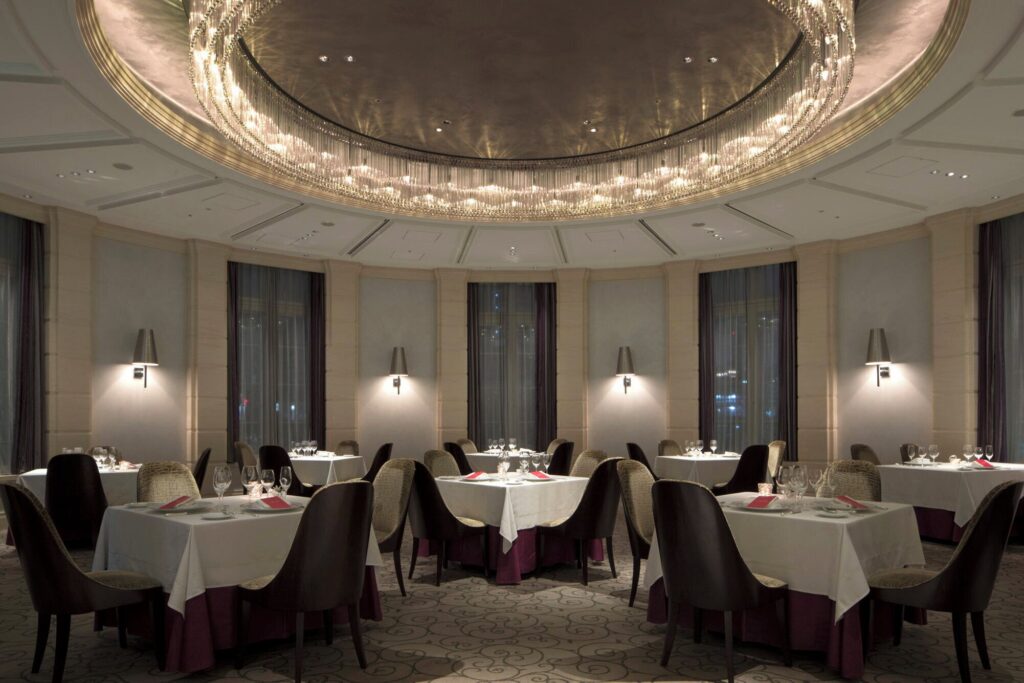
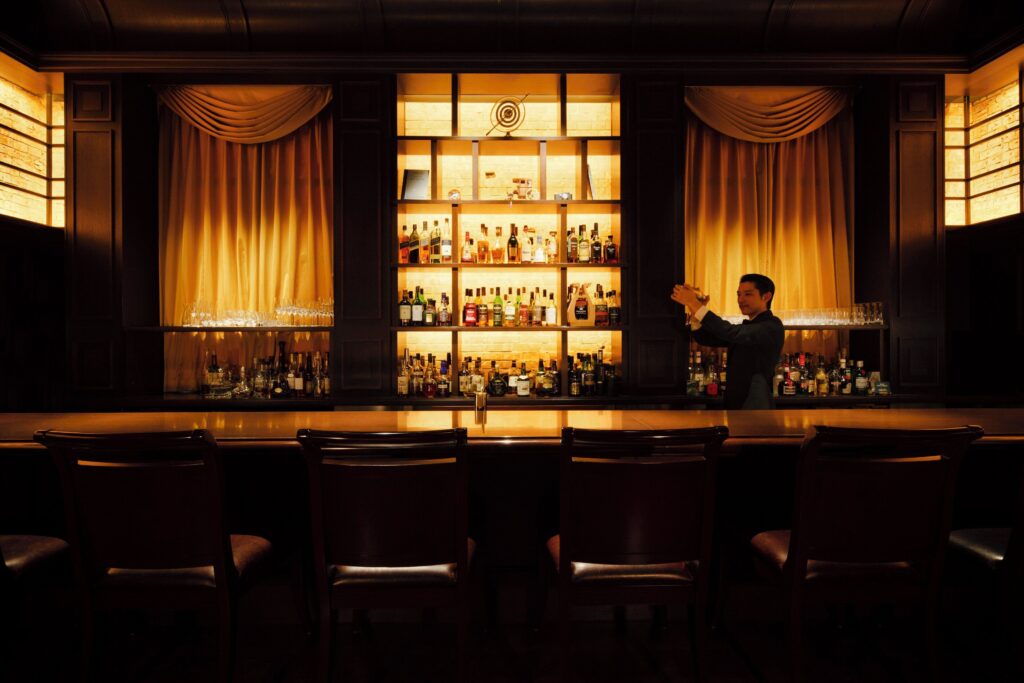
On the second floor, Bar Oak is a 16-seat bar finished with red brick. It makes an inviting last stop within the station after dinner.
The hotel also offers sushi, Japanese and Chinese cuisine, yakitori, an Italian wine bar, and the Lobby Lounge. Its official dining guide lists ten venues in addition to the Atrium.
High ceilings and a noon checkout
Contemporary hotel comforts have been fitted within the preserved and restored station building. Beds feature custom Simmons mattresses with quilted tops made to the hotel’s specifications.
All rooms except suites are supplied with “Est. 1915,” an original bath amenity created with the French fragrance house HISTOIRES de PARFUMS. Check-in begins at 3:00 p.m., and checkout is at noon.
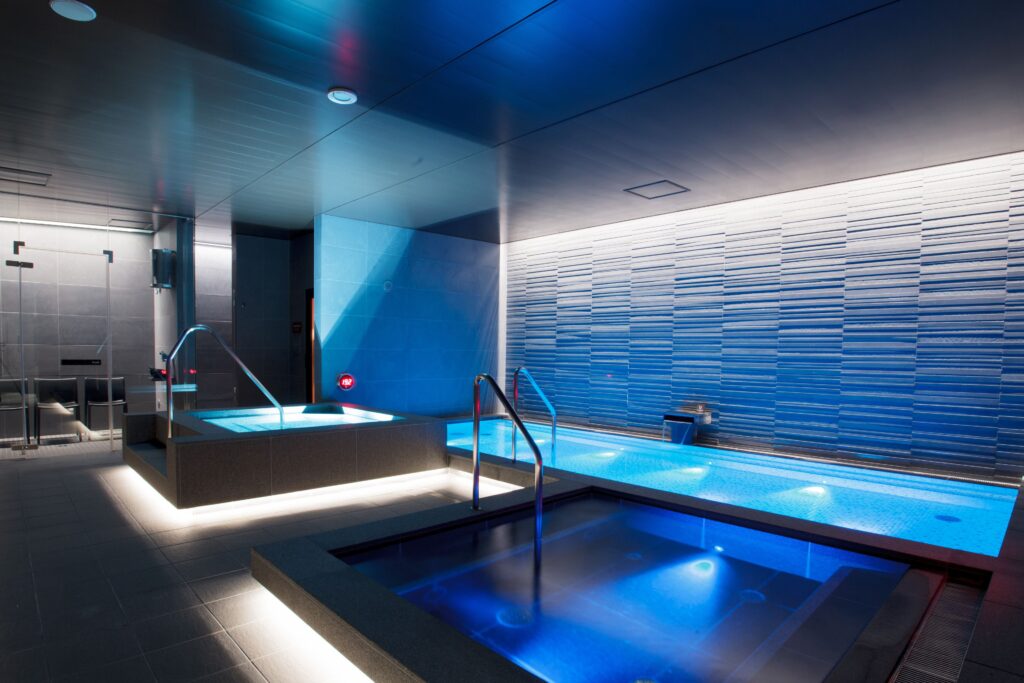
On the basement level, hotel guests can use THE JEXER TOKYO fitness lounge without charge. AN SPA offers treatments, while the separately charged Bath & Relaxing facility includes an artificial hot-spring bath, carbonated bath, cold bath, dry sauna, and steam sauna. The hotel has no swimming pool. Age restrictions, opening hours, and closure dates apply to these facilities.
Compare Inside Tokyo Station’s Marunouchi Building rates for your dates on Expedia →(Paid link)
From the writers who stayed here to the station’s restoration
Along the long corridors leading to the rooms, approximately 100 historical photographs trace the lives of Tokyo Station and the hotel. Images of the original building, its lobby, and the people who worked here turn the hotel’s history into a sequence of scenes.
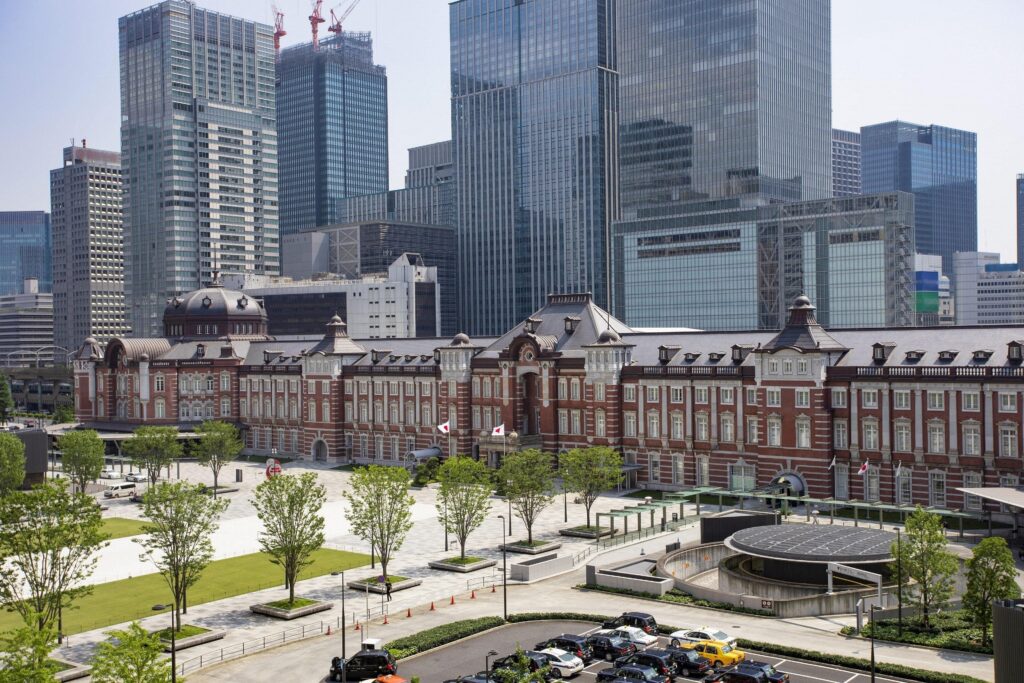
Tokyo Station opened in 1914, and the hotel began welcoming guests inside the station building on November 2, 1915. In 1956, Yasunari Kawabata stayed for about a month while writing the novel Onna de Aru Koto. Hyakken Uchida used the hotel as a regular base, and Edogawa Rampo placed a hotel-room scene in The Fiend with Twenty Faces.
Seicho Matsumoto also stayed here frequently. Hotel lore holds that watching the platforms from his room inspired the timetable device in Points and Lines.
The Marunouchi Station Building lost its roof and third floor in the air raids of 1945 and served for decades as a two-storey building. It was designated an Important Cultural Property of Japan in 2003, and preservation and restoration work began in 2007. The hotel closed for the project in 2006 and reopened on October 3, 2012.
The project preserved surviving brickwork and structural elements while restoring the lost third floor and domes to their original form. Today, the restored domes provide the view from guest rooms, while the roof level contains maisonettes and the Atrium.
Spend a night where most journeys pass through
The hotel can be entered from Tokyo Station’s Marunouchi South Exit. Shinkansen and Narita Express platforms are some distance from that exit, and the hotel offers complimentary, advance-reservation guidance from the platform for guests arriving on eligible trains.
Across Tokyo Station, people check departure times and hurry toward the gates. Above them are guest rooms. Beneath the central roof, breakfast tables are set, while red brick remains in the second-floor bar.
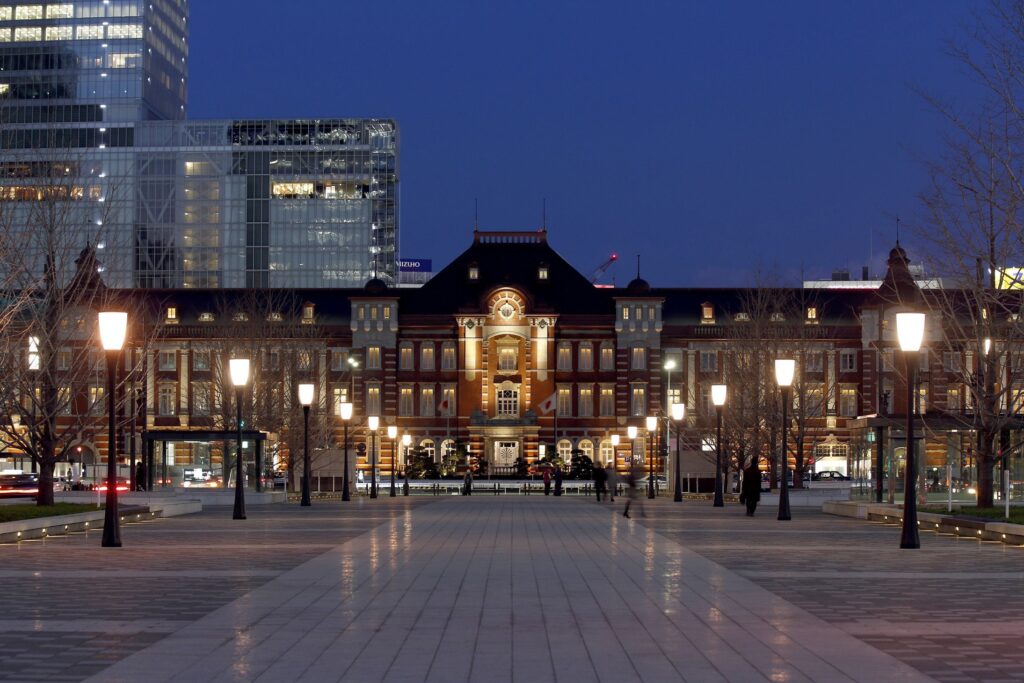
The following morning, Marunouchi South Exit is once again busy with commuters and travelers. Look up at the dome, and above it are the rooms where hotel guests spent the night.
Check rates and availability at The Tokyo Station Hotel
Dome Side and Palace View rooms look onto very different scenes. Decide whether you would rather see the decoration inside Tokyo Station’s domes at close range or look across Marunouchi Station Square and Gyoko-dori Avenue. If you want breakfast in the Atrium, compare breakfast-inclusive plans.
Rates vary by date and room category. Compare the available room types and plans for your travel dates.
More Tokyo hotels to explore
Japan Luxury Hotel Guide
The Okura Tokyo
Aman Tokyo
The Peninsula Tokyo
The Ritz-Carlton, Tokyo
Mandarin Oriental, Tokyo
Palace Hotel Tokyo
Shangri-La Tokyo
Hotel New Otani Tokyo
Four Seasons Hotel Tokyo at Marunouchi