Between the office towers of Otemachi—one of Japan’s largest business districts and the financial core of central Tokyo—stands a 17-story building wrapped in an intricate Edo-komon lattice. This is Hoshinoya Tokyo, a property conceived as a “tower ryokan.”
The building translates the customs of a Japanese inn into a vertical setting. Guests leave their shoes at the entrance, walk across tatami through most of the property, share a small lounge with only five other rooms, and bathe in hot-spring water drawn from 1,500 metres beneath the office district.
Hoshinoya Tokyo opened on July 20, 2016 and has 84 rooms. Its 14 guest floors each contain six rooms and a floor-specific Ochanoma Lounge. The top floor holds the indoor and open-air baths of Otemachi Onsen.
The experience is shaped by movement through the building: Edo-komon shadows cross the rooms, tatami continues from the corridors into the shared lounges, and the open-air bath directs the eye upward to a narrow frame of sky. These details place the routines of a ryokan in the centre of modern Tokyo.
Check Hoshinoya Tokyo rates for your dates on Expedia →(Paid link)
From Edo Castle’s Main Gate to a 17-Story Ryokan
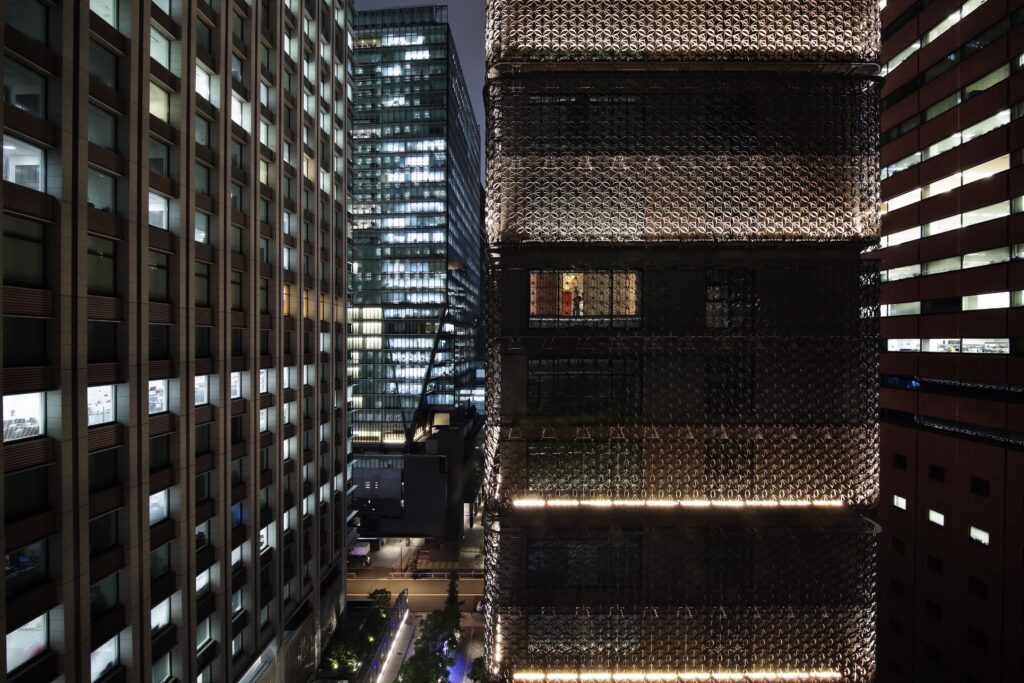
Otemachi takes its name from Otemon, the former main gate of Edo Castle. Hoshinoya Tokyo refers to that history through its exterior, which is covered with an abstracted hemp-leaf pattern known as asanoha-kuzushi.
From a distance, the building reads as a dark tower among the surrounding offices. The three-dimensional pattern becomes visible at closer range. At night, light passes through the lattice, while during the day the same pattern casts changing shadows across shoji screens and tatami inside the rooms.
Architect Rie Azuma has compared the building to a delicate stack of lacquered boxes placed in the office district. Its softly curved corners reinforce that impression and give the tower a form distinct from the rectilinear buildings around it.
A large door made from a single slab of Aomori hiba marks the entrance. Once inside, guests remove their shoes and step onto tatami that continues through much of the property. Slippers are not provided.
The guest rooms also include kimono-style clothing designed by Jotaro Saito. The official property information notes that it may be worn around the ryokan and for short walks or errands in Otemachi, Kanda and the Imperial Palace area.
Fourteen Guest Floors, Six Rooms and One Shared Living Room
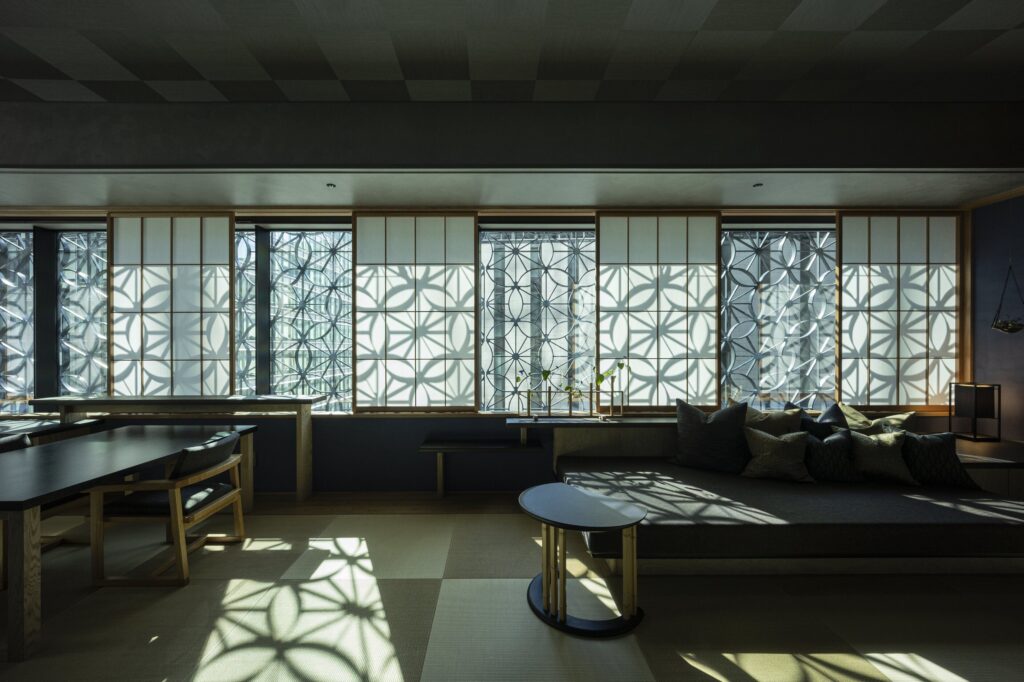
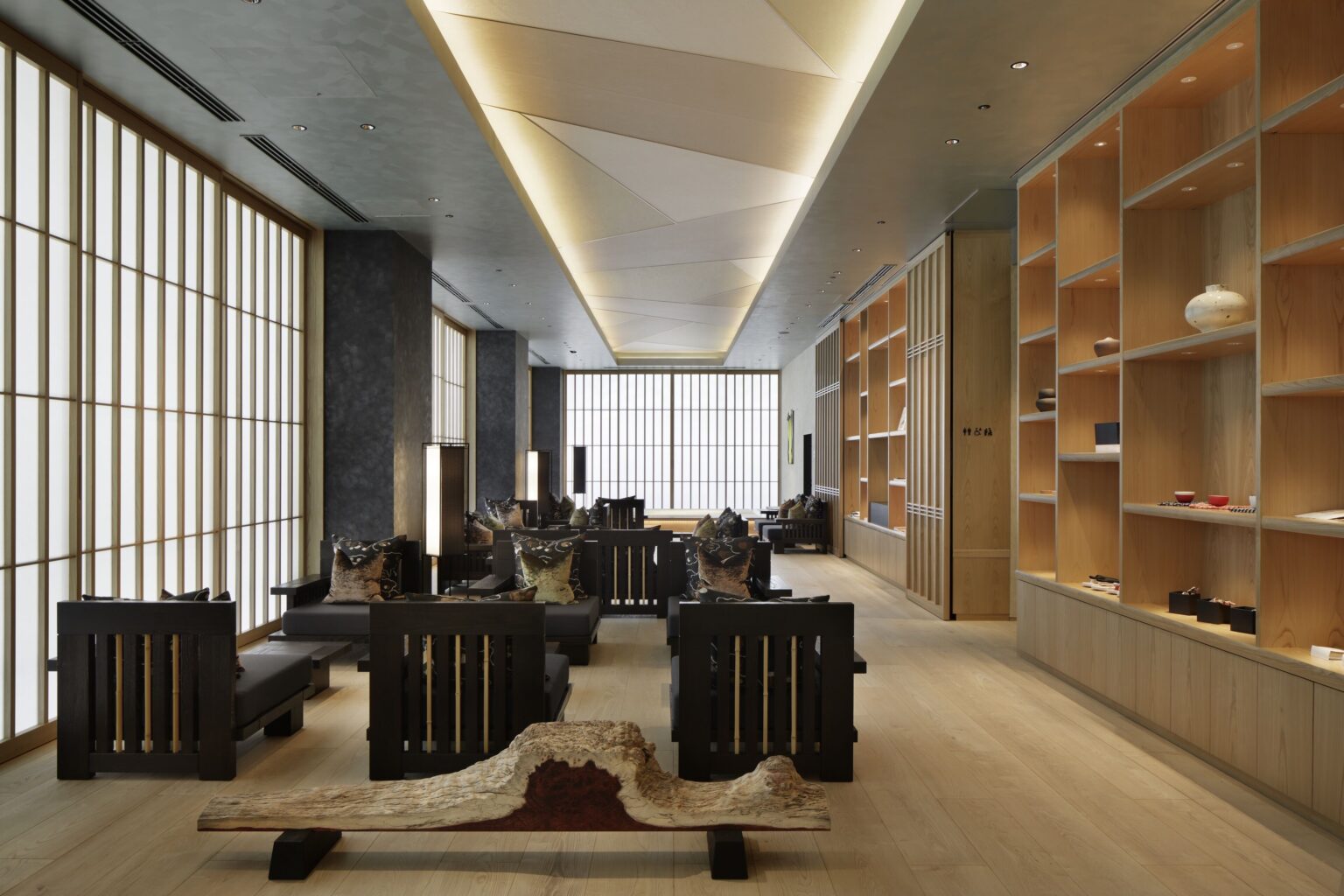
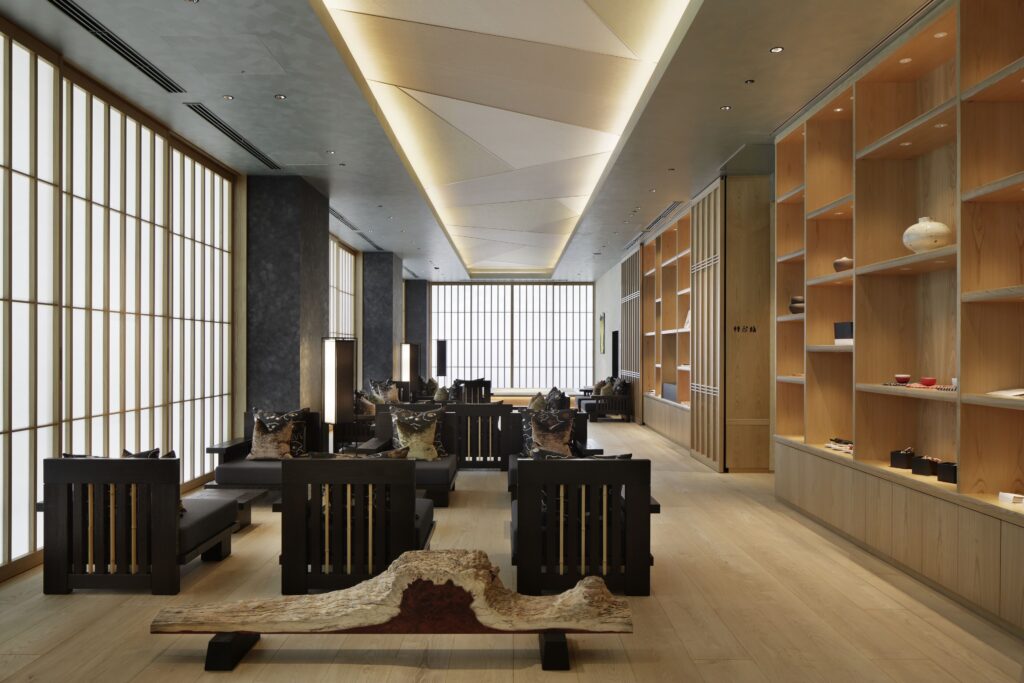
Each of the 14 guest floors is arranged as a small, self-contained inn. Six rooms share one Ochanoma Lounge, and access to the floor is limited to the guests registered there.
The lounge connects to the rooms through a tatami-matted corridor and remains available 24 hours a day. Shelves display pieces selected from craftspeople working across Japan, while drinks and small foods change with the season and time of day.
This layout keeps the shared space close to the rooms without turning it into a large public lobby. At most, the lounge serves the occupants of six rooms. Stacking these small clusters vertically gives the “tower ryokan” concept a clear physical form.
Yuri, Sakura and Kiku: Three Room Configurations
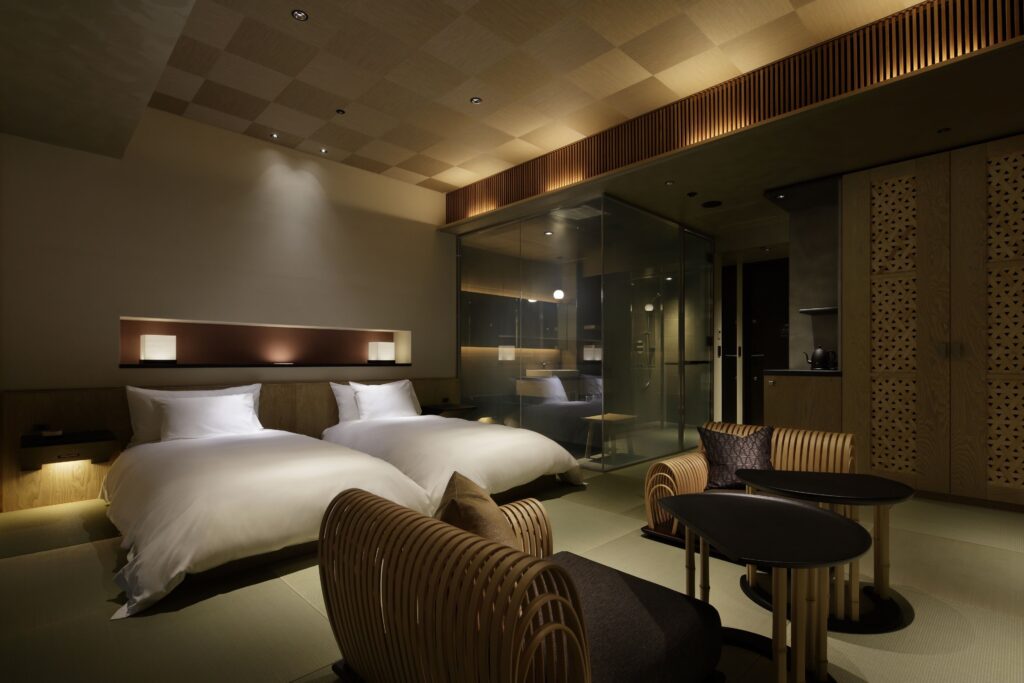
The principal room categories are Yuri, Sakura and Kiku. Yuri has one king bed, while Sakura has two single beds. Both use tatami, substantial paper screens, low furniture and natural materials including bamboo and chestnut.
Kiku is the largest category and occupies one south-facing corner on each guest floor. It includes a dining table, a small desk and a sofa with space to extend the legs. Three single-size sleeping arrangements can be placed side by side, allowing the room to accommodate up to three guests.
Room occupancy across the property ranges from one to three people, but the limit depends on the category. Children under 12 may share existing bedding up to the room’s maximum occupancy. Check-in is at 3:00 pm and check-out is at noon. Pets are not accepted.
Because Yuri and Sakura differ primarily in bed configuration and Kiku is the three-person corner room, it is worth checking the exact category rather than relying on the property-wide “one to three guests” description.
See Hoshinoya Tokyo room availability on Expedia →(Paid link)
Otemachi Onsen, 1,500 Metres Below the Office District
The top floor contains indoor and open-air baths supplied by Otemachi Onsen, drawn from 1,500 metres underground. The area now occupied by Otemachi was covered by sea in ancient times, and the source passes through layers containing ancient seawater and marine minerals.
The official classification is an iodine-sodium-chloride strongly saline spring. Its amber-coloured water is notably salty, giving the bath a character tied to the geological history beneath central Tokyo.
The open-air bath is enclosed by high walls. Its defining view is the changing sky framed above the bath, not a broad horizontal panorama of the skyline. Clouds, evening colour, wind and city sounds enter through the opening and latticework.
Compare Hoshinoya Tokyo rates on Expedia →(Paid link)
Kenjutsu Above Tokyo and Edo Routes at Street Level
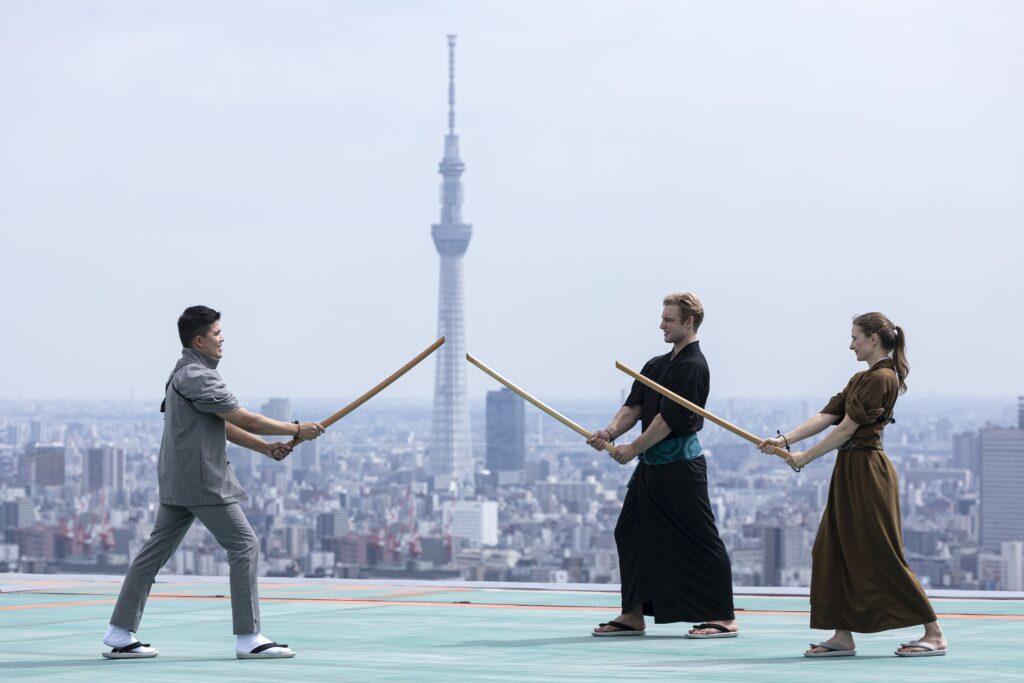
Hoshinoya Tokyo’s activities use Edo culture and the surrounding districts as their subject matter. Morning kenjutsu practice combines sword movements with controlled breathing on a rooftop approximately 160 metres above ground.
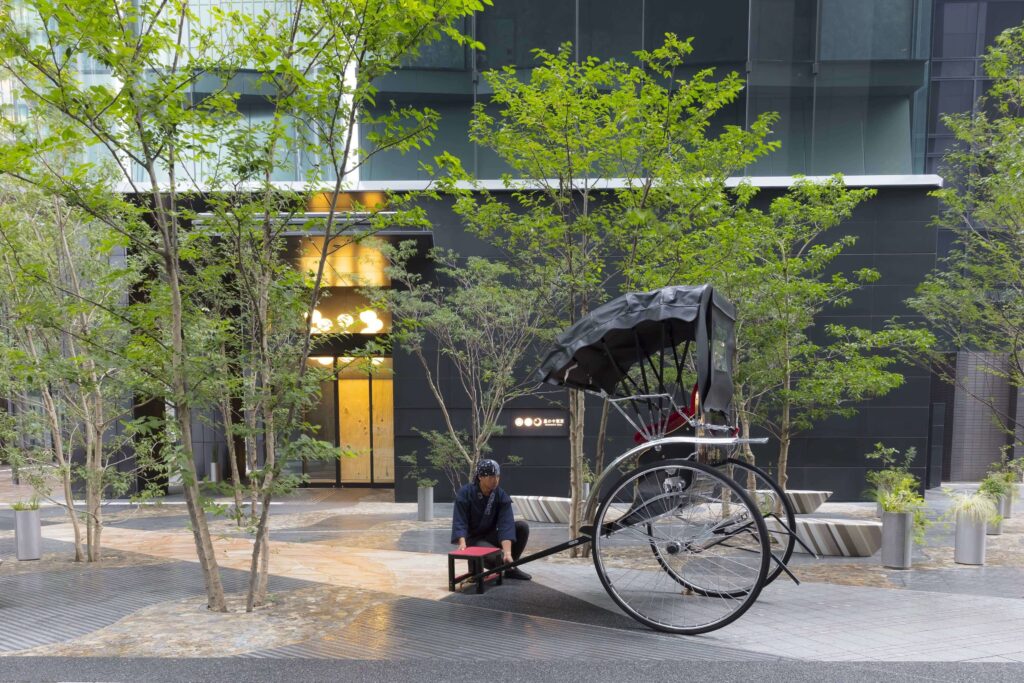
The current activity list also includes incense appreciation, seasonal miniature-garden making, traditional music and tea ceremony sessions. Outside the building, a rickshaw can depart from the entrance for routes through areas such as Kanda, Nihonbashi and Ningyocho.
River cruises leave from Nihonbashi and follow waterways that were central to Edo’s commercial life. Availability, age requirements, prices and booking deadlines vary by programme, so the official activity page should be checked for the intended stay date.
Vanishing Home Recipes and an Eight-Seat Sushi Counter
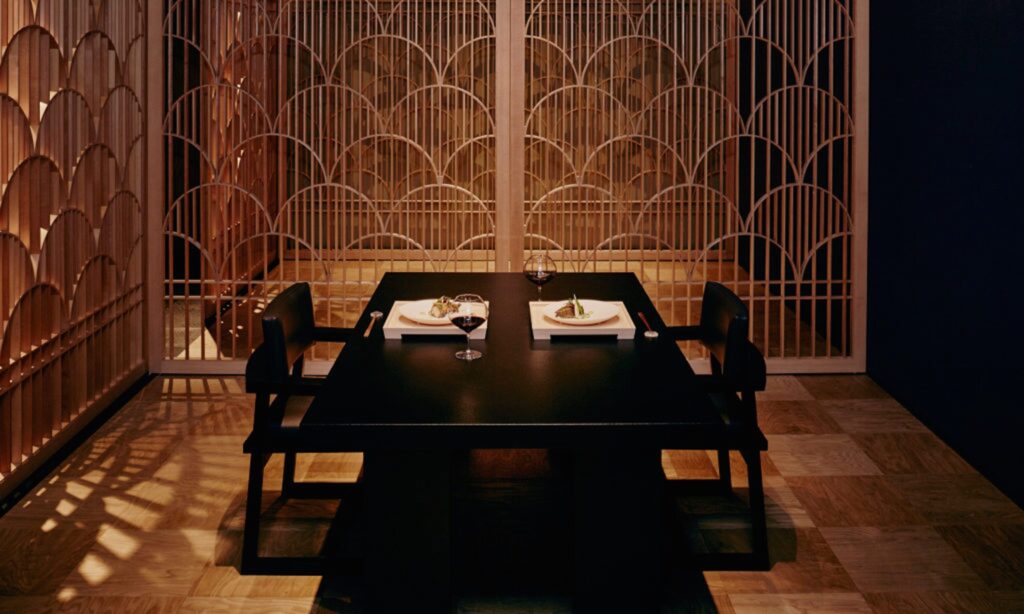
The main dining room currently serves a year-round dinner themed around Japanese home recipes that are disappearing from contemporary kitchens. Regional dishes provide the starting point, with the ingredients, technique and presentation reworked for the restaurant setting.
The second dinner option is Sushi Otemon. Its eight-seat counter is made from a single slab of Aomori hiba. The menu combines Edomae sushi methods with traditions from other parts of Japan, accompanied by small dishes shaped by Japanese culinary technique.
Guests can come to the counter after bathing, dressed in the property’s room wear and without changing out of the ryokan setting. Sushi Otemon has restrictions on allergy and disliked-ingredient substitutions, so its conditions should be checked before confirming a reservation.
Breakfast is served in the dining room, with Japanese and Western options that require advance booking. Dinner-time dishes can also be ordered in the guest room, while in-room dining covers additional light meals and drinks.
Dining is separate from the room rate. Menus, prices, times and booking deadlines can change, so confirm the current conditions before booking.
Check Hoshinoya Tokyo rates and room availability on Expedia →(Paid link)
Tokyo Station Access and the Otemachi Subway Exits
Hoshinoya Tokyo is at 1-9-1 Otemachi, Chiyoda-ku. It is 850 metres, or about a ten-minute walk, from the Marunouchi North Exit of JR Tokyo Station.
From Otemachi subway station, the nearest exit depends on the line: A1 for the Marunouchi Line and C1 for the other lines, according to the hotel’s current access page. Otemachi is a large interchange, so confirming the exit before reaching the concourse can reduce the walk through the district.
Drivers use the underground parking at Otemachi Financial City Grand Cube, with the Hoshinoya Tokyo vehicle entrance on basement level two. Parking is charged separately. The property does not operate a shuttle service.
A Ryokan Day in the Centre of Tokyo
After guests leave their shoes at the entrance, tatami links the rooms, corridors and Ochanoma lounges. The dining rooms and top-floor onsen continue the same sequence within the building: a meal can be taken in room wear, followed by a bath and a return to the six-room lounge.
Dinner, breakfast and many activities have advance-booking conditions. Once the stay date is fixed, checking the dining and activity schedules alongside room availability makes it easier to plan time inside the property.
Otemachi offers direct access to Tokyo’s rail network, the Imperial Palace area, Nihonbashi and Kanda. Inside Hoshinoya Tokyo, the Edo-komon facade, floor-by-floor lounges and deep-source onsen give the office district another identity: a place where the routines of a Japanese inn can occupy an entire day.
More Tokyo Hotel Reviews
Aman Tokyo Review
The Peninsula Tokyo Review
The Ritz-Carlton Tokyo Review
Mandarin Oriental Tokyo Review
The Okura Tokyo Review
Conrad Tokyo Review
Hotel Chinzanso Tokyo Review
The Tokyo Station Hotel Review
Hotel New Otani Tokyo Review
Four Seasons Hotel Tokyo at Otemachi Review