At the End of Hanamikoji
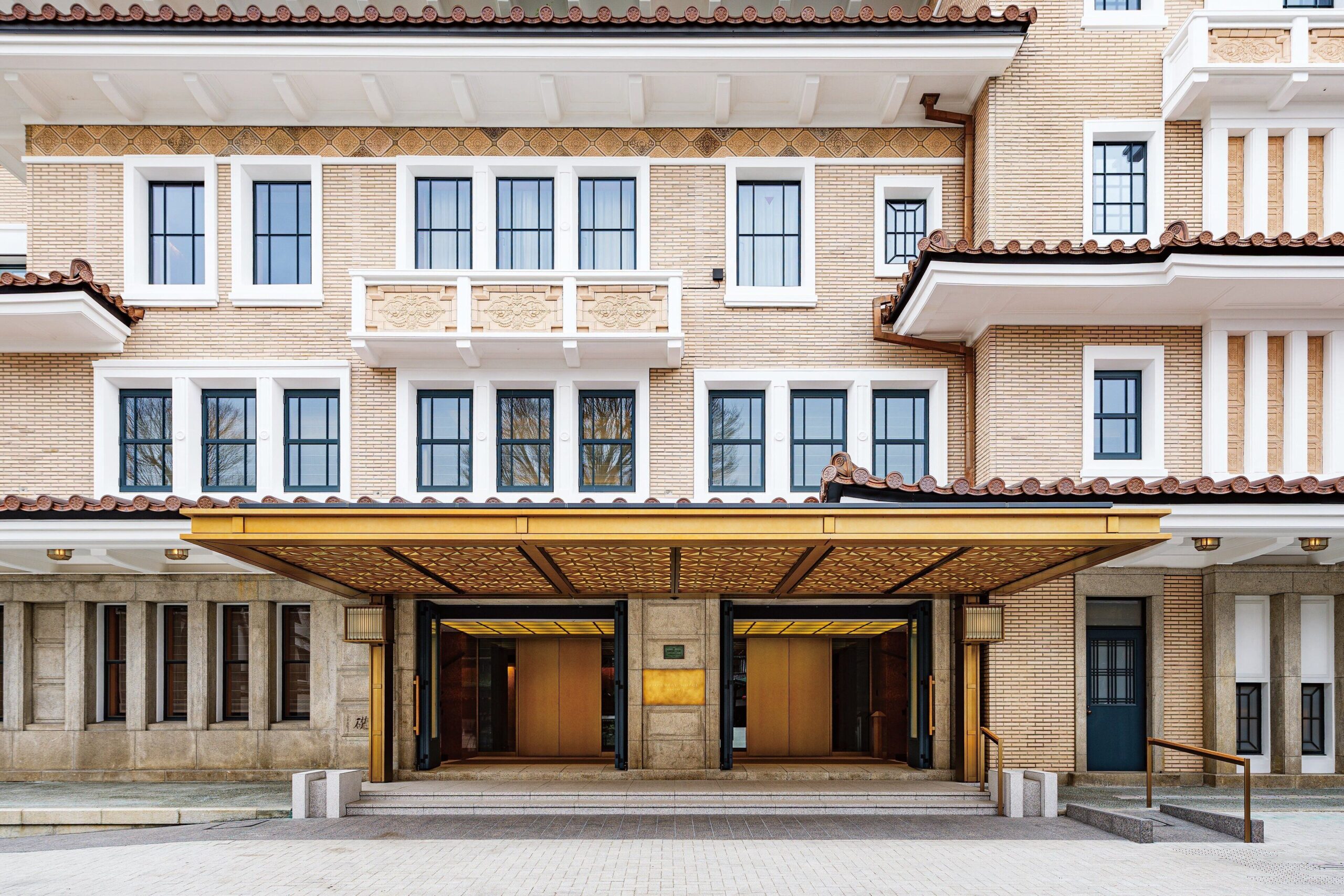
Hanamikoji leads south through Gion Kobu, past latticed facades and the grounds where the Miyako Odori has been performed for generations. Within the same Kaburenjo precinct stands a seven-storey building from 1936: Yasaka Kaikan, its tiered outline rising above the low roofs of the flower district.
On 5 March 2026, the registered tangible cultural property opened as the heart of Imperial Hotel Kyoto. The hotel holds 55 rooms—47 in the Main Building and eight in a newly built North Wing—together with places to dine, bathe and look back across the city. The hotel’s intimate scale allows the character of the old hall to come through—in its silhouette and in the original columns and window frames preserved within several rooms.
Booking Snapshot
- Best for
- Gion stays where architecture, dining and the neighbourhood matter as much as the room
- Heritage
- Yasaka Kaikan, completed in 1936, is preserved at the heart of the hotel
- Rooms
- 55 rooms: 47 in the Main Building and eight tatami rooms in the North Wing
- Dining
- French cuisine, teppanyaki, bar service and a guest rooftop shape the evening
- Location
- At the southern end of Hanamikoji within the Gion Kobu district
- Room decision
- Choose Heritage details and old window lines, North Wing tatami, or a larger suite and terrace
Check Imperial Hotel Kyoto rooms and current rates on Expedia →(Paid link)
In This Guide
Gion in the Old Window Frames
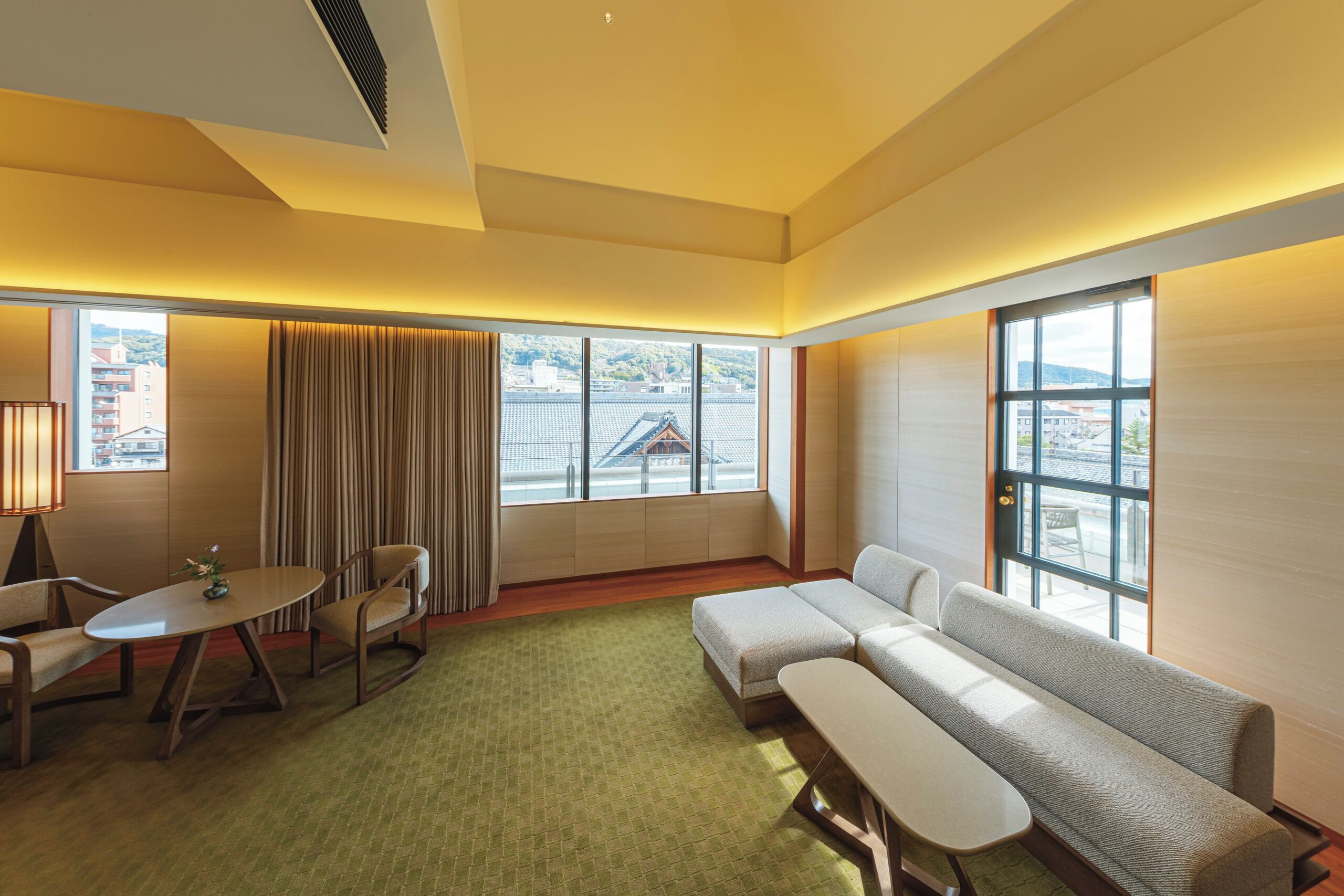
The rooms in the Main Building’s Heritage Area carry pieces of Yasaka Kaikan into the present. Original columns and window frames appear within rooms of 53 square metres and above; the largest Heritage Junior Suite opens 100 square metres behind a 22-square-metre balcony. The irregularities of an existing building have been kept as part of the plan. Its history is felt in smaller details: the line of a doorway, the surface of a wall and the view held by an old window.
Elsewhere in the Main Building, the earlier silhouette remains while the interiors take on a more contemporary line. The windows turn towards Kyoto and Gion, with the northern hills and Mount Hiei changing through the seasons. In the 103-square-metre Yasaka Suite, a 13-square-metre balcony looks towards Keninji; the 128-square-metre Imperial Suite places an expansive terrace before the Higashiyama mountains.
Every guest room measures at least 50 square metres. That breadth allows the building’s history to sit quietly in the background: there is room to notice the stone, the grain of the wood and the city held within the window before leaving for the evening.
| Category | Defining feature | Best for |
|---|---|---|
| Heritage Area | From 53㎡, with preserved columns or old window frames in selected rooms | Feeling the history of Yasaka Kaikan most directly |
| North Wing | Eight tatami rooms, from 50 to 71㎡ | A quieter, lower-scaled Gion atmosphere |
| Yasaka Suite | 103㎡ with a 13㎡ balcony towards Keninji | More space with a temple-side outlook |
| Imperial Suite | 128㎡ with an expansive Higashiyama-facing terrace | A landmark stay centred on space and view |
 (Paid link)
Tatami in the North Wing
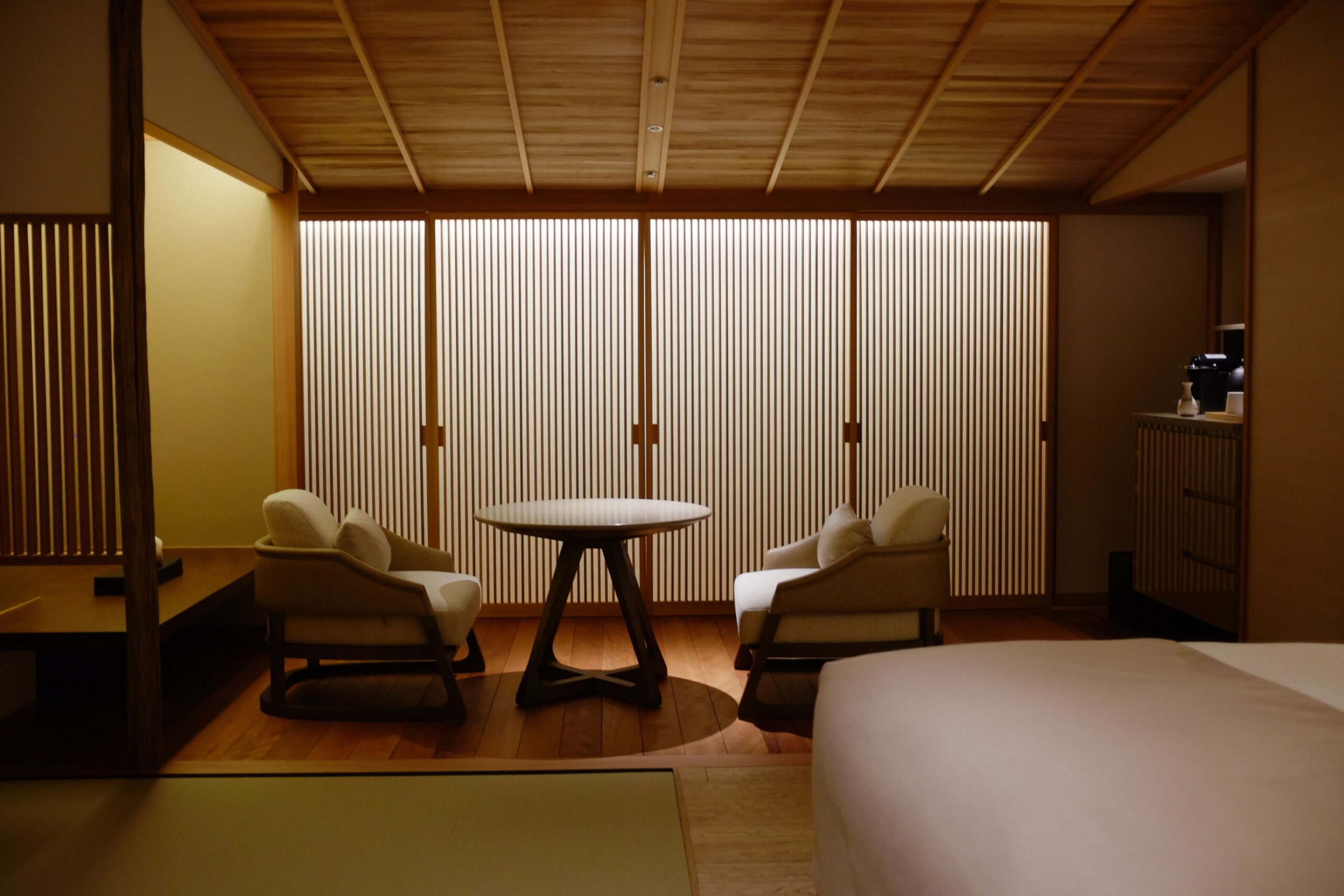
The North Wing draws on the quieter, more intimate scale of Gion. Its eight rooms are laid with tatami, a first for guest rooms at Imperial Hotel. North Wing Premier rooms measure 50 to 55 square metres, while Grand Premier rooms extend from 58 to 71 square metres.
Architect Tomoyuki Sakakida of New Material Research Laboratory designed the interiors around the idea that “old things are new.” Oya stone and rust-coloured stone from Shiraishi Island bring weight and age to otherwise restrained rooms. Here, the experience of the district is closer to the ground: tatami underfoot, the quiet proportions of a machiya and Gion continuing just beyond the glass.
 (Paid link)
Tea Before the Evening
Check-in takes place in a lounge reserved for staying guests. Tea and a seasonal Kyoto sweet accompany arrival; later in the afternoon, hotel-made pastries appear, followed towards dusk by Kyoto beer, wine and Champagne. The room changes gently with the hour, giving the beginning of the stay its own pause before dinner.
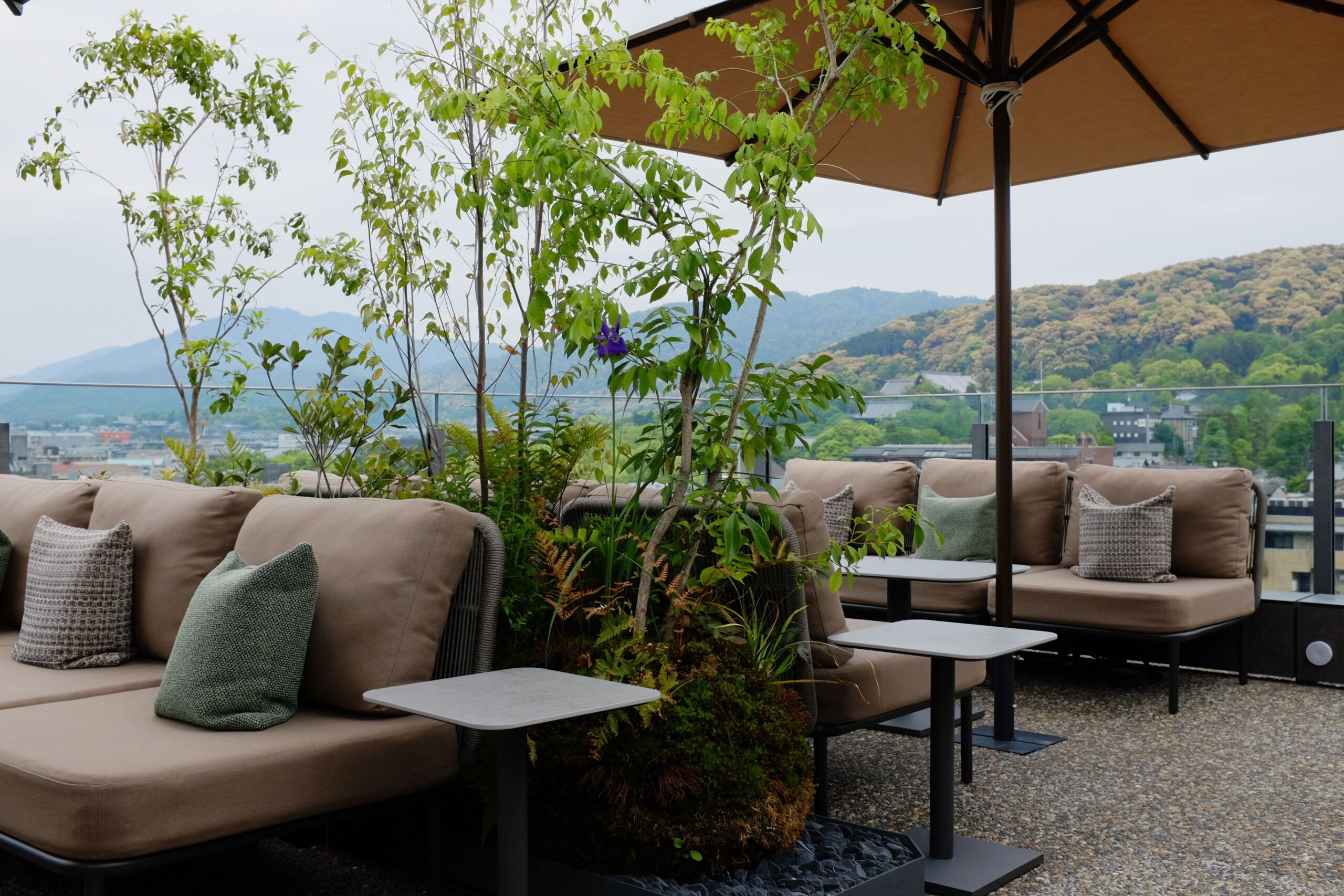
Above it, the roof of Yasaka Kaikan has been returned to hospitality. The building once held a lively beer hall; today, The Rooftop opens onto Kyoto’s roofs and sky from late March until around late November, weather permitting. It is principally reserved for hotel guests. As daylight leaves the tiled roofs, the old hall becomes a place from which to see the neighbourhood that has surrounded it for ninety years.
 (Paid link)
Twenty-Four Seasons at the Counter
Ren gives the evening to French cuisine and Kyoto’s twenty-four solar terms. Ten of its 18 seats face the counter, placing the cook’s hands, the warmth of a plate and its first aromas close to the table. Dinner is served from Monday to Saturday, with a private room completing the small dining room.
Yasaka carries the day from breakfast to dinner in a room warmed by a wood- and charcoal-fired oven. Imperial Hotel classics—pancakes and curry among them—share the menu with flame-grilled dishes. Later, the Old Imperial Bar on the seventh floor draws on the atmosphere of Frank Lloyd Wright’s former Imperial Hotel in Tokyo, bringing the hotel’s longer history into Gion through dark wood, low light and the measured work of the bar.
Kitagi Stone Beneath the City
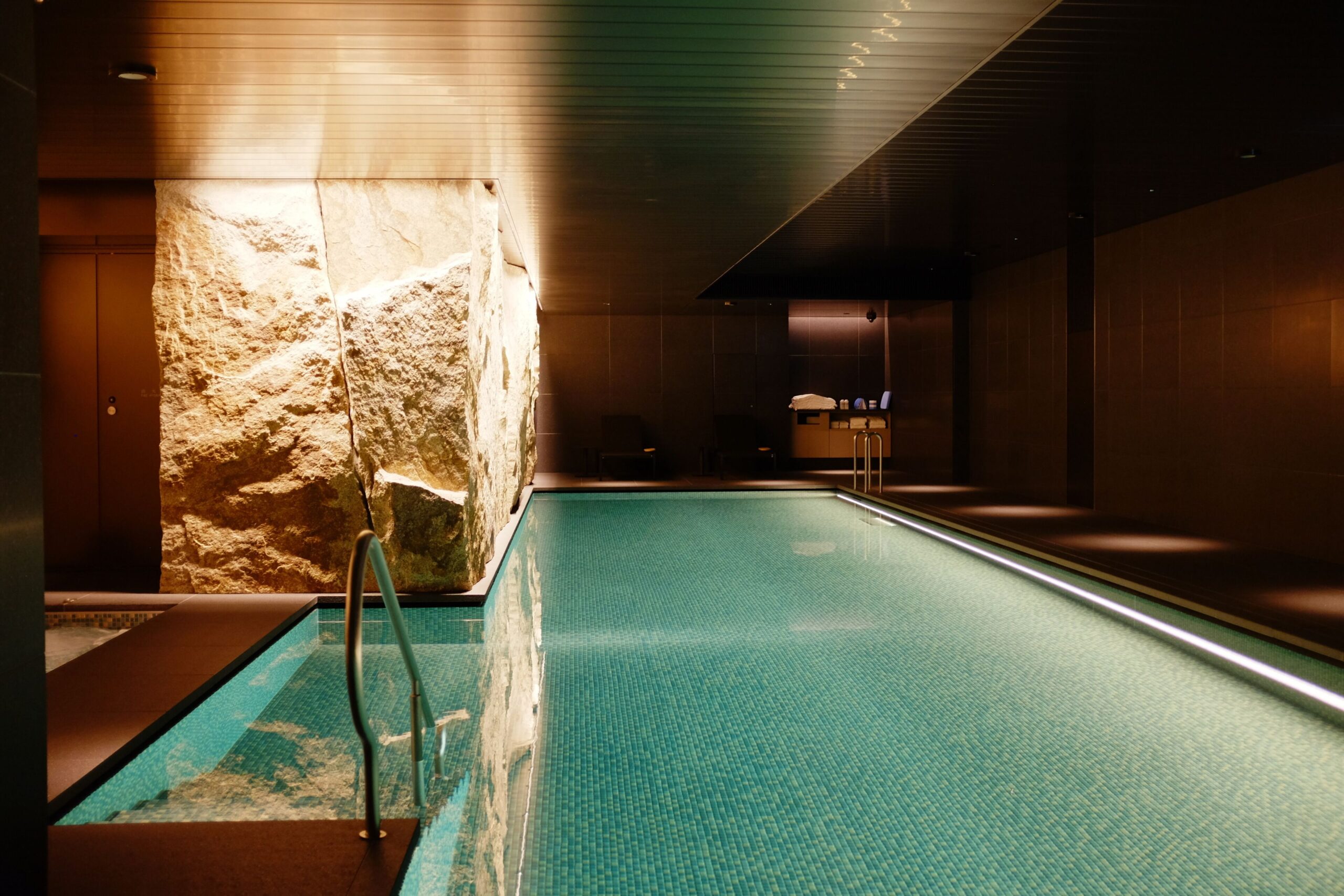
One floor below ground, a 17.5-metre pool lies beside the sauna and bathing facilities. The wall along the water is faced with Kitagi stone from Shiraishi Island in Okayama, the same granite used on the exterior of Yasaka Kaikan. The stone seen on the facade reappears beside the water, quietly tying the pool back to Yasaka Kaikan.
 (Paid link)
The pool, baths and sauna open from 7:00 to 22:00 for hotel guests, and the fitness room remains available throughout the day and night. THE SPA adds single and double treatment rooms, with treatments beginning in the afternoon. Morning can start below the city, with the pool’s stone wall catching the changing light before Gion wakes outside.
The Street Beyond the Glass
By morning, Hanamikoji is again a working street. Deliveries arrive, noren are set out and the Kaburenjo grounds settle after the previous evening. From one room, Keninji lies beyond the balcony; from another, Mount Hiei marks the edge of the city. In the North Wing, tatami keeps the gaze closer to Gion’s roofs and lanes.
Yasaka Kaikan stays present throughout the hotel—in the original window frames and columns, in the elevated views across Kyoto, and in the Kitagi stone beside the pool. The doors open back onto the flower district, with the building’s past still present in the room behind.
View current rooms and rates at Imperial Hotel Kyoto →(Paid link)
More Stories from Kyoto
Sowaka: A Former Ryotei in Gion
The Hotel Seiryu Kyoto Kiyomizu
Park Hyatt Kyoto in Higashiyama