

A private onsen changes the hours around dinner. There is no last walk through a corridor in a yukata, no need to leave the room when rain settles over the mountains. The bath is waiting beyond the shoji or terrace door, and the evening can follow the water’s pace.
Across Hakone, that intimacy takes many forms: a stone bath on the grounds of a former imperial villa, clear spring water beside a contemporary room, or a wooden inn reached across the Hayakawa River. The five ryokan below all place genuine hot-spring water within the privacy of the guest room, although at Gora Kadan and Yama no Chaya it belongs to selected room categories rather than every room.
Gora Kadan: Bathing on a Former Imperial Estate

Gora Kadan stands on the former summer-estate grounds of the Kaninnomiya branch of the Imperial Family. The setting still carries that history, while the rooms move between traditional Japanese materials and a more contemporary restraint.
Private bathing depends on the room category. The current collection includes detached villas, special rooms with stone or hinoki baths, and Japanese rooms with open-air baths, alongside standard rooms without one. Checking the exact category matters here. The property’s hot-spring water rises from its own source, and dinner follows a kaiseki menu that changes with the month and season.
Read our Gora Kadan story, or view current rooms and rates on Expedia →(Paid link)
Hakone Suishoen: Twenty-Three Rooms Around a Taisho Villa

At Hakone Suishoen, every room holds a private open-air bath with free-flowing water from the source. There are only 23 rooms, and each has its own plan, art and design. A bath beneath green leaves may sit beside a long terrace; another room draws the water closer to its interior.
The centre of the grounds is the former Mitsui family villa, completed in 1925 and now registered as a Tangible Cultural Property. It houses the Momiji restaurant, where Japanese and teppanyaki dinners bring the evening into rooms shaped by Taisho-era architecture. Afterward, the short return to a bath still warm beside the trees belongs entirely to the room.
Read our Hakone Suishoen story, or view current rooms and rates on Expedia →(Paid link)
Kinnotake Sengokuhara: Nine Suites and Bamboo

Kinnotake Sengokuhara reduces the ryokan to nine individually designed suites. Every one has a private open-air bath filled with 100 per cent natural, free-flowing hot-spring water. The smallest details change from room to room, but the bath is never an optional addition.
Dinner and breakfast are served in the room, leaving little reason to interrupt the evening. The bar is the principal shared space, set against the property’s bamboo-lined reflecting pool. Back in the suite, water continues to enter the bath from the source, ready before dinner and again in the quiet of the following morning.
Read our Kinnotake Sengokuhara story, or view current rooms and rates on Expedia →(Paid link)
Fufu Hakone: Clear Water in the Room, Milky Water Beyond It

Fufu Hakone’s 39 rooms are each different, yet every room has a private bath supplied with clear hot-spring water. Windows can be opened to the mountain air, bringing the scent and temperature of the forest close to the bath.
A second spring appears in the large communal bath, where the water is milky white and the Hakone ridgelines fill the windows. Dinner is composed around a choice of preparations, including tempura, sushi, Wagyu and teppanyaki, served at counters or in private rooms. A shuttle connects the property with Gora Station by prior arrangement.
Read our Fufu Hakone story, or view current rooms and rates on Expedia →(Paid link)
Yama no Chaya: Across the Suspension Bridge
 (Paid link)
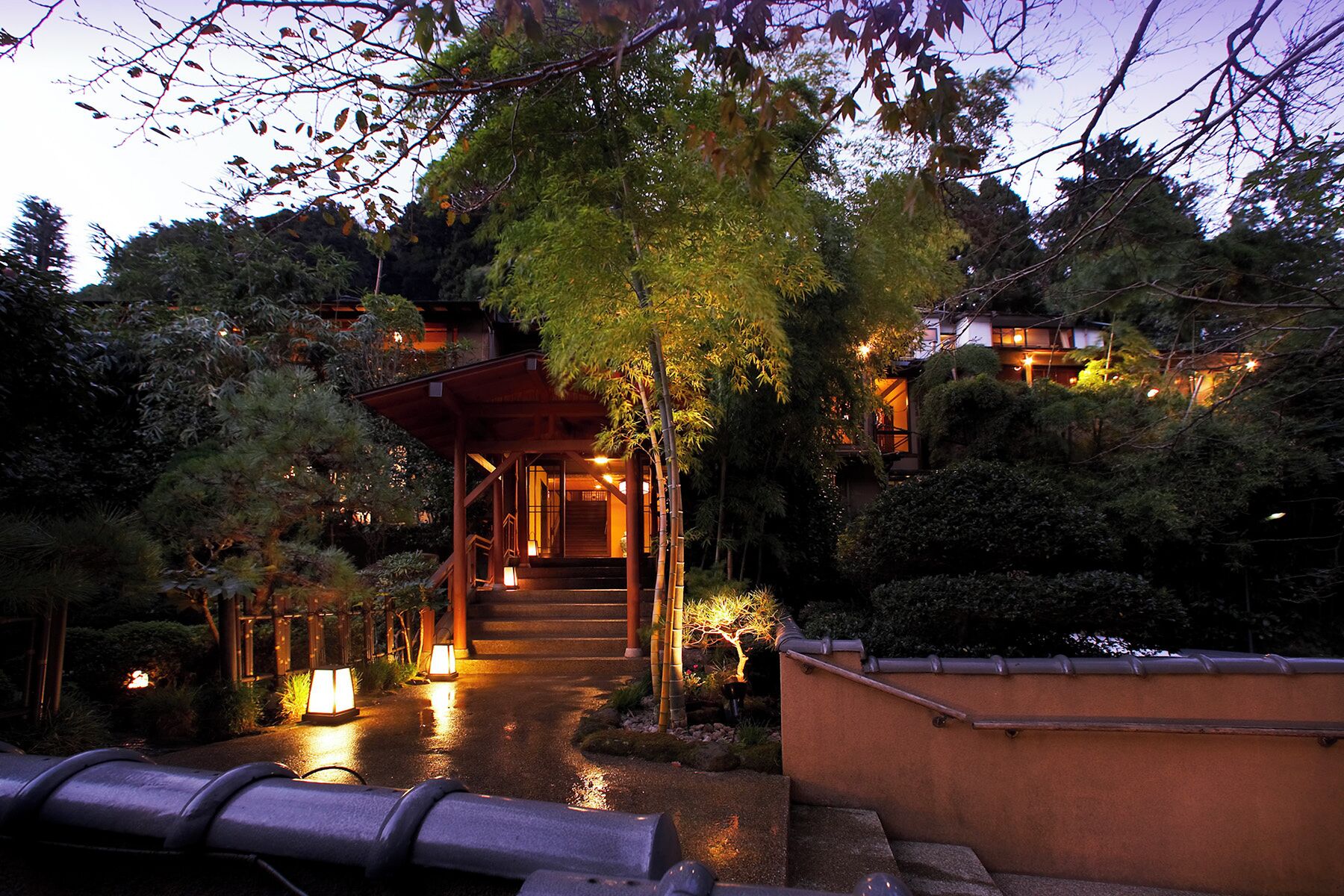
Yama no Chaya begins with a suspension bridge over the Hayakawa River. Beyond it, a wooden inn rises through deep bamboo on the slope of Tonosawa. The sound of the river and the narrow paths between the buildings stay present as the day moves towards dinner.
Eleven of its 15 rooms have a private open-air bath; four standard rooms do not, so the category should be confirmed before booking. Water in every bath on the property comes from the inn’s own spring, drawn from 300 metres underground. Seasonal kaiseki, bamboo, river and bath form one continuous evening, with the bridge waiting again at departure.
Read our Yama no Chaya story, or view current rooms and rates on Expedia →(Paid link)
The Water Stays With the Room
Once the door closes, the evening belongs to the room: steam rising from stone or hinoki, bamboo moving beyond an open window, the river heard below the trees. The water remains through the night, ready again before breakfast.

