Japan has around 3,000 onsen destinations and nearly 28,000 individual spring sources. Among them, Beppu stands apart.
Over 2,800 spring sources — roughly one in ten of all hot spring sources in Japan — are concentrated in this single city. The flow rate exceeds 100,000 liters per minute — the highest in Japan. And of the ten hot spring water types officially classified in Japan, seven can be experienced in Beppu alone.
I grew up in Oita Prefecture — home of Beppu. In Oita, onsen is not a tourist attraction. It is how people live. Some households in Beppu have no bath at home — because the neighborhood onsen, just a few minutes’ walk away, has always been enough.
This guide covers what you need to know before you step into a Japanese onsen — the universal rules, the things most travel sites don’t mention, and a few things that are specific to Beppu that even experienced Japan travelers sometimes get wrong.
Before You Enter: Preparation
Remove all makeup before entering. This is not a suggestion. Skincare products and cosmetics affect the water quality for everyone sharing the bath. Take this seriously.
Tie up long hair. Hair should not touch the water. If your hair is long, bring a hair tie and put it up before entering the bathing area — not after you’re already at the edge of the tub.
Leave valuables and jewelry in the locker. Do not bring your phone, watch, or wallet into the bathing area. More importantly, remove all jewelry before entering. Depending on the mineral content of the water, rings, necklaces, and other accessories can discolor or deteriorate. If something is precious to you, leave it in the locker. Most facilities provide lockers in the changing room.
Do not eat immediately before. Wait at least 30 minutes after a meal before bathing. Bathing on a full stomach puts unnecessary strain on your body and is best avoided.
Do not drink alcohol before entering. This is a safety issue, not just etiquette. The combination of hot water and alcohol can cause fainting or worse.
In the Washing Area: Clean First, Always
You do not enter the shared bath without washing first. This is the most fundamental rule of onsen etiquette, and the one most often overlooked by first-time visitors.
Sit down at a washing station, rinse your body thoroughly with the shower or ladle, and wash your hair and body with soap before approaching the communal tub. Do not stand while washing — sit on the provided stool.
When you finish washing, rinse the station completely. Remove any soap or shampoo from the stool, basin, and floor so the next person finds it clean.
Do not use your towel or belongings to reserve a washing station. If you step away, the spot is available for others. Claiming space with objects is considered inconsiderate.
In the Bath: The Rules Most People Don’t Know
Do not put your towel in the water. This is probably the most commonly broken rule among foreign visitors. Your towel should be folded and wrapped around your head, or left on a shelf inside the bathing area if one is available. It does not go in the water, and it should not rest on the edge of the tub.
Do a kake-yu first. Before entering the communal tub, pour hot water over your body — starting from your feet and working upward, toward your heart. This is called kake-yu and it serves two purposes: it acclimates your body to the temperature, and it is a final rinse before entering shared water.
Enter slowly and quietly. Do not jump in. Lower yourself gently.
Do not add cold water without asking. This is particularly important in Beppu, where the water runs very hot and locals often prefer it that way. If you find the temperature too high, ask the other bathers first: “Is it okay to add some cold water?” Do not simply turn on the cold tap. Some bathers have been waiting for that exact temperature.
Do not sit on the edge of the tub. In Beppu especially, sitting on the rim of the bath is considered poor manners. It is not a bench.
Keep your voice down. Onsen is a place for quiet relaxation. Loud conversations — and especially phone calls — are not appropriate in the bathing area.
Limit your time in the water. For a first visit, 3 to 10 minutes is enough. The water is hot and the minerals are strong. Depending on the spring type and your own constitution, you may feel a wave of fatigue after bathing — this is a normal response to the therapeutic effects of the water. Rest, and do not push yourself. You can re-enter after a break if you wish.
After Bathing: One Thing Many People Get Wrong
After leaving the bath, rinse off briefly with the shower, then dry yourself thoroughly inside the bathing area before moving to the changing room. This keeps the floor and mat dry for others — a basic courtesy in any shared facility.
Drink water after bathing. You have been sweating. Rehydrate before you do anything else.
Rest. Your blood pressure has changed during the bath. Sit quietly for a few minutes before rushing out.
Tattoos: The Honest Answer
Many onsen facilities in Japan prohibit tattoos — you will often see this stated clearly on a sign at the entrance. However, attitudes are changing, and many facilities now accept tattoos if covered with waterproof tape, available at Japanese pharmacies.
If you don’t see a clear policy at the entrance, ask at the front desk: “Is it okay if I cover my tattoo with waterproof tape?” Answers vary by facility, but more of them say yes to covered tattoos today than you might expect. And a small number of facilities go further and accept tattoos openly — including one in Beppu, covered later in this article.
Private baths (kashikiri-buro or kazoku-buro) are the most hassle-free option regardless. These are baths reserved for a single group — typically bookable by the hour — where tattoo policies do not apply. In Beppu, private bath facilities are especially common and easy to find.
Menstruation: What No Travel Guide Tells You
In Japan, the general custom is to refrain from bathing in communal onsen during menstruation, regardless of whether a tampon is used. Few facilities state this as a written rule, but it is widely understood as a matter of hygiene and consideration for the people sharing the water.
If your travel dates are fixed and an onsen stay is the centerpiece of your trip, it is worth speaking with your doctor before you travel — adjusting the menstrual cycle with medication is one option a doctor can walk you through.
Alternatively, a room with a private open-air bath removes the issue entirely — several Beppu hotels covered later in this article offer exactly that.
If You’re Visiting Beppu Specifically
Beppu is different from most onsen destinations in Japan. It has more hot spring sources than anywhere else in the country, and its public baths — called jimo-sen, or “local baths” — are woven into everyday life in a way that even other Japanese cities don’t match.
When you enter a jimo-sen in Beppu, you are stepping into someone’s neighborhood bathroom. Greet the other bathers when you enter. Say goodbye when you leave. This is not tourism etiquette — it is simply how people behave.
Many public baths in Beppu do not provide showers, soap, shampoo, or hair dryers. Bring your own towel and toiletries, or purchase them at the facility for a small fee — typically a few hundred yen.
The water in Beppu runs genuinely hot. Do not be embarrassed to ask before adding cold water, and do not assume that because you find the temperature extreme, others do too. Some locals have been bathing at these temperatures their entire lives.
If a jimo-sen still feels intimidating, Hyotan Onsen in the Kannawa district makes a good stepping stone. Founded in 1922, it is the only onsen facility in Japan to have earned three Michelin Green Guide stars — seven times in a row. You can try several bath styles in one visit, including waterfall baths, sand baths, steam baths, and cypress tubs. The ticket machines have English menus, signage throughout the facility is multilingual, and tattoos are accepted as they are, no covering required. Entry to the main baths is 1,160 yen for ages 13 and up, and private family baths start at 2,400 yen for 60 minutes.
Where to Stay in Beppu: Three Hotels That Make Onsen Easy
If reading this far has made you slightly nervous about all the rules, don’t worry. Beppu has hotels where even a first-timer can settle into onsen life without stress. Here are three, each with a different character.
ANA InterContinental Beppu Resort & Spa
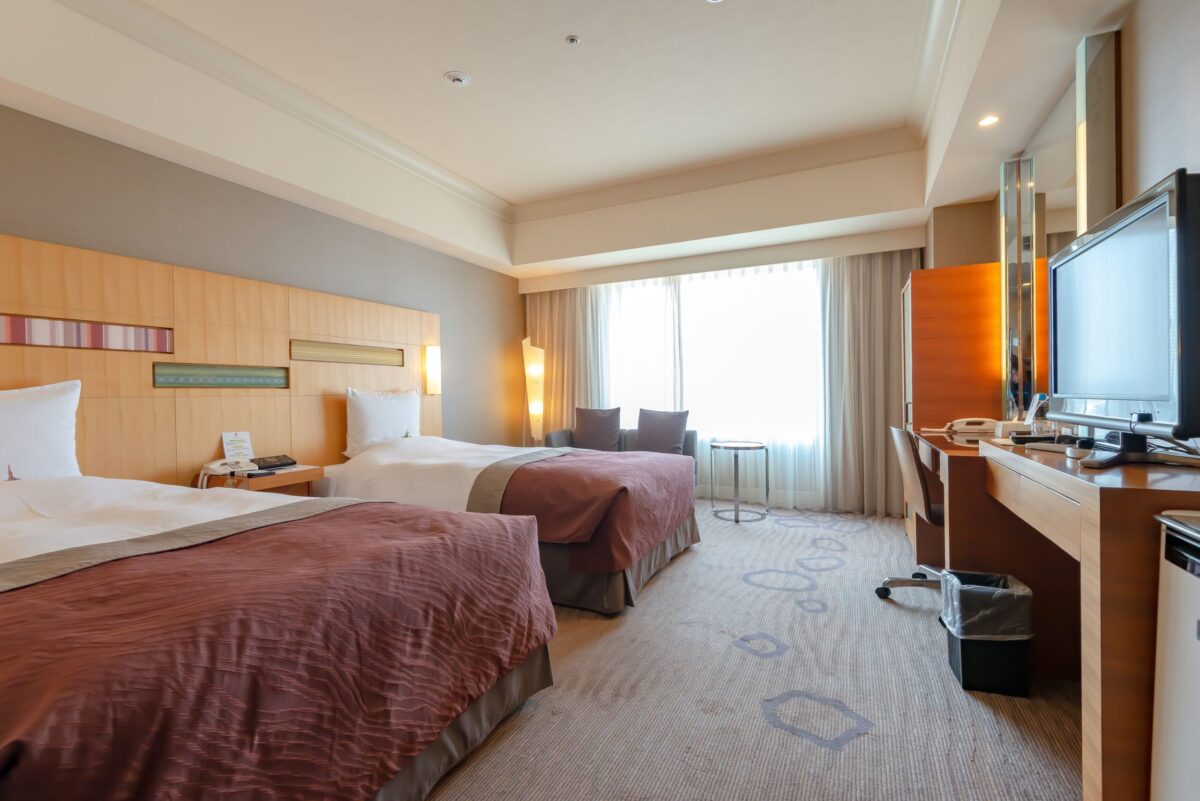
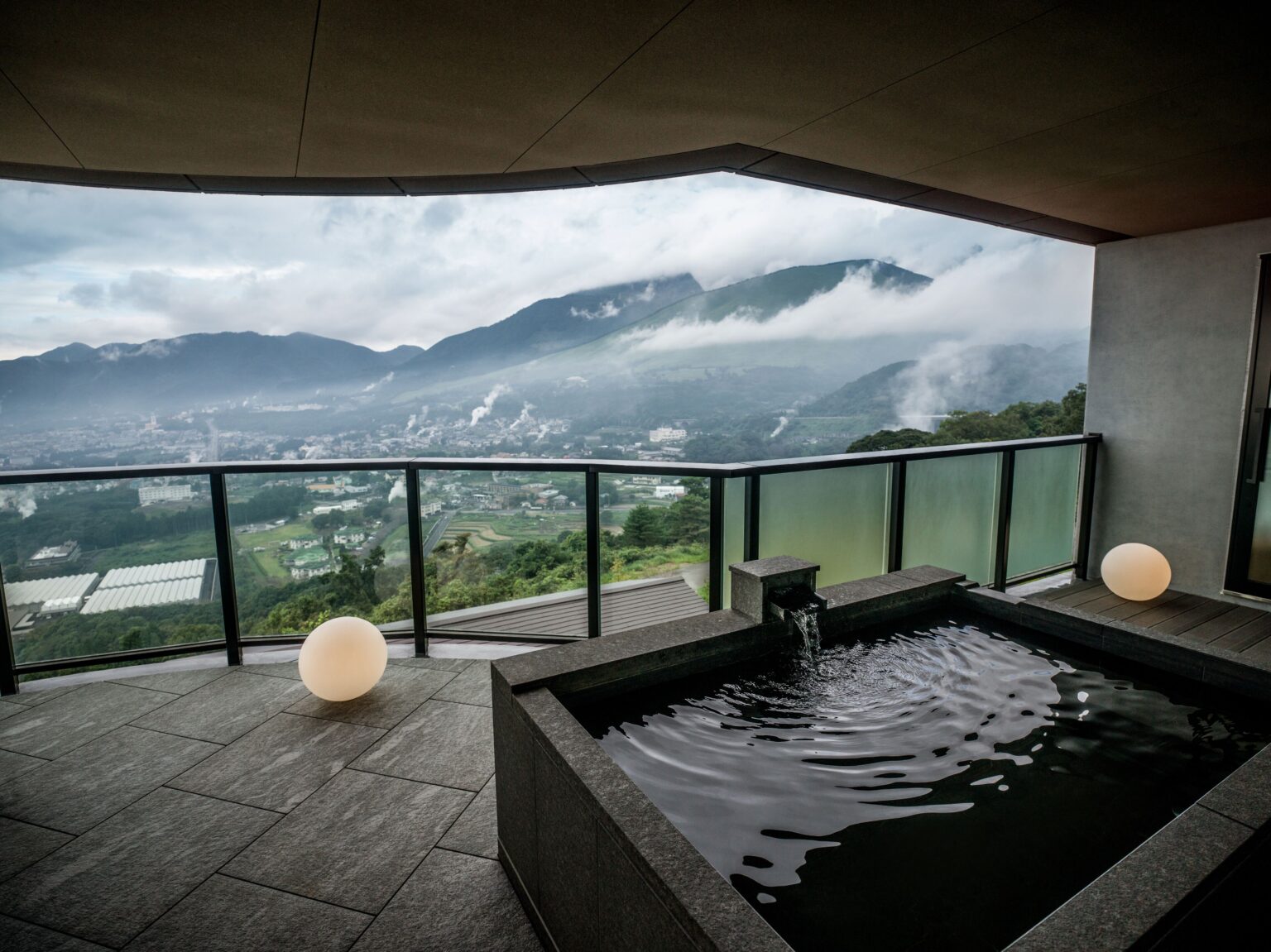
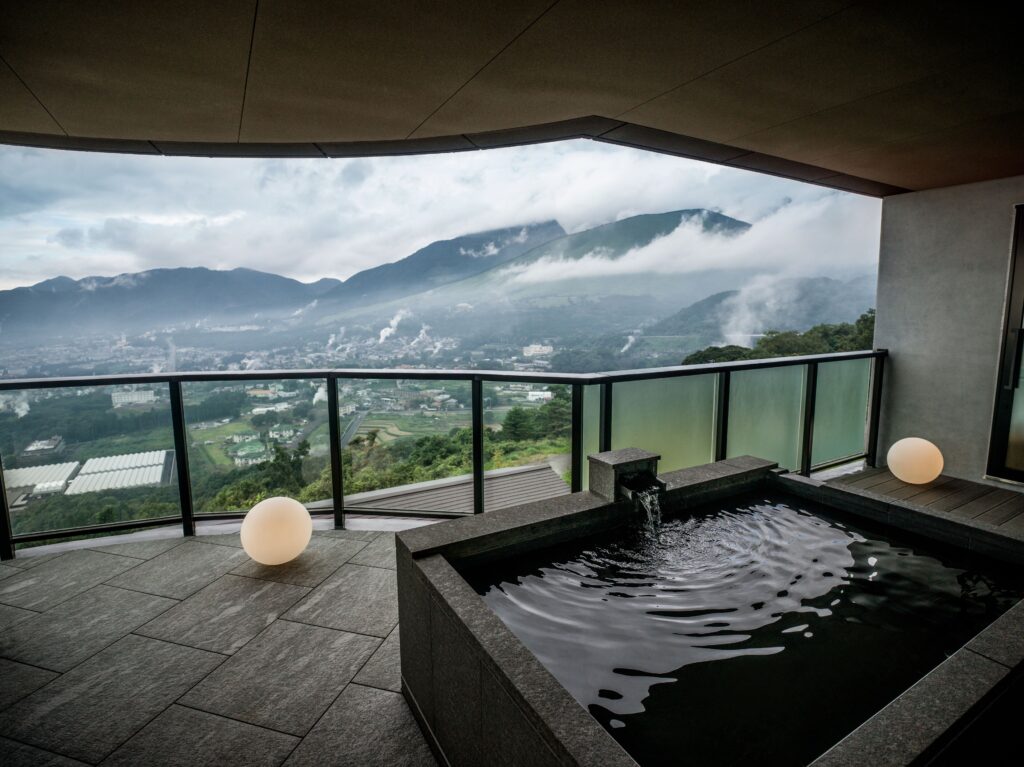
Opened in 2019, this is Beppu’s first international luxury resort. It sits on a hillside in the Kannawa area, and both the open-air baths and the infinity pool look out over Beppu Bay and the city below. All 89 rooms measure at least 60 square metres. The water comes from Myoban, known as one of Beppu’s “beautifying” springs. Private baths are available, so if you are not yet confident about communal bathing etiquette — or you have tattoos — you can start there. A free shuttle runs from Beppu Station and takes about 20 minutes.
Check availability and rates on Expedia →(Paid link)
KAI Beppu (Hoshino Resorts)
A hot spring ryokan designed by architect Kengo Kuma, opened in 2021. All 70 rooms face Beppu Bay, and the location matters: it stands in the Kitahama district, about a 10-minute walk from Beppu Station — and about the same distance from Takegawara Onsen and the jimo-sen culture this article describes. A natural rhythm forms here: practice the etiquette in the hotel’s large bath as a guest, then walk to a local bathhouse the next morning. The interior is modeled on Beppu’s onsen streets, and there is a footbath terrace overlooking the bay.
Check availability and rates on Expedia →(Paid link)
AMANE RESORT SEIKAI
A ryokan on the Shoningahama waterfront where every room comes with an ocean view and a private open-air bath fed directly from the source. In practical terms, this means you can soak as long as you like without thinking about communal bath rules at all. For guests with tattoos, travelers whose trip happens to overlap with their period, or families with small children, there is no easier option. The property has three dining venues, with menus built around seafood from Beppu Bay. It is about a 10-minute walk from JR Beppudaigaku Station.
Check availability and rates on Expedia →(Paid link)
A Final Note
Onsen etiquette is not complicated. The underlying principle is simple: you are sharing something with other people, and those other people deserve consideration.
Follow the rules, move quietly, and pay attention to what others around you are doing. You will be welcomed. Beppu in particular has a long tradition of hospitality toward visitors. That warmth is real, and it goes both ways.
Above all, don’t forget to enjoy yourself. Onsen is one of Japan’s greatest pleasures — and once you know the rules, there is nothing left to worry about.