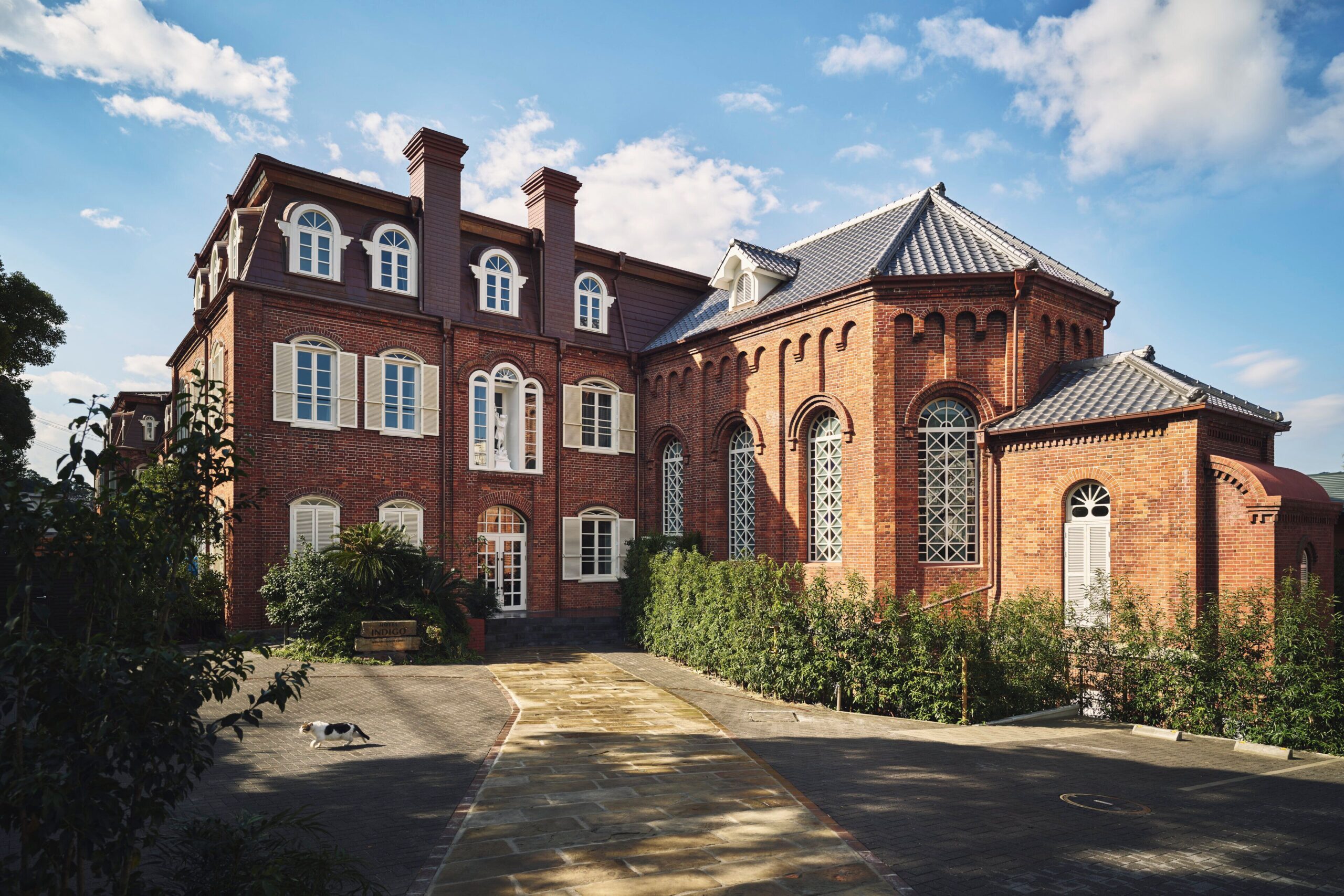
Beppu first appears as steam. It rises between houses, drifts above the slopes of Kannawa and softens the line where the city meets the bay. ANA InterContinental Beppu Resort & Spa looks back over that landscape from higher ground, placing the rituals of a contemporary resort—terraces, a heated infinity pool, a club lounge and expansive rooms—above one of Japan’s most deeply rooted hot-spring towns.
The hotel opened in 2019 with 89 rooms and suites. Its scale is intimate enough for the view and materials to remain legible, yet substantial enough to support a full resort day. Natural onsen, a spa, several dining settings and an outdoor pool are not separate attractions so much as parts of one sequence: arrival from the station, the first sight of rising steam, an afternoon swim, a bath at dusk and dinner after the lights have appeared along Beppu Bay.
The booking decision: ANA InterContinental Beppu is most persuasive for travellers who intend to give part of the journey to the resort itself. A Classic room already provides access to the public onsen and infinity pool, with unusually generous indoor and terrace space; the premium for a private-onsen or Club room is most meaningful when bathing in seclusion or lingering at the hotel will shape the stay. One night works with an early arrival. Two allow the pool, bathing, dinner and Beppu below to unfold without haste.
Booking Snapshot
- Best for
- Couples who want Beppu onsen with the space and service of a contemporary resort
- Rooms
- 89 rooms and suites; entry categories are already generous at 62–68㎡ including terraces
- Private onsen
- Available only in room names that specify it; Classic and Club do not automatically mean private bathing
- Resort time
- Public onsen, heated infinity pool, spa and several dining settings reward an early arrival
- Access
- On the hillside above Kannawa, with a scheduled complimentary shuttle from Beppu Station
- Room decision
- Choose view, private onsen and Club access separately; each changes the value of the stay
Check ANA InterContinental Beppu rooms and current rates on Expedia →(Paid link)
In This Guide
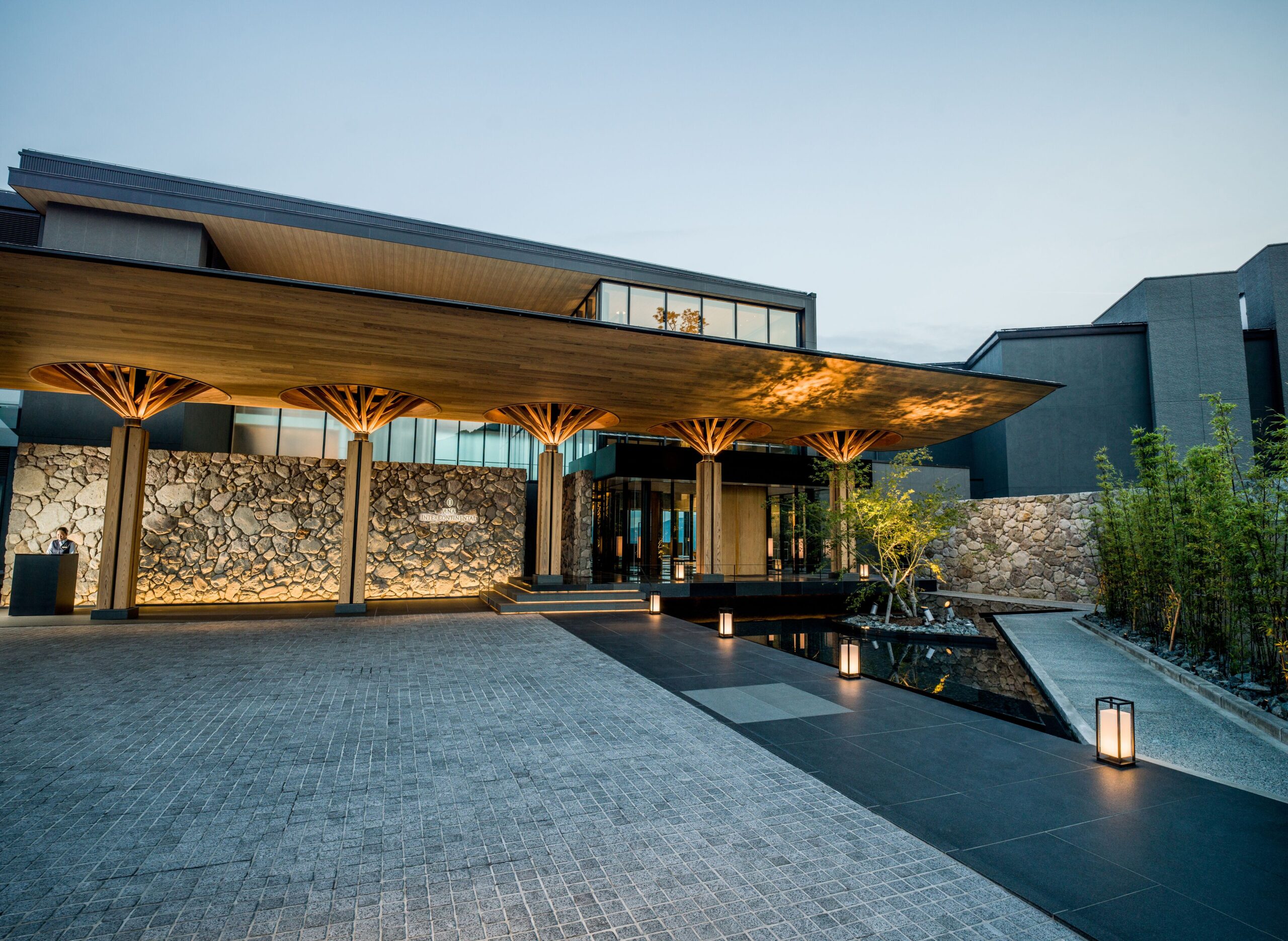
This is not the hotel to choose simply because it carries an international name. Its distinction lies in how carefully that name has been adapted to Beppu. The strongest stays here make time for the property itself and choose the room category with some precision, particularly when a private onsen or Club InterContinental access is central to the trip.
The Road Above Kannawa
ANA InterContinental Beppu stands in the hills above Kannawa, away from the compact centre around JR Beppu Station. The separation is part of the experience. Streets narrow, the gradient becomes more apparent and the urban view opens behind the car. On arrival, the atmosphere is closer to a mountainside retreat than a city hotel, although Beppu remains continually present below.
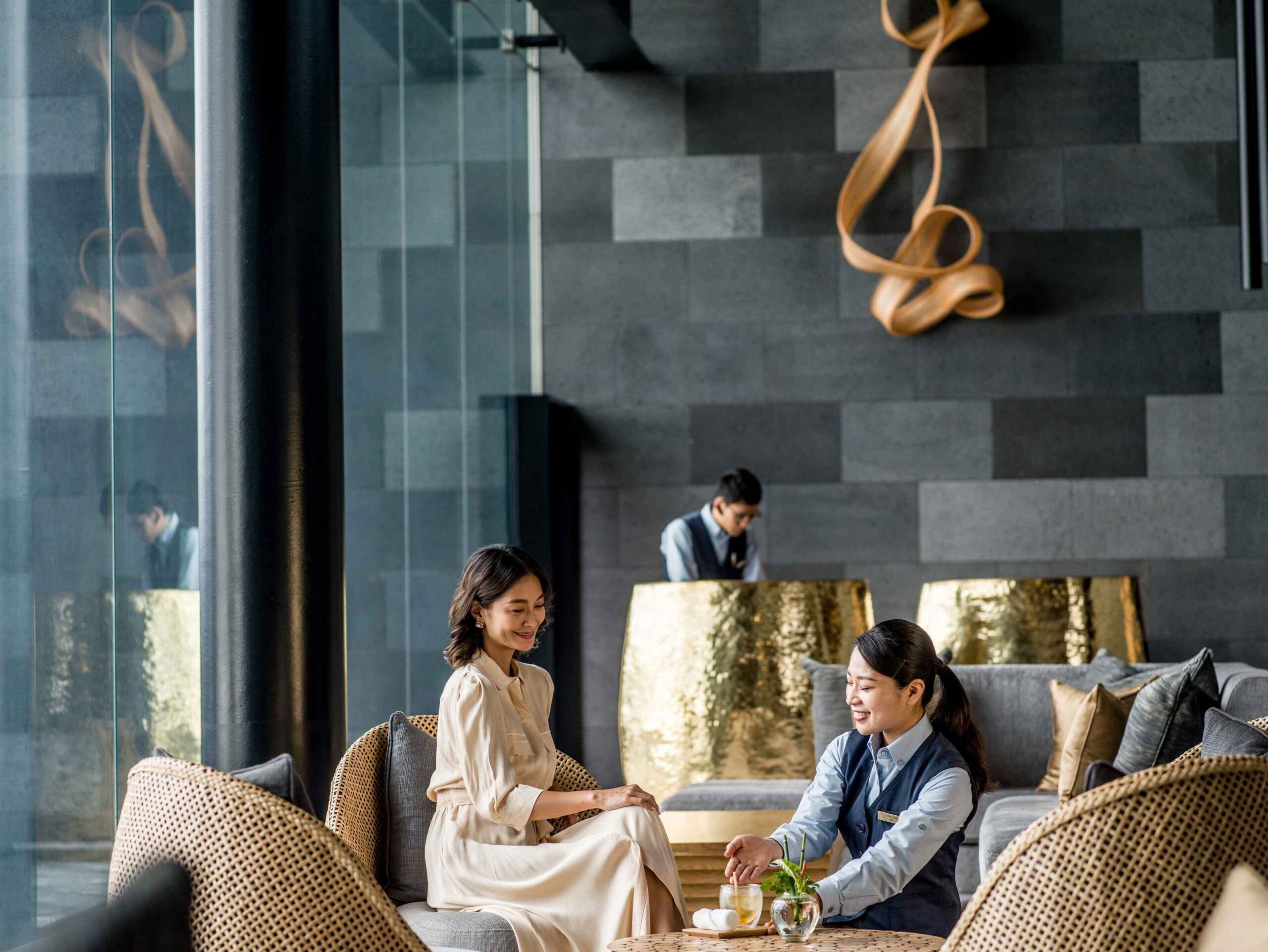
The hotel operates a complimentary shuttle from Beppu Station on a set timetable. Advance arrangements are sensible: the service has limited seating, and the official access information asks larger parties to reserve. A taxi provides more flexibility, especially for an early arrival or late departure. Guests planning several restaurant visits in central Beppu should account for the distance; those intending to spend an afternoon and evening at the resort will find the hillside position much easier to appreciate.
Check-in begins at 3:00pm and check-out is at 11:00am. That schedule supports a coherent one-night stay if arrival is not delayed: settle into the room, use the pool while daylight still reaches the bay, move to the onsen before dinner and return to the view in the morning. Two nights allow the hotel to feel less like a collection of facilities and more like a place with its own rhythm.
Choosing the Room
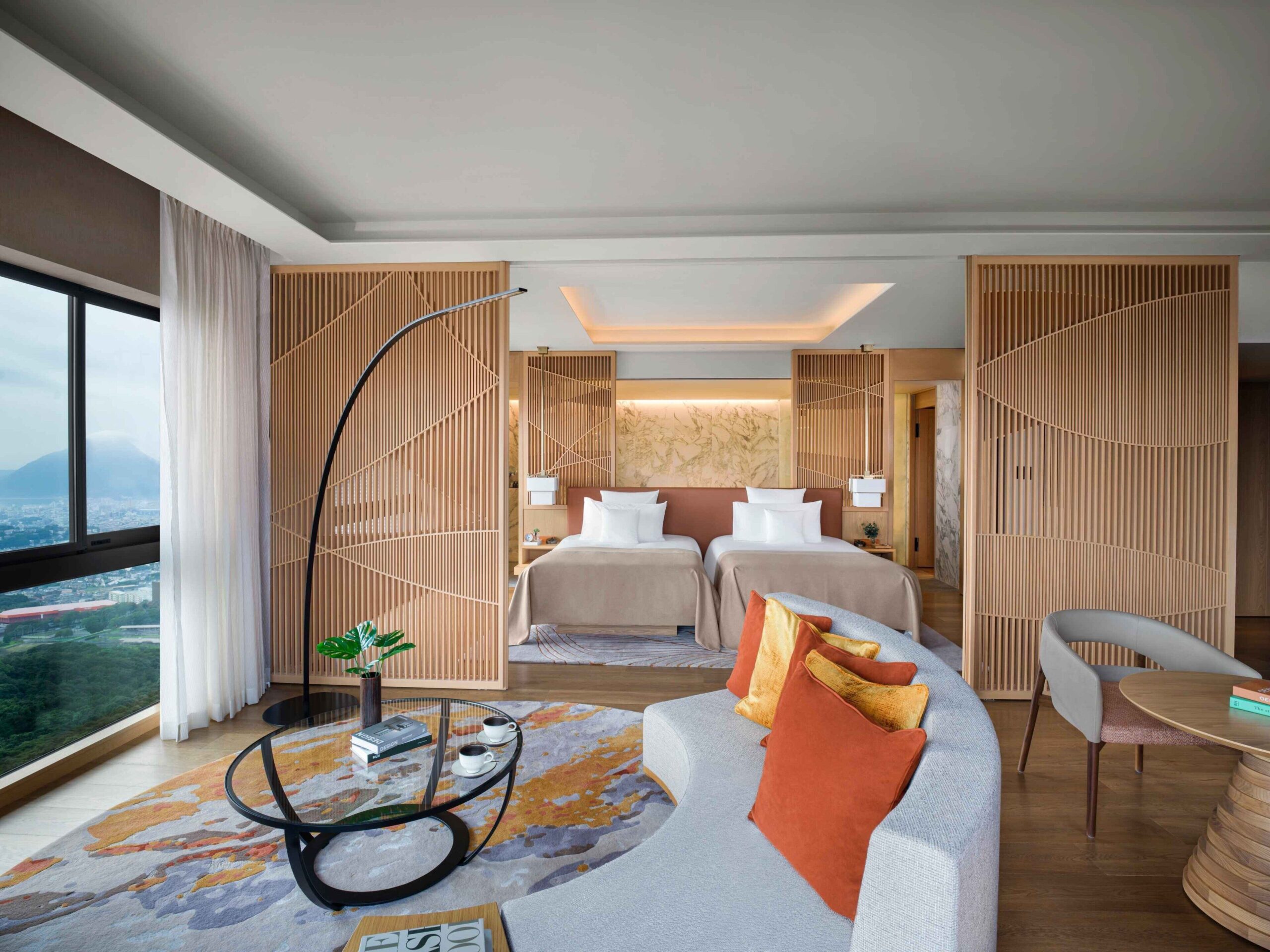
Even the entry categories are unusually generous. Classic Rooms range from 62 to 68 square metres when their terraces are included, with either one king bed or two double beds depending on the category. Wood floors, bamboo details, stone and marble give the interiors a composed warmth, while the bathroom is arranged with a separate bathtub, walk-in shower and twin basins. A screen between bedroom and bathroom can be raised, drawing daylight deeper into the plan.
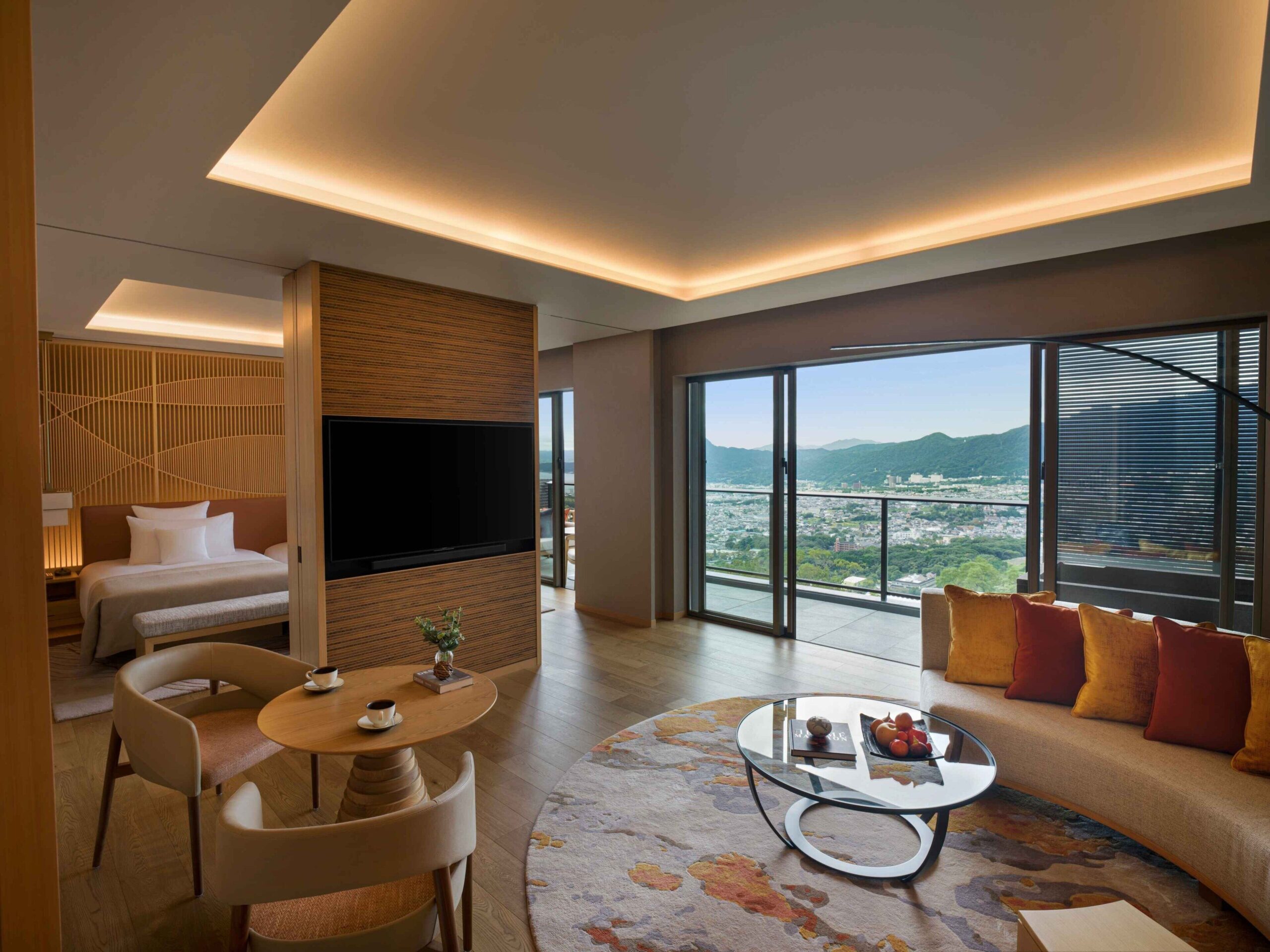
The terrace matters almost as much as the interior. In a 68-square-metre City View room, 16 square metres are outdoors, furnished for sitting rather than treated as a narrow balcony. Mountain-facing rooms offer a calmer, greener composition; City View and upper-floor categories bring Beppu and the bay more directly into the stay. Exact room names deserve careful attention at booking because view, floor, lounge access and private bathing are separate decisions.
Club InterContinental rooms with a private onsen are among the property’s most persuasive choices. They remain 68 square metres, but place an open-air hot-spring bath on the terrace, allowing the city’s steam and the water beyond to become part of a private evening. Other Club rooms include lounge access without a terrace onsen, so the word “Club” alone should not be taken to mean that the room has its own bath.
The suites widen both the plan and the view. One-bedroom options extend from approximately 96 to 102 square metres, while Panorama Suites reach 145 square metres and the largest two-bedroom configuration 212 square metres. Selected suites include a private onsen on the terrace; others may use a hot tub instead. For most couples, however, the central choice is simpler: a spacious Classic room with shared onsen access, or a Club private-onsen room that moves the defining Beppu experience onto the terrace.
The practical divide is therefore not simply between a room and a suite. Travellers content to use the public onsen may find the Classic categories entirely sufficient; those who want to bathe privately without arranging the evening around shared facilities should look directly at room names that specify a private onsen. At this hotel, the complete category matters more than a general promise of a Beppu view.
| Room family | What to check | Best for |
|---|---|---|
| Classic | 62–68㎡ including terrace; view varies; public onsen access | Space and resort facilities without paying for private bathing |
| Club InterContinental | Lounge access; only named private-onsen categories include a terrace bath | Longer hotel time and a more serviced stay |
| Private-onsen Club | A 68㎡ example combines 52㎡ indoors with a 16㎡ terrace and open-air onsen | Couples making private bathing central to the trip |
| Suites | Approximately 96–212㎡; bath type, view and Club access vary by exact name | Separate living space, celebrations or larger parties |
Compare available room plans for your dates on Expedia →(Paid link)
Onsen Above the Bay
The public onsen is the quiet centre of the hotel. Japanese cypress, stone and restrained lighting frame water drawn from the Myoban area, long associated in Beppu with skin-softening mineral qualities. Indoor and open-air baths allow the experience to shift with the weather. The view is elevated rather than enclosed: hills, city and bay replace the garden wall found in many traditional inns.
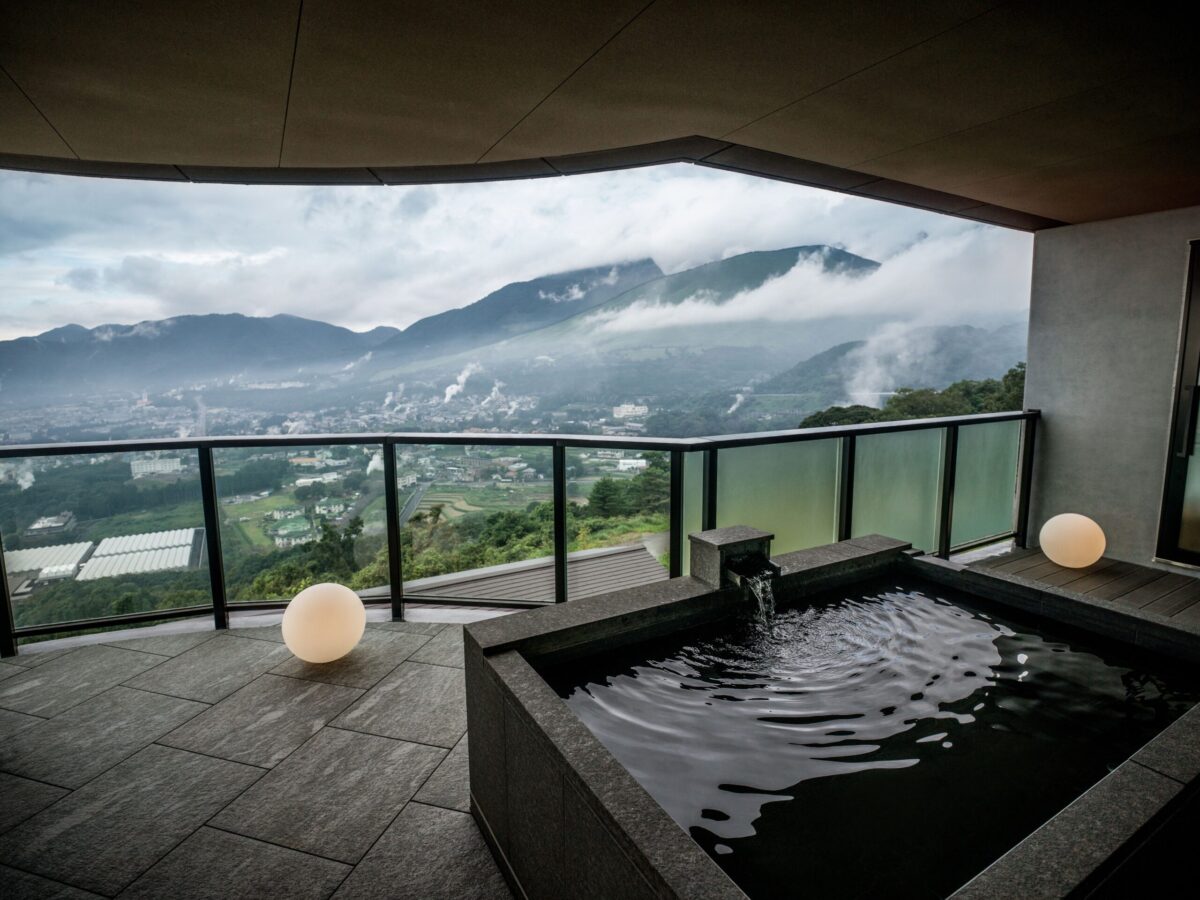
For first-time visitors, the hotel offers an unusually gentle introduction to communal bathing. The architecture is polished, instructions are clear and the wider resort gives the bath a natural place in the day. Guests with tattoos are currently permitted to use both the hotel onsen and the private Family Onsen, according to the hotel’s published guidance. Children under twelve may use the onsen with a parent or guardian, with the usual age and gender conditions for younger children.
The Family Onsen provides another level of privacy. These reservable rooms pair an outdoor hot-spring bath overlooking Beppu with a lounge, daybed and separate bathroom. They are charged separately and should be booked rather than assumed to be included. For families, guests with tattoos who still prefer privacy, or anyone uneasy about a first communal bath, the arrangement can be more valuable than adding another restaurant meal or room upgrade.
The Infinity Pool
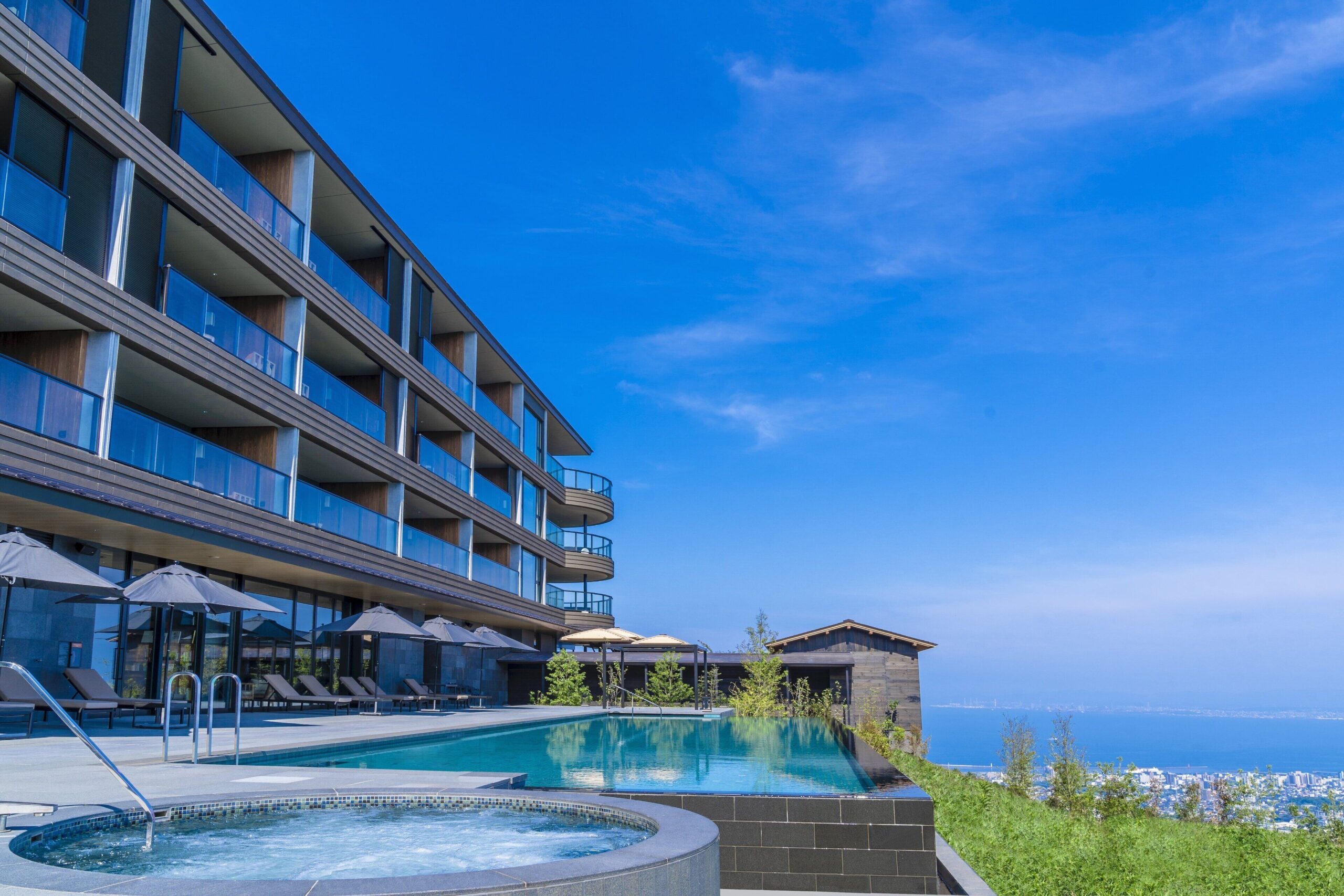
The infinity pool provides the hotel’s most immediate image: water appears to meet the city, and the steam of Kannawa rises in the middle distance before the land reaches Beppu Bay. It is heated to approximately 27 degrees, including through winter, but it remains an outdoor experience. Wind, cloud and the temperature after leaving the water all influence how long one wishes to stay.
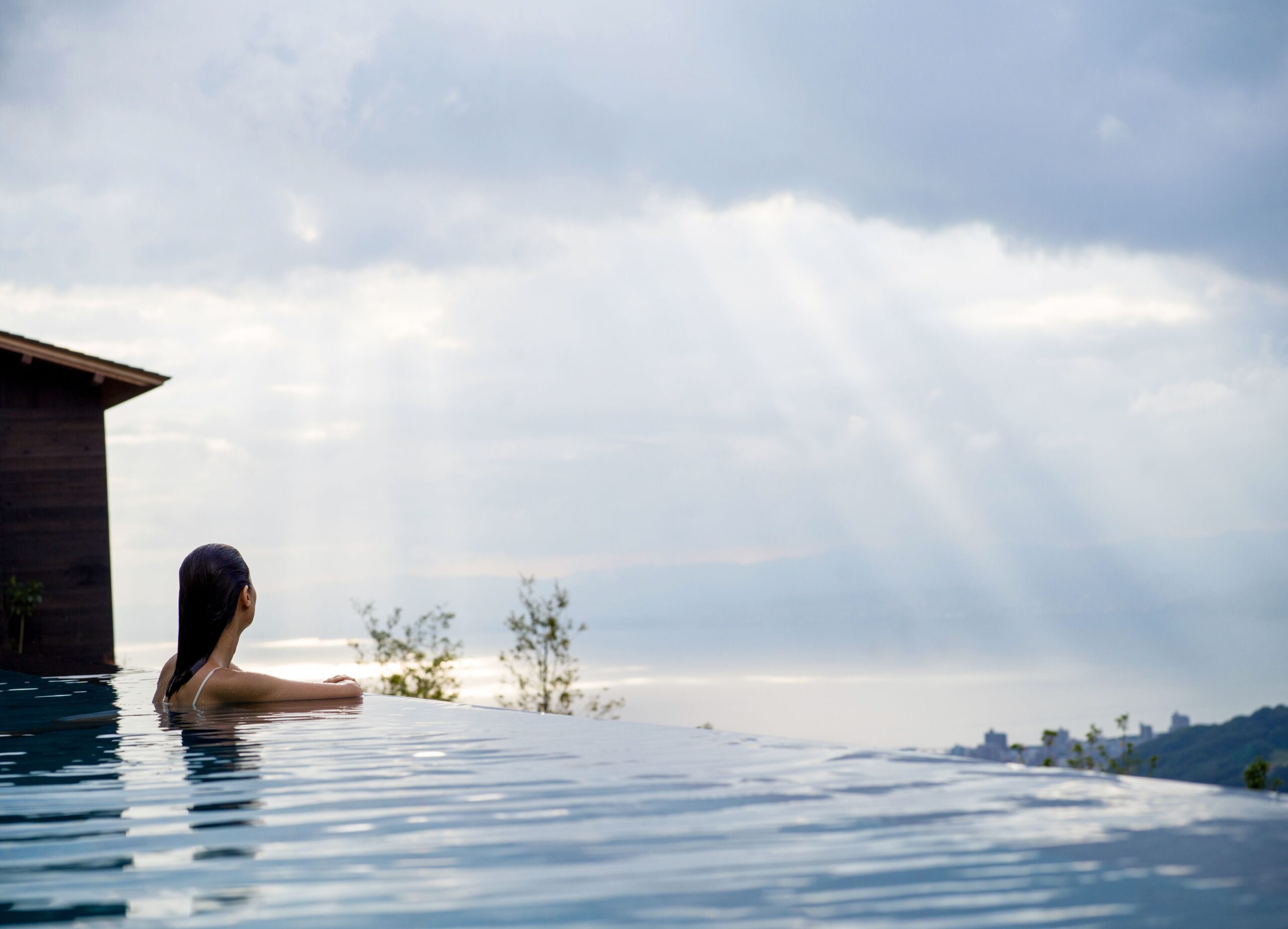
Twelve loungers, a sunken seating area and a jacuzzi allow the pool to function as more than a place for laps. AQUA, the poolside bar, extends the setting with drinks and lighter dishes. The best use is unhurried: swim while the city is still visible, sit with the changing light and let the bath follow later. Treating the pool and onsen as separate checklist items misses the continuity between them.
Pool access is included for staying guests, subject to operating conditions and capacity. The hotel currently limits the area to twenty people, and rules for visiting children differ from those for resident guests. Opening hours and seasonal arrangements can change, so families should confirm the current policy for their dates rather than rely on a general description.
Bamboo, Stone and Contemporary Beppu
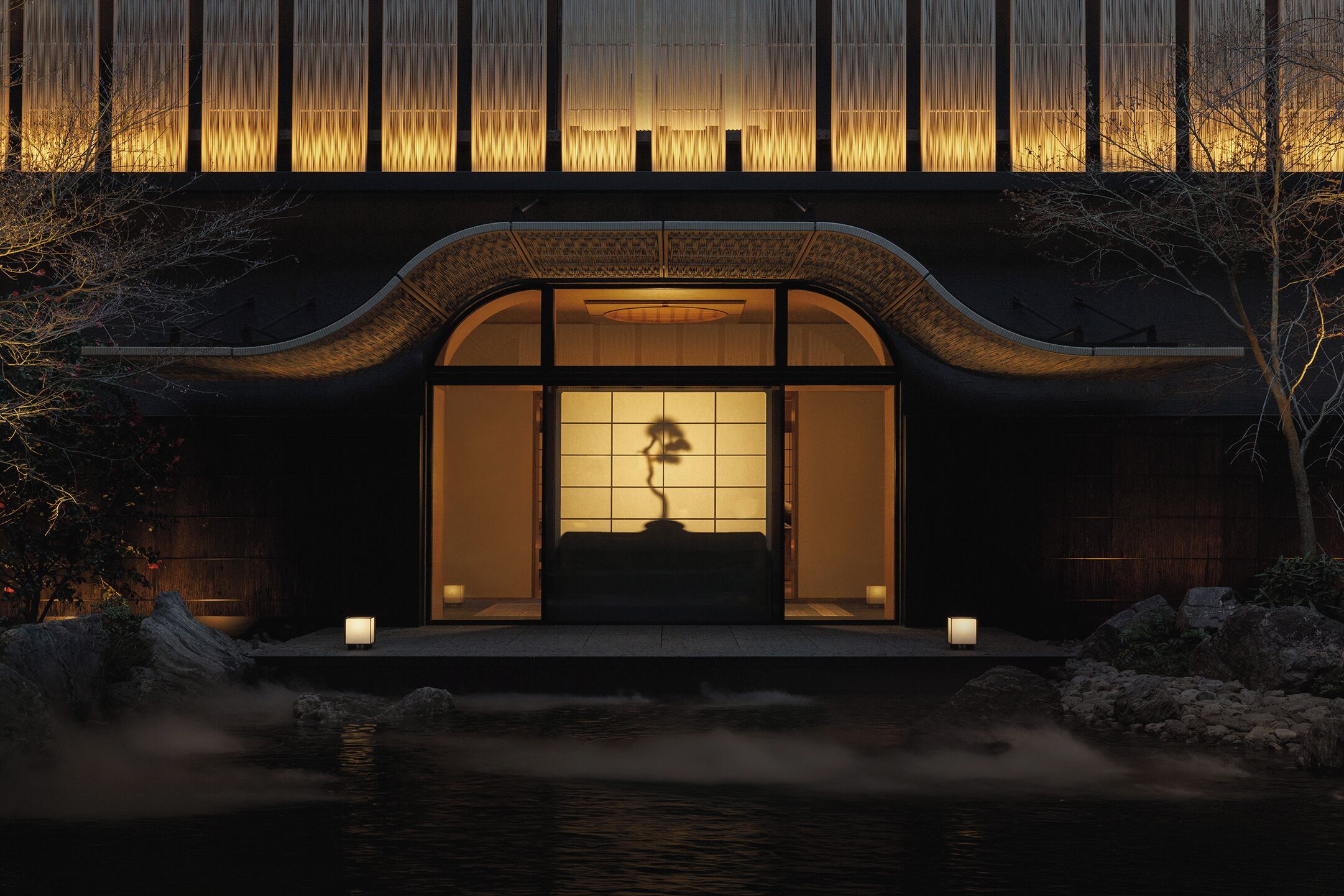
The resort’s design is most convincing when it avoids literal references. Bamboo craft appears in screens and details rather than as decoration applied after the fact. Volcanic stone, timber, marble and washi introduce texture without turning the hotel into a pastiche of a ryokan. The result is contemporary, but its materials continually return attention to Oita and to the volcanic geography beneath Beppu.
That balance also explains why the hotel feels different from a tower placed above a scenic city. Terraces pull rooms outward; framed sightlines make steam part of the interior; stone surfaces lead naturally toward the bath. Luxury here is expressed less through ornament than through space, material and the freedom to move slowly between water and view.
Dining from Morning to Atelier
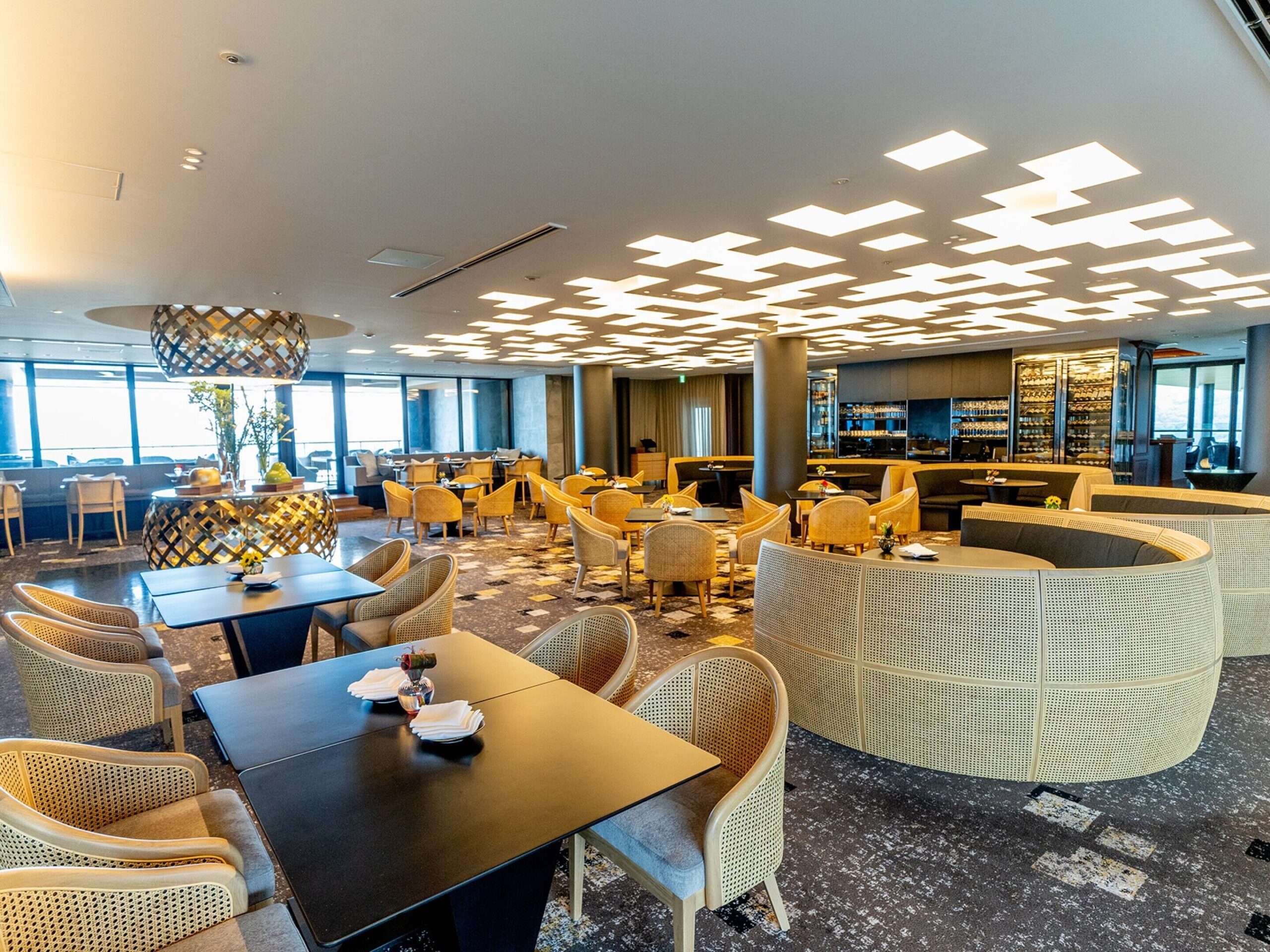
ELEMENTS is the hotel’s flexible all-day dining room, serving breakfast and moving through lunch, dinner and an à-la-carte menu. Bamboo-woven chairs, horse-chestnut tables and a floor pattern inspired by sunlight through trees continue the natural vocabulary of the rooms. Breakfast is currently presented as a semi-buffet, making it suitable for a morning that should not feel rushed before a final bath or terrace hour.
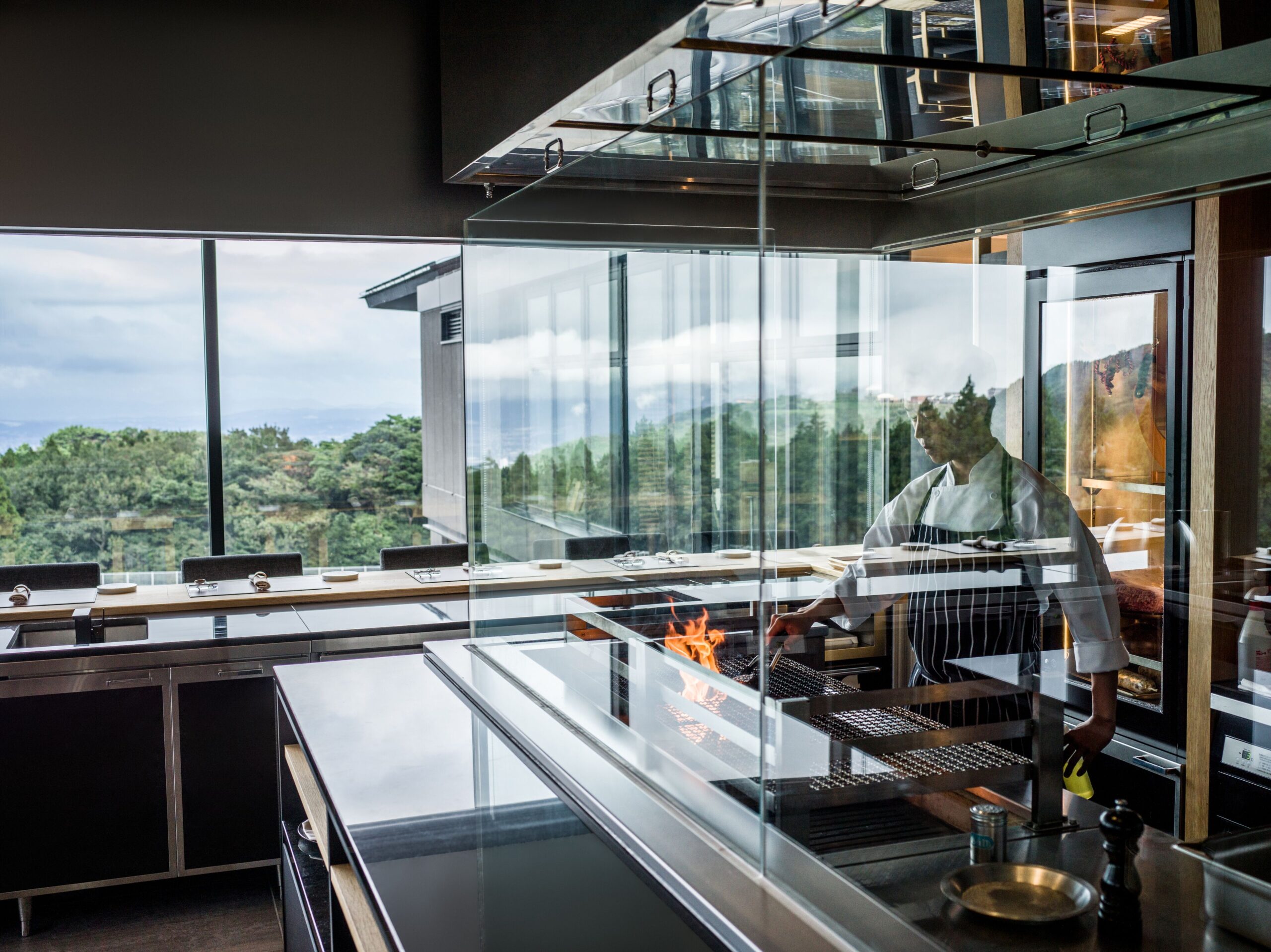
ATELIER is the more concentrated dinner experience, organised around counter seating and a menu shaped by regional ingredients. Sushi Musui adds a further, reservation-led option, while THE BAR and THE LOUNGE give the day less formal intervals. Opening days, last orders and child policies vary by venue; the sushi counter, in particular, currently has age restrictions for younger children.
Dining entirely on property is the easiest way to preserve the resort’s pace, but it is not the only defensible choice. Beppu has its own food culture and lively neighbourhoods below the hotel. On a two-night stay, one evening at the resort and one in town creates a useful contrast. On a single night, remaining on the hillside prevents transfers from breaking the sequence between pool, onsen and dinner.
When Club InterContinental Makes Sense
Club InterContinental is not merely an additional room label. Lounge access brings a quieter setting, personalised service and food-and-drink presentations that can change how the hotel is used. For guests who expect to spend most of the stay on property, the lounge adds another measured pause between the room, pool and evening meal.
The stronger reason to book Club, however, may be the combination with a private onsen. A terrace bath overlooking the bay removes the need to organise a separate Family Onsen session and allows bathing to follow one’s own schedule. Couples marking an occasion, guests who value privacy and travellers who want the landscape present late at night or early in the morning will notice the difference most.
Guests interested only in breakfast and the public facilities may find a Classic City View room better balanced. The public onsen and infinity pool are already included, and the base rooms are larger than many city-hotel suites. Club becomes compelling when its lounge and private bathing will genuinely be used, not simply because it is the higher category.
What to Know Before Booking
First, this is a resort above Beppu rather than a hotel beside the station. The complimentary shuttle is useful, but it follows a timetable and capacity is limited. Reserve or confirm arrangements when transport is important, particularly for a group or a connection to a train.
Second, read the complete room name. “City View,” “Top Floor,” “Club,” “Private Onsen” and “Hot Tub” describe different features. A room can have Club access without a private onsen, and a suite’s outdoor bathing arrangement may not be the same as another suite’s. The Expedia listing should be compared with the hotel’s current room descriptions before payment.
Third, reserve the experiences that matter. ATELIER, Sushi Musui, spa treatments and the Family Onsen should not be left to chance during busy periods. Operating hours can change for maintenance or seasonally. The onsen, pool and restaurants publish current schedules, but checking shortly before arrival is more reliable than building a trip around an old timetable.
Finally, allow enough time. The price is difficult to justify if the hotel is used only as a bed between a late arrival and early departure. Its value lies in the accumulation of space, water and view: the terrace before sunset, the pool, a proper onsen interval, dinner and a quieter morning. One night can work; two reveal the design more fully.
Who Should Stay Here
ANA InterContinental Beppu suits travellers who want onsen culture without giving up the space and service of an international luxury resort. It is particularly persuasive for a first visit to a Japanese hot spring, a celebratory trip built around a private terrace bath, or a Kyushu itinerary that needs a genuine pause between cities.
It is less suited to a visitor whose priority is walking out directly into central Beppu each morning and returning late each night. Nor is it a traditional ryokan: dinner is not automatically part of every stay, rooms use beds and contemporary bathrooms, and the public spaces have the scale of a resort. Guests seeking tatami-room ritual and a fixed kaiseki sequence should choose with that distinction in mind.
For the right stay, those differences are the attraction. The hotel translates Beppu through open space, local craft and water rather than reproducing an inn from another era. The city remains visible, but the pace changes.
A Resort That Looks Back Toward the Onsen City
From the infinity pool, Beppu is not a distant panorama. Its steam gives the view movement and identifies the source of the experience unfolding at the hotel. From a private onsen terrace, the same landscape becomes quieter and more personal. From the public bath, stone and cypress place the body back within the volcanic geography that shaped the city.
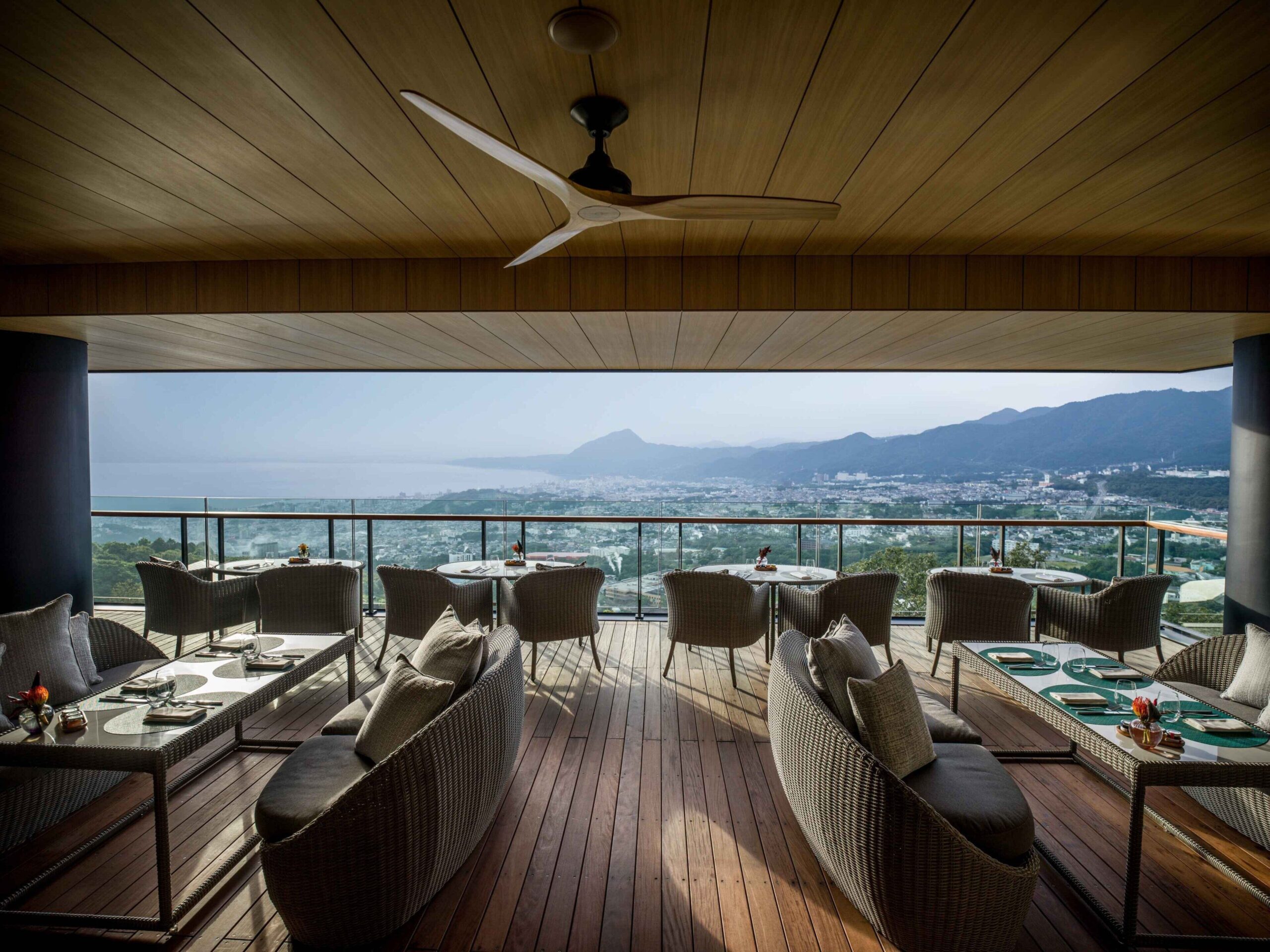
That repeated act of looking back is the hotel’s defining gesture. ANA InterContinental Beppu does not isolate luxury from its setting; at its best, it makes the setting impossible to forget. Choose the room according to how privately you wish to bathe, leave time for both pool and onsen, and let the hillside distance become part of the arrival.
View current availability at ANA InterContinental Beppu on Expedia →(Paid link)
Related Reading
Luxury Onsen Hotels in Beppu and Yufuin
Onsen Rules for First-Time Visitors
Luxury Hotel Guides in Japan