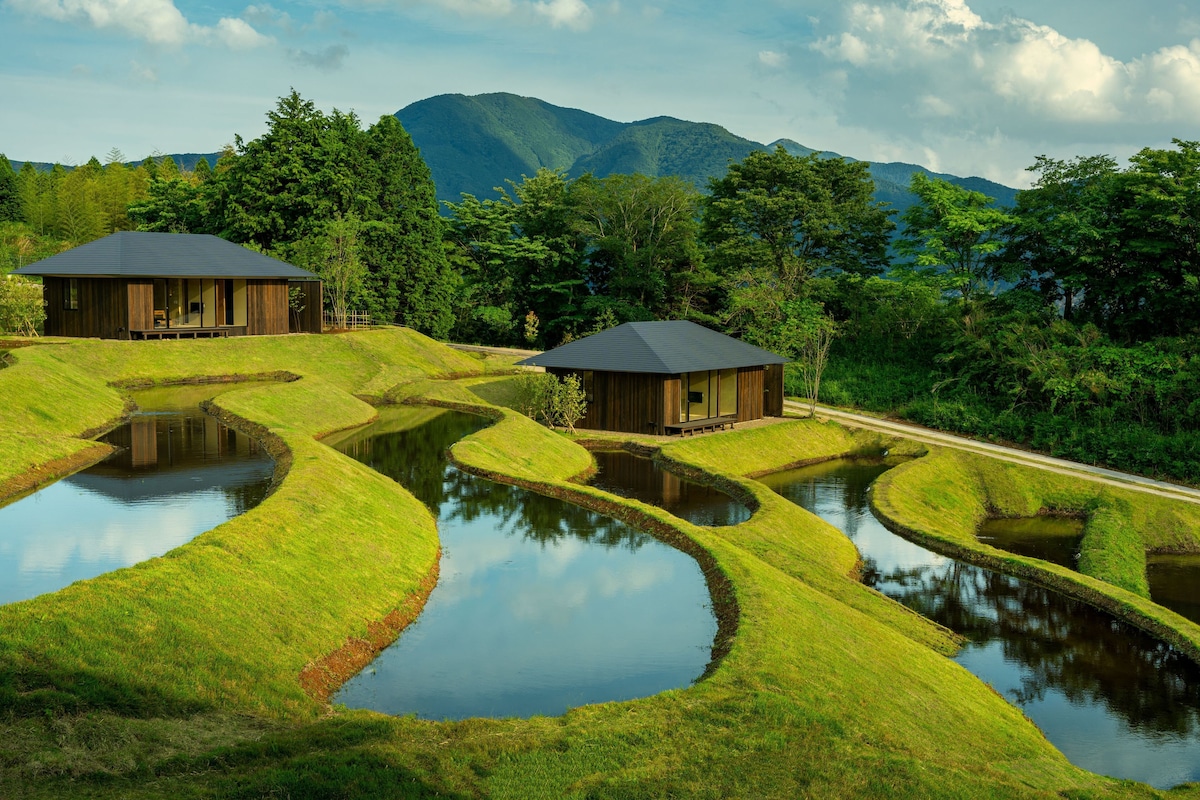
On the Horita hillside above central Beppu, where the city gives way to the green lower slopes of Mount Tsurumi, GALLERIA MIDOBARU approaches the onsen stay from an unusually thoughtful angle. The hotel does not imitate an old ryokan, nor does it treat art as decoration added after the architecture was complete. Its rooms, passages, water, materials and contemporary works form a single interpretation of Beppu: a city of rising steam, hillside light, narrow alleys, visiting strangers and long conversations after bathing.
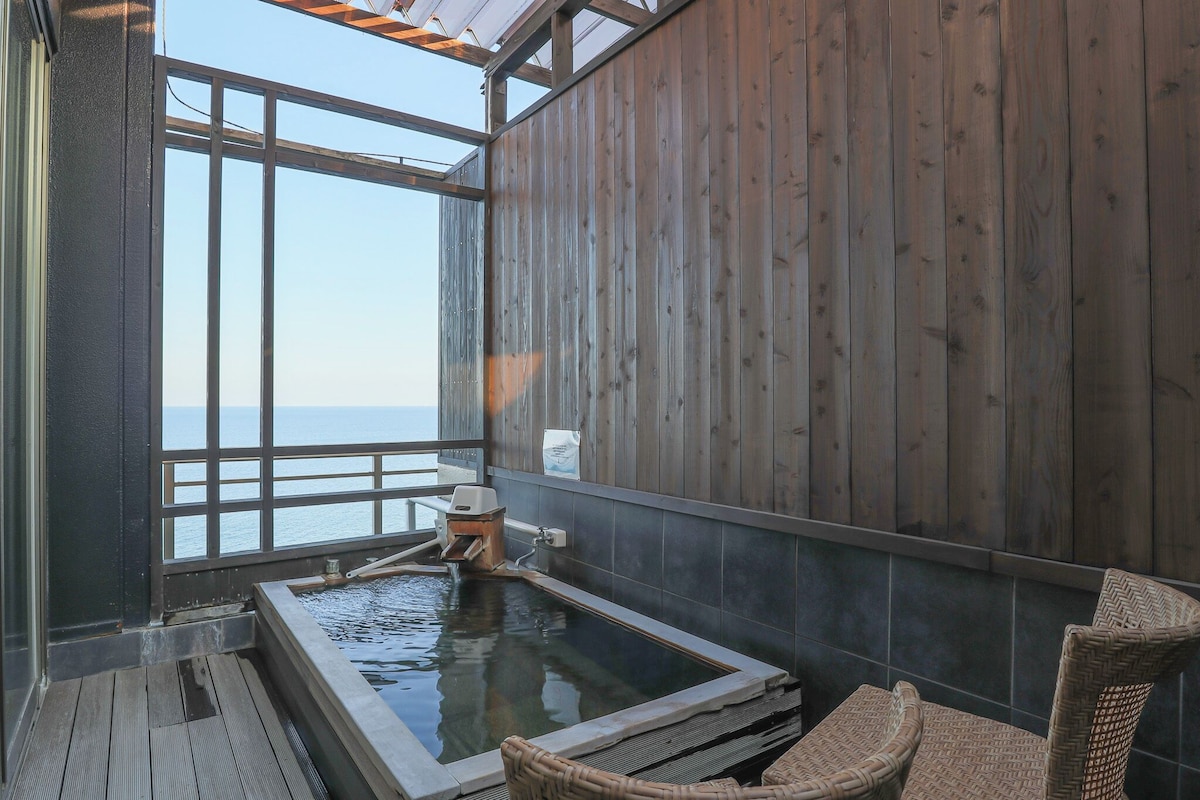
Opened in December 2020, this 35-room hotel looks across Beppu toward the bay. Most rooms are generous 47.43-square-metre spaces with a further 10.26-square-metre terrace, while two maisonette suites extend to 116.88 square metres. The practical luxury, however, is shared throughout the property: every guest room has a private semi-open-air bath supplied with natural water from Horita Onsen.
For travellers who want the privacy of an in-room onsen but also hope to understand something of the place beyond the bath, GALLERIA MIDOBARU is one of Beppu’s most distinctive choices.
Check current room categories and rates at GALLERIA MIDOBARU(Paid link)
The Booking Decision
Book GALLERIA MIDOBARU for three things: a private onsen bath in the room, a quiet hilltop view over Beppu, and an art-and-architecture experience that continues from arrival until departure. The hotel is particularly persuasive for couples, solo travellers who value design, and repeat visitors to Japan who want an onsen stay with a contemporary voice.
It is less suited to a traveller whose first priority is walking out of the lobby into Beppu’s restaurant streets. The hotel stands in Horita, about 15 minutes by car from Beppu Station and three minutes from Beppu Interchange. A taxi or car makes the stay markedly easier. That remove is part of the appeal—the city is visible below, yet the hotel feels held apart from it—but it should be understood before booking.
One night can work well if you arrive early enough to walk through the building, take the art tour if it is operating, bathe before dinner and reserve a meal at WAGYU STEAK THE PEAK. Two nights allow the architecture and artworks to reveal themselves more slowly, and leave space for an excursion into Beppu without reducing the hotel to somewhere you only sleep.
The most consequential choice is not between dozens of dramatically different rooms. It is between a 47.43-square-metre Twin or King configuration for one or two guests, a triple-capable room for three, and the much larger Two-Bedroom Suite for a family or small group. Confirm the full room name, bedding and bath photographs on the booking page; similar floor areas do not mean that every category feels identical.
A Hotel That Interprets Beppu Through Art
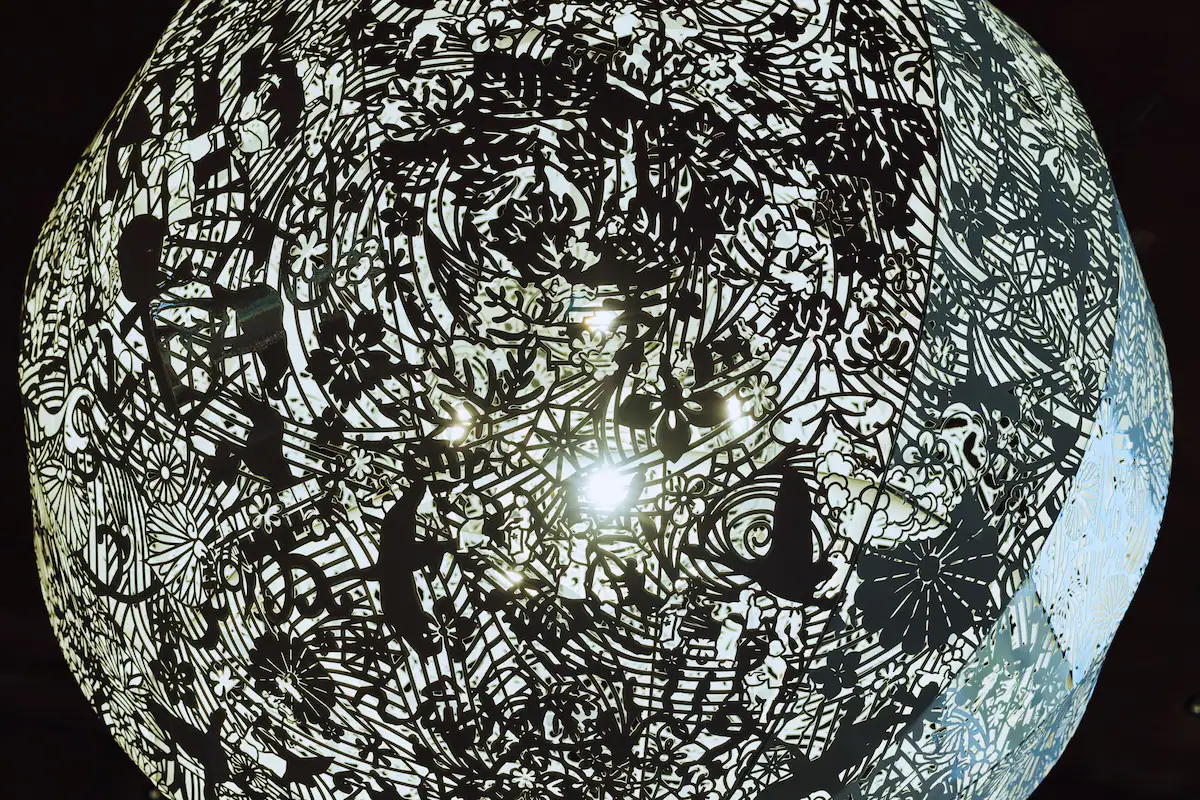
The phrase “art hotel” is often used loosely. At GALLERIA MIDOBARU, the more useful idea is site-specific art: works conceived through Beppu rather than transported into a neutral luxury interior. Steam moving through a blue sky, the intimacy of back alleys, yukata patterns and the exchanges between residents and travellers are among the fragments of the city that inform the collection.
Artists represented throughout the hotel include Shinji Ohmaki, Akiko Nakayama, Masamitsu Katsu, Nerhol, Toshie Kusamoto, Olectronica, Sohei Nishino, Mé, Shimabuku, Hiraku Suzuki, Ine Izumi and Mika Aoki. The list matters less than the way the works alter the pace of a stay. A suspended form changes the volume of the lobby. A photograph asks you to look at people rather than scenery. Light across a textured wall can become as memorable as an object formally presented as art.
This is not a museum with silent galleries and a prescribed route. It is a hotel in which checking in, walking to breakfast and returning from the bath repeatedly bring you into contact with an artist’s view of Beppu. Guests who give those encounters time will find more here than guests who treat the public areas as a corridor between room and car.
Architecture of Light, Water and Passage
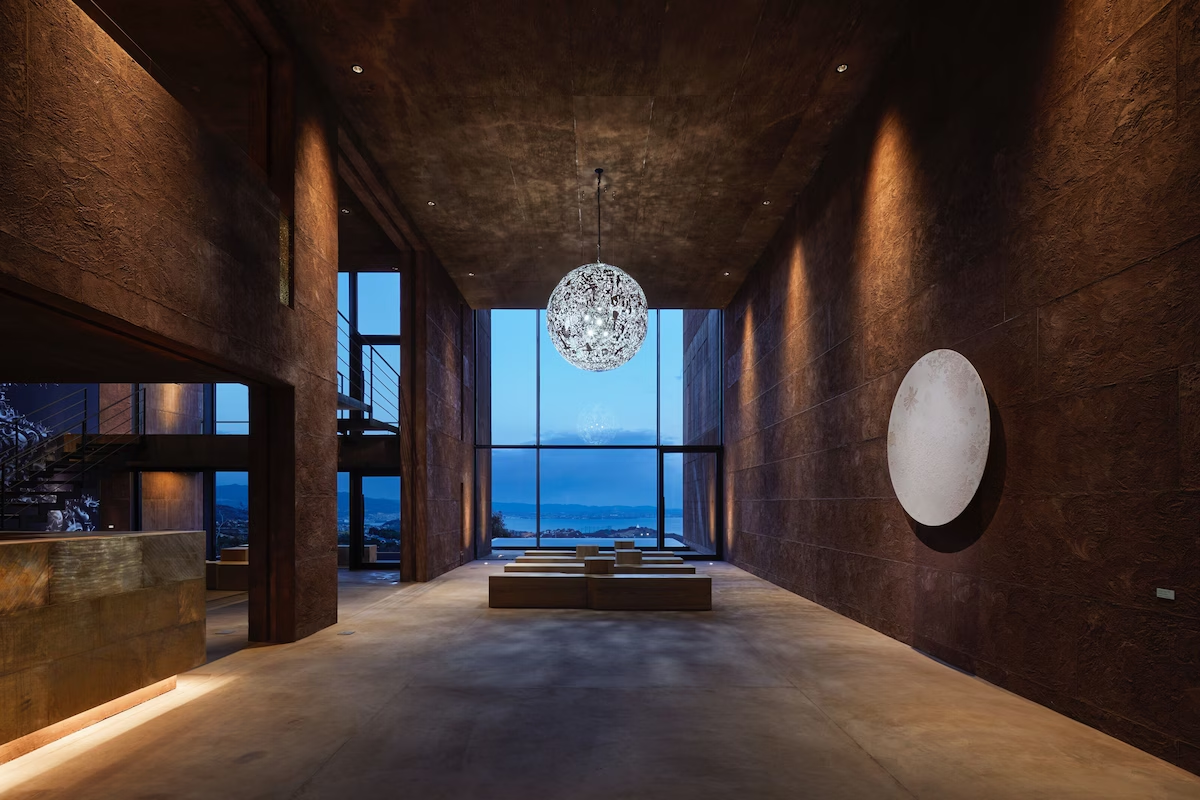
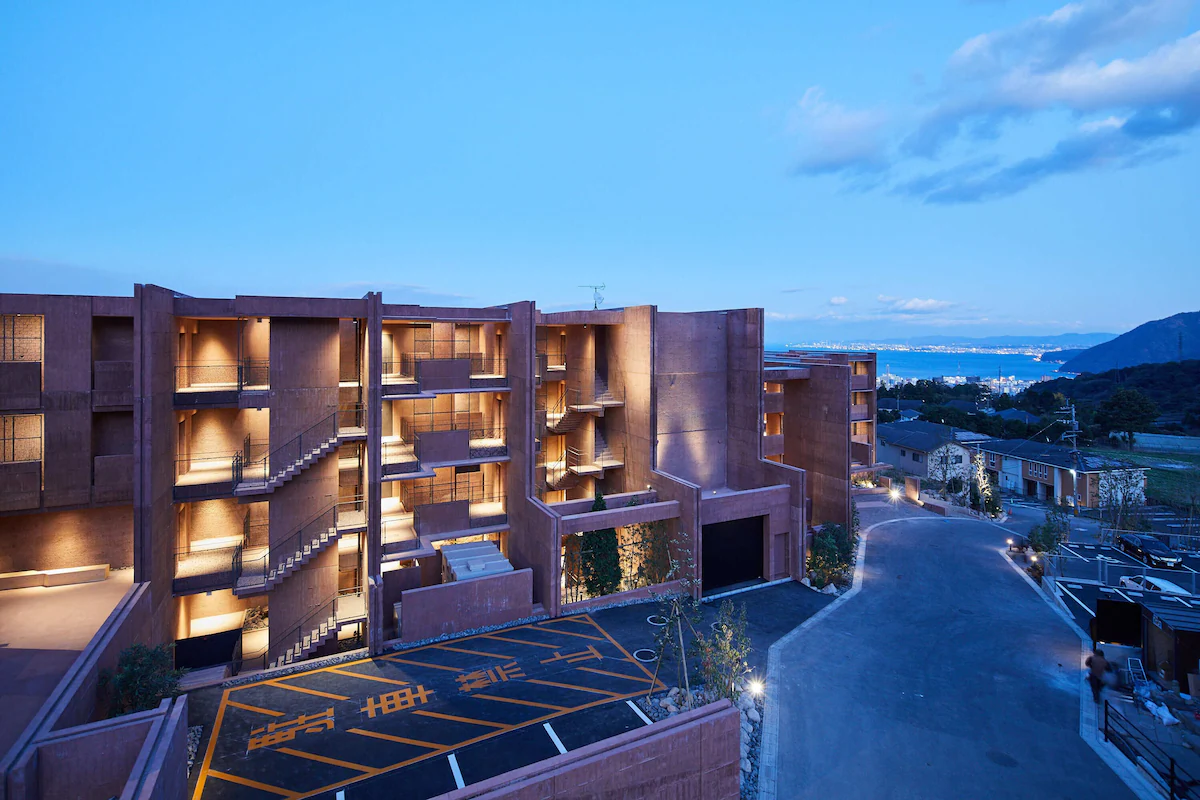
The arrival is deliberately transitional. A thick exterior wall opens into an entrance where the sound of water and changing daylight loosen the sense of the ordinary world outside. From there, the building resists an obvious, hotel-like procession. Axes turn, openings frame partial views and latticework casts broken light into passages that feel closer to Beppu’s layered lanes than to a conventional resort corridor.
The materials carry the same local logic. Kyushu conifer retains its grain on the lobby ceiling. Reception uses brass washed with hot-spring water, allowing the mineral landscape of the city to leave a physical trace. Japanese oak furniture, Oita cypress decking, shell-ash plaster and stone baths bring texture without resorting to ornamental excess.
There is a certain severity to the architecture—broad planes, deep openings, mineral colours—but water and timber prevent it from becoming cold. The pleasure lies in moving between enclosure and release: a shaded passage, then a wide view; a dark surface, then reflected light; the quiet of the room, then Beppu spread below the terrace.
Choosing the Right Room
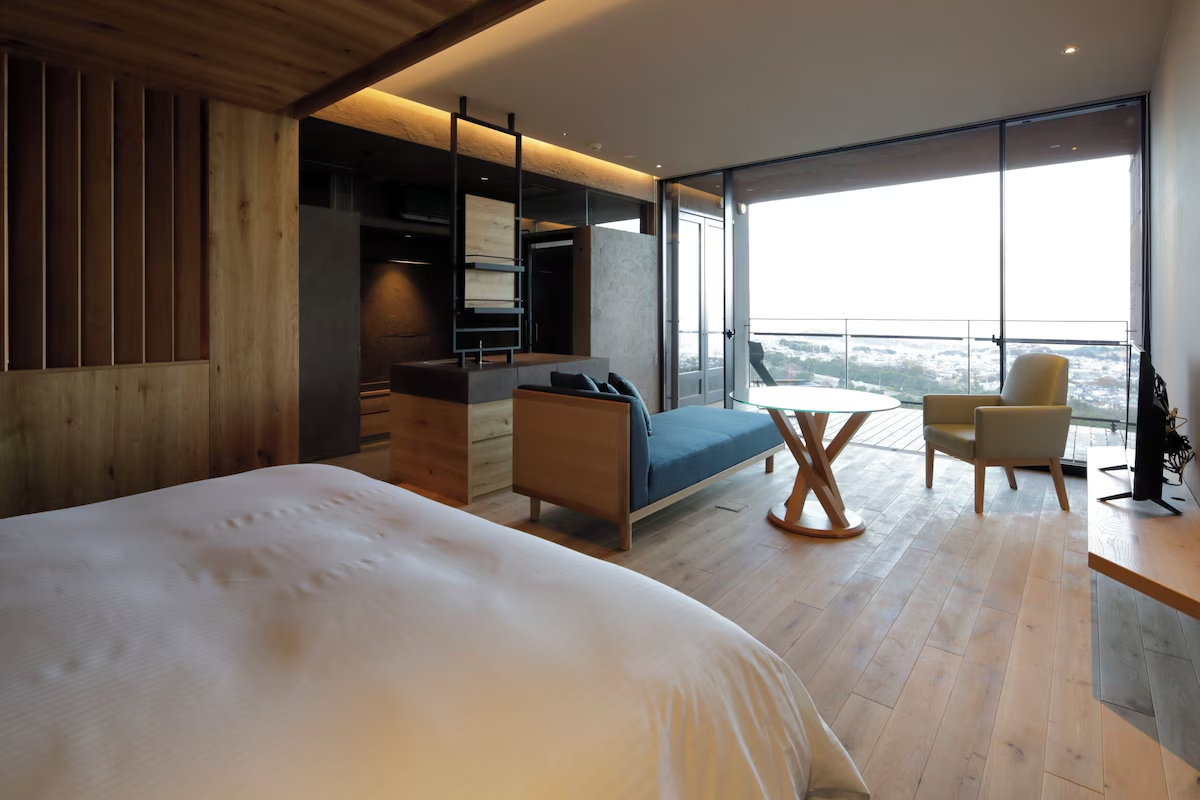
The room list is easier to understand when reduced to three questions: how many people are travelling, which bed arrangement is preferred, and whether the stay needs the scale and separation of a true suite.
Twin, Twin for triple occupancy, Deluxe Twin and Deluxe Twin for triple occupancy all list an interior area of 47.43 square metres with a 10.26-square-metre terrace. The standard Twin accommodates one or two guests; the triple configurations accommodate up to three. The differences are therefore not simply a ladder of larger floor areas. Check the exact photographs and inclusions attached to the available rate instead of assuming that the word “Deluxe” means a materially bigger room.
King, Deluxe King and Galleria King use the same published interior and terrace measurements and accommodate one or two guests. These are the natural choices for a couple who prefers one large bed. Twin categories are more flexible for friends or travellers who sleep separately, while a triple-capable Twin solves a practical problem without forcing three guests into the expense of the suite.
The shared strengths are substantial: space well beyond a typical city hotel, a terrace, views across Beppu City toward the bay, and a private semi-open-air natural hot-spring bath. The correct decision is less about chasing the highest category name than about matching the exact bed, occupancy and outlook to the travellers.
Compare available King, Twin and Suite room details(Paid link)
The 47-Square-Metre Rooms
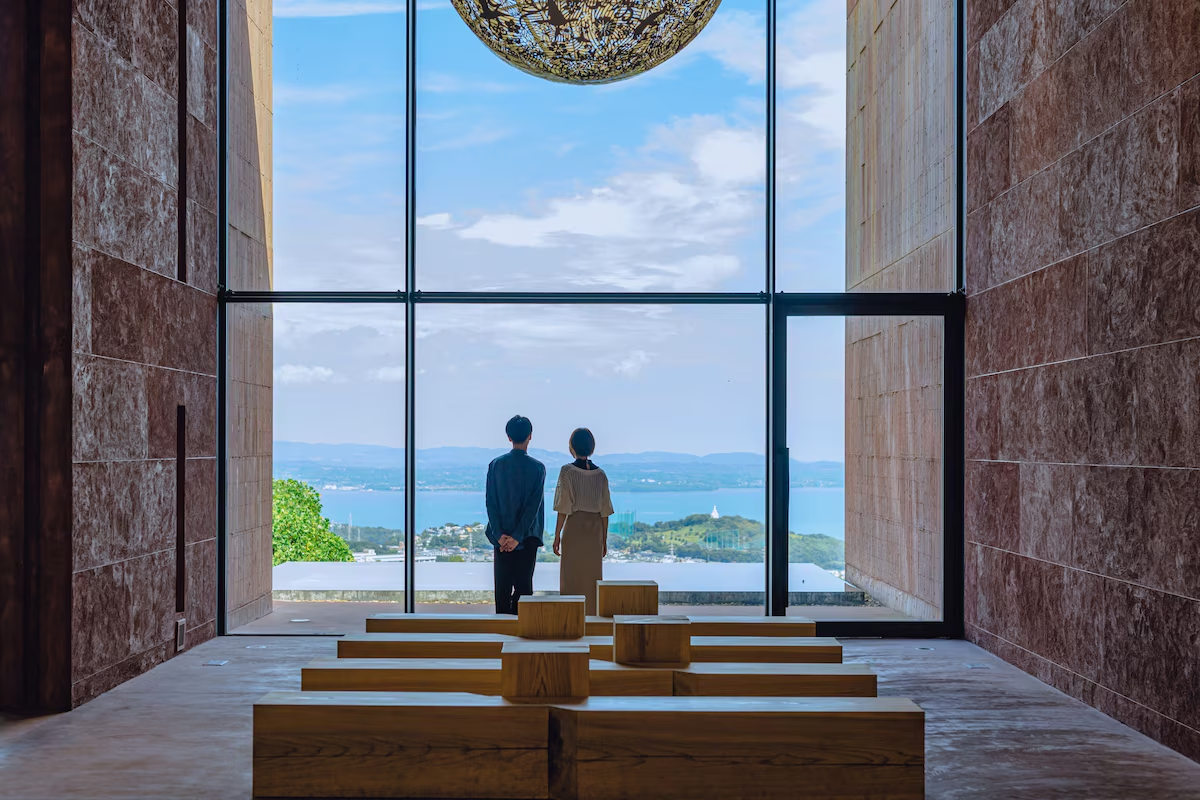
At 47.43 square metres before the terrace is counted, the principal rooms have enough volume to make time indoors feel intentional. The design remains restrained so that the tactile elements—Japanese oak, plaster, linen, stone and art—carry the atmosphere. Furniture does not crowd the floor, and the broad glass toward the terrace keeps the room connected to weather and changing light.
The 10.26-square-metre terrace is not a negligible balcony. It extends the room toward the city and bay and gives the view room to breathe. Beppu’s most characteristic landscape is not only the water in the distance; it is the relationship between the bay, the dense town and steam lifting from the ground. From the hillside, those layers can be read together.
Travellers should avoid assuming that every room will deliver the same unobstructed panorama. Position, floor and category can affect what is visible. If the view is decisive, examine the current room photographs and wording rather than relying on a general property description. The advantage of the design is that the private bath and terrace remain meaningful even when weather softens the horizon.
The Two-Bedroom Suite
For families, friends travelling together or a longer stay, the Two-Bedroom Suite changes the scale of the experience. Its 116.88-square-metre interior is arranged as a maisonette, with the sleeping level above and an internal staircase leading down to a living room, kitchen and open terrace. The terrace itself measures 29.55 square metres, and the suite accommodates up to five guests.
The plan gives companionship and privacy equal weight. Two bedrooms allow different sleeping routines, while the living area provides a place to gather that is not one person’s bedside. A kitchen and generous terrace make the category particularly relevant when several nights are planned.
There are two cautions. First, the internal stairs are a real part of daily movement and may not suit every guest. Second, Expedia may label the suite bath differently from the semi-open-air language used for other categories. The hotel’s general information states that guest rooms have natural hot-spring baths, but anyone booking specifically for an open or semi-open bathing experience should confirm the exact suite name, bath photograph and current description before paying.
Private Horita Onsen Above the City
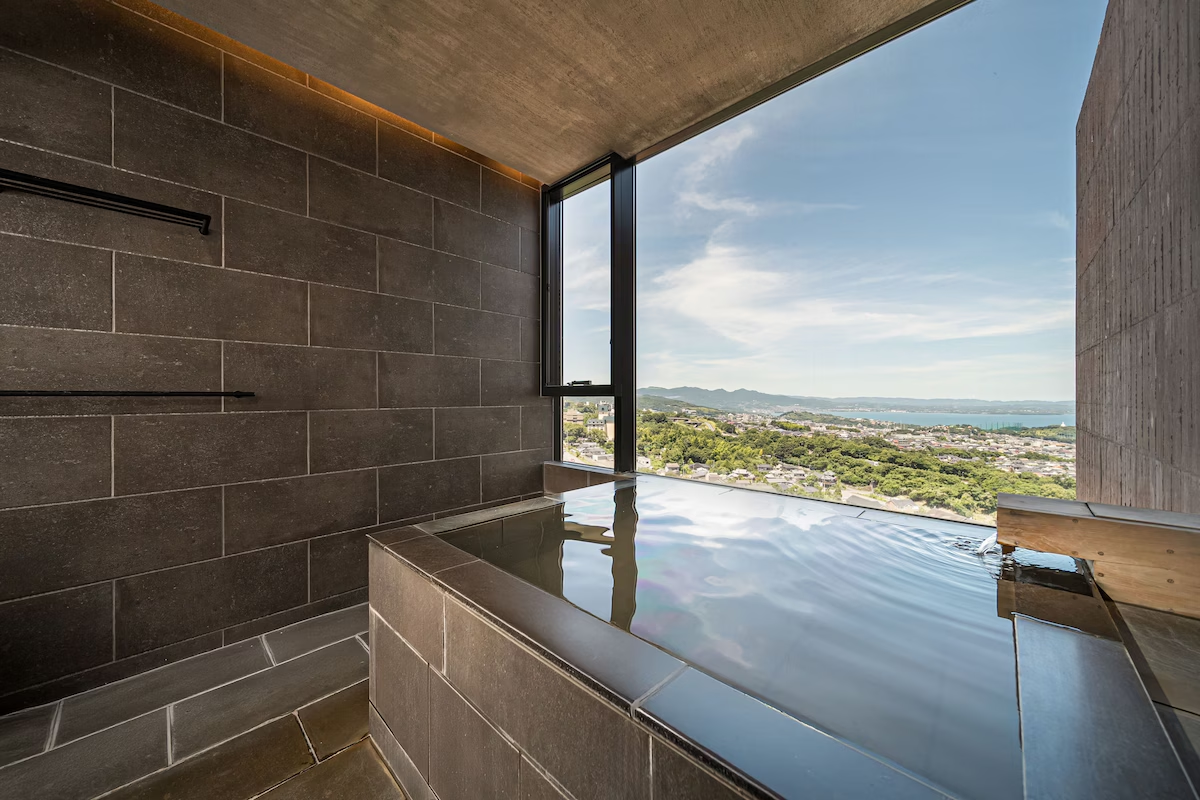
Horita Onsen is one of the eight traditional hot-spring areas collectively known as Beppu Hatto. Long before the present hotel, Horita served travellers moving between Beppu, Yufuin and Hita. At GALLERIA MIDOBARU, its sulfur spring is brought into the privacy of each guest room.
The bath is not treated as a generic amenity. A tub carved from solid stone retains warmth, while custom Mino-ware tiles introduce an earthy, irregular surface around the bathing area. The result belongs to the architecture of the room: mineral water, stone, ceramic and the outlook toward the city.
A private semi-open-air bath changes the rhythm of the stay. There is no need to coordinate with public-bath hours or dress for a journey through the hotel. A first soak can follow arrival; another can come after dinner; morning can begin in the water before the city below has fully gathered pace. It is also a reassuring format for travellers who feel uncertain about communal bathing. Those planning to visit Beppu’s public baths as well may find our guide to onsen rules for first-time visitors useful before setting out.
Spring composition and temperature can affect individuals differently. The property’s official information identifies the water as a sulfur spring of the hydrogen-sulfide type. Guests who are pregnant or managing a health condition should seek appropriate medical advice rather than treating general therapeutic descriptions as personal guidance.
Art Worth Slowing Down For
The hotel’s complimentary art tour, when offered, provides a way into works that might otherwise remain visually striking but unexplained. Past schedules have placed the tour in the late afternoon, beginning with Shinji Ohmaki’s luminous Gravity and Grace — Yudama before moving through the Hot Spring Bar and outdoor pieces. Times and availability can change, so ask the hotel before arrival or at check-in.
Even without a tour, a simple method makes the collection more rewarding: walk through the building once in daylight and once after dark. Natural light activates the rough exterior surfaces and lattice shadows; evening makes illuminated works and the brass-toned bar feel more theatrical. The same passage can appear to belong to a different building.
Photography can be part of the pleasure, but the works should not be reduced to backdrops. Many grew from close observation of Beppu and its residents. Reading the artist information, then looking back toward the city, reveals the hotel’s central idea: art is not an escape from the destination but another way of entering it.
Dinner at WAGYU STEAK THE PEAK
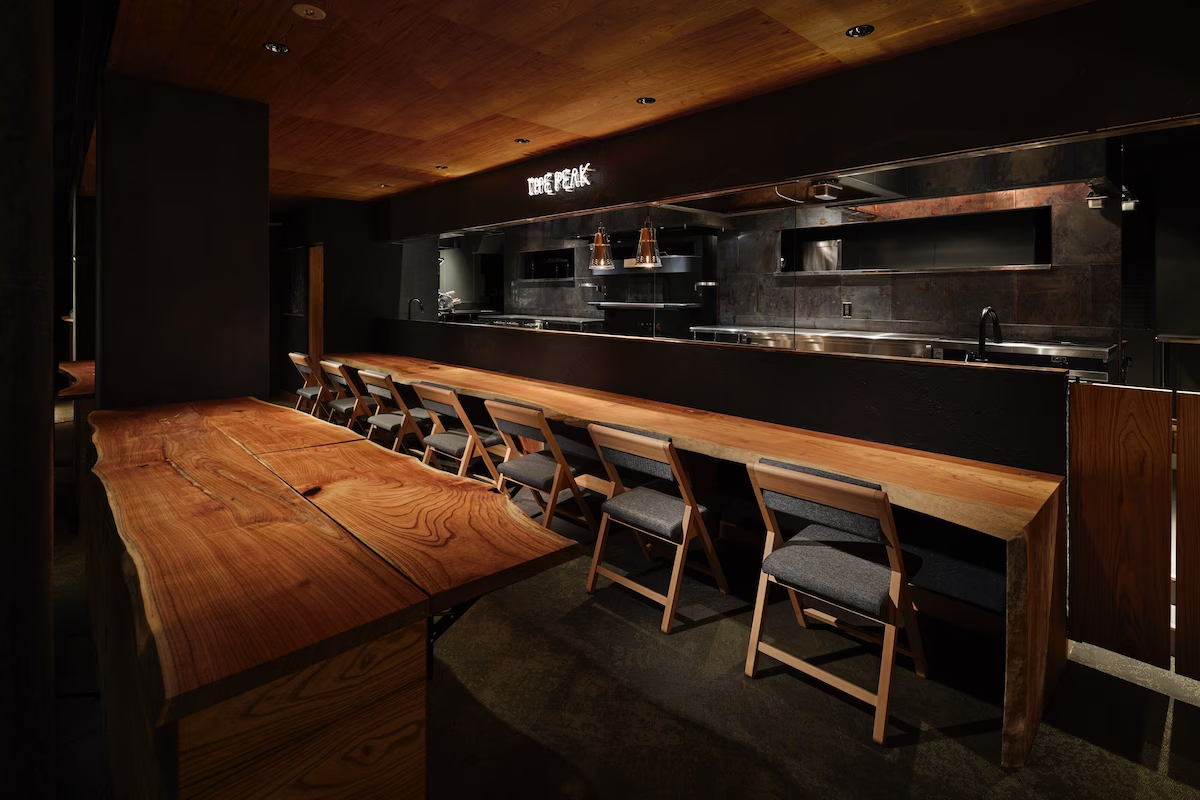
WAGYU STEAK THE PEAK centres its cooking on a custom-built stone oven beneath a copper-sheet dome. Local meat, fish and vegetables are prepared with heat that concentrates flavour, while Kyushu hardwood, shell-ash plaster and Beppu-inspired art carry the hotel’s material language into the dining room.
Course and à-la-carte dishes use meat, fish and vegetables from Oita and the wider region, with preparations changing according to season and supply. The appeal is not formality for its own sake. It is the continuity between place and plate: shiitake, local vegetables and regional meats appearing in a dining room that looks back across the landscape from which the hotel takes its cues.
Reserve dinner rather than assuming a table will be available after arrival, particularly on weekends and holidays. A half-board rate can be the easiest choice for a one-night stay because the hillside location makes an unplanned evening meal less convenient than it would be near Beppu Station. Expedia advises guests on some half-board rates to arrive by 6:00 p.m. to receive dinner; confirm the condition attached to the exact plan you select.
Breakfast arrangements depend on the selected rate. Expedia currently lists breakfast as available for a surcharge, so confirm whether it is included, the current service time and the meal details attached to the exact plan rather than assuming that every rate follows the same arrangement.
Lunch and afternoon tea may also be offered, and room-service or takeaway selections can change. Treat current menus and hours as date-specific information. The most reliable booking decision is to choose the room first, then check whether dinner is included and what arrival time the plan requires.
One Night or Two
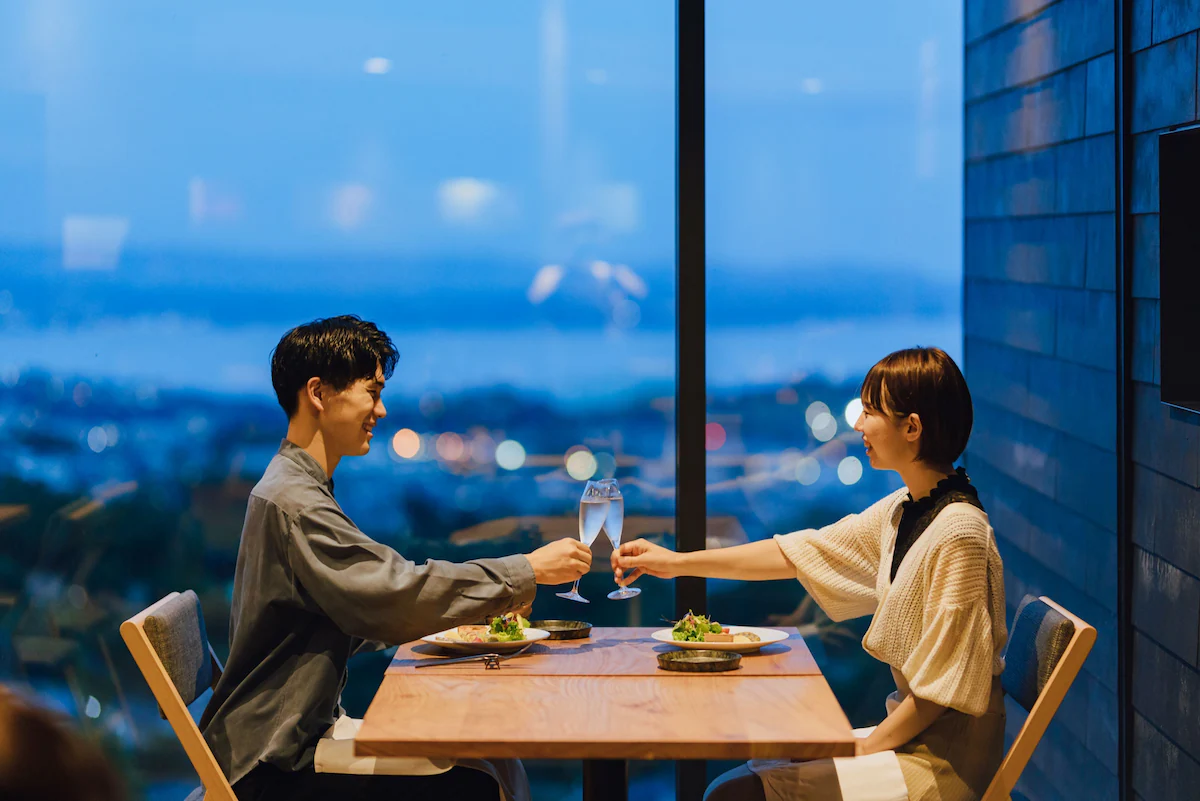
A well-planned one-night stay begins before sunset. Arrive with enough time to let the entrance, lobby and passages register; join the art tour if available; bathe while the view still holds daylight; then move to dinner without haste. A second soak after dark and another in the morning complete the experience without leaving the hotel.
Two nights are justified when the art and private onsen are as important as sightseeing. The additional day can be divided between Beppu’s hot-spring districts and the quiet of the room. Rather than packing every hour, return while there is still light, use the terrace and allow the hotel to function as part of the destination.
If the wider Kyushu itinerary is already fast, one night here may feel too compressed. If time is limited, protect the stay by avoiding a late arrival. If the journey allows two nights, the cost buys not merely another bed-night but a less hurried relationship with the architecture, bath and city below.
Access and Practical Details
GALLERIA MIDOBARU is located at 6 Horita, Beppu, on the hillside above the central city. The hotel states approximately 15 minutes by car from Beppu Station, about three minutes from Beppu Interchange and roughly 50 minutes from Oita Airport to Beppu Station by airport bus. Parking is available for 40 cars.
For most international travellers, the simplest arrival is a taxi from Beppu Station or a rental car. The address is not ideal for repeatedly walking into town, and the return uphill should not be left to improvisation. Guests who want to explore Beppu after dark should arrange transport before leaving the hotel.
The front desk operates with limited hours according to current Expedia information, and luggage or arrival arrangements should be confirmed when a late schedule is unavoidable. Check-in and check-out rules, shuttle availability and dining cut-off times can change, so the reservation confirmation should take precedence over any general guide.
Before You Book
Choose GALLERIA MIDOBARU if privacy, design and a sense of place rank above central convenience. The hotel suits couples who want a bath of their own, art-minded travellers, architecture enthusiasts and guests who prefer a small property to a full-scale resort. Triple-capable Twin rooms and the Two-Bedroom Suite also make it more practical for friends and families than its intimate atmosphere might first suggest.
Look elsewhere if the trip depends on walking to nightlife, if a large communal onsen complex is essential, or if stairs make the maisonette suite unsuitable. Be precise when booking: verify the full room category, number and type of beds, occupancy, bath description, view wording, meal inclusion and required dinner arrival time.
View current availability for your Beppu dates(Paid link)
Final Verdict
GALLERIA MIDOBARU succeeds because its strongest elements do not compete. Art gives the architecture a way to speak about Beppu; the architecture frames water, light and the city; the private Horita onsen turns those ideas into something felt rather than merely observed. The hotel is contemporary without becoming placeless and luxurious without relying on spectacle.
The right room is usually straightforward: King for a couple who prefers one bed, Twin for separate beds or a flexible arrangement, a triple-capable Twin for three, and the Two-Bedroom Suite when several travellers need genuine shared living space. Once that decision is made, reserve dinner, plan the arrival and leave enough time to look.
From the bath, Beppu is not presented as a postcard of sea alone. The city, hillside, bay and rising steam occupy the same view. That layered perspective—part landscape, part artwork, part private ritual—is what makes a stay at GALLERIA MIDOBARU worth travelling uphill for.