Check Hotel Chinzanso Tokyo rates and availability on Expedia →(Paid link)
Set on the heights of Mejirodai, Hotel Chinzanso Tokyo offers enough within its grounds to shape an entire day and night. All guestrooms start at 45 square metres. Views face either the Japanese garden or the city, while the Prime category is divided between the European-classical Prime Classic and Prime Modern, which draws on Japanese colours and materials.
Dining extends from Kinsui, a sukiya-style restaurant in the garden, to stone-grilled dishes served in the relocated buildings of Mokushundo. Italian cuisine, sushi, teppanyaki and afternoon tea are among the choices across eight restaurants and bars. At YU, THE SPA, facilities include onsen water delivered from Ito in Izu, a heated all-weather pool beneath a retractable roof, and a sauna.
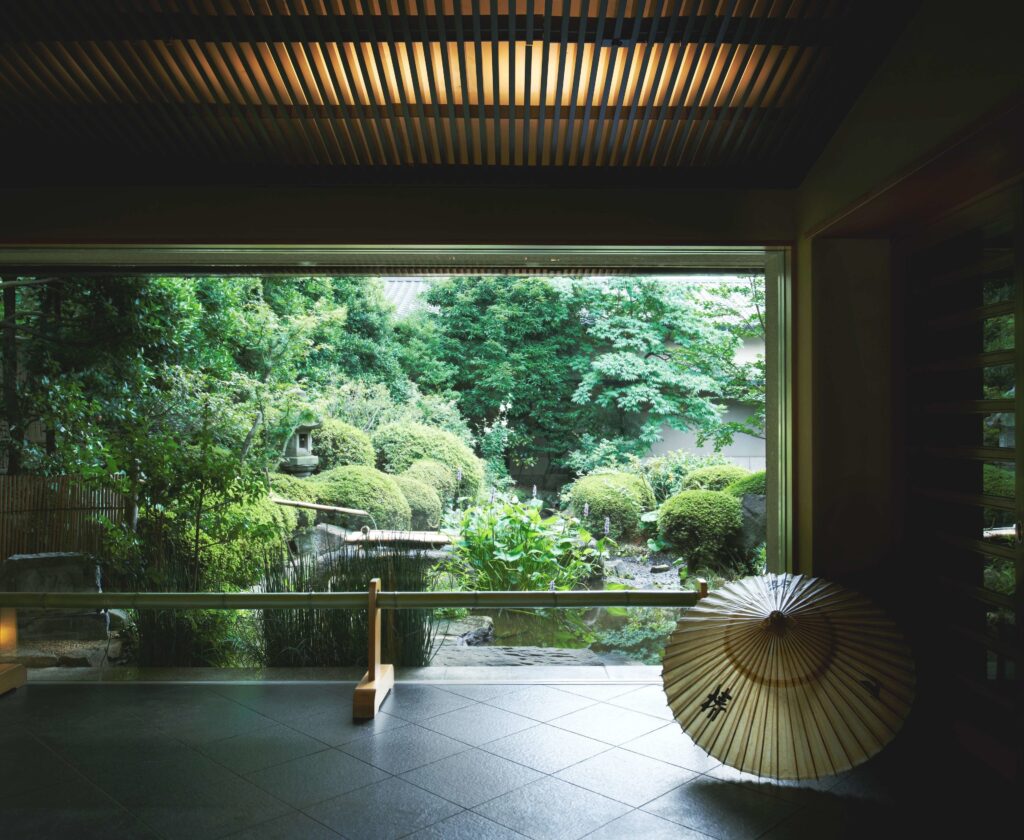
The garden preserves the contours of Mejirodai. According to records cited by the hotel, wild camellias grew here by the Nanboku-cho period, when the area was known as “Tsubakiyama,” or Camellia Hill. In 1878, Aritomo Yamagata acquired the land, directed the creation of a landscape garden that used its slopes, streams and ponds, and named the estate Chinzanso.
A walk through the grounds now passes a three-storied pagoda brought from Hiroshima, trees planted during the postwar reconstruction, and the mist of Tokyo Sea of Clouds — YAKUMO — introduced in its current form in 2026. The garden is seen from guestrooms, visited on foot and entered again through its restaurants. Its history is built into the wider hotel rather than confined to one scenic corner.
See available Hotel Chinzanso Tokyo room plans on Expedia →(Paid link)
Guestrooms from 45 Square Metres: Garden or City
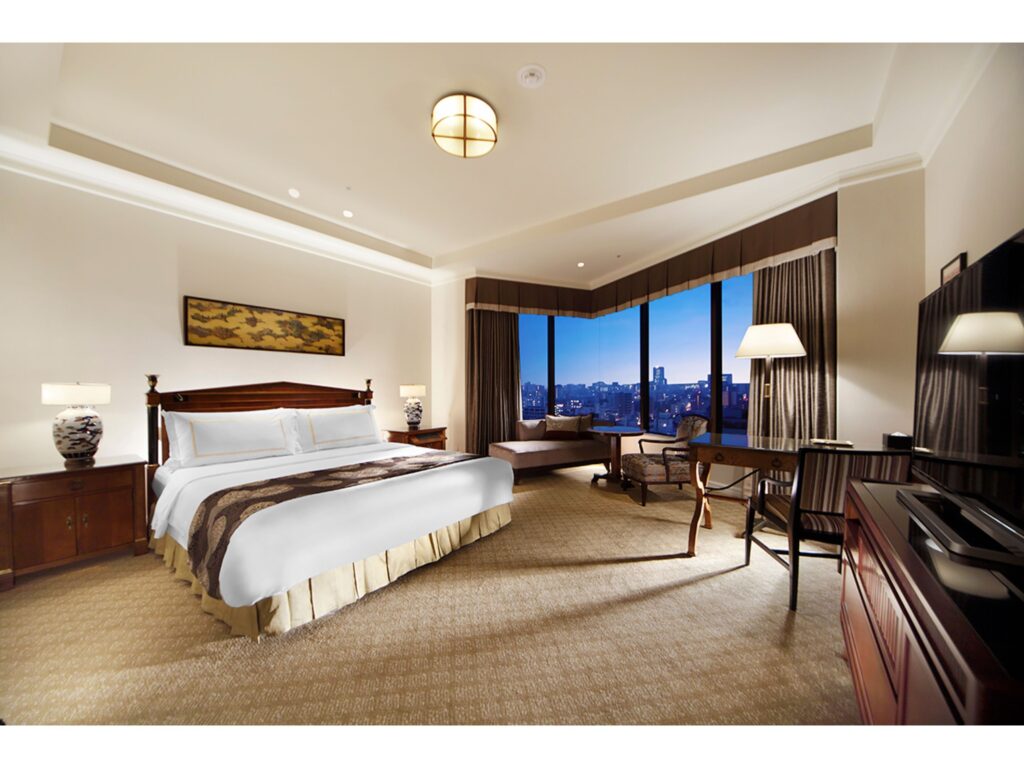
The hotel has 265 guestrooms and suites on floors 5 to 14. The entry-level Prime Superior measures 45 square metres. Its approximately 16-square-metre bathroom separates the soaking tub, shower stall and toilet.
Rooms face either the garden or the city. A Garden View places the grounds and Tokyo Sea of Clouds below the window; a City View looks across the Tokyo skyline. Both versions of the Prime Superior measure 45 square metres. In the Prime Deluxe category, however, City View rooms measure 55 square metres and Garden View rooms 60 square metres, so the difference concerns space as well as scenery.
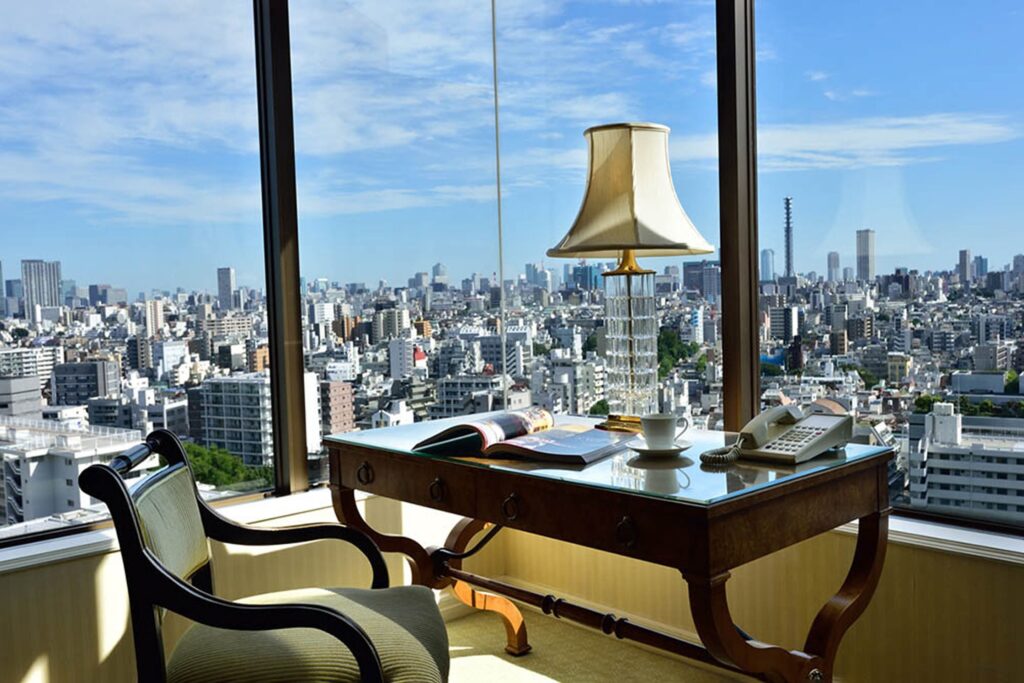
Prime Classic uses a European-classical vocabulary, while Prime Modern introduces Japanese motifs through its palette and materials. A preference can be requested in advance, but the hotel does not guarantee either design because availability is limited.
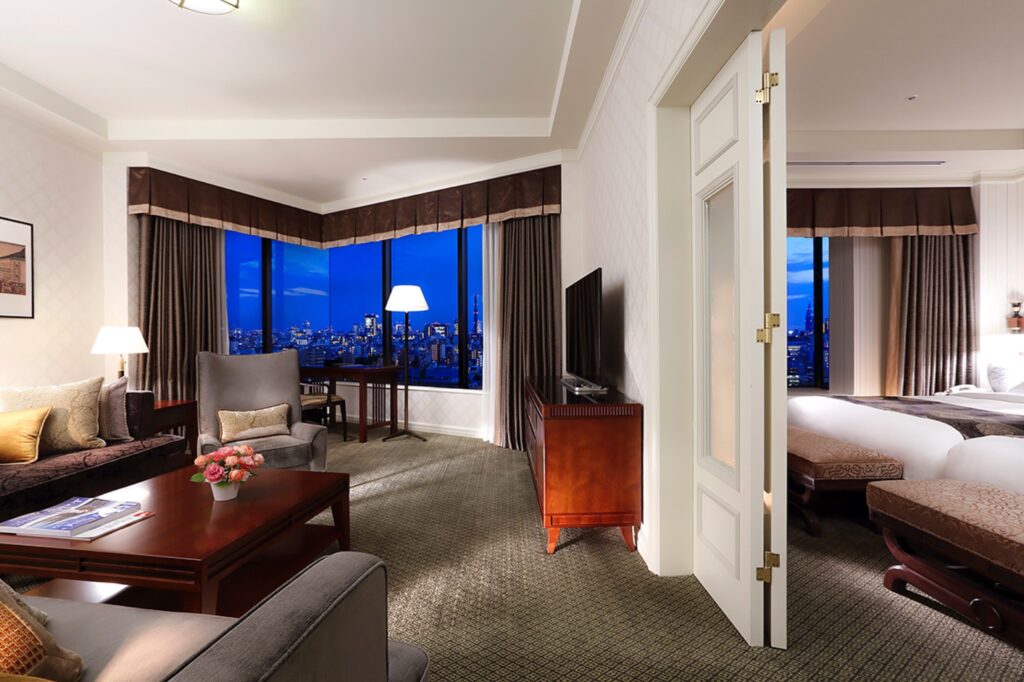
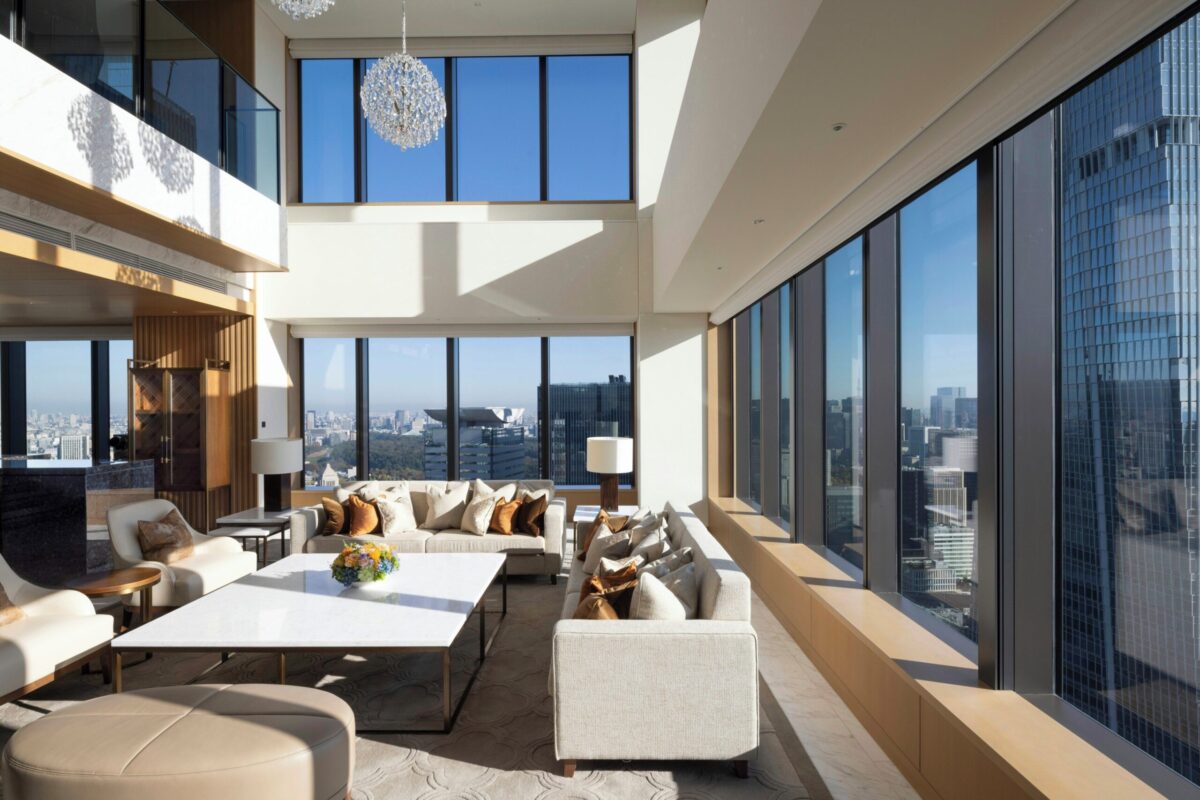
Suite guests have access to the Executive Lounge Le Ciel, which opened in 2024. It provides dedicated check-in and check-out and food and drinks at set times. A booking decision may therefore rest on a Garden View guestroom, or on the additional space and lounge privileges of a suite.
Compare Hotel Chinzanso Tokyo rates for your dates on Expedia →(Paid link)
Eight Restaurants and Bars, Including Dining in the Garden
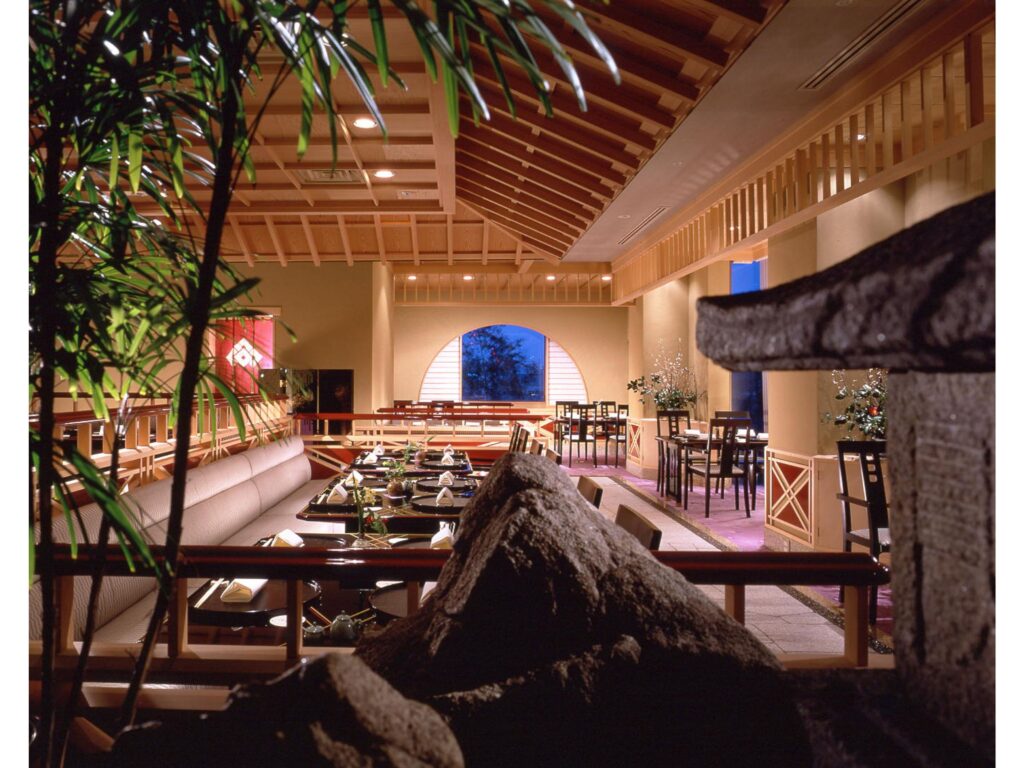
Hotel Chinzanso Tokyo has eight dining venues. Some occupy the hotel building; others are set among the paths and ponds of the garden, where relocated architecture becomes part of the meal.
Kinsui stands beside Unkinchi Pond. The sukiya-style ryotei contains ten private dining rooms and two hermitage-style rooms, all overlooking the garden, and serves formal kaiseki cuisine. One part of the complex is Zangetsu, a tea house transferred from Hakone Kowakudani in 1947 and registered as a Tangible Cultural Property in 2004.
Mokushundo comprises six Japanese buildings beside the garden’s approximately 500-year-old sacred tree. Country houses from the Nakatsugawa valley in Kanagawa were moved here and rebuilt in 1953. Its kaiseki centres on meat, seafood and vegetables cooked on hot lava stone from Mount Fuji.
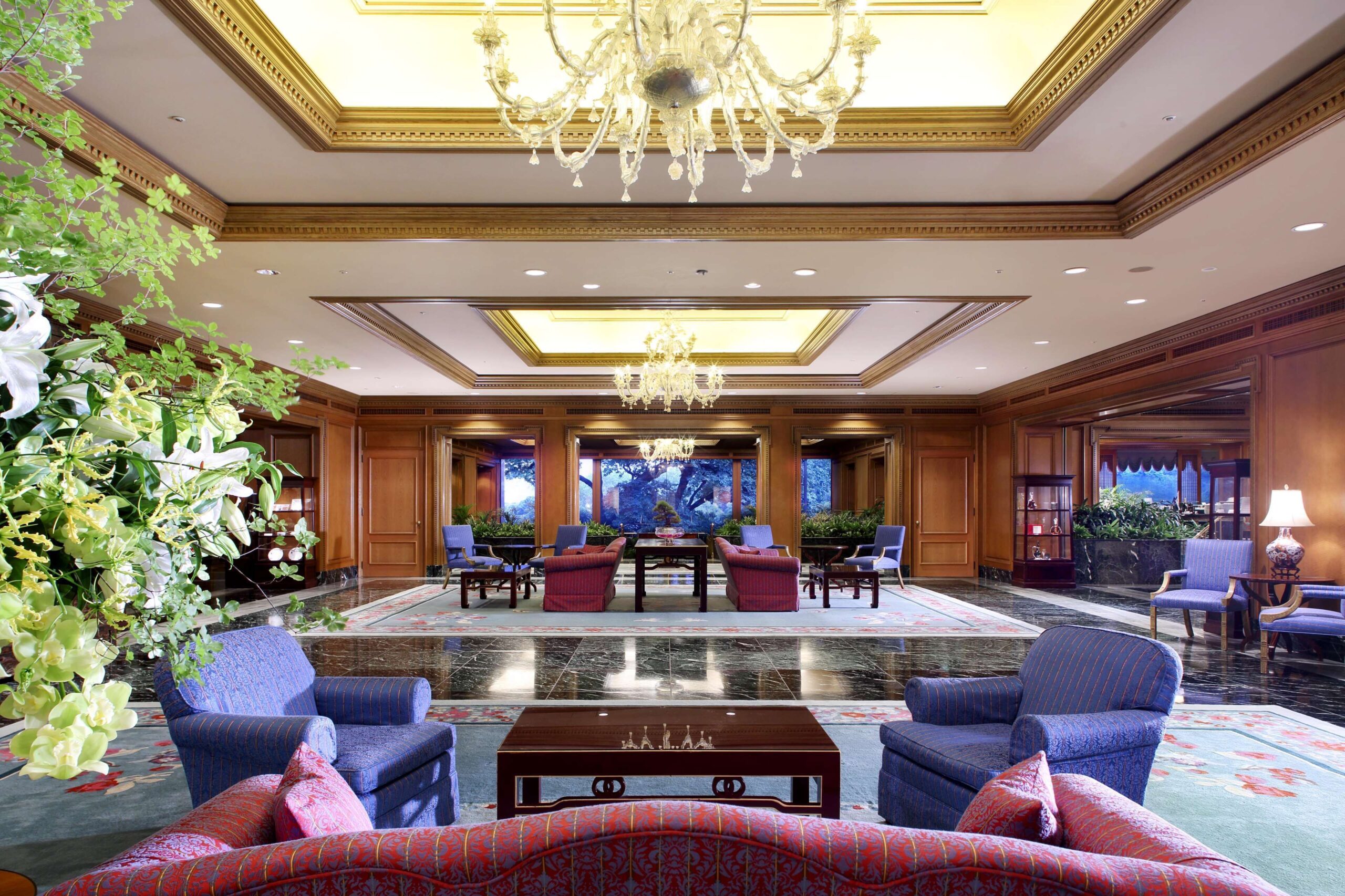
Inside the hotel are Il Teatro, an Italian restaurant facing the garden; Miyuki for Japanese cuisine, sushi and teppanyaki; The Bistro; the lobby lounge Le Jardin; and the main bar Le Marquis. In the garden, Unakiku is an eel restaurant operated by Nara’s Kikusuiro. It occupies a building thought to date to the Muromachi period and transferred to the garden in 1954.
Kinsui, Mokushundo and Unakiku offer three different ways to enter the garden through a meal. Their operating days and hours vary, so restaurant availability should be checked separately from the room booking.
Ito Onsen and a Heated Pool Beneath a Retractable Roof
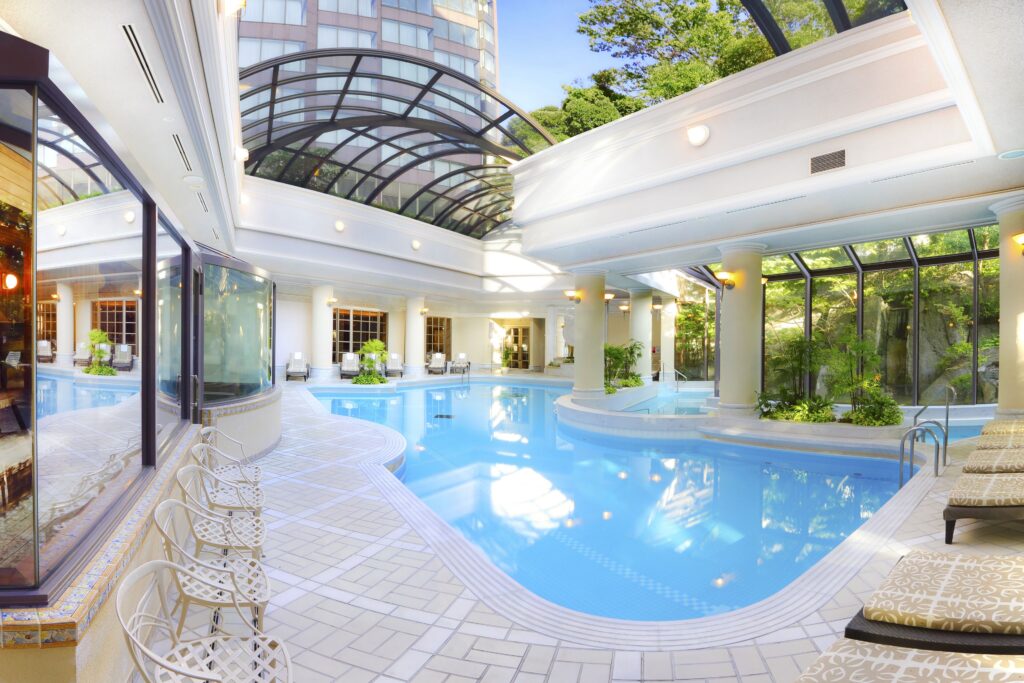
YU, THE SPA contains onsen water delivered from Ito in Izu, an all-weather heated pool beneath a retractable roof, a jet bath, sauna and fitness gym. The roof structure allows daylight and fresh air into the pool area.
The pool, onsen and gym area is reserved for hotel guests, spa members and treatment guests, but it is not automatically included in every room rate. As of 31 July 2026, the standard charge is ¥5,500 per adult for the pool and onsen area, or ¥2,750 for onsen access only. Guests on spa-inclusive accommodation plans receive priority when the area is busy, and other hotel guests may need to wait.
Children under four cannot enter. Those aged four to twelve may use the facilities from 8:00 a.m. to 6:00 p.m. Hotel guests can use the fitness gym alone free of charge, 24 hours a day. Because rates and conditions can change, the hotel’s current spa information should be checked before booking.
From Tsubakiyama to Chinzanso: The Garden on Mejirodai
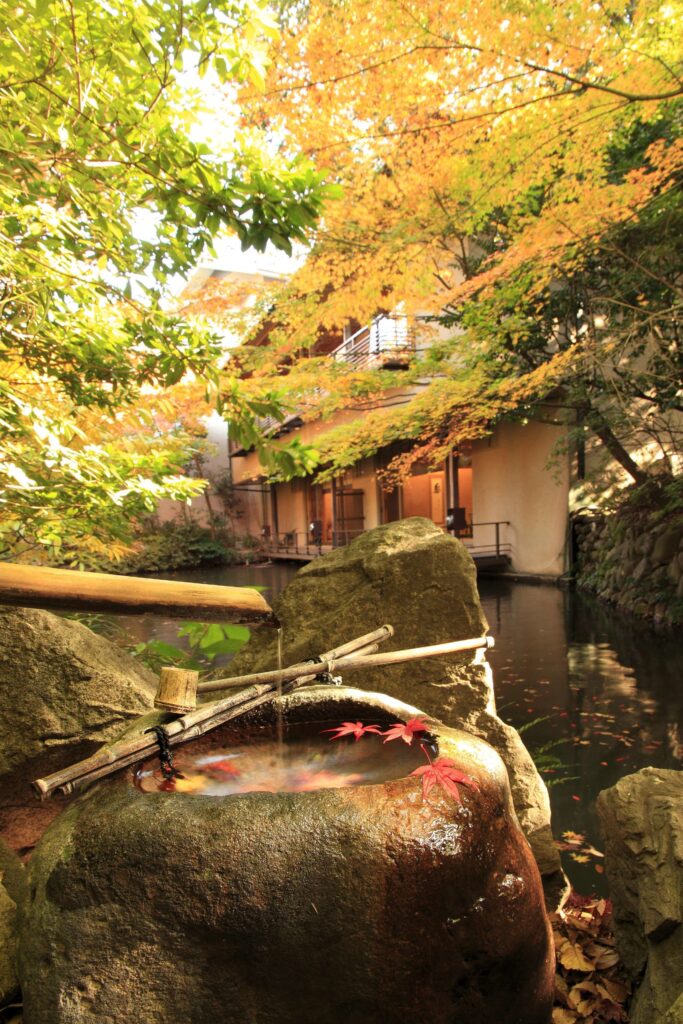
According to Edo-period geographical records cited by the hotel, wild camellias already grew on Mejirodai during the Nanboku-cho period, when this scenic area was known as Tsubakiyama. Matsuo Basho later lived for more than four years at Sekiguchi Ryugean beside the present grounds. Utagawa Hiroshige depicted the wider landscape in his 1857 series One Hundred Famous Views of Edo.
In 1878, statesman Aritomo Yamagata bought the land with private funds, created a residence and garden, and named it Chinzanso. Yamagata directed the overall design and its details, using the Mejirodai escarpment, gentle slopes, streams and ponds to establish the origins of the present rinsen-kaiyu landscape garden.
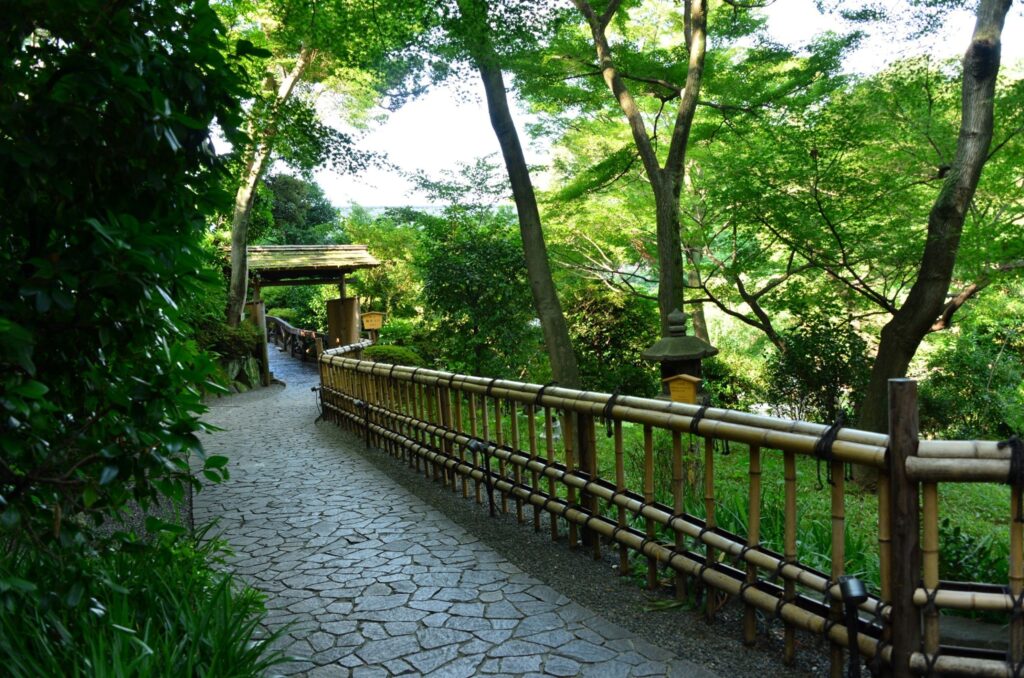
Baron Heitaro Fujita inherited the estate in 1918. Air raids in 1945 destroyed the residence and most of its trees. Reconstruction began in 1948 under Eiichi Ogawa, who transplanted more than 10,000 trees from around Japan, and Chinzanso reopened in 1952. The garden visible today is therefore not an untouched survival of the Meiji period. It was replanted and reassembled after the war, with historic buildings moved into the grounds at different dates.
Entsukaku, the Three-Storied Pagoda Moved from Hiroshima
The three-storied pagoda Entsukaku originally stood at Chikurinji Temple on Mount Takamura in Higashihiroshima. Heitaro Fujita transferred it to Chinzanso in 1925, and it was among the few structures to survive the 1945 air raids.
Its exact construction date is unknown. A tree-ring investigation conducted in 2010 found that major timbers had been felled around 1420. Entsukaku is a registered Tangible Cultural Property and is counted among the three oldest surviving pagodas in Tokyo. Major restoration and seismic reinforcement took place in 2010 and 2011; the centenary of its relocation was marked in 2025.
The route from a temple in Hiroshima to a private garden in Tokyo is central to the pagoda’s story. It was added after Yamagata’s original garden, survived the destruction around it and became one of the anchors of the postwar landscape.
Tokyo Sea of Clouds — YAKUMO — Since July 2026
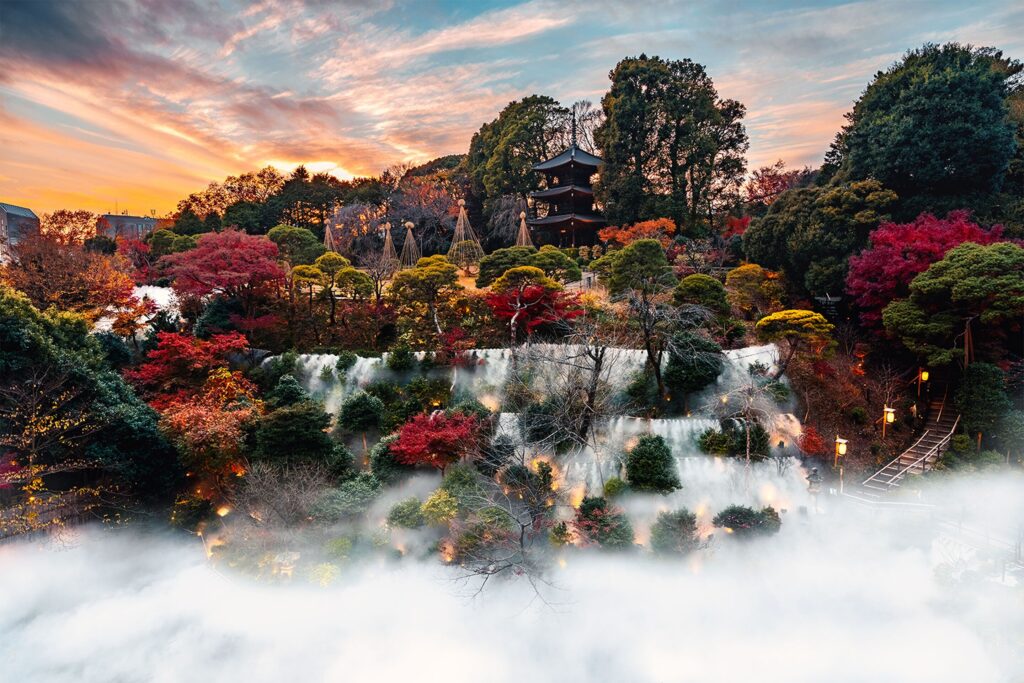
The mist across the garden is a designed installation rather than a naturally occurring sea of clouds. First introduced in 2020, Tokyo Sea of Clouds was expanded and relaunched as Tokyo Sea of Clouds — YAKUMO — on 1 July 2026. Regular displays last about three minutes; the Great Sea of Clouds scheduled in the morning and at night lasts about eight minutes.
During the larger display, mist can cover approximately three quarters of the garden. It can be viewed from Garden View guestrooms or closer to the ground around Yusuichi Pond, the garden terrace and the red bridge, where its relationship with the pagoda and water changes with each position. At night, light and sound are added to the display.
Times are published by the hotel but may change or be cancelled without notice. Entry to the garden is limited to people using the hotel’s accommodation, restaurants, events or other facilities. Seasonal programmes such as cherry-blossom illuminations and firefly viewing should be treated separately from YAKUMO, which is presented as a year-round garden installation.
The Uphill Walk from Edogawabashi
The nearest station is Edogawabashi on the Tokyo Metro Yurakucho Line. The hotel is about a ten-minute walk from Exit 1a, but the route includes roughly 500 metres uphill. The Kandagawa entrance beside the river is open from 6:00 a.m. to 10:00 p.m. and has a steep ramp. The hotel advises guests with large luggage or wheelchairs to use the main entrance instead.
From Mejiro Station, a Toei bus takes about ten minutes to the Hotel Chinzanso Tokyo-mae stop. Toei buses and the B-guru community bus also run from the Edogawabashi area. On Saturdays, Sundays and public holidays, a complimentary shuttle operates between the hotel and the west exit of Ikebukuro Station.
The hotel gives approximate taxi times of 30 minutes from Tokyo Station and 25 minutes from Shinjuku Station, subject to traffic. This is not a station-connected hotel: the slope and the position on Mejirodai should be included in arrival plans.
Four Details to Check Before Booking
- View and floor area: Garden View rooms place the grounds and mist displays outside the window. In the Prime Deluxe category, they are also five square metres larger than City View rooms.
- Prime room design: Prime Classic and Prime Modern can be requested, but neither is guaranteed.
- Spa access: The onsen and pool normally carry an additional charge. Compare spa-inclusive packages with standard room plans if these facilities are part of the stay.
- Garden restaurants: Kinsui, Mokushundo and Unakiku differ from the restaurants in the hotel building in both setting and cuisine. Check operating days and reserve them separately.
A Hotel Stay Arranged Around the Garden
Hotel Chinzanso Tokyo combines guestrooms of at least 45 square metres, dining rooms whose buildings have histories of their own, and a spa supplied with onsen water from Ito. Between them lies a garden shaped by Yamagata’s design, postwar reconstruction, a pagoda brought from Hiroshima and a contemporary installation of mist.
Its Mejirodai setting is less efficient for repeated journeys across Tokyo than a hotel attached to a major station, and the walk from Edogawabashi includes a hill. For an itinerary that gives time to dinner, bathing and a walk through the grounds, however, the estate offers several reasons to remain within it. The hotel becomes clearer through its buildings, meals and onsen as well as through the garden seen from a window.
Planning a wider luxury journey through Japan?
Explore all of our curated hotel guides here → Luxury Hotel Guides in Japan
Check current Hotel Chinzanso Tokyo availability on Expedia →(Paid link)
Related Tokyo Luxury Hotel Reviews
Mandarin Oriental Tokyo Review