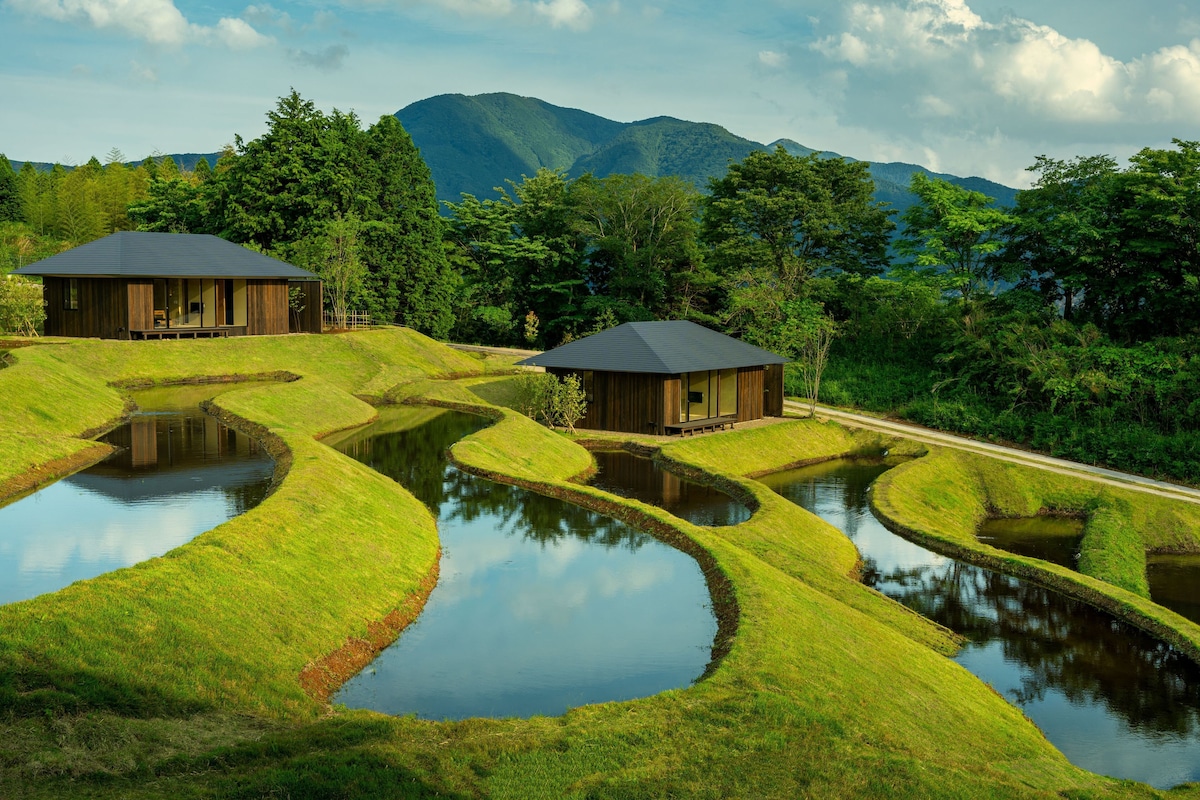
There are ryokan that frame a celebrated view, and there are ryokan that allow the landscape to set the rhythm of the entire stay. Hoshino Resorts KAI Yufuin belongs to the latter. Set on the quieter edge of Yufuin, beneath the green profile of Mount Yufu, the property is arranged around a recreated rice-terrace landscape whose water, young shoots, deep summer green and harvested stubble change with the agricultural calendar. The appeal is not simply pastoral prettiness. It is the unusual pleasure of watching a carefully designed luxury ryokan remain in conversation with the working imagery of rural Oita.
Architect Kengo Kuma’s buildings are deliberately low and restrained. Cedar, bamboo, rice straw and local shichitoi grass give the interiors a tactile warmth, while expansive windows and long eaves keep drawing the eye outside. This is not a stay built around spectacle in the conventional resort sense. Its luxury is quieter: an unhurried cup of tea beside the terraces, the silhouette of Mount Yufu beyond the bath, a room softened by woven materials, and a dinner that gives Oita’s mountain produce an elegant stage.
That serenity, however, makes the booking decision more nuanced than the photographs first suggest. Not every room has the same outlook, and only selected categories include an outdoor bath. The property also sits outside central Yufuin, so advance transport planning matters. This guide explains which room style best suits which traveller, what the onsen and dining experience add to the stay, and where expectations should be set before reserving.
The Booking Decision in Brief
KAI Yufuin is best chosen for its complete composition rather than for one amenity alone. The architecture, seasonal fields, regional meals, public onsen and small cultural rituals reinforce one another. Travellers who want to slow down inside the property—rather than use it merely as a base for sightseeing—will understand its value most readily. It is particularly persuasive for design-minded couples, quiet celebrations, and a first or final restorative night in Kyushu.
The most important decision is the room. Expedia currently presents standard Japanese-style rooms, an outdoor-bath room, and two outdoor-bath suite categories. A standard room can still deliver the full KAI experience through the public baths, dining and shared landscape, and some offer beautiful views. Yet views vary by location, and the rice terraces or Mount Yufu should never be assumed from the room name alone. If bathing privately is central to the trip, book a category that explicitly states “with Outdoor Bath” rather than relying on a general photograph.
A two-night stay is the more graceful choice when the budget allows. One night can encompass dinner, onsen and breakfast, but it moves quickly once check-in and meal times are considered. A second night creates room for Yufuin town, a longer morning beside the terraces, and repeated bathing without turning the stay into a timetable. For a one-night visit, arriving near the beginning of the check-in window and reserving transport in advance will make the experience feel substantially less hurried.
A Ryokan Designed Like a Refined Farmhouse
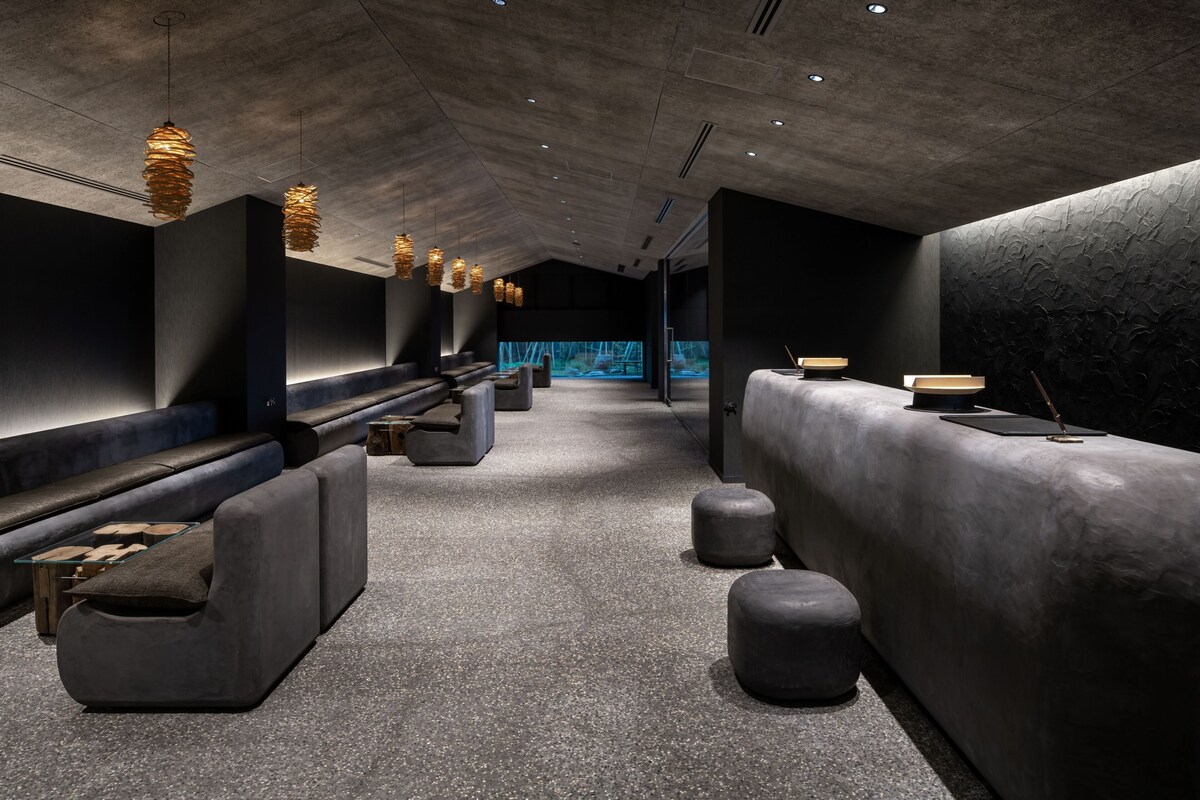
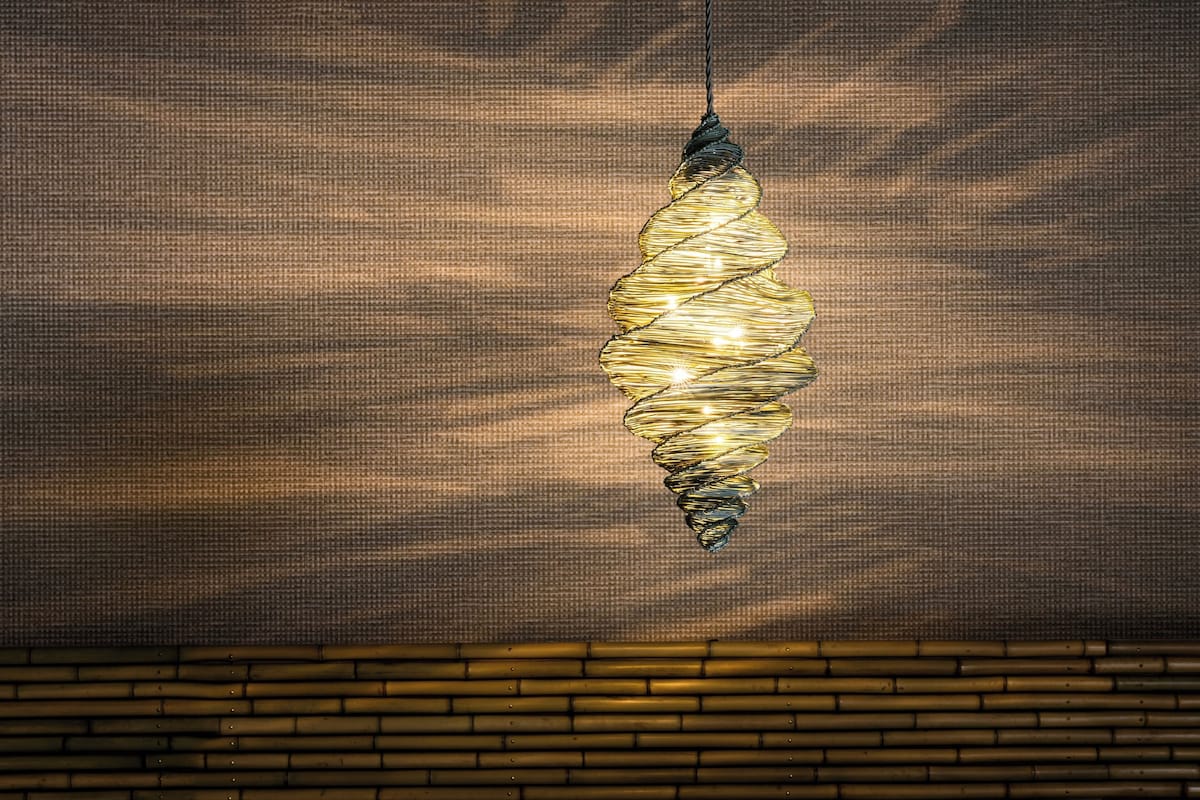
Kengo Kuma’s design begins with a familiar rural sequence. The official description evokes the progression of a traditional farmhouse—from an earthen-floored entrance to timber flooring and then tatami—translated into a contemporary ryokan. The result feels grounded without becoming rustic. Dark reception spaces heighten the transition from the outside world, while woven lamps, textured walls and softly illuminated surfaces gradually reveal the craftsmanship within.
Materials carry much of the narrative. Japanese cedar supplies visual calm; Oita bamboo appears in furniture and details; rice and straw are reimagined as decorative elements; and Kunisaki’s shichitoi grass connects the interiors to a craft once prized for robust tatami. These references are never arranged as folklore displays. They are integrated into the building’s proportions and touchpoints, giving the property a sense of place that is legible even to a guest encountering Oita for the first time.
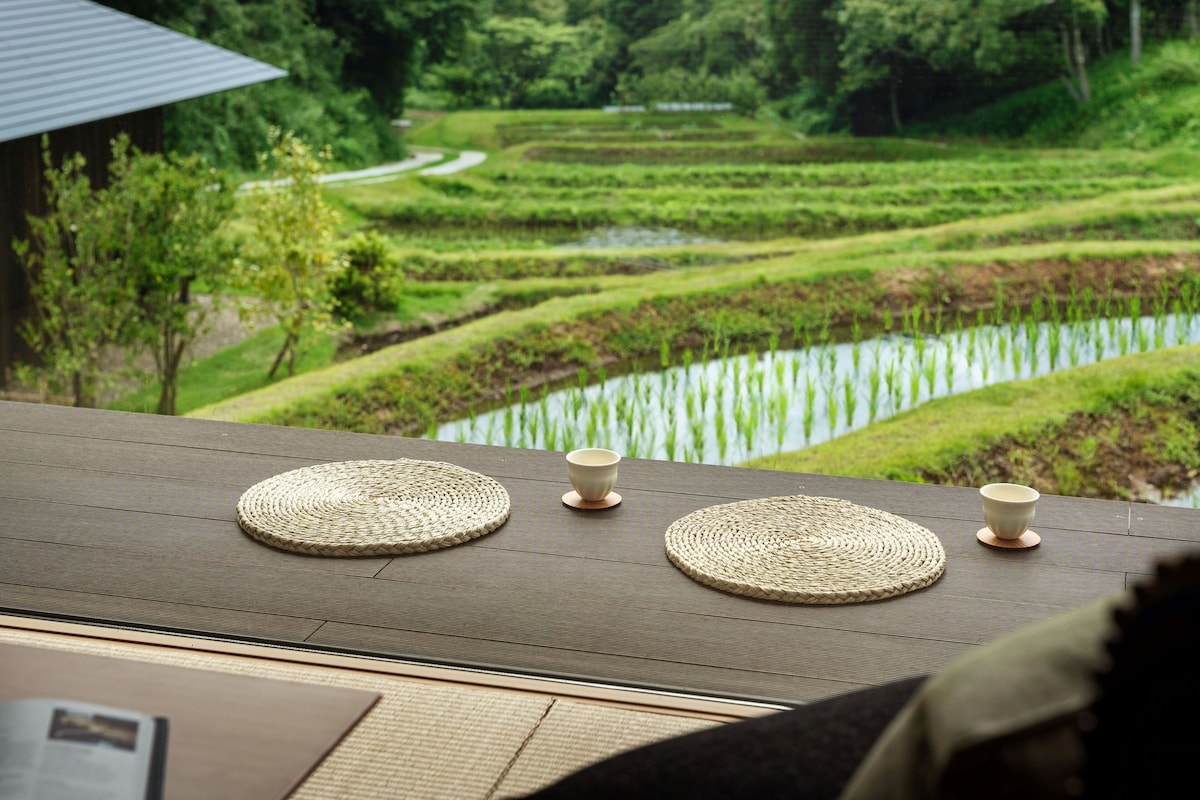
The long eaves at the Rice Terrace Deck are especially effective. They create a sheltered threshold from which the landscape can be watched in sun or light rain, and they temper the scale of the sky and fields. KAI Yufuin is therefore most memorable not as a collection of photogenic rooms, but as a sequence: shadowed reception, warm woven light, a widening view, water in the paddies, then the mountain beyond.
The Rice Terraces Change with the Agricultural Calendar
The terraces are the emotional centre of the property, but they should be understood as a living seasonal setting rather than a guaranteed postcard. In the planting period, water catches the sky and young shoots form fine green lines. Summer deepens the colour and density. Later, warmer tones and the signs of harvest alter the mood again; winter is quieter and more graphic. Weather, agricultural timing and maintenance naturally affect what guests see on any particular date.
This variability is precisely why the landscape feels more compelling than an ornamental garden designed to remain unchanged. Morning mist may soften the mountain; rain can sharpen the smell of earth and timber; clear evenings bring a different stillness. No single season is objectively the “best.” Those seeking luminous water surfaces may favour late spring, while travellers drawn to lush green often prefer summer. Autumn offers a more burnished palette, and colder months place greater emphasis on the bath, architecture and mountain air.
The most rewarding approach is to choose dates for the wider journey and accept the terraces as they are. KAI Yufuin’s design does not depend upon one fleeting condition. Even when the fields are subdued, their contours guide the eye across the property, separating the low buildings and lending the grounds an unusual sense of depth.
Understanding the Rooms Before You Book
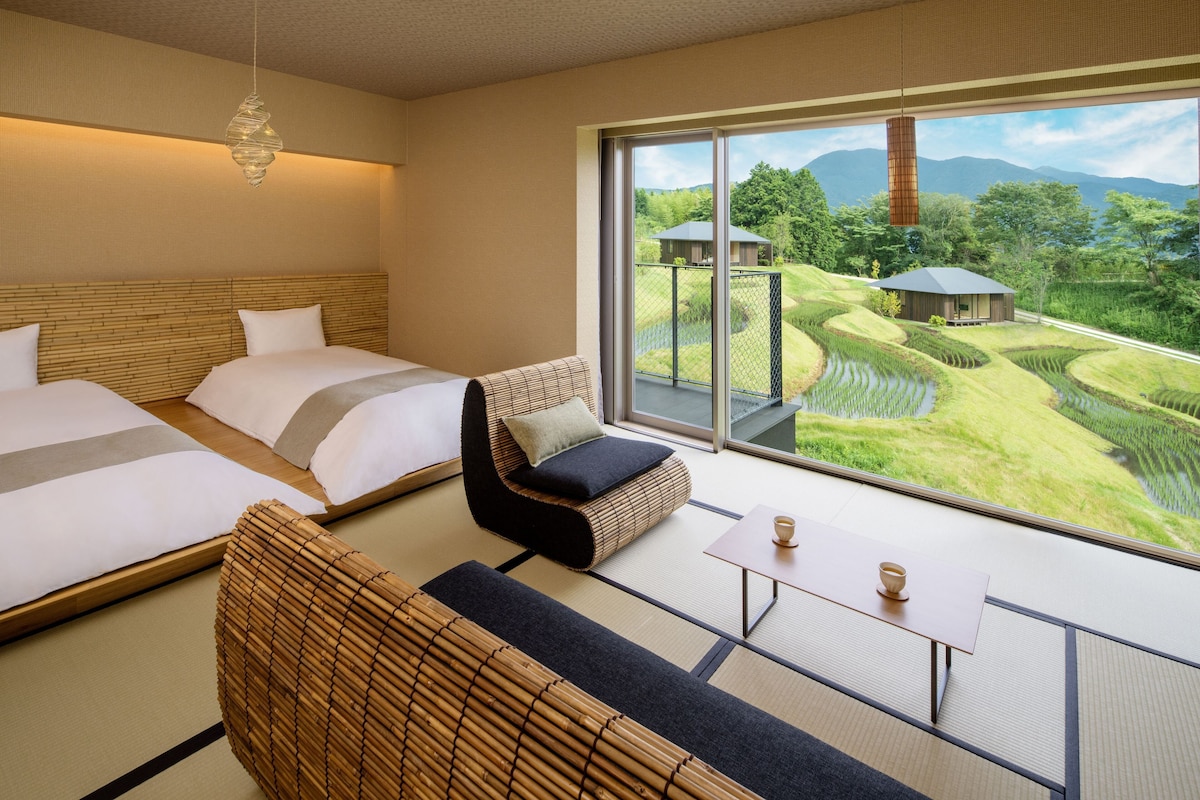
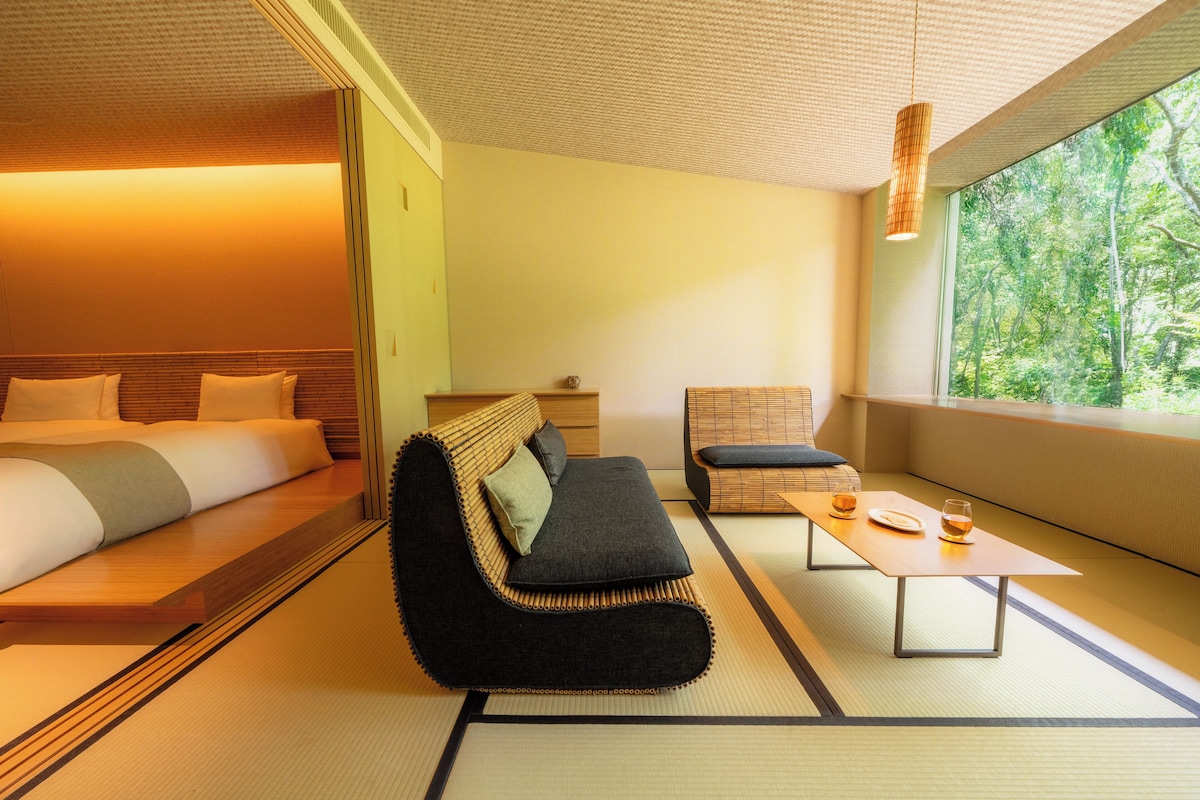
The property has 45 rooms in several configurations, all conceived as KAI Signature Rooms. The shared vocabulary includes low beds, tatami, pale natural materials and sculptural bamboo seating. Firefly-basket-inspired lamps add an intimate glow after dark, while the restrained palette gives the windows and surrounding greenery visual priority.
Expedia’s current inventory may display fewer categories than the full range described by the hotel, and naming can differ between booking channels. At the time of writing, the principal choices include a Japanese-style Room TA3, a Japanese-style Room FA4 for up to four guests, a Japanese-style Room with Outdoor Bath RA, and two Japanese-style suites with outdoor baths. Availability changes by date, so the practical task is not to memorise every code but to read the exact category description attached to the rate.
Three details deserve special attention. First, a photograph of the terraces in the gallery does not mean every room overlooks them. Second, a room may have an attractive bath area without having an open-air hot-spring bath; the booking title must explicitly confirm the outdoor bath. Third, bedding and occupancy vary. Couples may find the standard room arrangement serene, while families should check the stated number of beds and maximum occupancy rather than assuming a traditional futon layout.
Room selection here is less about moving from “good” to “better” than choosing where to place the premium. Standard rooms direct more of the budget toward the shared landscape, meals and public onsen. Outdoor-bath rooms shift the emphasis toward privacy and time spent in the room. The detached suites add a stronger sense of retreat, but should be booked for that seclusion—not because they are the only way to appreciate KAI Yufuin.
Main-Building Rooms: When the Landscape Matters More Than a Private Bath
A main-building room is the sensible choice for guests who enjoy communal onsen and expect to spend much of the day in the property’s shared spaces. These rooms retain the essential design language: tatami underfoot, beds set low against bamboo detailing, softly curved woven chairs, and windows that bring in the surrounding slopes or grounds. The atmosphere is notably residential, with very little visual clutter.
Some room photographs show a magnificent sweep across the rice terraces toward the mountain, but this outlook must be treated as category- and location-dependent. If the view is decisive, contact the property or examine the booking description closely; requests remain requests, not guarantees. Travellers who can accept that uncertainty may find the standard category offers the best balance of design and price.
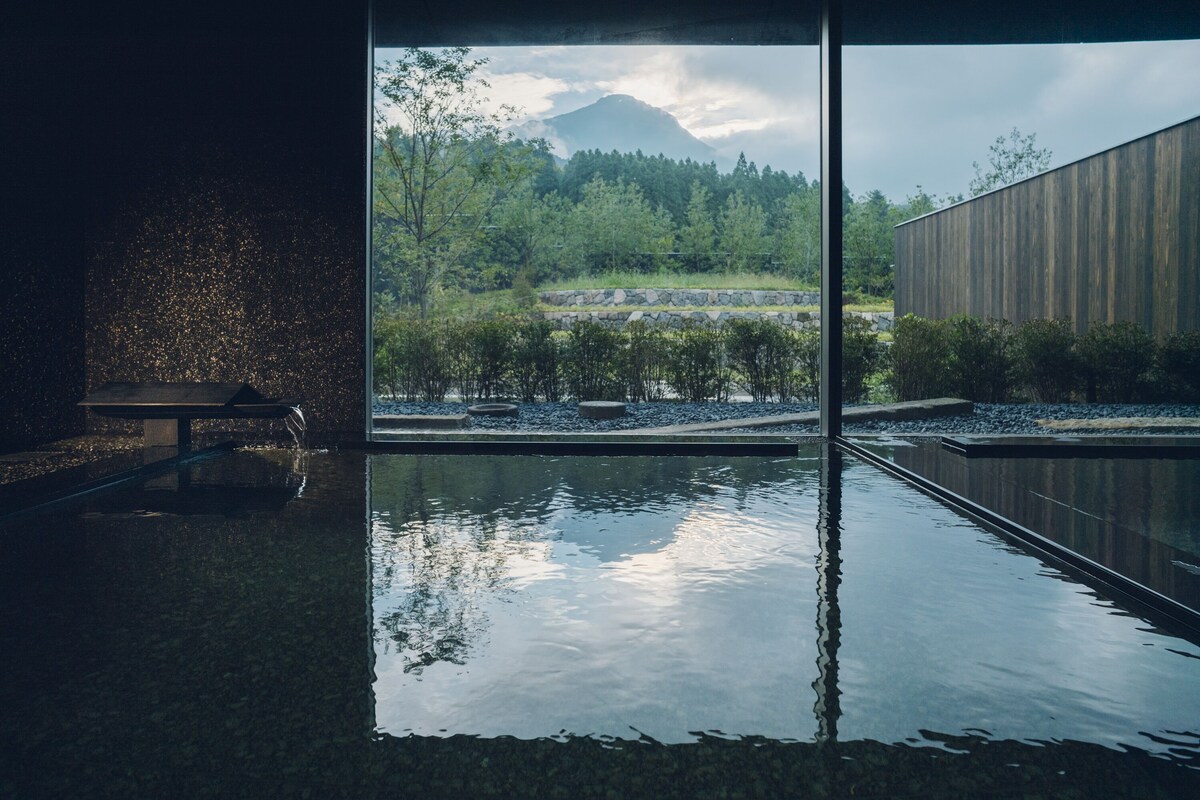
The absence of a private outdoor bath need not diminish the stay. The public onsen is architecturally stronger than many in-room baths and provides the most dramatic framed view of Mount Yufu. A standard room can therefore be the more coherent choice for guests comfortable with Japanese bathing etiquette. It preserves the pleasure of returning from the larger bath to a calm tatami room, rather than paying a premium for an amenity that may be used only once.
Outdoor-Bath Rooms and the Two Detached Suite Settings
For guests who value privacy, the outdoor-bath categories change the pace of the stay. The ability to bathe before breakfast, after dinner or in the quiet interval between activities makes the room feel like a destination in itself. It is especially useful for couples seeking seclusion, travellers who prefer not to use a communal bath, or anyone planning a slow two-night visit.
The official design story distinguishes two detached suite settings: one associated with the rice-terrace landscape and another set by a sawtooth oak forest. The latter is described with a separate cedar bathhouse, creating a particularly private sequence between room, trees and bath. Booking-channel codes do not always map transparently onto those poetic names, however. Confirm the current room description and photographs for the exact date rather than assuming which suite code corresponds to which setting.
There is also an outdoor-bath room category that offers privacy without necessarily delivering the spatial drama of a detached suite. For many couples, this may be the sweet spot. It carries the amenity that most changes the daily rhythm while avoiding the highest suite premium. What matters is to buy the experience one will actually use. A terrace view may be more valuable to one guest; a private soak surrounded by woodland may be more meaningful to another.
The Public Onsen: Mount Yufu, Atsuyu and Nuruyu
The public onsen is not a secondary facility; it is one of the property’s defining rooms. Large panes frame Mount Yufu above the waterline, and the architecture is dark enough to make the changing daylight feel vivid. The official design information describes separate bathing areas for men and women, each with indoor baths and an outdoor bath. The experience is composed around contrast: interior shadow and open sky, warm stone and cool mountain air.
KAI properties often encourage guests to explore different water temperatures, and Yufuin’s bathing spaces lend themselves to alternating an atsuyu warmer bath with a gentler nuruyu soak. Rather than rushing through, allow the body to settle gradually. Early morning tends to feel contemplative; after dinner, the darkness outside makes the illuminated interior more enveloping. Hours and maintenance schedules can change, so check the information given at arrival.
Standard Japanese onsen etiquette applies: wash before entering, keep towels out of the water, and speak softly. Tattoo policies can vary and Expedia advises that some properties may restrict access to public bathing facilities. Guests for whom this is relevant should confirm directly before booking. An outdoor-bath room may offer a private alternative, but it should not be assumed to override every property policy.
Kaiseki from the Mountains of Oita
Dinner provides the richest expression of the region after the landscape itself. The current signature course centres on three meats served shabu-shabu style in a deep, aromatic broth, accompanied by bright Oita accents such as kabosu pepper and ponzu. The pleasure lies in balance: the meats bring warmth and depth, while citrus and spice keep the sequence from becoming heavy. Menus are seasonal and may change, which is part of the point rather than a weakness.
Meals are served in semi-private dining spaces, preserving a sense of occasion without the formality of a fully private room. Presentation is polished but the ingredients remain recognisable. This is not urban kaiseki transplanted into the countryside; it is a dinner designed to make Oita’s mountain character intelligible through broth, grill, vegetables and condiments.
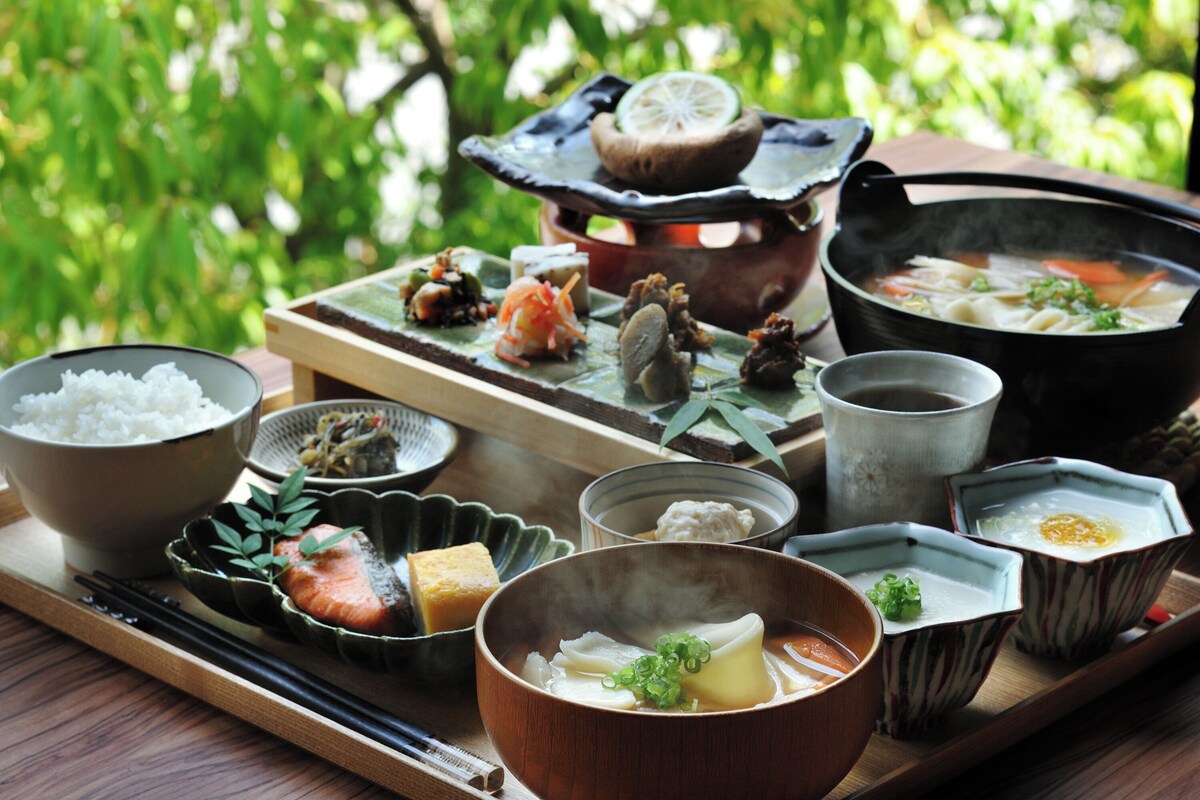
Breakfast returns to a gentler register with an Oita-style Japanese set built around dango-jiru dumpling soup and shiitake grilled with kabosu. A Western breakfast can also be selected under current guidance, except from January 1 to 3. Guests with dietary restrictions should not wait until arrival: vegetarian arrangements have a stated advance cutoff, while serious allergies require direct confirmation.
Half-board is integral to the ryokan rhythm. Leaving the property for dinner would interrupt the very continuity that makes KAI Yufuin persuasive. When comparing rates, check whether both dinner and breakfast are included, and consider the value of two carefully paced meals rather than comparing the room price with a conventional hotel on accommodation alone.
Small Rituals Around the Rice Fields
The most distinctive moments are often the least expensive to stage. Sitting at the terrace edge with tea, watching light move over the paddies, or noticing the woven firefly-basket lamps after dusk can be more memorable than a crowded activity schedule. KAI’s cultural programming is designed to translate the locality into approachable rituals, and offerings may follow the season.
Participation is worthwhile, but the property should not be treated as a checklist. Ask at check-in which activities require reservations and then leave enough empty time around them. The terraces reward repetition: they look different before breakfast, in the flat brightness of midday, and when evening lowers across the slopes. A guest who sees them only while walking from reception to the room misses much of the design’s intention.
The lighting is another quiet signature. The suspended forms reference woven firefly baskets and cast soft, irregular shadows across the textured walls. Their intimacy becomes especially effective after the expansive outdoor views disappear. It is a subtle reminder that the hotel’s rural references are carried not only by scenery, but also by craft, pattern and the way darkness is used.
One Night or Two — and How to Reach the Ryokan
KAI Yufuin is approximately ten minutes by taxi from JR Yufuin Station and around fifteen minutes by car from the Yufuin Interchange under normal conditions. From Oita Airport, driving takes roughly an hour; the airport bus to Yufuin followed by a taxi is another practical route. The property offers parking, and a complimentary station shuttle may be available by advance reservation.
The shuttle should be planned, not improvised. Seats are limited, departure times are fixed, and the reservation deadline is several days before arrival. Travellers with luggage or an inflexible train connection may find a taxi simpler. In winter, snow and ice can affect the roads around Yufuin; drivers should check conditions and carry appropriate tyres or chains rather than assuming Kyushu roads will remain clear.
For one night, arrive early enough to settle before dinner, enjoy the bath twice and preserve a quiet morning. For two nights, central Yufuin fits naturally into the middle day. Kinrin Lake and Yunotsubo Kaido are not on the doorstep, which is part of the property’s calm, but taxis make the distance manageable. The second evening then feels like a return to the countryside rather than a repetition.
Current check-in begins at 2:30 p.m., with evening arrival limits, and checkout is by 11:00 a.m. These details can change, so verify them on the booking page. Guests arriving after the stated window should contact the property, particularly when dinner is included; a late arrival can affect a meal that requires substantial preparation.
Booking Cautions — and Who KAI Yufuin Suits
This ryokan suits travellers who appreciate quiet architecture, seasonal landscapes and meals as part of the destination. It is less suitable for guests who want to walk directly into Yufuin’s shopping streets, require a guaranteed terrace view without confirming the category, or expect every room to include a private outdoor bath. The property also has areas without elevators, according to Expedia, so mobility needs should be discussed before reservation.
Rates can appear high when judged as a room alone. The better comparison is with a composed overnight experience that includes regional dining, onsen, design and unusually spacious grounds. Value rises for guests who arrive early, eat on site and use the public spaces; it falls for those who check in late and depart immediately after breakfast. The hotel does not need an overloaded itinerary. It needs time.
Before paying, verify four points: the exact room category, whether dinner and breakfast are included, the transport plan from Yufuin Station, and any dietary or bathing requirements. Also remember that photographs show the property across different seasons and room positions. Neither a mirror-like paddy nor a particular mountain view can be promised for every stay.
Families can be comfortable in the larger configurations, but should check occupancy, bedding and meal arrangements for children. Couples choosing between a standard room and a private-bath category should decide whether they will genuinely use the in-room bath often enough to justify the premium. There is no universally correct category—only the one that aligns the cost with the moments that matter most.
A Stay Measured by the Rice-Field Seasons
KAI Yufuin succeeds because its defining image is not merely decorative. The terraces determine how the buildings sit, how the long eaves frame the horizon, how rooms turn toward light, and how guests understand the passage of a day. Kengo Kuma’s architecture gives that landscape refinement without overwhelming it, while the onsen and dining carry the experience inward through water, warmth and taste.
The most compelling reservation is therefore made with clarity. Choose a standard room if shared onsen and the wider property are the priority. Choose an outdoor-bath room if private, repeated bathing will shape the stay. Choose a detached suite for seclusion and architectural presence, after confirming the precise setting attached to the category. In every case, allow the rice fields to be seasonal rather than perfect.
For travellers seeking a polished Oita ryokan that feels inseparable from its landscape, KAI Yufuin is a persuasive choice. It does not ask to be consumed quickly. It asks for an afternoon that opens gradually, a dinner paced in courses, a bath beneath the mountain, and a morning in which the fields have changed almost imperceptibly overnight.
Related reading: Continue exploring Oita with our AMANE RESORT SEIKAI review, or prepare for the baths with our first-time visitor’s guide to onsen etiquette.
Room names, meal contents, shuttle schedules and policies may change. Confirm the details shown for your travel dates before booking.