Check Four Seasons Hotel Kyoto rates and availability on Expedia →(Paid link)
Four Seasons Hotel Kyoto begins with a contradiction. It is a substantial modern hotel—123 guest rooms and suites, with another 57 residences—yet the element that gives it character predates the building by centuries. Shakusui-en, the pond garden at its centre, is believed to date from the end of the Heian period and extends across roughly 10,000 square metres.
The garden is more than an attractive view from the lobby. It changes which room categories are worth considering, draws meals towards the water and gives the tea house a setting that could not be reproduced by interior design. At the same time, this remains a full-service Four Seasons, with a 20-metre indoor pool, ofuro, sauna, 24-hour gym, connecting rooms and residences equipped for longer stays.
That combination makes the hotel unusually versatile in Kyoto. Couples can choose a garden-facing room and let the property carry more of the stay; families can secure space and practical facilities without moving to the edge of the city. The important question is not simply whether the hotel is luxurious. It is whether the room, view and facilities selected make proper use of what is here.
Check current Four Seasons Hotel Kyoto availability on Expedia →(Paid link)
Shakusui-en Sets the Hotel’s Pace
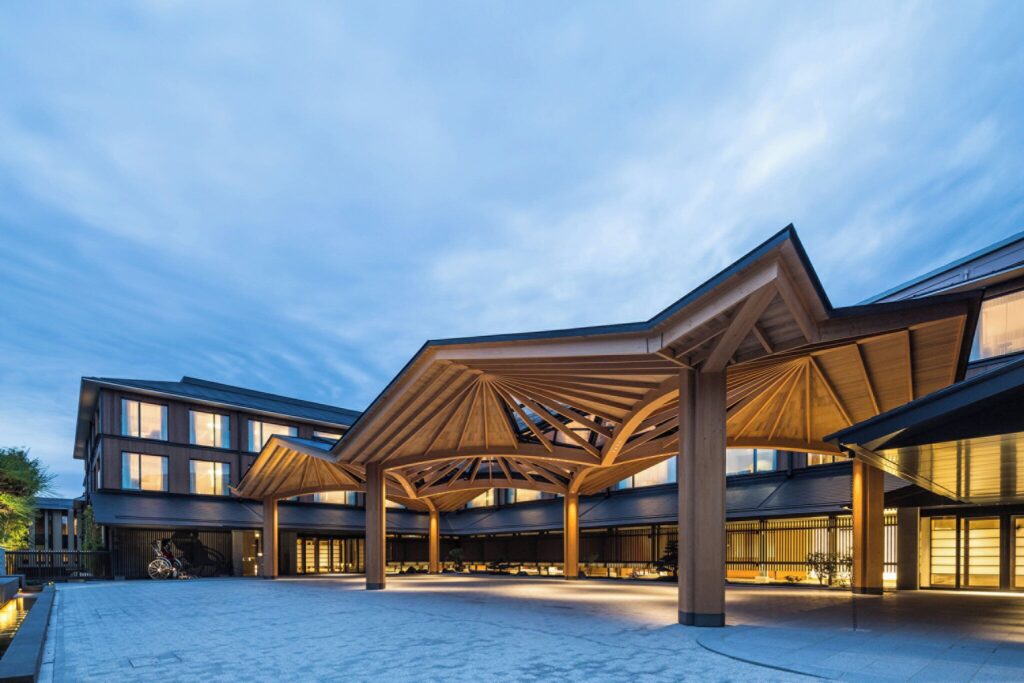
Four Seasons describes Shakusui-en as an approximately 800-year-old circuit-style pond garden and one of the few surviving gardens created near the end of the Heian period. It is believed to have belonged to the estate of Taira no Shigemori, though that lineage is presented as a historical belief rather than a settled fact.
The long garden runs west to east, with a stone bridge dividing the larger Oike pond from the smaller Koike. Remnants of an old stone waterfall remain on the Koike side. These details matter because they reveal a composed landscape rather than a decorative pond added when the hotel opened in 2016.
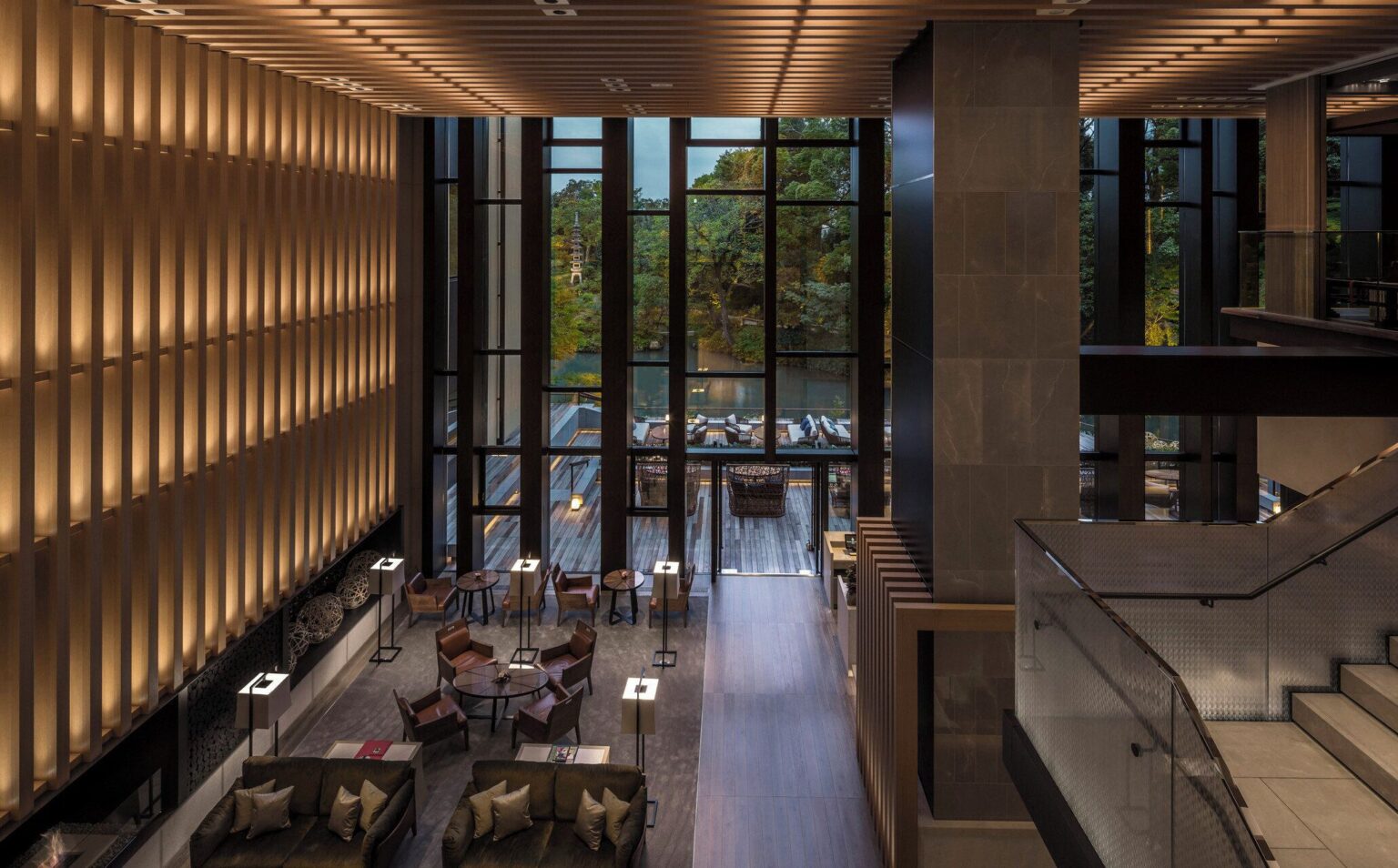
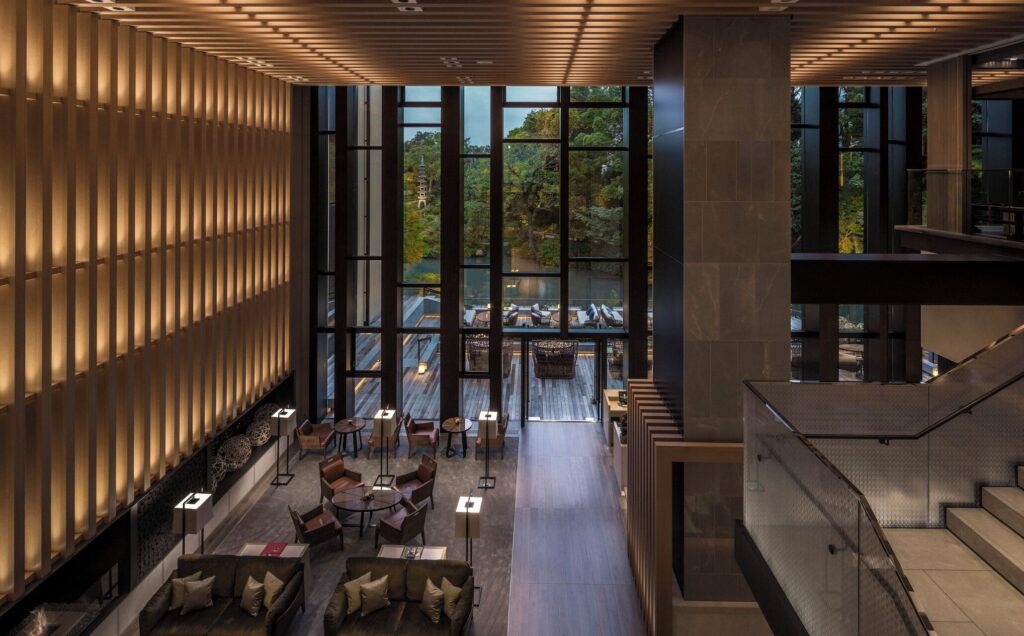
Hotel life repeatedly returns to this older ground. The lobby looks towards it; garden rooms face it; EMBA’s terrace reaches the water; and a glass bridge leads to Fuju and the tea-ceremony room. The building is large, yet the garden gives its public spaces a specific Kyoto rhythm.
See available Four Seasons Hotel Kyoto room plans on Expedia →(Paid link)
The Old Garden Meets 123 Rooms and 57 Residences
The official inventory is often simplified incorrectly. Four Seasons currently lists 180 accommodations in total: 110 guest rooms, 13 suites and 57 hotel residences. The distinction is useful. The first 123 provide a conventional hotel stay in generous proportions; the residences add kitchens, laundry and layouts intended for families, friends or longer visits.
Even the entry Deluxe Room measures 49 to 53 square metres, with a separate rain shower and bathtub, double vanity and a window that can be opened. Its outlook, however, is towards the entrance courtyard. Premier Rooms add space and may face the courtyard or city. The defining pond view belongs to named Heritage Garden categories, not to every key in the building.
This is the central booking decision. A guest who mainly needs a spacious Higashiyama base may be perfectly content with a Deluxe or Premier Room. Someone choosing the hotel for Shakusui-en should price the garden view explicitly, ensuring that the selected category includes the view that gives the property its identity.
Choose the Garden View Room by Room
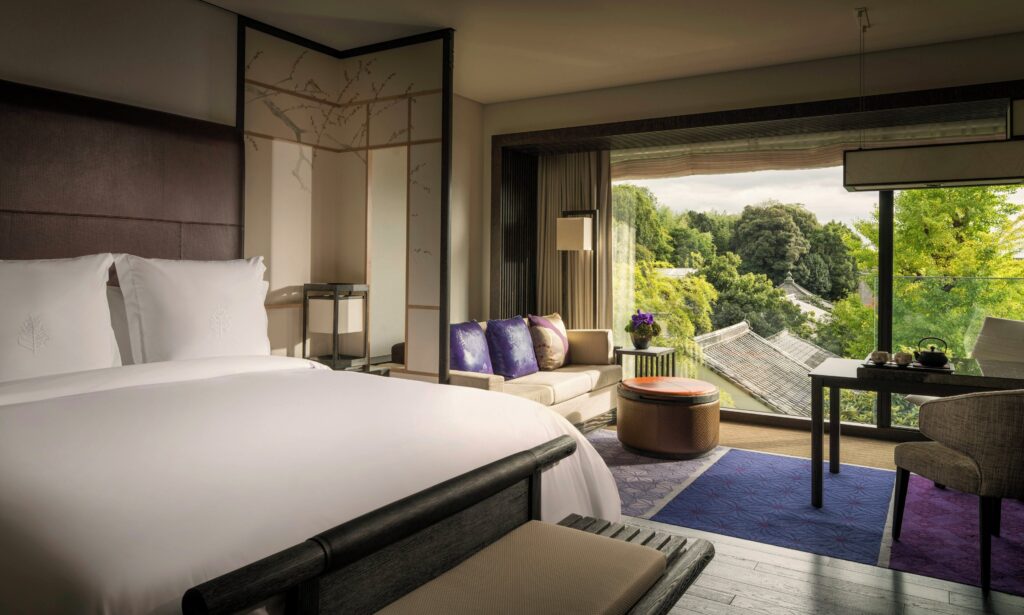
Premier Heritage Garden Rooms measure 52 to 53 square metres and frame Shakusui-en through broad windows. Four Seasons Heritage Garden Rooms are 53 square metres with a six-square-metre balcony and sit on the fourth floor. The difference is not simply one more amenity: height, outdoor space and the angle onto the garden determine how strongly the oldest part of the property enters the room.
The same logic continues through the suites. A One-Bedroom Heritage Garden Suite offers 71 to 76 square metres and distinct sleeping and living areas; the Premier version reaches 98 to 103 square metres. Those figures are useful, but the view and configuration deserve equal attention. A larger courtyard-facing suite is not automatically the better choice for a couple who intends to spend mornings overlooking the pond.
Room names are therefore unusually informative here. “Heritage Garden” signals the experience most closely associated with the hotel, while “Residence” signals a different kind of value. The right choice begins with how the room will be used: garden immersion for a shorter stay, or residential ease for a longer journey.
Residences Make a Longer Family Stay Work
A one-bedroom residence begins at 83 square metres and includes a fully equipped kitchen and washer. Larger residential layouts create proper dining and living space, making breakfast for a young child, an early evening in or several days of laundry considerably easier. This is practical luxury rather than merely additional floor area.
Connecting rooms are available across several room and suite categories. Four Seasons also states that children under 18 incur no additional room fee when sharing an existing bed with parents or guardians, subject to space; extra beds and occupancy limits remain category-specific. Families should confirm the exact configuration instead of reading that policy as unlimited free occupancy.
For couples, a residence may be unnecessary unless privacy, a kitchen or a much longer stay justifies it. For a multigenerational journey, however, the combination of separate rooms, hotel service and central facilities is one of the clearest reasons to choose Four Seasons over Kyoto’s smaller retreats.
Twenty Metres of Pool, Then Ofuro and Sauna
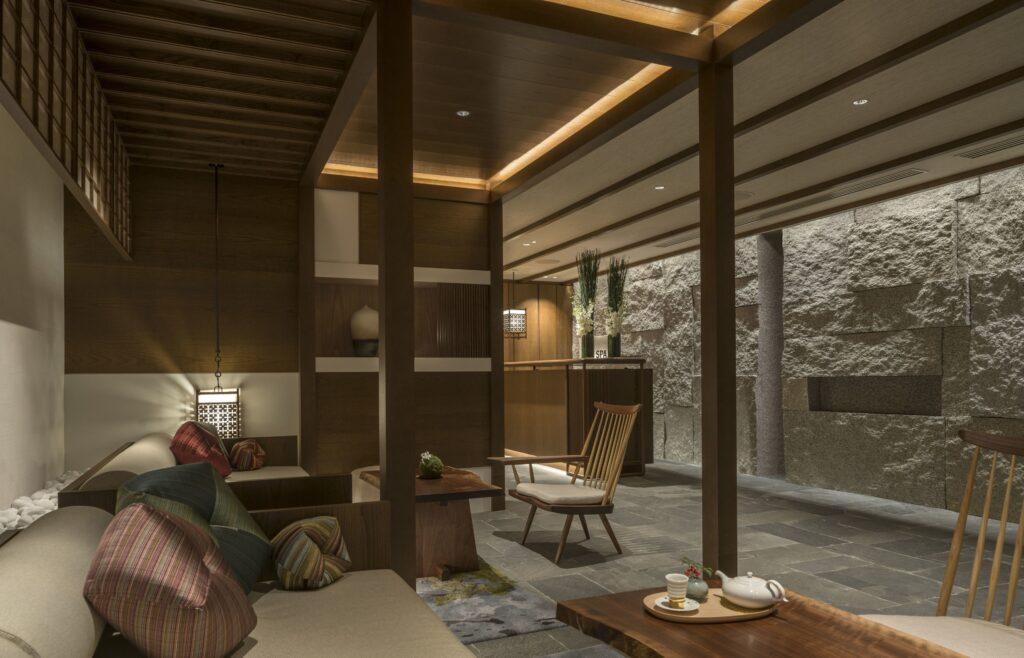
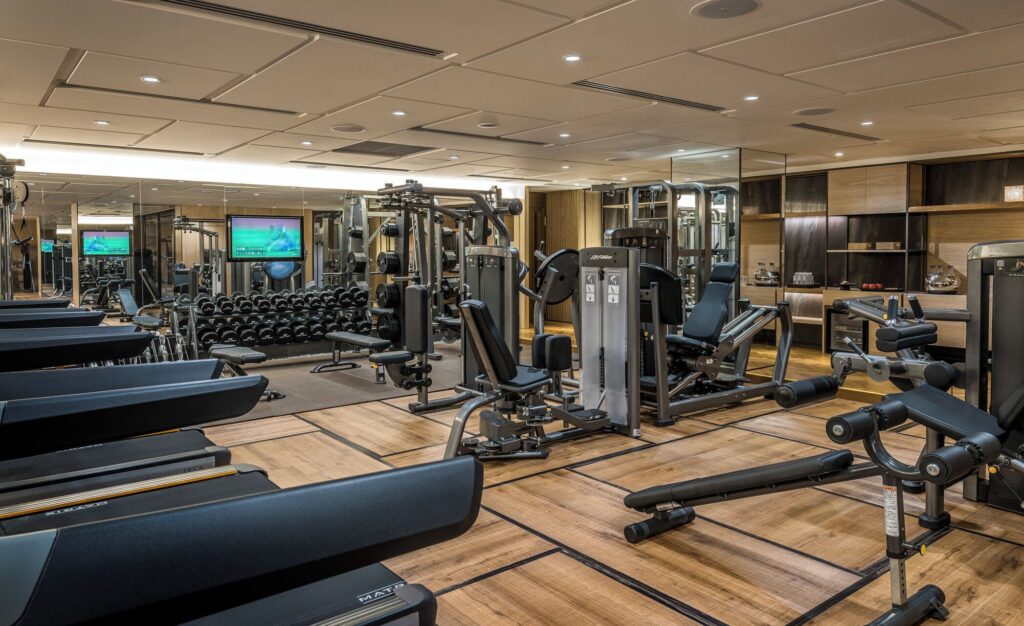
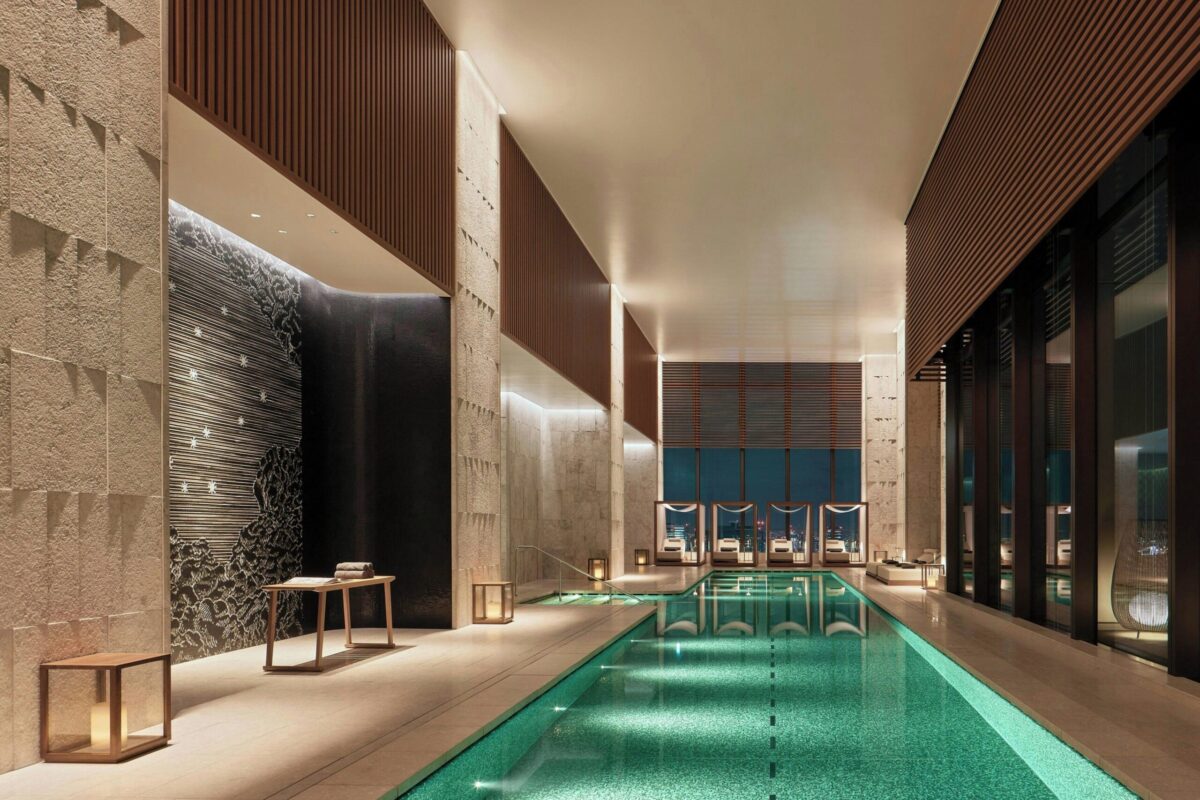
The wellness floor supplies breadth that many smaller Kyoto hotels cannot. Its indoor pool is 20 metres long, with underwater lounge chairs and two whirlpools. Morning and evening periods are reserved for adults, so families should check the current access schedule rather than promise children unrestricted pool time.
Hotel guests also receive complimentary access to the ofuro and sauna. These are bathing facilities rather than a natural hot spring, a distinction worth keeping clear when comparing Four Seasons with an onsen resort. The spa’s paid treatments draw on Japanese rituals and local ingredients, while the 24-hour fitness centre is equipped for guests who want more than a token treadmill.
Taken together, pool, bathing and fitness make poor-weather hours easier to use and give a family more room to vary the day. The wellness floor becomes a substantial part of the hotel’s value.
Fire, Edomae Sushi and Tea Beside the Pond
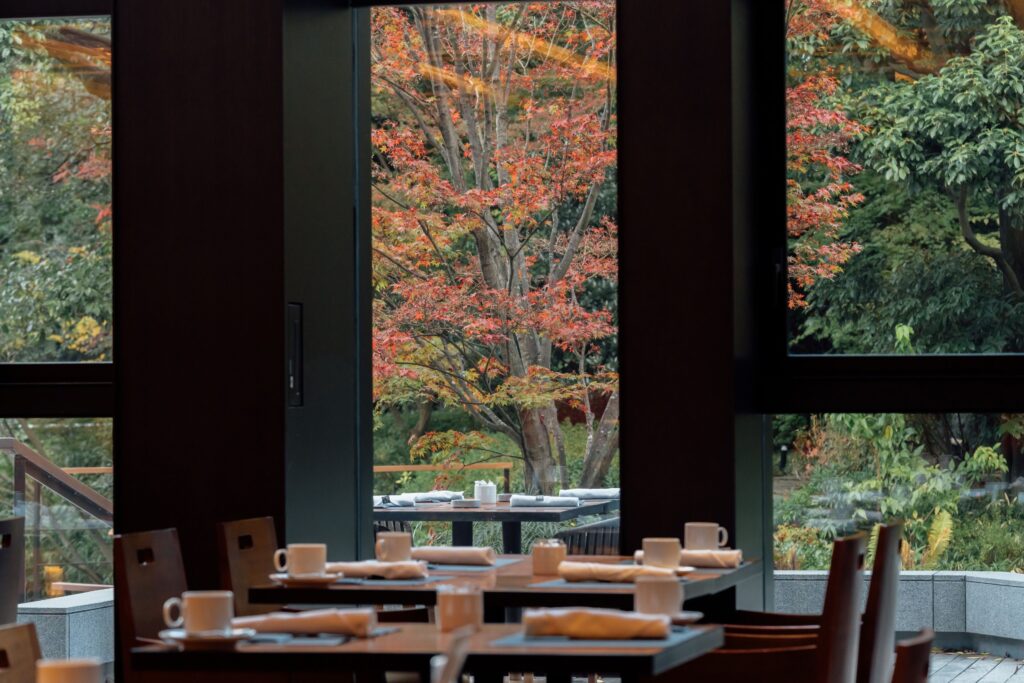
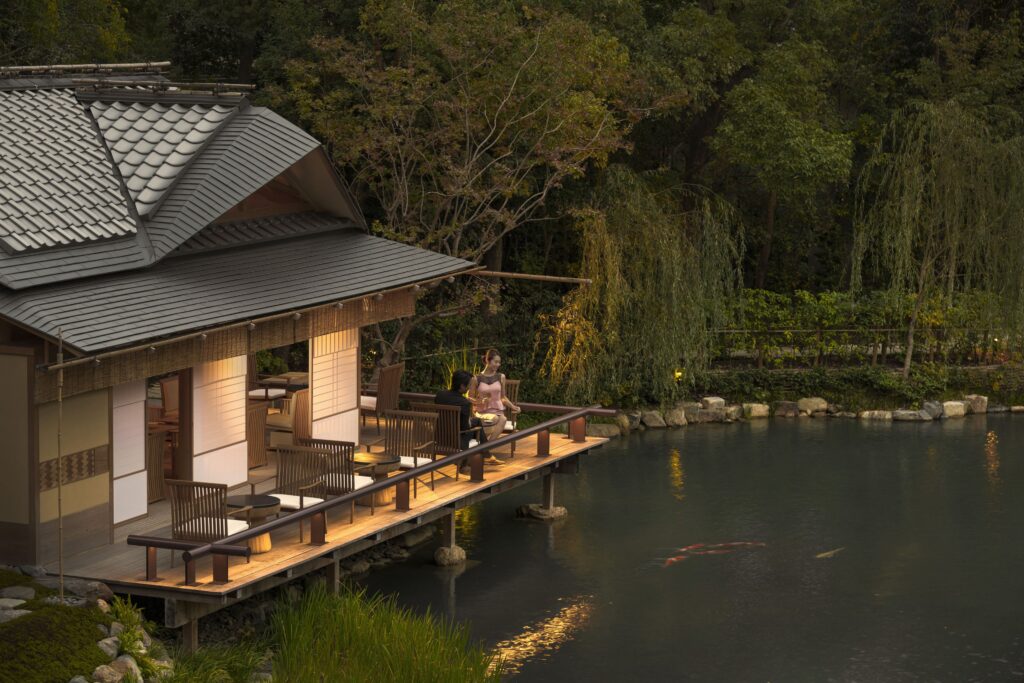
The main restaurant has operated as EMBA KYOTO GRILL since April 2025, with a focus on dry-aged meat, seafood and vegetables cooked with a Josper grill and charcoal. Its terrace and dining room look towards the pond, making it the easiest place to connect breakfast or dinner to the setting.
Sushi Ginza Onodera at Four Seasons Hotel Kyoto opened in October 2024 and serves Edomae omakase using ingredients sourced from Kyoto, Toyosu and Hokkaido. Fuju, reached through the garden, is the quieter choice for matcha, local sweets, sake or Champagne. The newer SEY bar adds cocktails and reworked izakaya dishes.
Menus, prices and seasonal concepts move quickly, so the useful constant is range: grill cooking, a formal sushi counter, tea by the pond, cocktails and 24-hour in-room dining. That range makes it easy to alternate pond-side meals at the hotel with Kyoto’s independent restaurants.
Compare Four Seasons Hotel Kyoto rates for your dates on Expedia →(Paid link)
Higashiyama Shichijo, Eight Minutes From Kyoto Station
The hotel sits in Higashiyama Shichijo, near Sanjusangendo and below the eastern hills. Four Seasons gives the distance from Kyoto Station as 1.8 kilometres—about eight minutes by car or 15 minutes by train—and places downtown roughly ten minutes away. This is convenient for arrivals and for the southern Higashiyama sights, but it is not the same as stepping directly into Gion or Pontocho after dinner.
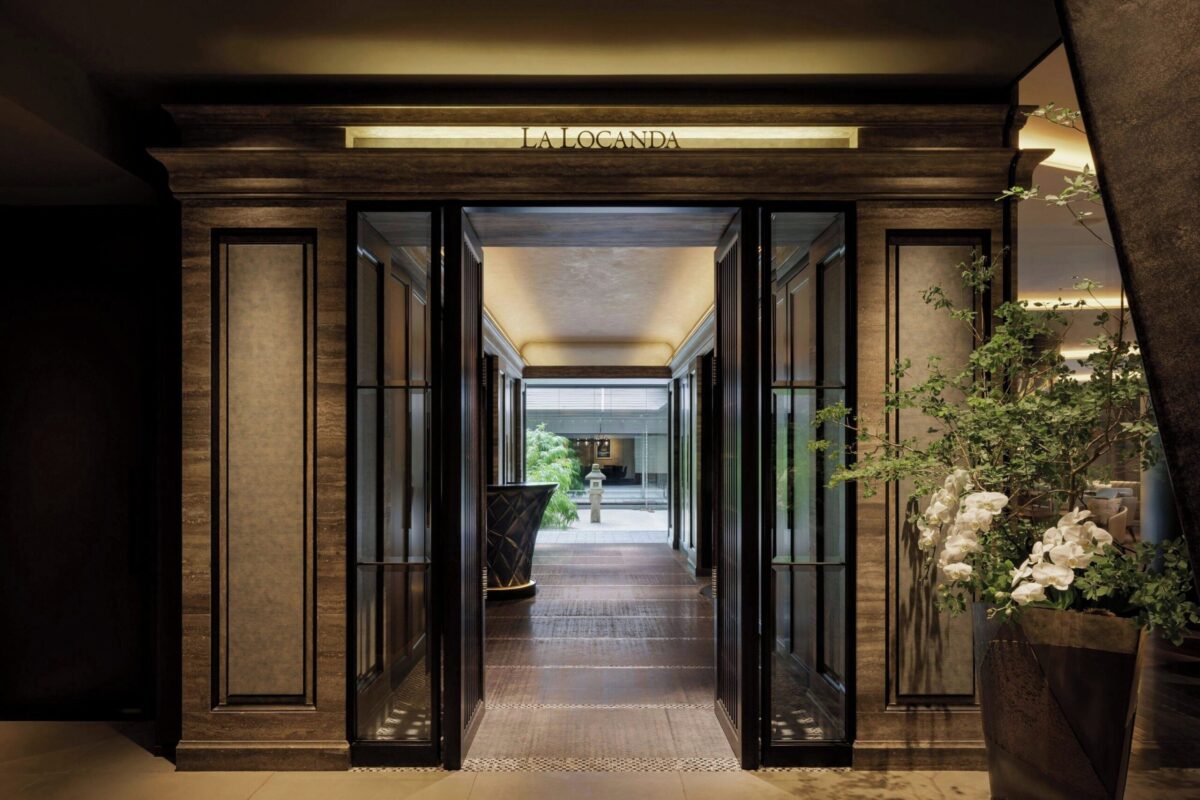
The main entrance is reached by walking up Onna-zaka from Higashioji Street. Vehicles are restricted there from 8:00 to 9:00 am daily except Sundays and public holidays; during that hour, arrivals and departures use the Residences entrance. It is a small operational detail, but useful when timing an early train.
The location suits travellers who want temple districts by day and a self-contained hotel in the evening. Those who measure convenience by walkable nightlife may prefer a base closer to the Kamo River or central Gion.
A Full-Service Kyoto Stay Anchored by Shakusui-en
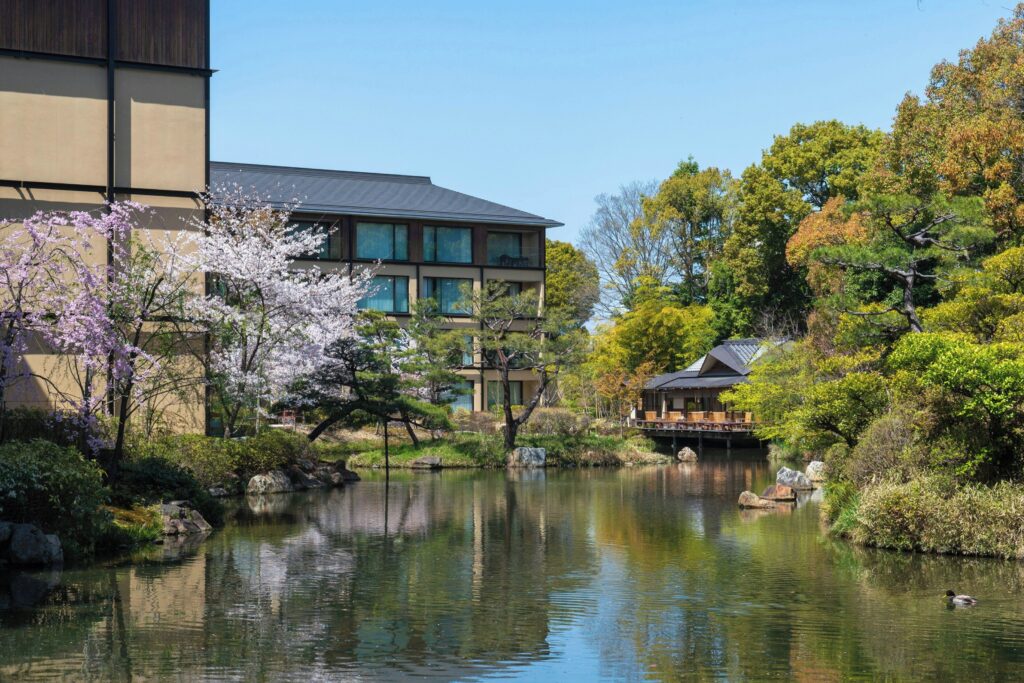
Four Seasons Hotel Kyoto is strongest for travellers who want the assurance and facilities of a large international hotel together with Kyoto-specific context. The historic pond garden supplies that context; the rooms, residences, pool and dining breadth make it workable for several generations and several kinds of day.
The trade-off is scale. This is not an intimate inn, and the defining garden view must be booked rather than assumed. A courtyard room used mainly for sleeping can still be spacious and comfortable, but it captures less of the reason this particular Four Seasons matters.
For a couple, the most persuasive version is a Heritage Garden room combined with time at Fuju, the pool and at least one pond-side meal. For a family or longer stay, the residences and connecting options shift the calculation. In both cases, the value comes from using the hotel’s range while allowing Shakusui-en—not a checklist of luxury amenities—to hold the stay together.
For a smaller Kyoto retreat, compare our Aman Kyoto review and Park Hyatt Kyoto review. Our The Ritz-Carlton Kyoto review considers a more central riverside address, while Six Senses Kyoto offers another wellness-led Higashiyama option. Hilton Kyoto provides a more urban base. You can also browse our luxury hotel guides in Japan.