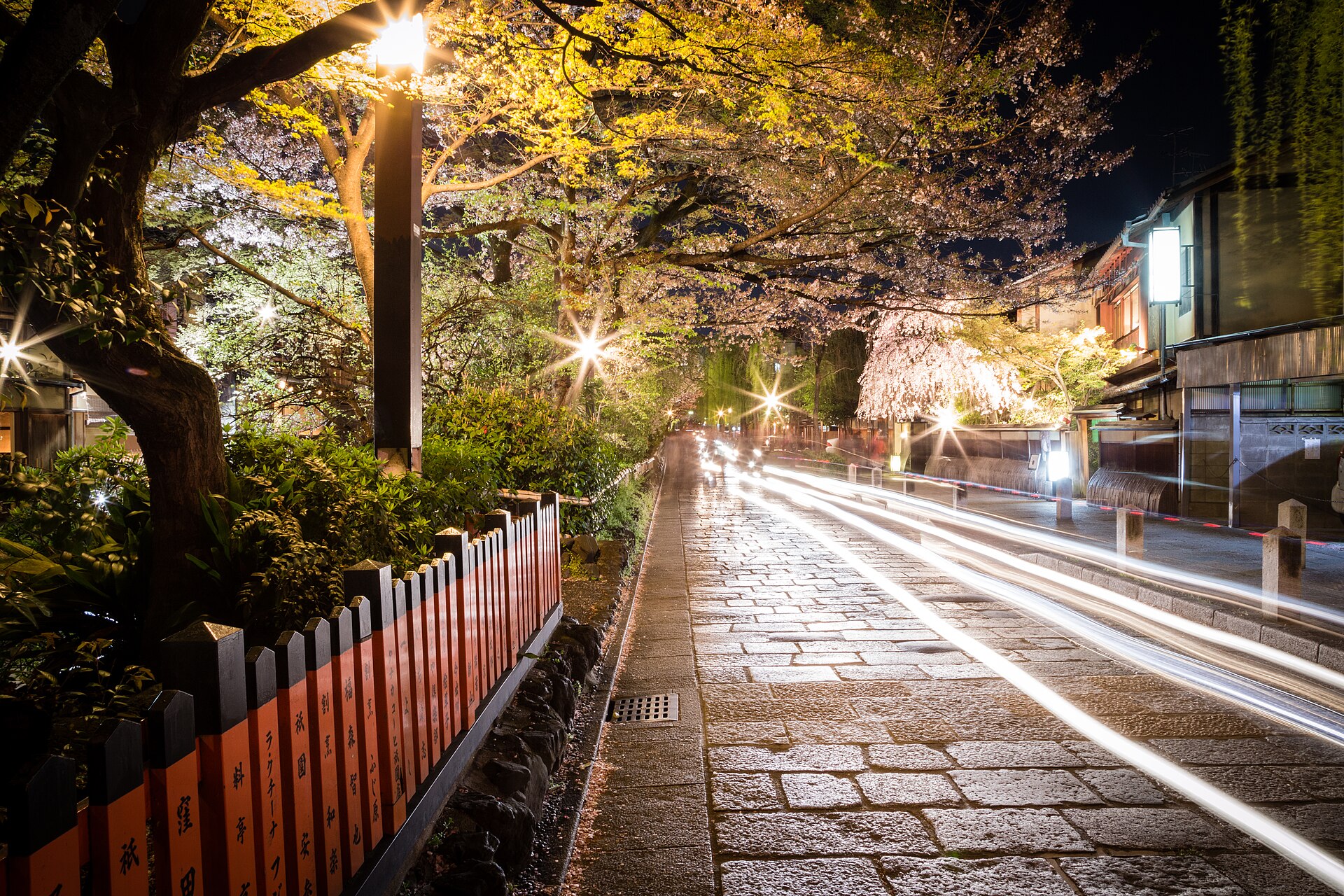
From Shinmonzen-dori, The Shinmonzen does not announce itself with an architect’s signature. Its dark timber frontage keeps the cadence of Gion’s old art-and-antiques street; the more revealing gesture is made inside. Each of the hotel’s nine suites turns towards the Shirakawa River, giving every guest a private balcony above the water.
This is a small hotel with a surprisingly complete point of view. Tadao Ando’s architecture, works by artists including Louise Bourgeois and Hiroshi Sugimoto, and a restaurant by Jean-Georges Vongerichten are not assembled as separate attractions. They belong to one carefully judged address, where Kyoto’s traditional scale is met with contemporary art and hospitality.
The choice is nevertheless precise rather than universal. There is no pool, sprawling spa or collection of restaurants. Room categories differ meaningfully in bed style, bathing and outdoor space, even though all share the river. The question is not simply whether The Shinmonzen is luxurious, but whether its nine-room intimacy is the kind of luxury you want.
A Ryokan Idea, Drawn Quietly by Tadao Ando
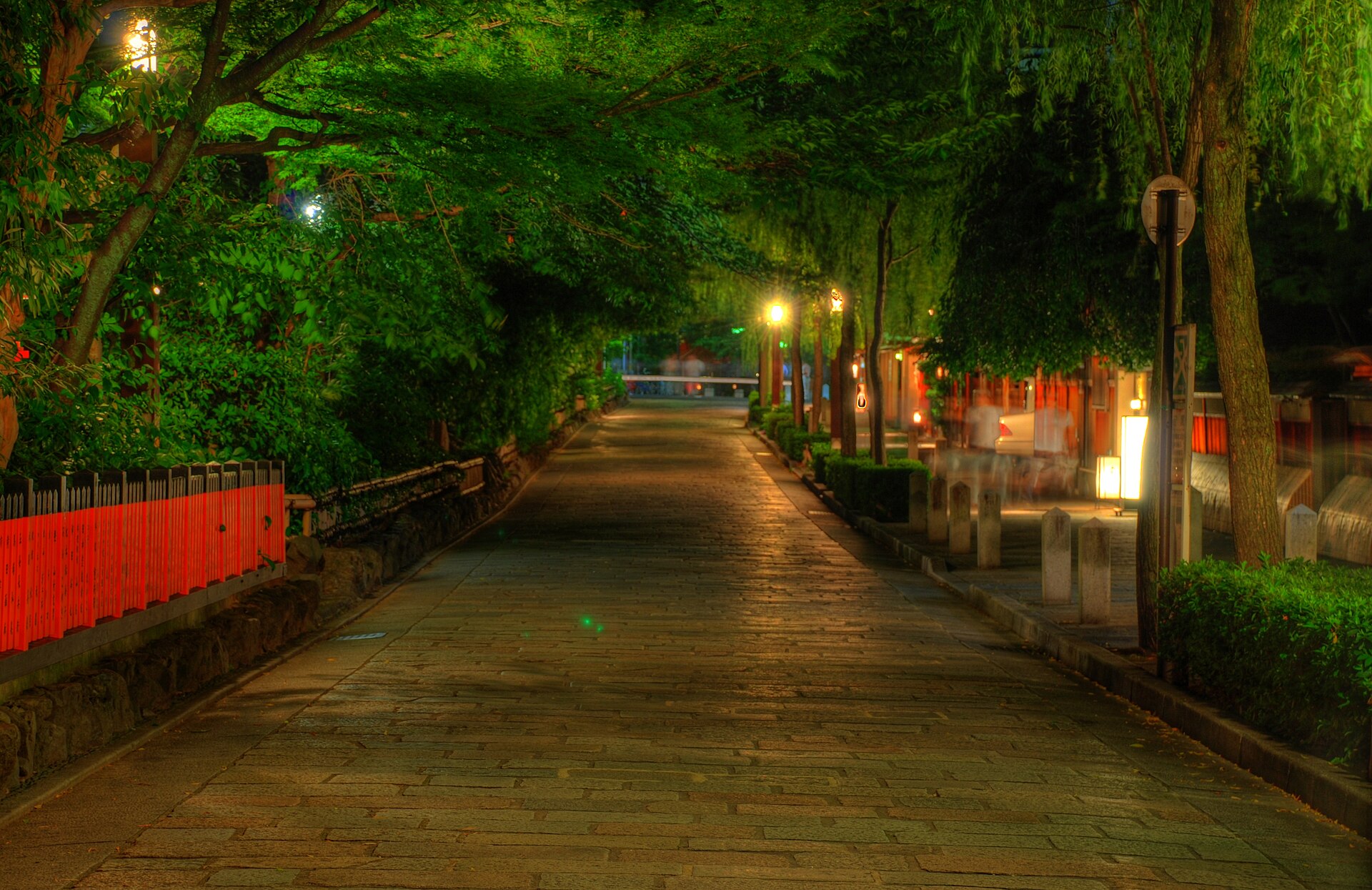
The project took more than a decade to realise and began with the idea of a ryokan for contemporary travellers. That starting point matters. Ando is often reduced to exposed concrete, yet the street elevation here is restrained timber, aligned with the narrow plots and eaves of Shinmonzen-dori. Architecture does not interrupt the neighbourhood for the sake of recognition.
Crossing the threshold changes the emphasis from street to river. The plan draws the gaze through the building towards Shirakawa; private balconies repeat that orientation on every floor. Traditional references appear in proportion, material and the sequence between public and private rooms rather than in theatrical imitation. The result is closer to a conversation with the ryokan than a modern hotel dressed in familiar Kyoto motifs.
The Shinmonzen began accepting guests in December 2021. Its independent status and nine-suite scale help explain the personal tone, but they also mean that availability is limited and that choosing the right suite deserves more attention than it might at a larger hotel.
Nine Suites, One Shared View of the Shirakawa
All nine suites are individually named for natural materials, from WASHI and TOOKI to KINU and HINOKI. More unusually, every one has a private balcony and a view of the river. There is no need to pay upwards simply to secure the hotel’s defining outlook; the real distinctions are found inside the room and in the size of the outdoor space.
WASHI is the most compact at 40 square metres, with a king bed, four-square-metre balcony and hinoki bathtub. TOOKI adds more floor area and an eight-square-metre balcony. URUSHI is a generous 62 square metres despite having one of the smaller balconies, while HINOKI places a king bed on the top floor. These are the clearer choices for travellers who prefer a Western bed and want the ritual of a hinoki bath.
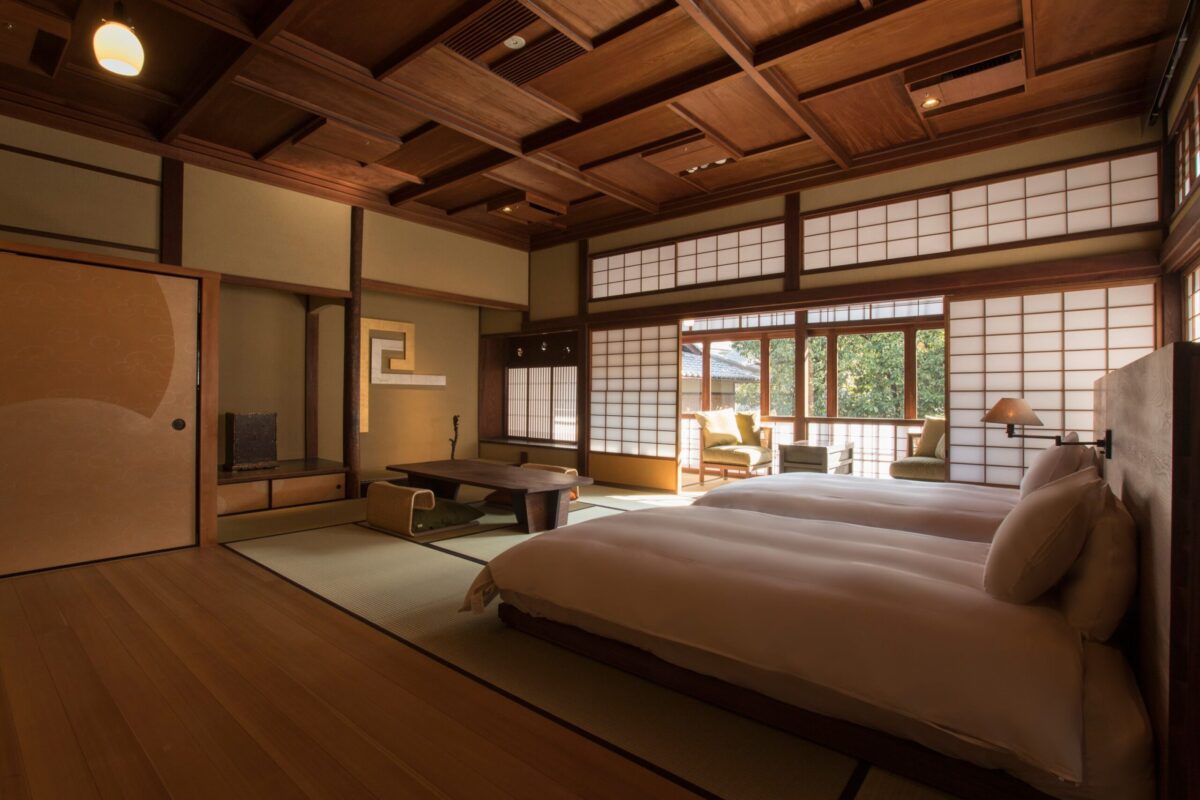
ISHI, TAKE and the 80-square-metre KINU use Japanese twin, futon-style beds with tatami. KINU also has two balconies and is the largest interior. JIKI and TAKE do not list a hinoki bathtub among their official features, so bath preferences should be checked rather than assumed. None of these tubs is an onsen: the pleasure is cedar, privacy and bathing space, not natural hot-spring water.
For a Terrace, Choose SUISHO; for Tatami, Look to KINU
SUISHO makes the most decisive departure from the others. The 68-square-metre twin suite has a 25-square-metre terrace in addition to its smaller river balcony. It is the compelling choice when outdoor living matters more than having the largest bedroom, and when twin beds suit the journey.
KINU answers a different wish: more interior space, tatami and Japanese-style bedding, a hinoki bath and two balconies. Couples may gravitate to the king-bedded WASHI, TOOKI, URUSHI or HINOKI, but the smallest category is not automatically the least appealing. A compact room can feel entirely sufficient when the balcony, breakfast and minibar are shared privileges across the house.
Complimentary farm-to-table breakfast and a gourmet minibar are listed with the suites. In-room dining, treatments and transport may carry additional charges. Before reserving, compare the exact official room plan rather than relying on a generic “river-view suite” description: at The Shinmonzen, bed, bath and terrace are the decisions that shape the stay.
Art Belongs to This Address, Not Merely to the Décor
Shinmonzen-dori has long been associated with dealers in art and antiques, so a serious collection here feels less like hotel styling than an extension of the street. The Shinmonzen names Louise Bourgeois, Gerhard Richter, Damien Hirst, Hiroshi Sugimoto and Makoto Ofune among the artists represented. A Charlotte Perriand desk in the lounge adds design history to the conversation.
The collection rewards attention because works are placed through the building and chosen in relation to individual suites. It is better approached slowly than consumed as a list of famous names. The hotel can also arrange encounters beyond its doors—Zen meditation, tea ceremony, geiko or maiko experiences and rickshaw outings—but these are tailored arrangements, not inclusions promised with every reservation.
OGATA at The Shinmonzen brings another strand of contemporary Japanese craft to the address. Opened in 2024, the boutique presents tea, confectionery, objects and fragrance alongside exhibitions. It gives non-residents a reason to enter, while remaining consistent with the hotel’s interest in material and making.
Jean-Georges at the Water’s Edge
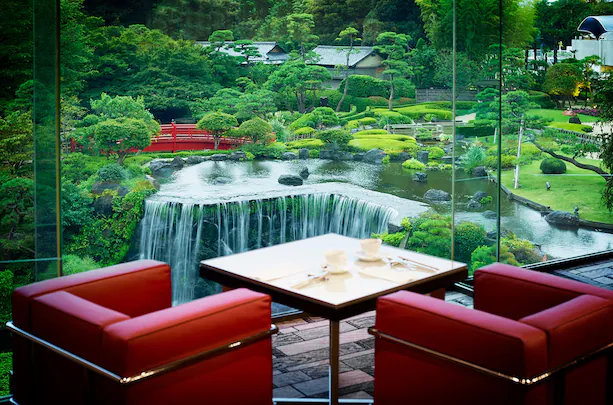
Jean-Georges at The Shinmonzen serves breakfast, lunch and dinner, giving a nine-suite hotel a dining room with an identity of its own. Jean-Georges Vongerichten’s cooking draws on French, American and Asian influences while working with local, seasonal ingredients. Tasting menus and à la carte dishes are supported by a cellar of more than 3,000 bottles.
From late winter to autumn, the Riverside Terrace takes breakfast, lunch and afternoon tea outdoors when the season allows. Exact dates and hours vary, so the terrace should be treated as a weather- and calendar-dependent pleasure, not a year-round guarantee. A guest-only Riverside Lounge offers complimentary seasonal drinks and gourmet items, creating a quieter alternative to the restaurant.
There is still only one principal restaurant. Travellers who enjoy choosing among several bars and dining rooms without leaving the property may find a grand hotel more convenient. Here, the compensating pleasure is coherence: the same river that orders the suites also accompanies breakfast or an afternoon table.
What Nine-Room Intimacy Gives—and What It Does Not
A hotel this small can offer recognition and calm without the choreography of a large lobby. The concierge can arrange Kyoto experiences, private transport and valet service; suite benefits include access to a 24-hour cardio gym. A treatment room and in-suite therapies, including Reiki, provide a modest wellness programme.
The limits are equally clear. There is no swimming pool, thermal circuit or expansive resort spa, and no portfolio of restaurants. The hotel also sits outside the large international loyalty systems that may influence a points-led booking. None of those absences is accidental, but they should not be romanticised as virtues for every traveller.
The Shinmonzen is strongest for guests who would exchange breadth for privacy, architecture and a neighbourhood they can enter on foot. It is less persuasive for a family seeking extensive facilities, or for anyone who wants a resort day without leaving the building.
Gion at the Door; Kyoto Station a Taxi Ride Away
The address at 235 Nishinocho places Tatsumi Bridge, Gion Shirakawa and the antique shops of Shinmonzen Street close at hand. Pontocho and central Higashiyama are natural walks. Early morning and evening are especially rewarding, when the water, willows and machiya façades recover some quiet from the daytime flow of visitors.
Kyoto Station is approximately 15 minutes away by car in normal traffic, and the hotel can arrange private transport. This is not the most efficient base for repeated Shinkansen journeys or rail-heavy day trips. Traffic conditions also matter. Its value lies in stepping directly into Gion, not in eliminating every transfer.
For couples drawn to art, food and the texture of the old city, few Kyoto hotels make those interests feel so closely related. The final decision returns to scale. If nine distinct suites, a river balcony and one accomplished restaurant sound sufficient, The Shinmonzen can feel unusually complete. If a pool, multiple dining choices or a large spa are part of the holiday, its refinement will not erase their absence.
Compare This Shirakawa Hideaway With Other Kyoto Hotels
The nearby Park Hyatt Kyoto review covers a larger hotel with several dining venues and views towards Yasaka Pagoda, while our Four Seasons Hotel Kyoto review examines a full-service resort beside a historic pond garden.
For riverside luxury on a grander scale, compare The Ritz-Carlton Kyoto. Our reviews of Hotel The Mitsui Kyoto, Aman Kyoto, Hoshinoya Kyoto, Suiran Kyoto and Six Senses Kyoto offer further contrasts in garden, river and neighbourhood.
Planning beyond Kyoto? Browse our Luxury Hotel Guides in Japan.

.jpg)