Check Hilton Kyoto rates and availability on Expedia →(Paid link)
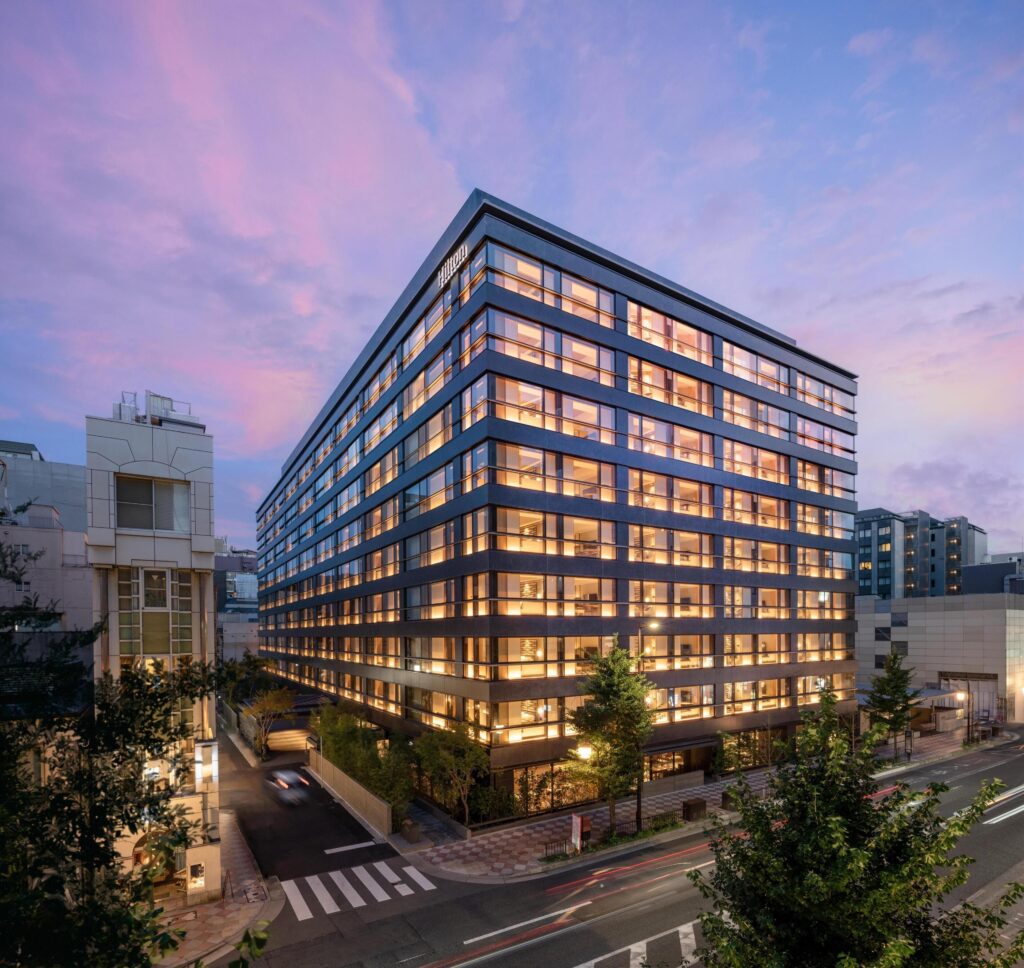
Kyoto’s most persuasive hotels often promise removal: a garden beyond the city, a boat ride into Arashiyama, a discreet door in Gion. Hilton Kyoto makes the opposite case. It places 313 rooms beside Kawaramachi Street, two minutes on foot from Kyoto Shiyakusho-mae Station, and treats the city’s restaurants, shops and evening streets as part of the stay.
That urban scale does not mean the hotel is anonymous. A five-storey atrium draws on the lattice of Kyoto weaving, rooms begin at a generous 40 square metres, and the building contains four places to eat or drink, an indoor pool, a spa and an executive lounge. The interpretation of Kyoto is contemporary and graphic rather than antique or residential.
The result suits a particular journey exceptionally well: a first visit with a full sightseeing list, a family that needs connecting rooms, or a Hilton Honors traveller who values the practical range of a full-service hotel. It is less convincing for anyone seeking ryokan intimacy or the feeling of having withdrawn into a historic quarter. Hilton Kyoto’s luxury is not seclusion. It is the freedom to keep several kinds of day open.
Check current Hilton Kyoto availability on Expedia →(Paid link)
An Atrium Woven From Kyoto, at a Decidedly Urban Scale
Hilton Kyoto opened in September 2024 as the first Hilton Hotels & Resorts property in the city. Its design brief, described by Hilton as a “Kyoto synapse”, connects tradition with the contemporary city. The idea is most legible in the lobby: a tall atrium, repeated lattice patterns and layered lines derived from orimono, Kyoto’s woven textiles.
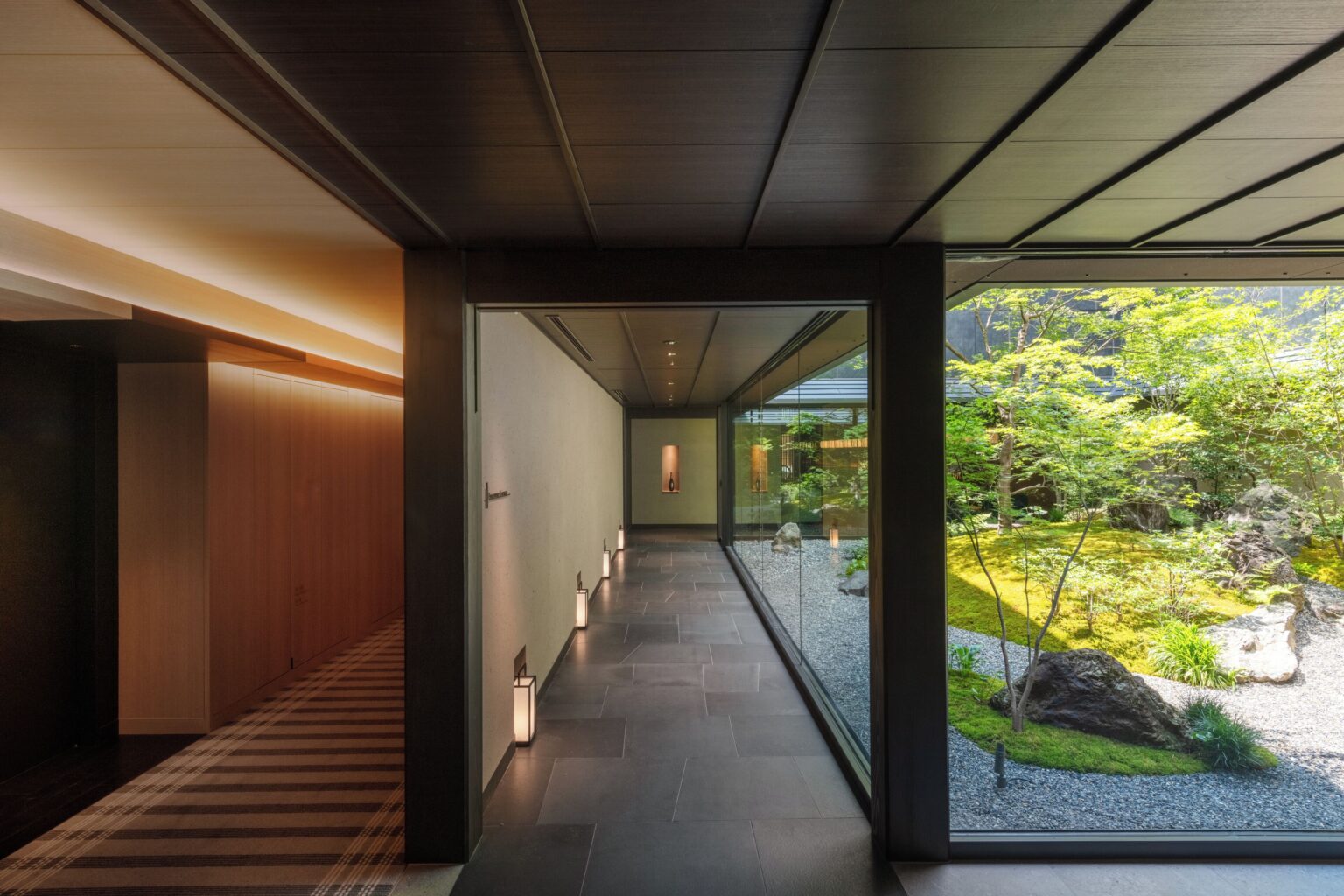
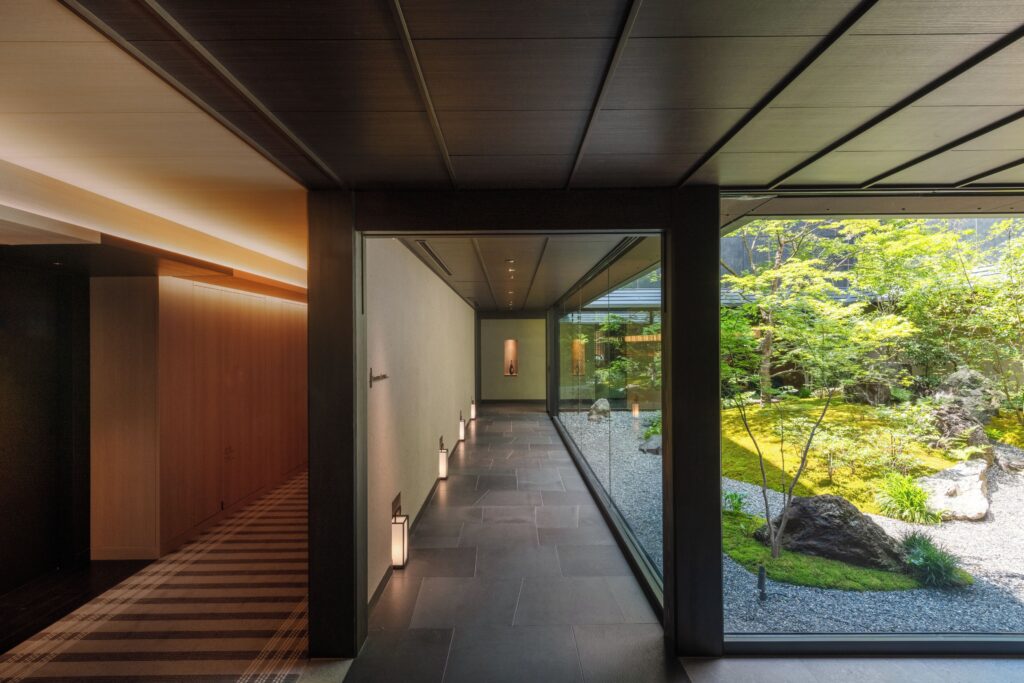
This is translation rather than reconstruction. The hotel does not try to resemble a centuries-old machiya, and its long bands of windows make the exterior unmistakably modern. Inside, gardens and darker stone corridors temper that scale, while craft references appear as pattern, texture and filtered light. Guests who dislike generic international interiors will find enough local thought to hold the eye; those hoping for patina and small-room intimacy should keep their expectations elsewhere.
Forty Square Metres Is the Starting Point, Not the Upgrade
The 313 rooms span 16 categories, from 40-square-metre guest rooms to 121-square-metre suites. In a city where compact rooms are common, that entry size is a meaningful advantage. Large windows, shoji screens and carpets patterned with Kyoto’s geography soften the practical hotel-room plan without crowding it with decorative gestures.
The first decision is therefore not whether the lowest category is livable—it should be comfortable for most couples—but what the upgrade actually adds. Deluxe and executive categories offer different positions, outlooks or privileges; suites introduce proper separation between sleeping and living. Executive rooms and eligible suites include access to the executive lounge, while the exact value of Hilton Honors benefits depends on membership status and current programme terms.
Families have a more concrete reason to compare plans: the hotel has 28 connecting rooms. Those should be requested carefully rather than inferred from a room name. Bed type, occupancy and children’s rules also deserve attention; Hilton currently treats guests aged six and above as adults for reservations, while younger children may share existing bedding under stated conditions.
See available Hilton Kyoto room plans on Expedia →(Paid link)
Choose the Kyoto Suite for Tatami; the Executive Floor for the Lounge
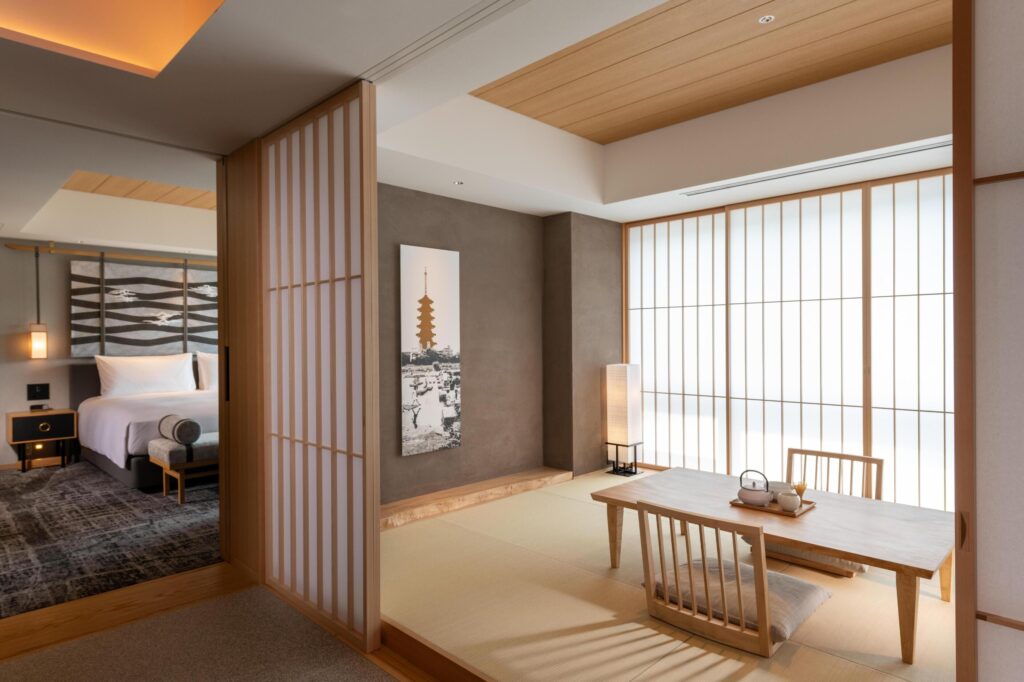
The Kyoto Suite offers the clearest sense of occasion, using a tatami sitting area and shoji screens to create a room within the room. It does not turn the hotel into a ryokan, but it gives a long stay or special journey somewhere to pause beyond the bed. Larger suites extend that comfort further, up to 121 square metres.
For many travellers, however, the most useful upgrade may be executive access rather than additional floor area. The lounge is inspired by a machiya and includes a small courtyard garden, bringing a more domestic rhythm to a hotel of this size. Lounge service and eligibility can change, so current inclusions should be checked against the exact rate and Hilton Honors status before booking.
The sensible hierarchy is unusually clear. Start with a 40-square-metre room if days will be spent outside. Choose executive access if a quieter breakfast or evening pause matters. Move to a suite when a separate living space or tatami room will genuinely be used. Paying simply for a more impressive category name misses the hotel’s practical strength.
Compare Hilton Kyoto rates for your dates on Expedia →(Paid link)
Téori at Breakfast, 7 EMBERS at Dinner, Cloud Nest When the Season Allows
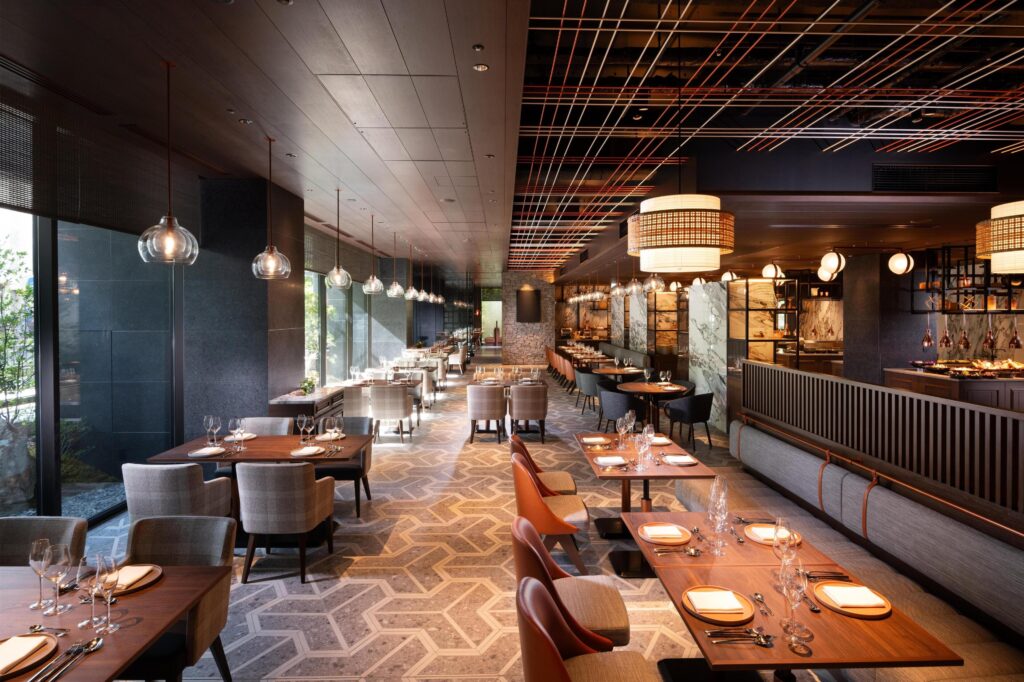
Four venues give the hotel enough variety for a short stay without pretending to replace Kyoto’s dining scene. Téori is the 120-seat all-day dining room, with an open kitchen and Kyoto-inspired buffet at breakfast, lunch and dinner. Breakfast is charged unless it is included in the room rate, lounge access or an applicable status benefit; the old article’s vague suggestion that it was simply “expected” was not useful enough for a booking decision.
Osteria Italiana 7 EMBERS is the more deliberate evening choice. Hilton’s current description centres on handmade pasta, oven-fired sourdough pizza and Italian dishes shaped by seasonal Kyoto ingredients. LATTICE LOUNGE changes pace across the day, moving from coffee, light meals and afternoon tea towards drinks in the evening.
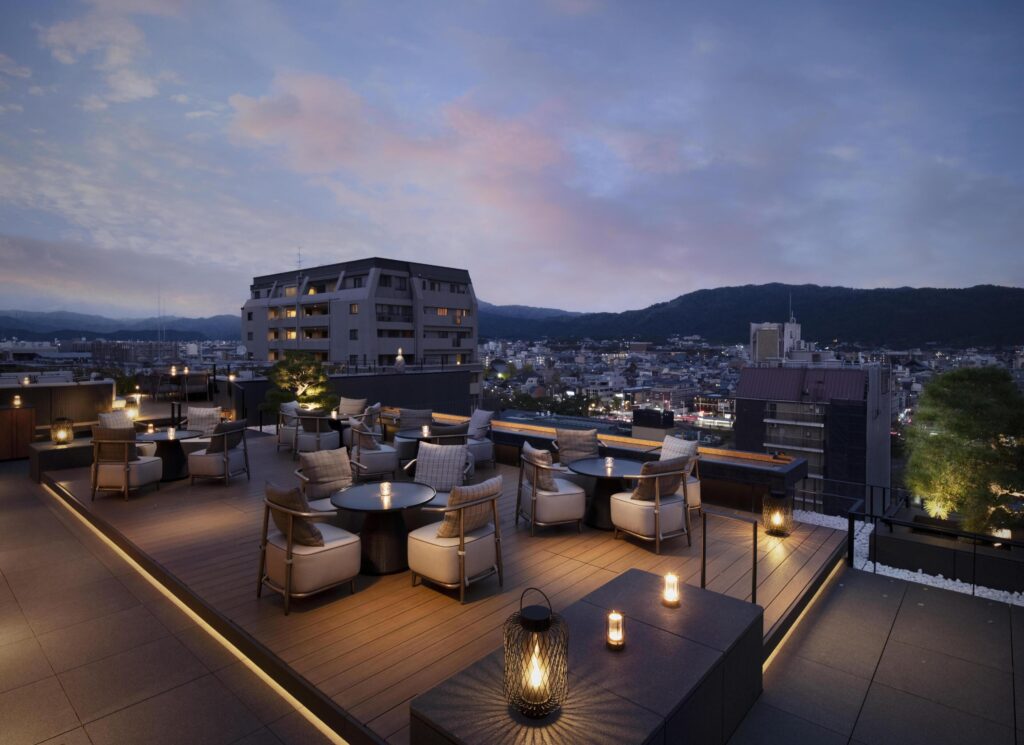
Cloud Nest makes the memorable final move, lifting drinks above the city with views towards the Kamo River and Higashiyama. It is seasonal, not a dependable year-round amenity, and weather or operating dates may alter plans. When open, it supplies something the inward-looking courtyard hotels cannot: Kyoto’s eastern hills seen as part of a broad urban horizon.
A Pool Below, Higashiyama Above
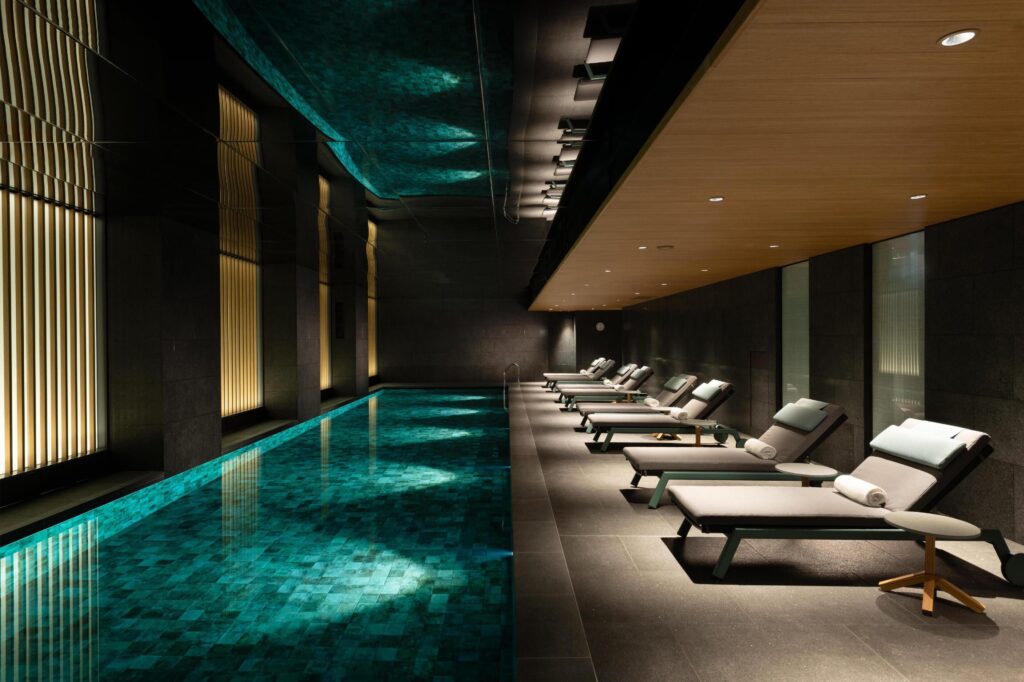
The indoor pool is one of Hilton Kyoto’s strongest practical distinctions. It turns a wet afternoon, jet-lagged morning or family break into usable hotel time, rather than leaving every hour dependent on sightseeing. The pool is joined by a 24-hour fitness centre and eforea Spa, whose three treatment rooms use oils and ideas associated with kitayama-sugi, hinoki and kuromoji.
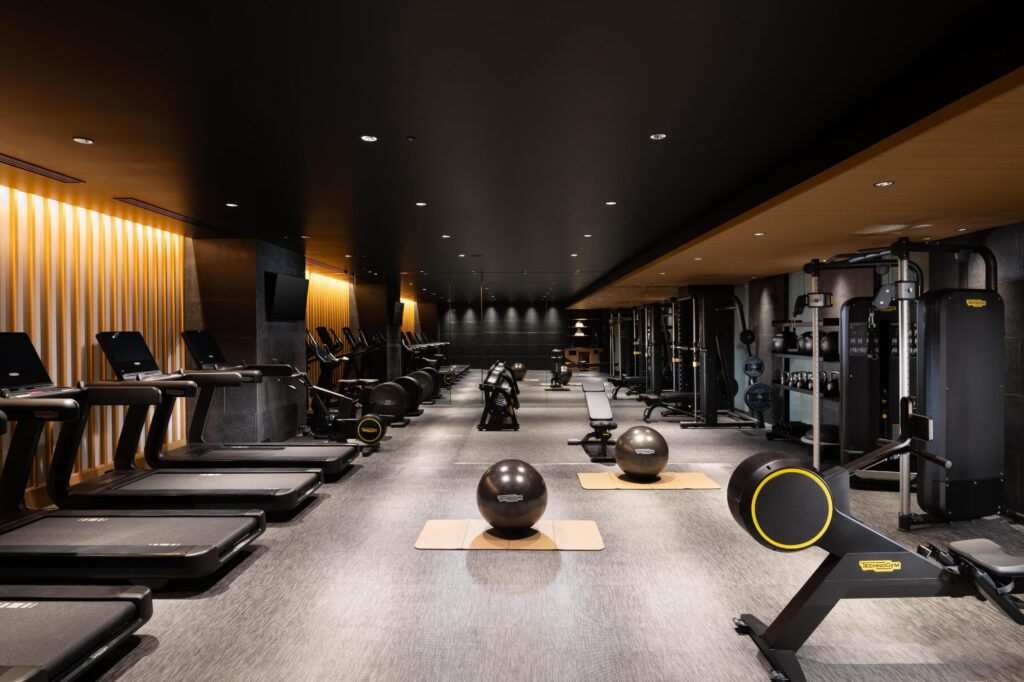
This is not destination wellness on the scale of a mountain resort, nor does the pool offer a scenic outdoor setting. Its appeal is dependable access. Travellers who want a thermal onsen, garden rituals or a retreat organised around treatments should look elsewhere. Those who simply want a proper swim, capable gym and optional massage in the centre of town may value this arrangement more.
Kawaramachi-Sanjo Rewards Travellers Who Like to Walk
The hotel stands at 416 Shimomaruyacho, along Kawaramachi Street. Kyoto Shiyakusho-mae Station is about two minutes away on foot, while Kyoto Station is approximately 15 minutes by car in normal traffic. Hilton lists Pontocho at 0.5 kilometres and Nishiki Market at 0.8 kilometres; Gion and the Kamo River also sit naturally within an evening walk.
That makes the address particularly good for a mixed itinerary. A morning can begin at a temple reached by taxi or subway, return through the shopping streets, and end over dinner in Pontocho without another car. Kiyomizu-dera and the quieter edges of Higashiyama are not immediately outside the door, and the hotel does not manufacture a historic atmosphere around itself. It exchanges that romance for transport choice and a city centre that remains useful after sightseeing hours.
Drivers should note that parking is paid, limited and not reservable; valet parking and airport shuttle service are not offered. This is a hotel designed more naturally around walking, taxis and public transport than around keeping a car.
The Luxury Here Is Range, Not Seclusion
Hilton Kyoto is easiest to recommend when flexibility is the scarce resource. Forty square metres at entry level, connecting-room inventory, four dining and drinking settings, a pool, spa and lounge remove many of the small negotiations that can complicate a family trip or a first visit. Hilton Honors members may also find value in direct-booking benefits, points and digital tools, subject to current programme and status terms.
The same strengths explain who should hesitate. With 313 rooms, the hotel cannot offer the recognition of a nine-suite house or the sensory concentration of a ryokan. Its Kyoto references are newly made, and its downtown position remains visibly urban. If the hotel itself is meant to be the journey’s great cultural encounter, a smaller Gion property, a garden retreat or a riverside ryokan will likely feel more singular.
For travellers who want Kyoto outside and a highly capable hotel inside, the balance is persuasive. Hilton Kyoto does not ask to be mistaken for an old address. It offers space, choice and a pool in the part of the city where an unplanned evening is easiest to enjoy.
Compare This Downtown Base With Kyoto’s More Intimate Hotels
For a far smaller Gion address, compare our The Shinmonzen review and Sowaka review. The Park Hyatt Kyoto review and Dusit Thani Kyoto review consider larger full-service alternatives in very different neighbourhoods.
For garden or riverside seclusion, read our reviews of Aman Kyoto and HOSHINOYA Kyoto. Our Four Seasons Hotel Kyoto, Hotel The Mitsui Kyoto, The Ritz-Carlton Kyoto and Six Senses Kyoto reviews offer further comparisons in garden, wellness and city-centre service.
Planning beyond Kyoto? Browse our Luxury Hotel Guides in Japan.