HOSHINOYA Kyoto begins at a boat lounge near Togetsukyo Bridge, not at a hotel entrance. From there, a reserved boat travels for about 15 minutes up the Oi River, leaving central Arashiyama behind before reaching a century-old riverside property. The journey is more than theatre. It sets the practical terms of the stay: arrival requires planning, the hotel has no parking, and time on the grounds matters.
Opened as HOSHINOYA Kyoto in 2009, the retreat has 25 rooms, each facing the Oi River and Mt. Ogura. Its appeal is not a conventional checklist of resort facilities. There is no communal onsen listed by the hotel. Instead, the experience rests on the river approach, preserved architecture, carefully framed views, gardens and cultural programs. For travelers choosing between a city base and a destination stay, that distinction is the place to begin.
The Boat Is the Beginning of HOSHINOYA Kyoto
The normal arrival is by private boat from the HOSHINOYA Kyoto Boat Waiting Area at 60 Arashiyama Nakaoshitacho. The transfer requires advance reservation and currently runs from 2:30 p.m. to 5:45 p.m., a narrow afternoon window rather than a flexible shuttle service. Times should be reconfirmed at booking, since the schedule can change. If weather or river conditions stop the boat, the hotel arranges transport by private car.
This arrangement creates a clear trade-off. The boat separates the property from the crowds around the bridge, but it makes late or improvised arrival less suitable. Guests coming by train must first reach the boat lounge; those driving need to use public parking in Arashiyama because there is no car park at the retreat itself. HOSHINOYA Kyoto works best when the transfer is treated as the start of the stay, not as an inconvenience between sightseeing stops.
A Century-Old Inn Reworked by Rie Azuma
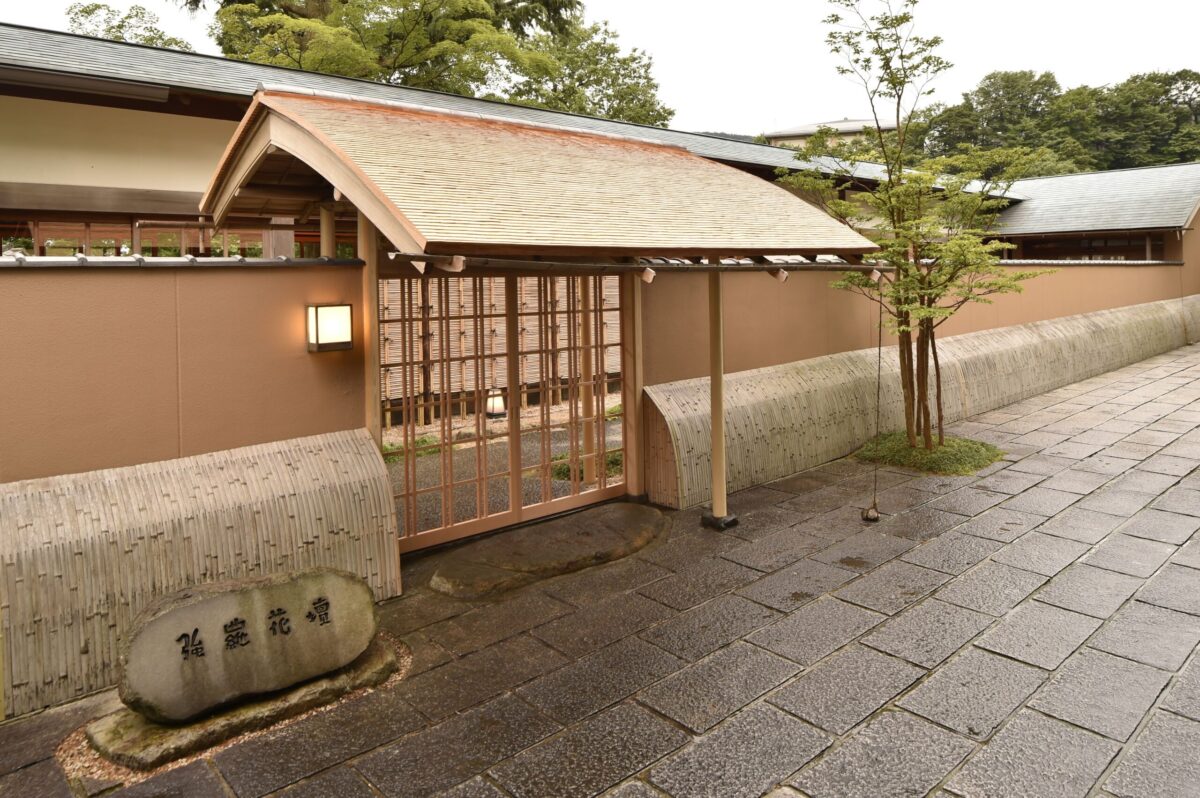
Architect Rie Azuma began with a surviving ryokan building approximately a century old. The intention was not to erase its age or freeze it as a museum. Existing wooden structures and materials were retained where possible, then adapted for contemporary use when HOSHINOYA Kyoto opened in 2009.
The guest rooms show that balance in detail. Kyoto craftspeople revived pillars and ceiling boards using arai, a washing technique that removes accumulated dullness without replacing the timber. Kyo Karakami paper appears on the walls, while a custom Tatami Sofa places the eye at a lower level associated with sitting on tatami. The design is most convincing when read as a continuation of the old building rather than a collection of decorative references to Kyoto.
Twenty-Five Rooms, Each Facing the Oi River and Mt. Ogura
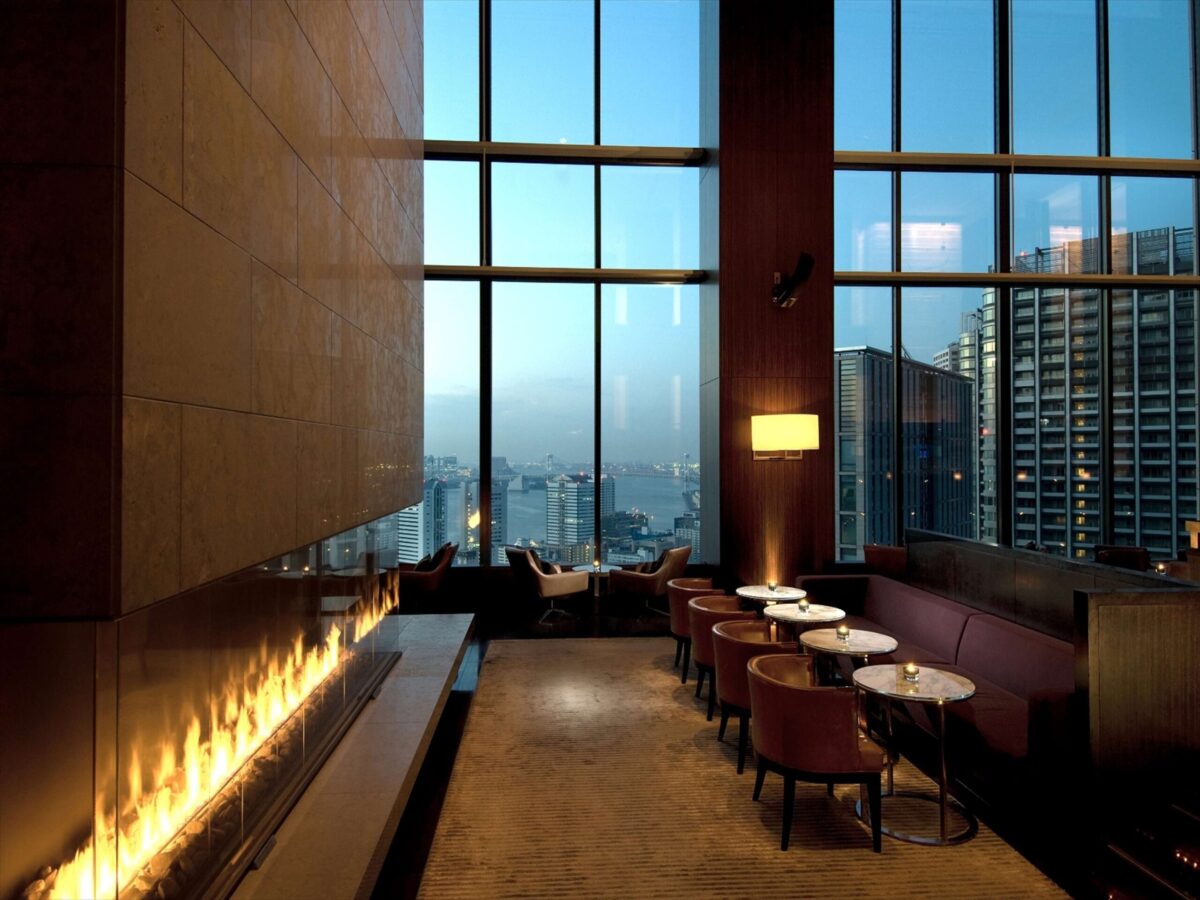
Every one of the 25 guest rooms looks toward the Oi River and Mt. Ogura. That shared orientation is more important than a generic promise of a nature view: the gorge remains the visual constant from room to room, while layouts and the amount of Japanese-style living space vary.
The interiors are shaped around long periods indoors rather than a quick return between excursions. Low seating, framed windows and traditional materials keep attention on the opposite slope and the changing light over the water. Occupancy is limited to one to three guests depending on the room. Travelers who require a particular bed arrangement or more floor space should compare the current room plans directly, but the essential choice is whether the river-facing setting justifies staying beyond central Kyoto’s usual rhythm.
SHINMIJIZAI at Dinner, Breakfast in the Room
Dinner is presented under the name Savor of SHINMIJIZAI. The kitchen keeps the structure and techniques of Japanese cuisine while bringing in ingredients, seasonings and methods from outside Japan. The point is not to reproduce a fixed historical menu, but to let Kyoto cooking remain recognizable while allowing unfamiliar pairings.
Breakfast takes a different form. It is served in the guest room and centers on seasonal vegetables cooked in broth, allowing the morning view of Mt. Arashiyama to remain part of the meal. Dinner and breakfast require separate arrangements after the room has been booked, and the official site notes restrictions on accommodating dietary requirements for some dining options. That deserves checking before committing to a secluded stay where spontaneous alternatives are less convenient.
No Communal Onsen: Wellness Takes Another Form
HOSHINOYA Kyoto should not be chosen as a hot-spring ryokan. The hotel’s current property details do not list an onsen or public bath. Its wellness offering is instead built around an in-room spa treatment and a changing program of activities, including morning stretching, Zen meditation and an introduction to incense ceremony.
Schedules, reservations and age conditions differ by activity, and some programs are seasonal. It is better to select one or two that meaningfully shape the stay than to treat the list as entertainment to complete. Travelers for whom private or communal hot-spring bathing is essential will find a clearer fit at another Kyoto property.
Hidden Garden and Water Garden Change the Viewpoint
The grounds offer two deliberate counterpoints to the river. Hidden Garden uses white sand and smoked roof tiles in a dry landscape that visitors can enter rather than only observe from the edge. Mt. Ogura becomes borrowed scenery beyond it, connecting the composed garden with the larger slope seen from the rooms.
Water Garden appears after the boat landing, where a waterfall was restored from traces of the garden that occupied the site roughly a century ago. Together, the two spaces prevent the property from depending on one panoramic river view. One draws the mountain into a precise composition; the other uses sound and water to mark the transition from boat to building.
A Destination in Oku-Arashiyama, Not a Central Kyoto Base
HOSHINOYA Kyoto is persuasive for travelers willing to give the property a substantial part of the itinerary. The boat, room view, meals and gardens form a continuous sequence, and compressing them around a full day of temples misses much of what makes the address different.
Choose another hotel if the priority is walking out to restaurants at night, returning freely between appointments, parking on site or bathing in an onsen. Choose this one when the transfer itself feels worth planning around and a river-facing room in Oku-Arashiyama is the purpose of the stay. Its luxury lies less in facility count than in controlling how the city gradually falls away.
Planning a wider luxury journey through Japan?
Explore all of our curated hotel guides here → Luxury Hotel Guides in Japan