Check The Ritz-Carlton, Kyoto rates and availability on Expedia →(Paid link)
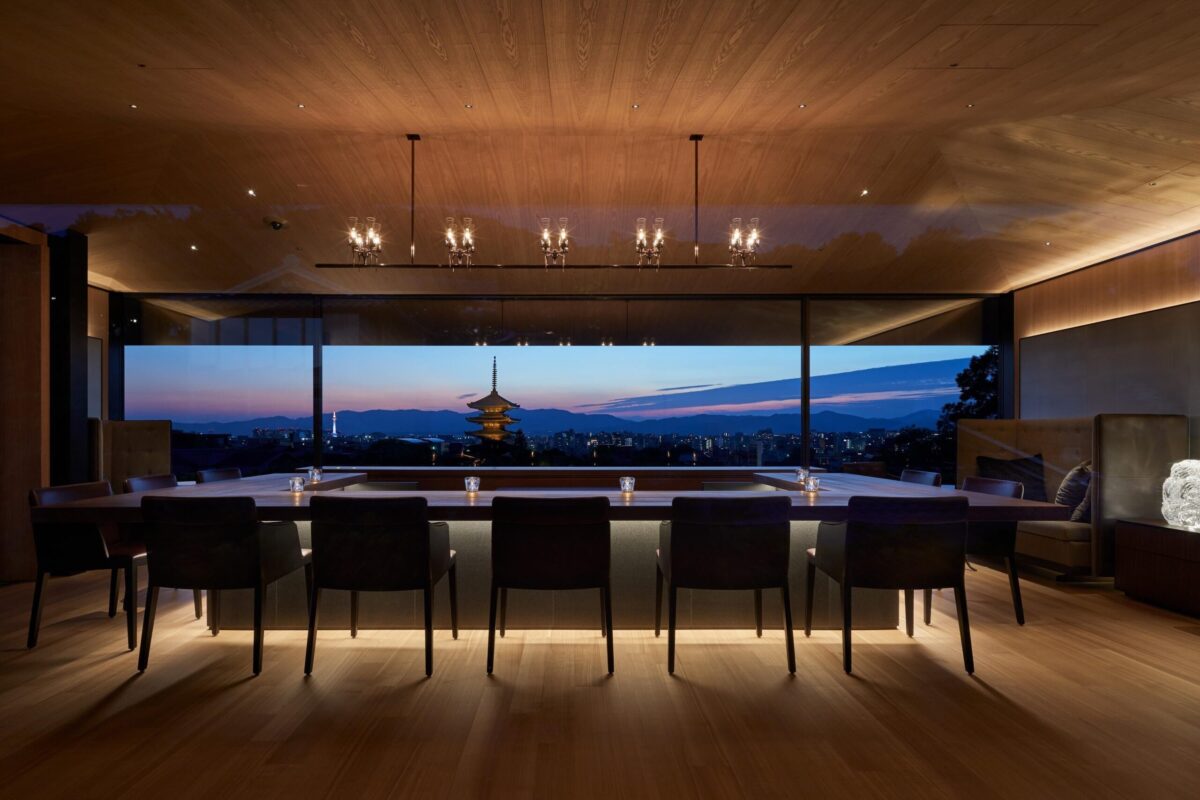
The Ritz-Carlton, Kyoto occupies the west bank of the Kamogawa near Nijo Bridge, where the river opens a long view towards the Higashiyama mountains. That address is the hotel’s clearest distinction. Aman Kyoto turns inward to a forest garden; Four Seasons gathers itself around an old pond. Here, Kyoto is encountered across moving water, from selected guest rooms and suites in a low-rise urban resort.
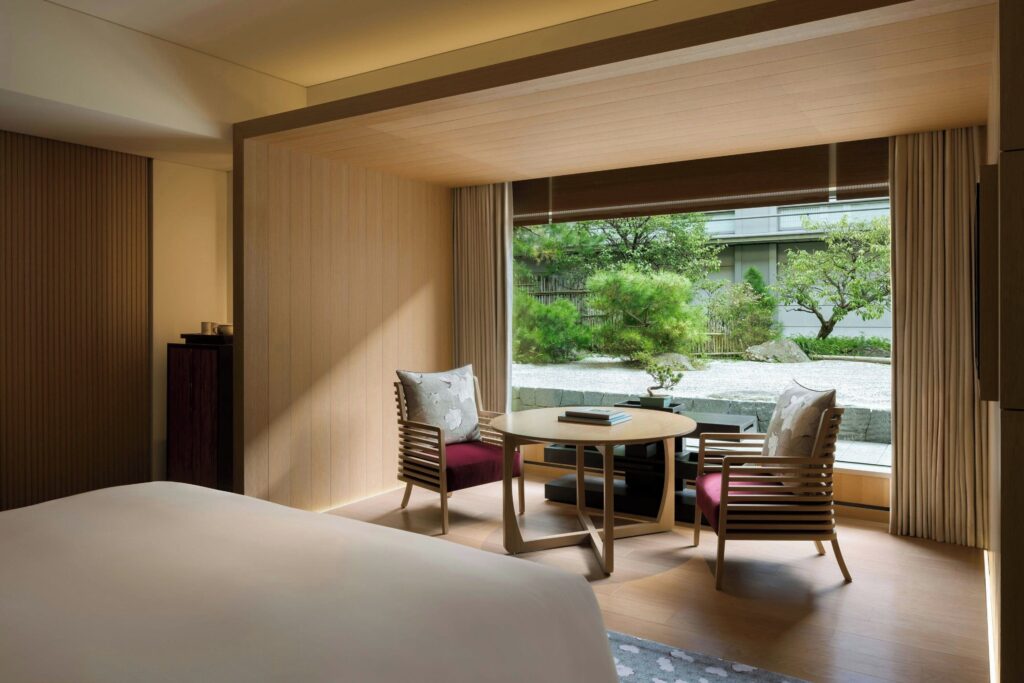
The word “selected” matters. The hotel has 134 rooms and suites, averaging about 50 square metres, but their outlooks range from courtyard and private garden to river and mountain. A generous room does not automatically provide the panorama used in the hotel’s most recognisable photographs. Choosing the view is therefore the first serious booking decision.
Beyond the windows, the property assembles Kyoto through particular objects and spaces: 409 works of modern Japanese art, tea served at arrival, a tatami-and-futon suite, four distinct ways to dine at Mizuki and a preserved 1907 villa incorporated into La Locanda. The result has more texture than a familiar international brand name might suggest, while the pool, spa and central location keep the stay practical.
See available The Ritz-Carlton, Kyoto room plans on Expedia →(Paid link)
A Low-Rise Resort on the Kamogawa’s West Bank
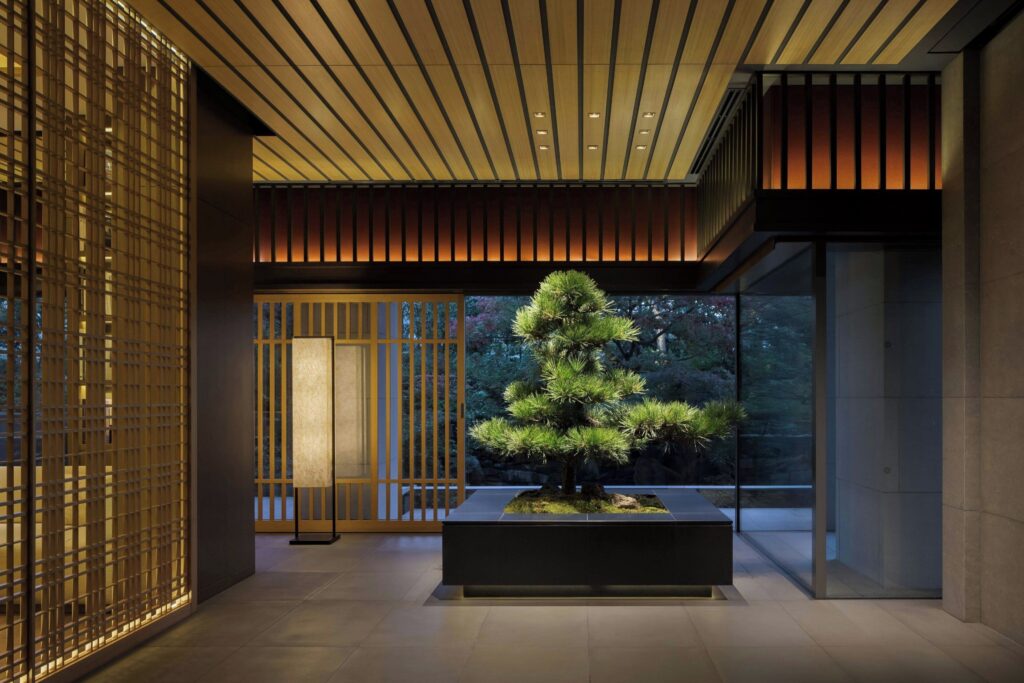
The official history describes this riverside site as one favoured by Japanese nobility from the seventeenth century. The hotel does not need a grander claim. Its modern relevance comes from the relationship between the broad Kamogawa, the mountains beyond and the neighbourhood streets behind it.
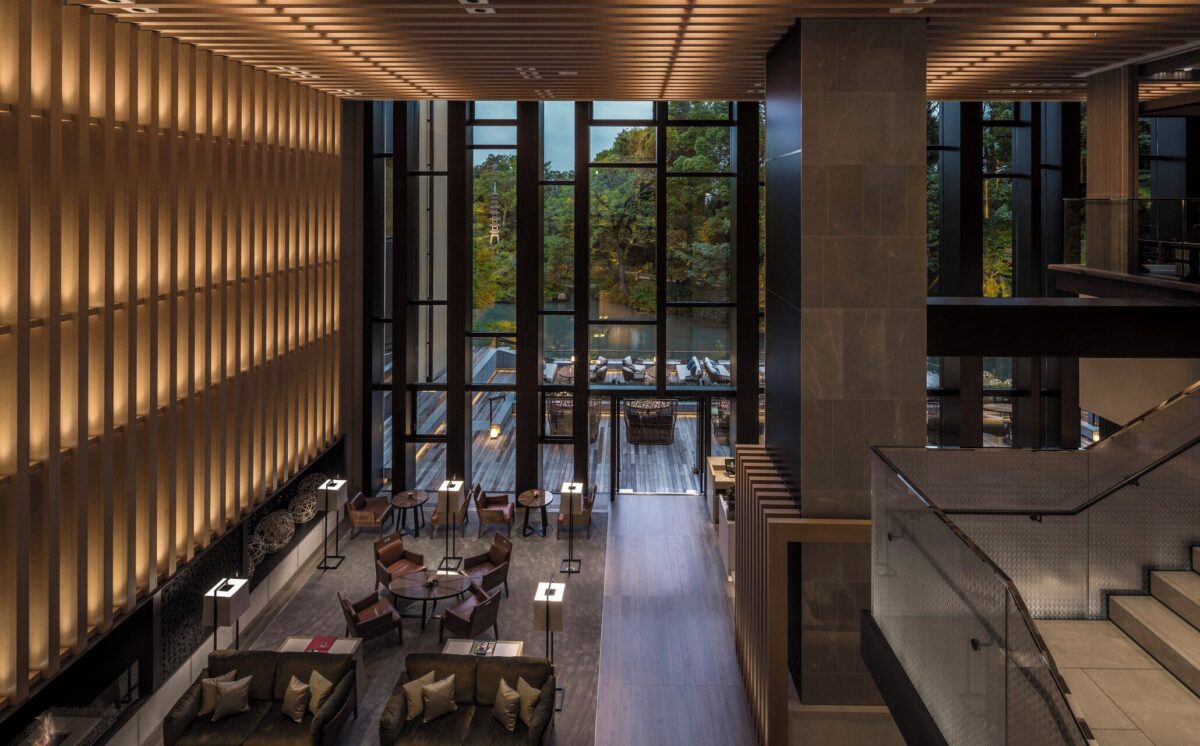
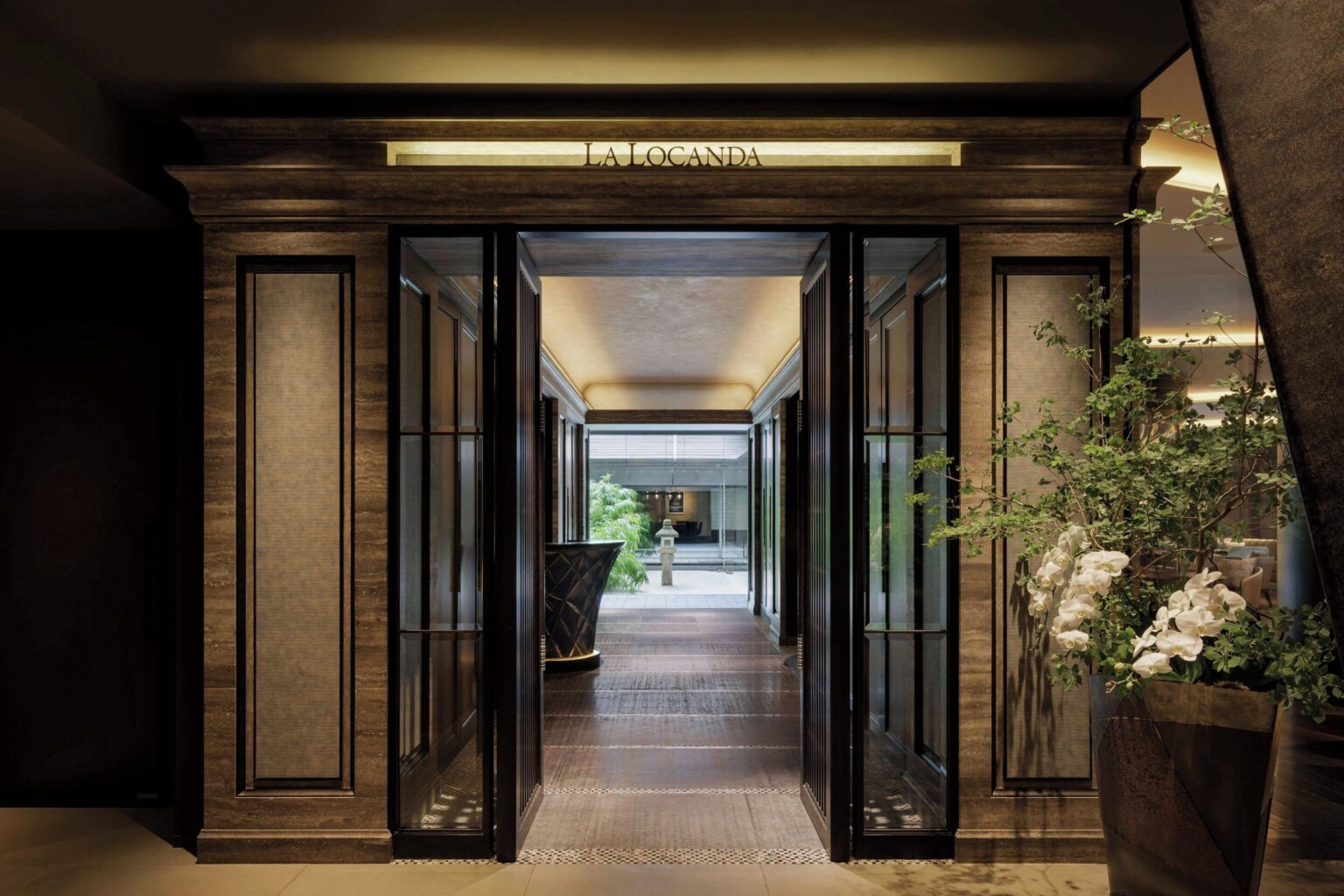
At five storeys, the building keeps close to the river rather than rising above Kyoto as a tower. The entrance sequence is deliberately quiet, using stone, timber, latticework and carefully framed planting. Inside, tea accompanies arrival and art appears throughout corridors and public rooms. These gestures slow the transition from the city without pretending that the hotel is a ryokan.
The scale—134 rooms and suites—is large enough for several restaurants and a serious wellness floor, yet compact enough for the river to remain legible from many shared spaces. It creates a useful middle ground between a small retreat and a full urban palace.
Compare The Ritz-Carlton, Kyoto rates for your dates on Expedia →(Paid link)
The View Category Shapes the Stay
Guest rooms average approximately 50 square metres, an unusually comfortable starting point for central Kyoto. Their Japanese references are restrained: pale timber, textile panels, low furniture and deep baths sit within a conventional luxury-hotel plan. The view creates the larger difference.
Courtyard and garden rooms favour enclosure and calm. Kamogawa categories look east across the river towards Higashiyama, and upper or more expansive suites deepen that relationship with broader glazing or outdoor space. Travellers drawn by the riverside address should compare the exact wording of each category rather than rely on a generic “Kyoto view”.
A courtyard room can suit a sightseeing-heavy itinerary, offering generous space while keeping the rate closer to the entry point. For an anniversary or a stay with more time indoors, the river view earns its place in the budget because it carries the hotel’s setting into the room throughout the day.
Check current The Ritz-Carlton, Kyoto availability on Expedia →(Paid link)
Tatami, Moon-Viewing Decks and the 212-Square-Metre Summit
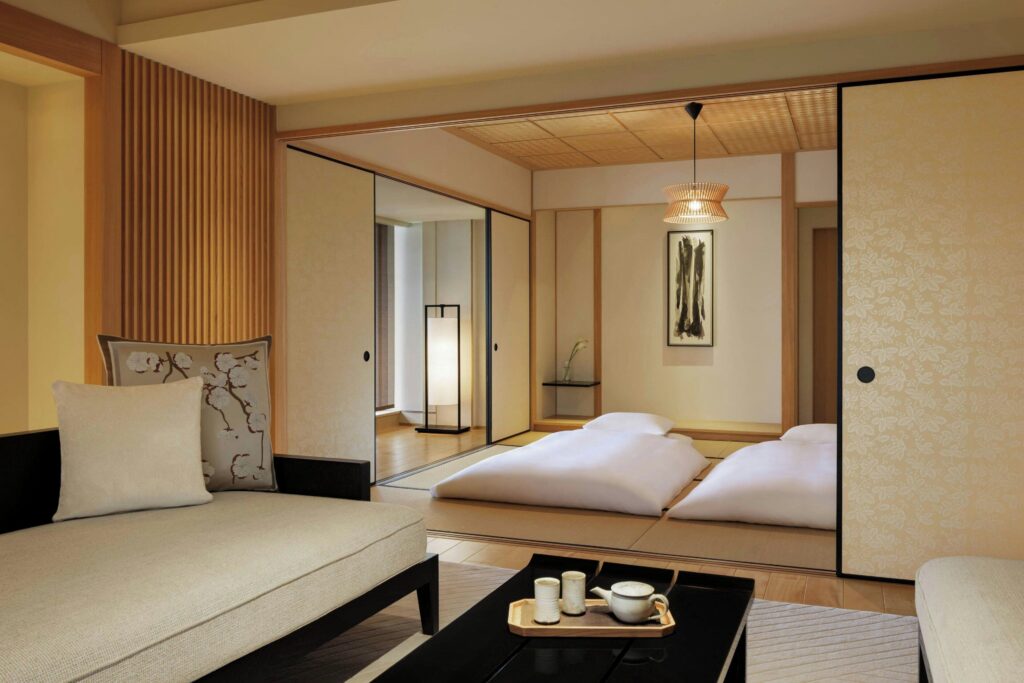
The signature suites move in several directions rather than following one ladder of size. Garden Terrace Suite Tatami measures 62 square metres and places two futons in a tatami bedroom, with a private terrace overlooking a Japanese garden and the Higashiyama mountains. It offers the clearest ryokan-inflected option within the hotel, supported by a separate living area and hinoki bath.
Suite Kamogawa expands to 126 square metres with a separate bedroom and living room; second-floor versions add a private balcony. Suite Tsukimi introduces an open moon-viewing deck and private garden. At the top of the range, The Ritz-Carlton Suite reaches 212 square metres, with river and mountain views, a private dining room and a balcony with a fireplace.
These suites produce distinct journeys: tatami and futon for a more Japanese residential rhythm, Kamogawa for the river panorama, Tsukimi for outdoor evening time and the flagship suite for private entertaining. The best upgrade is the one whose layout becomes part of the itinerary.
Four Ways to Dine at Mizuki
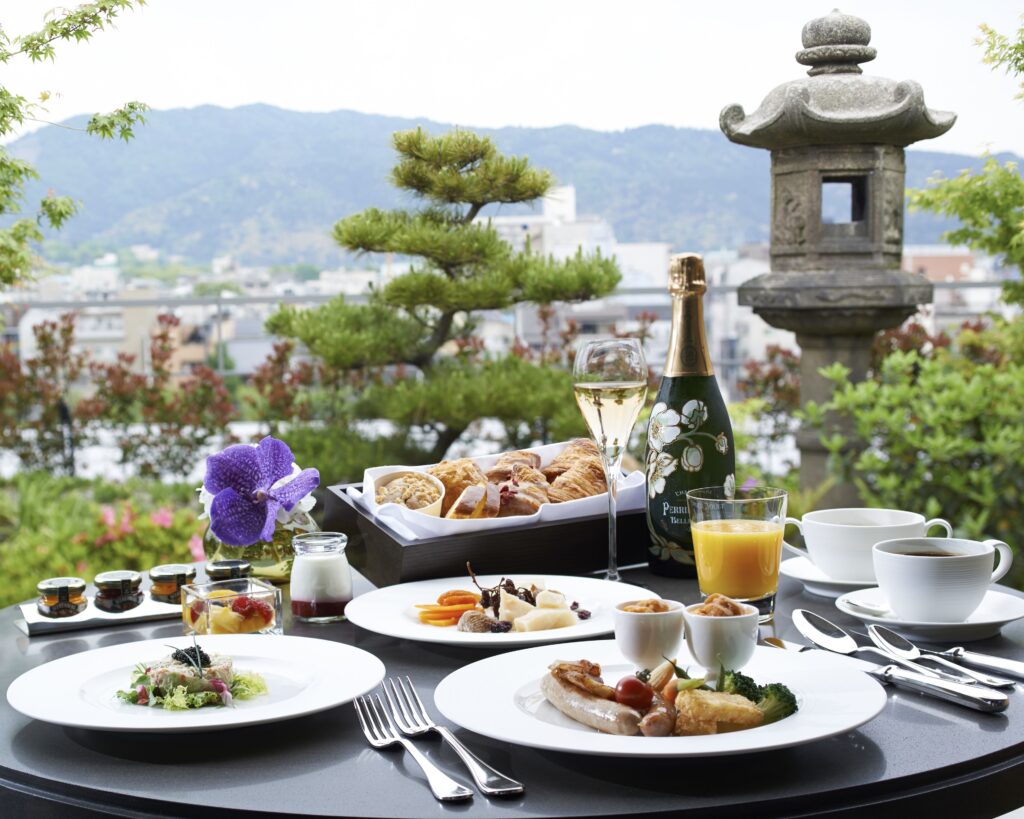
Mizuki is better understood as four Japanese dining experiences under one name. Kaiseki, sushi, tempura and teppanyaki each have their own counter or room and their own pace. This lets a guest choose between a composed seasonal meal, Edomae sushi, ingredient-focused tempura or cooking performed across the iron plate.
The current dining programme also includes Chef’s Table by Katsuhito Inoue, while the Lobby Lounge, The Bar and Pierre Hermé Paris boutique cover afternoon tea, drinks and patisserie. Menus and prices change, so the durable advantage is breadth rather than a promised signature dish.
For a short stay, one Mizuki format can anchor an evening at the hotel while leaving room for Kyoto’s independent restaurants. A longer visit can explore more than one counter without repeating the same style of meal.
A 1907 Villa Lives Inside La Locanda
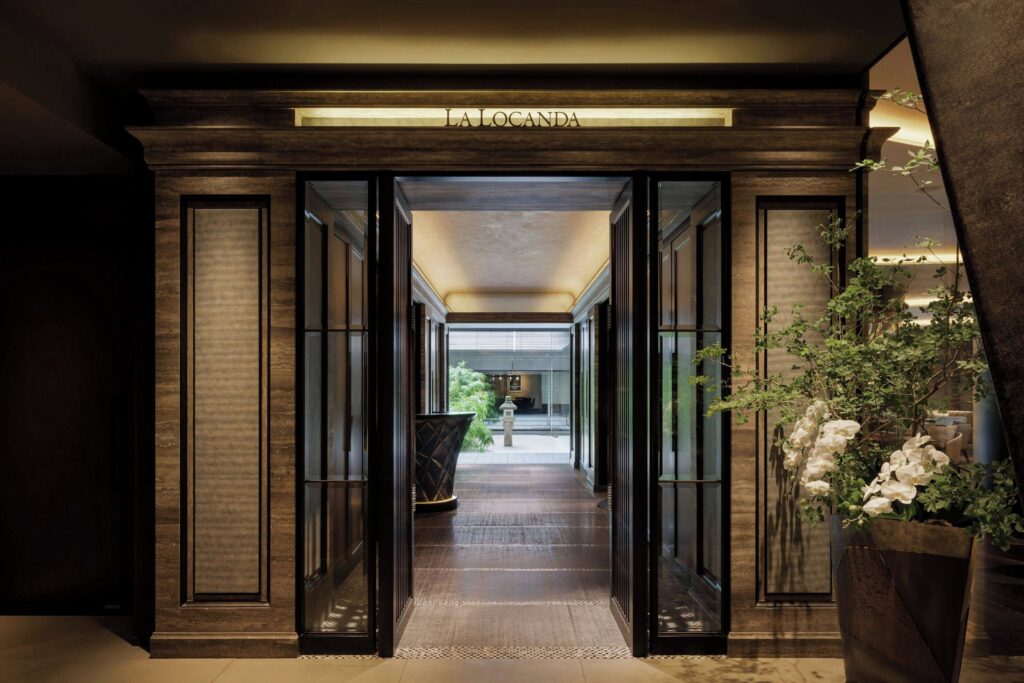
La Locanda serves Italian cooking made with locally sourced ingredients, but its most distinctive room comes from an earlier Kyoto. Ebisugawa-tei, a structure dating from 1907, is incorporated into the restaurant as a private dining space. Its timber, tatami and domestic proportions interrupt the polished contemporary interior with a tangible fragment of the city’s past.
The official accounts vary in how they describe the building’s relocation, so the date of that process deserves no embellishment. What can be said with confidence is that the preserved villa now gives private dining a setting more specific than a generic function room.
Together with the hotel’s 409 works of modern Japanese art, Ebisugawa-tei shows how this Ritz-Carlton constructs a sense of Kyoto: through accumulated craft, objects and architecture. Guests who notice those layers will find the interior as rewarding as the river frontage.
Twenty Metres of Pool Beside a City Itinerary
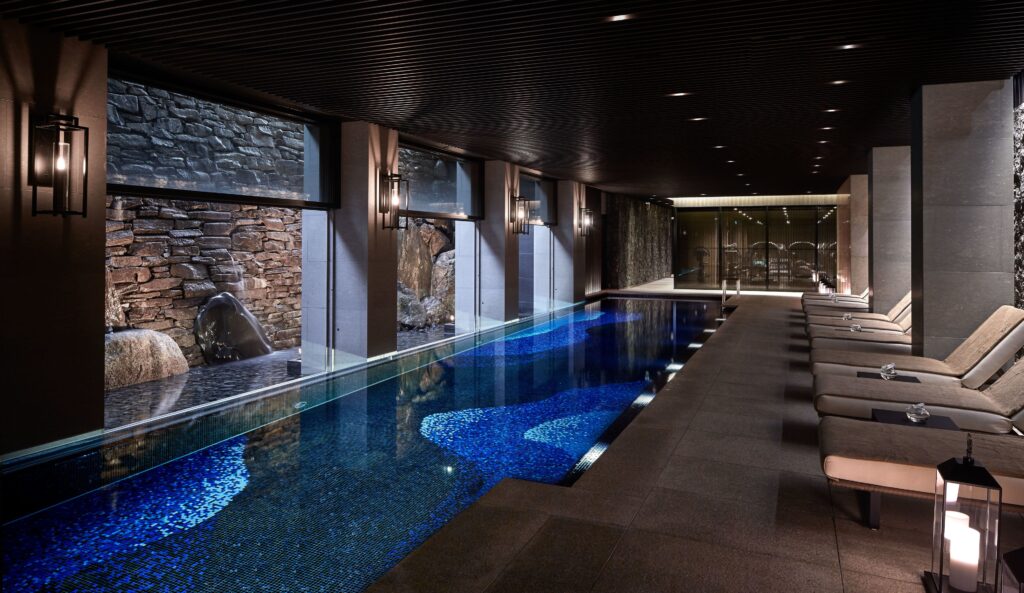
The wellness floor is substantial enough to influence the day. Its heated indoor pool is 20 metres long, accompanied by a steam room and dry sauna. LA PRAIRIE SPA contains seven treatment rooms, including a private spa suite, while the fitness centre operates around the clock.
The pool is a conventional heated pool rather than an onsen. That distinction makes comparisons clearer: the hotel serves swimmers, spa appointments and fitness routines, while a natural-hot-spring stay belongs to another category of Kyoto journey.
For guests covering the city on foot, an hour here can divide temples and shopping from dinner. Families also gain an indoor option when the weather turns, giving the hotel useful depth beyond the room.
Kamogawa and Teramachi Reward a Thoughtful Route
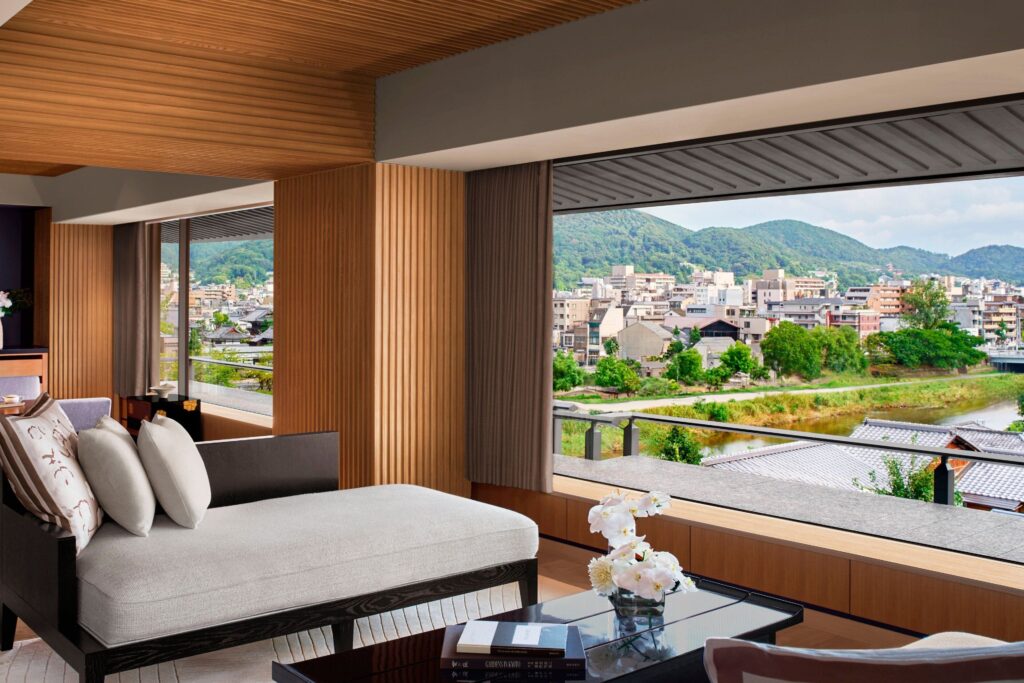
The address is Kamogawa Nijo-Ohashi Hotori in Nakagyo, with Kyoto City Hall subway station and Sanjo Keihan station providing the most useful rail connections. The river path is immediately relevant, Teramachi is close and the Kyoto Imperial Palace lies naturally to the north-west.
Gion and Nishiki Market are reachable on foot, as the hotel notes, though each is a meaningful walk rather than a doorstep attraction. The route can be pleasant when folded into a day along the river or through central streets. Travellers who want late evenings in southern Gion with the shortest possible return may favour a Higashiyama address.
This position works especially well for a second Kyoto visit: mornings along the Kamogawa, the palace and northern temples can take precedence over repeating the most crowded southern circuit. A little itinerary planning turns the riverside location into a genuine advantage.
Choose the Riverside Version of This Hotel
The Ritz-Carlton, Kyoto suits travellers who want a central luxury hotel with enough space to slow down and a setting that remains recognisably tied to the city. Its river rooms, layered interiors, varied Japanese dining and 20-metre pool create a balanced stay for couples, families and repeat visitors.
The most persuasive reservation includes the element that makes the address special. A Kamogawa-facing room or suite carries the river and Higashiyama into private time; a Garden Terrace Suite Tatami exchanges that panorama for a more enclosed Japanese setting. Courtyard rooms remain spacious, but they place greater weight on location and facilities.
For an anniversary, the river view is the natural priority. For a family or a city-intensive itinerary, room size, pool access and convenient routes may matter just as much. Matching the category to the journey reveals the hotel at its most coherent.
For quieter retreats, compare our Aman Kyoto review and ROKU Kyoto review. Our Park Hyatt Kyoto review considers a more intimate Higashiyama base, while Four Seasons Hotel Kyoto offers residences and an 800-year-old pond garden. Six Senses Kyoto develops the wellness theme, and Hilton Kyoto provides a broader urban alternative.