Check ROKU KYOTO rates and availability on Expedia →(Paid link)
ROKU KYOTO is not designed as a convenient base for moving quickly between Gion, Nishiki Market and Kyoto Station. Its appeal lies farther north, in Takagamine: 114 rooms beside the Tenjin River, an outdoor pool fed with natural hot-spring water, and a setting shaped by the area’s long association with artists and craftspeople.
Opened in September 2021 as the first LXR Hotels & Resorts property in Asia Pacific, it asks for more time than a central city hotel. ROKU KYOTO is at its best when part of the itinerary is given over to the hotel itself—not when every hour has already been claimed by the city.
Compare ROKU KYOTO rates for your dates on Expedia →(Paid link)
Beyond Kinkaku-ji, Takagamine Sets a Slower Course
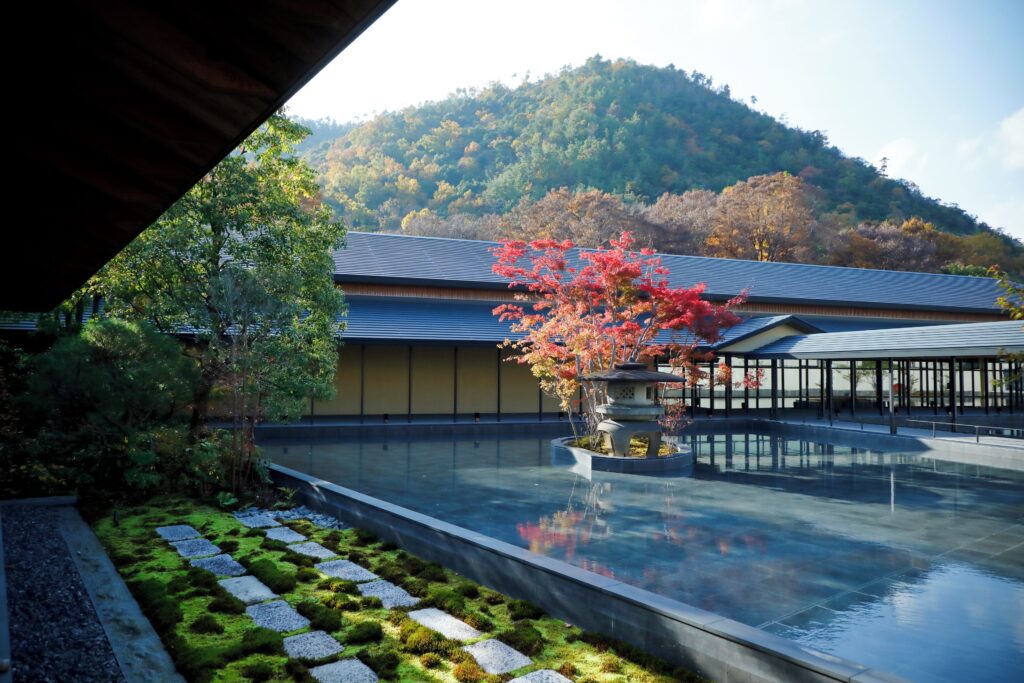
The hotel sits within the Shozan Resort Kyoto grounds at the foot of the Takagamine mountains. Kinkaku-ji is 1.2 kilometers away, while Ryoan-ji and Ninna-ji are also on the northern side of the city. The location works well for a day centered on these temples, but it is less practical for repeated trips to Higashiyama or downtown.
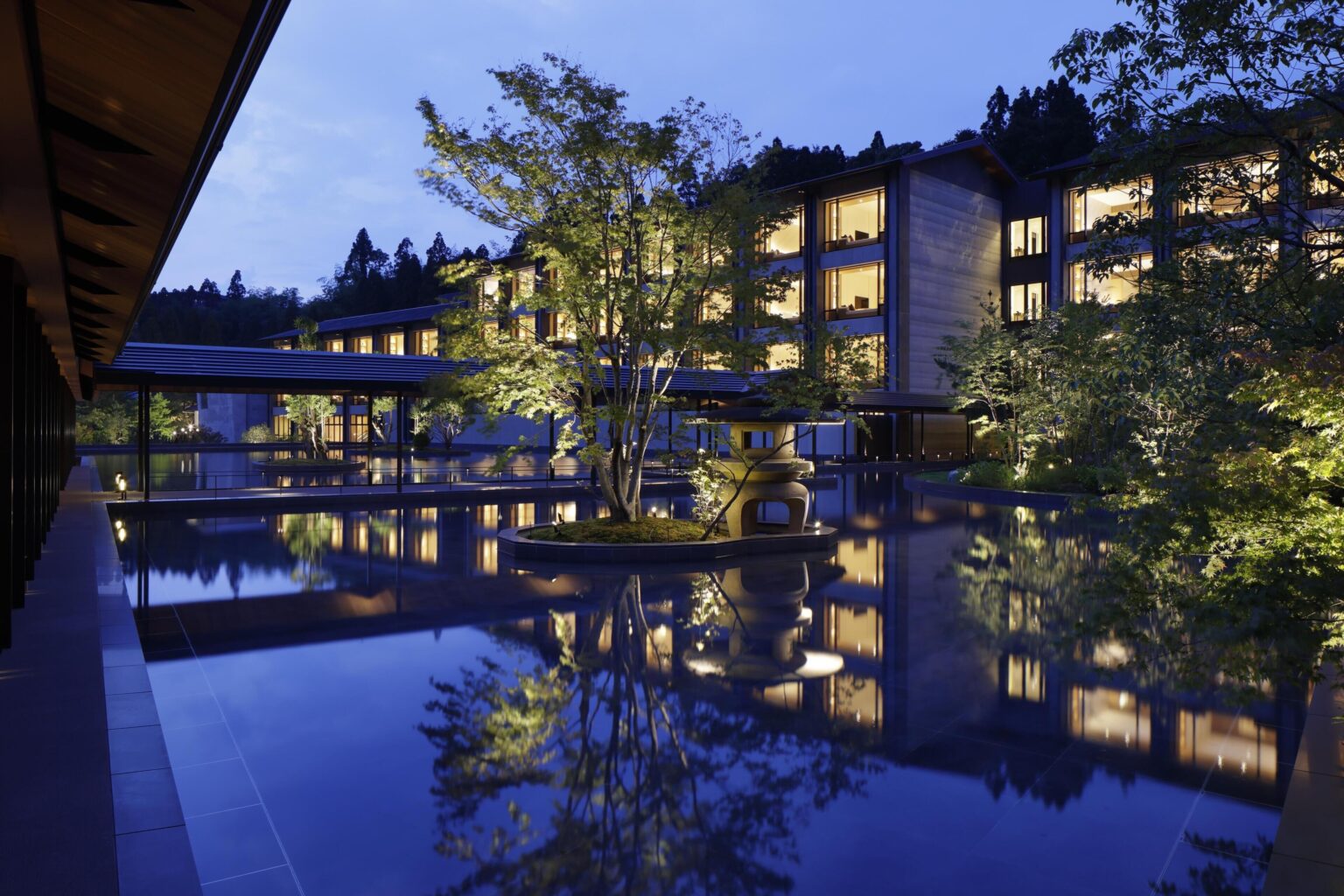
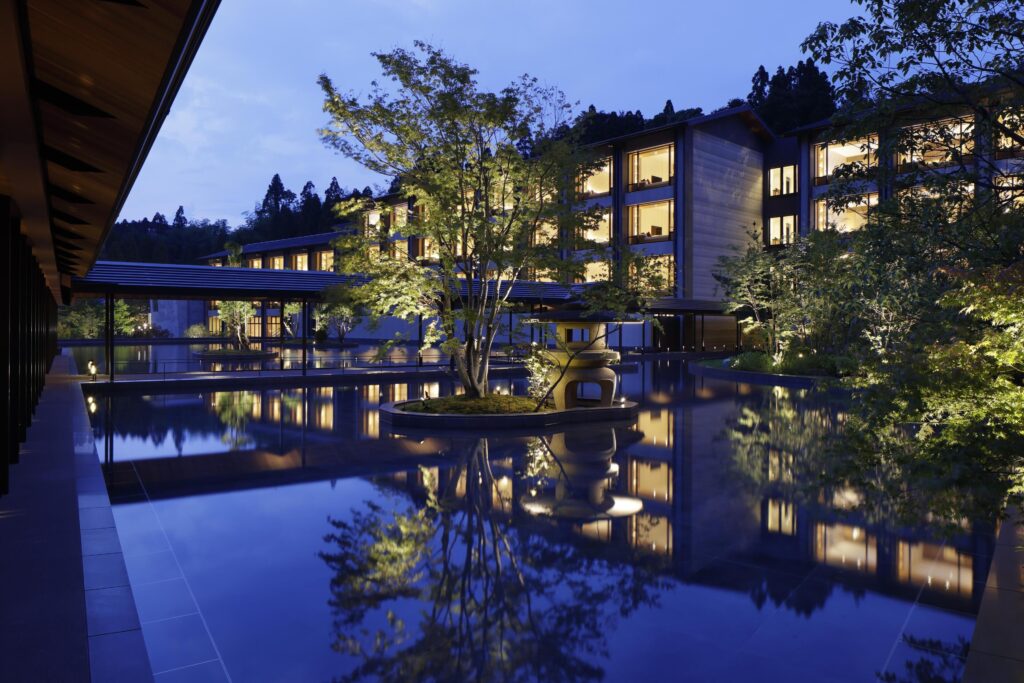
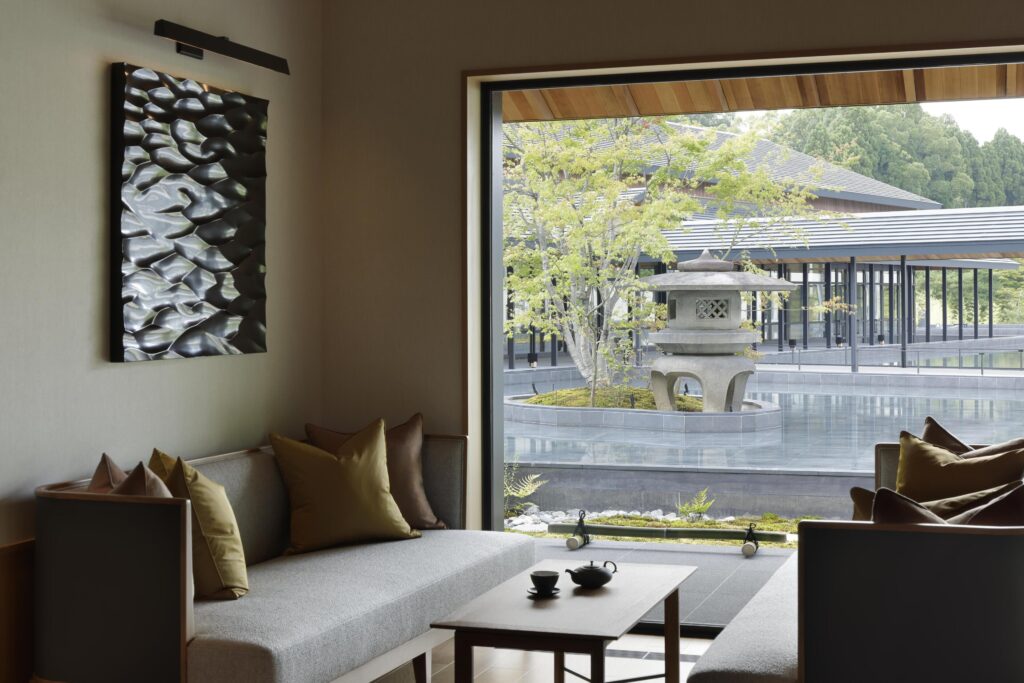
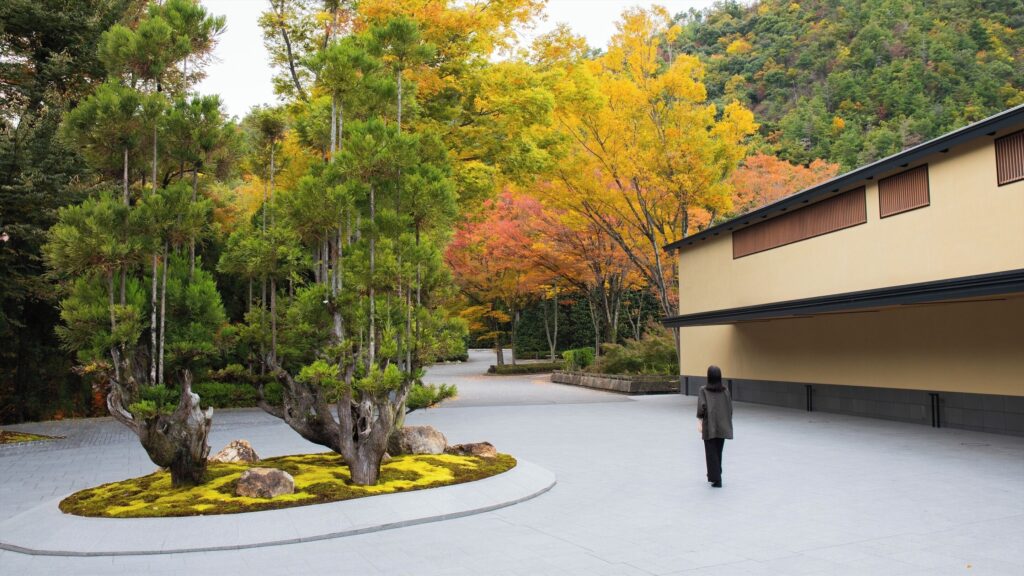
That trade-off is the point. Low buildings, long covered passages and pools of water give the property room to breathe. The atmosphere comes less from decorative references to Kyoto than from the way the buildings frame trees, hills and changes in light. Guests choosing ROKU KYOTO are choosing this distance as part of the stay.
Check current ROKU KYOTO availability on Expedia →(Paid link)
Hot-Spring Water Under an Open Sky
The outdoor thermal pool is the clearest reason to book the hotel rather than simply visit northern Kyoto for the day. It draws natural hot-spring water from the adjoining Shozan grounds and remains open throughout the year. Hilton describes it as Kyoto’s only outdoor natural onsen pool.
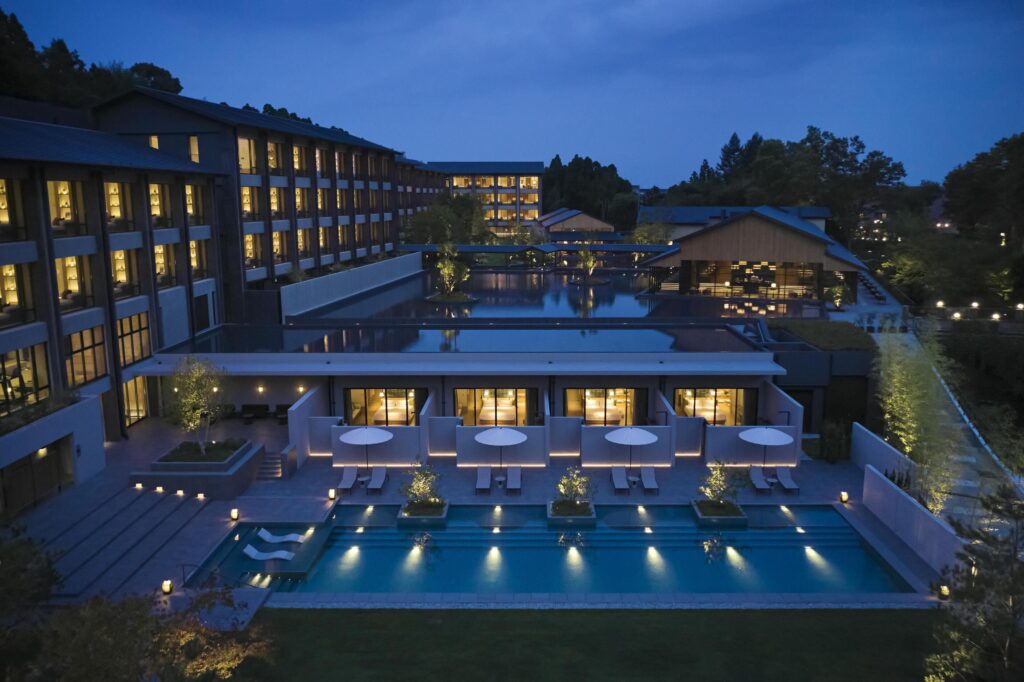
Practical details matter here. The pool operates from 8:00 a.m. to 9:00 p.m., and a reservation is required for a 60-minute session. Children under four are not admitted. Guests aged four to sixteen may use it with adult supervision between 9:00 a.m. and 6:00 p.m. These limits are important for families and for anyone imagining unrestricted pool access throughout the day.
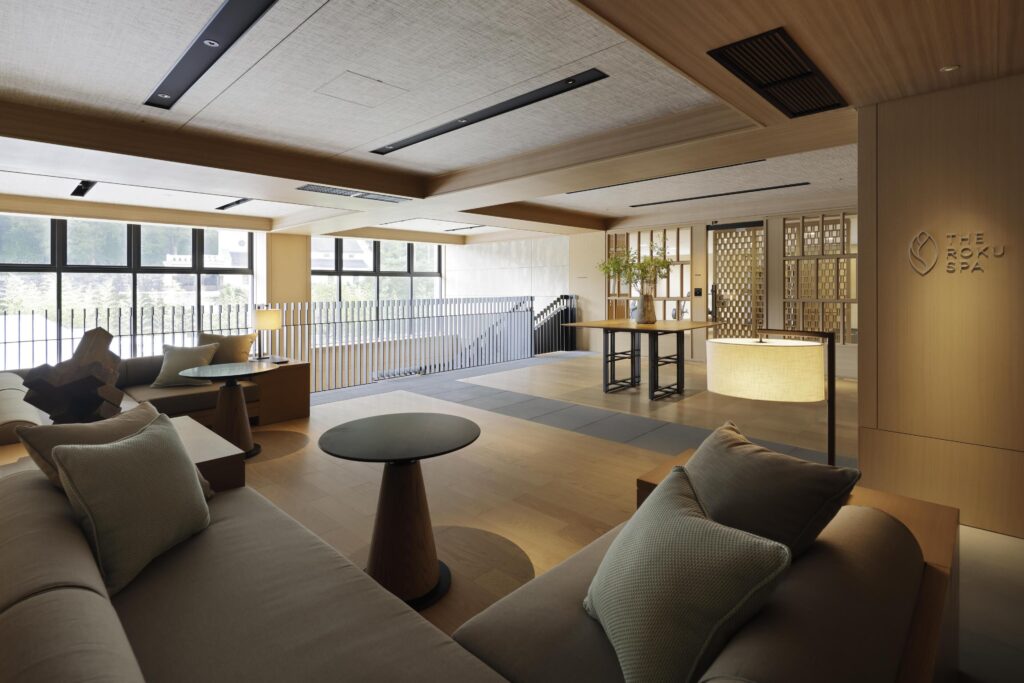
The Roku Spa also has treatment rooms, and the fitness center is open 24 hours. Together, these facilities make the property viable for a slower hotel-led day, particularly after several days of walking through Kyoto.
The Difference Between a View, a Terrace and a Private Onsen
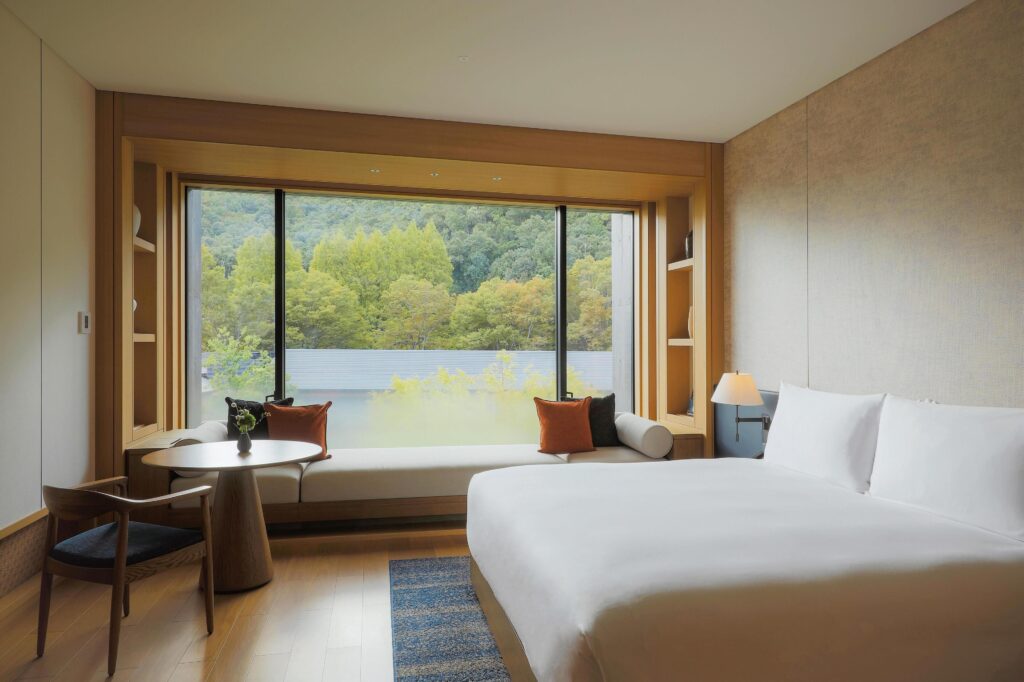
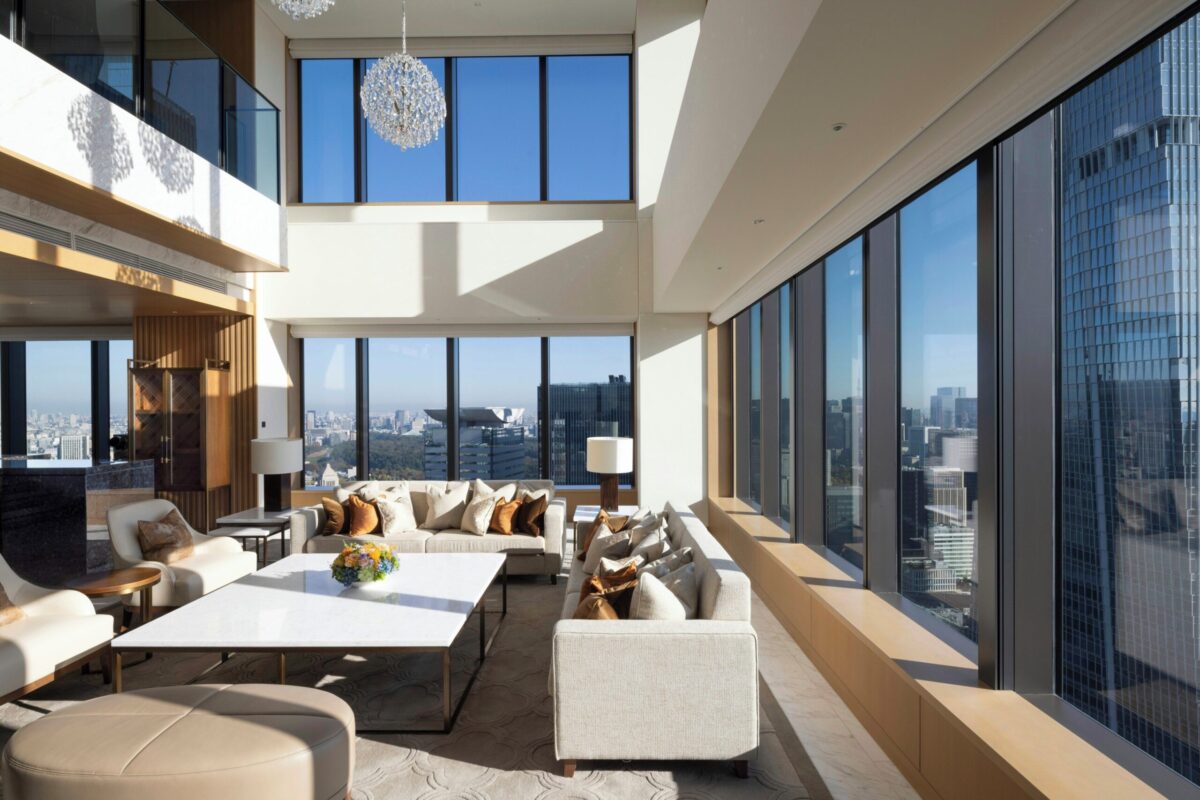
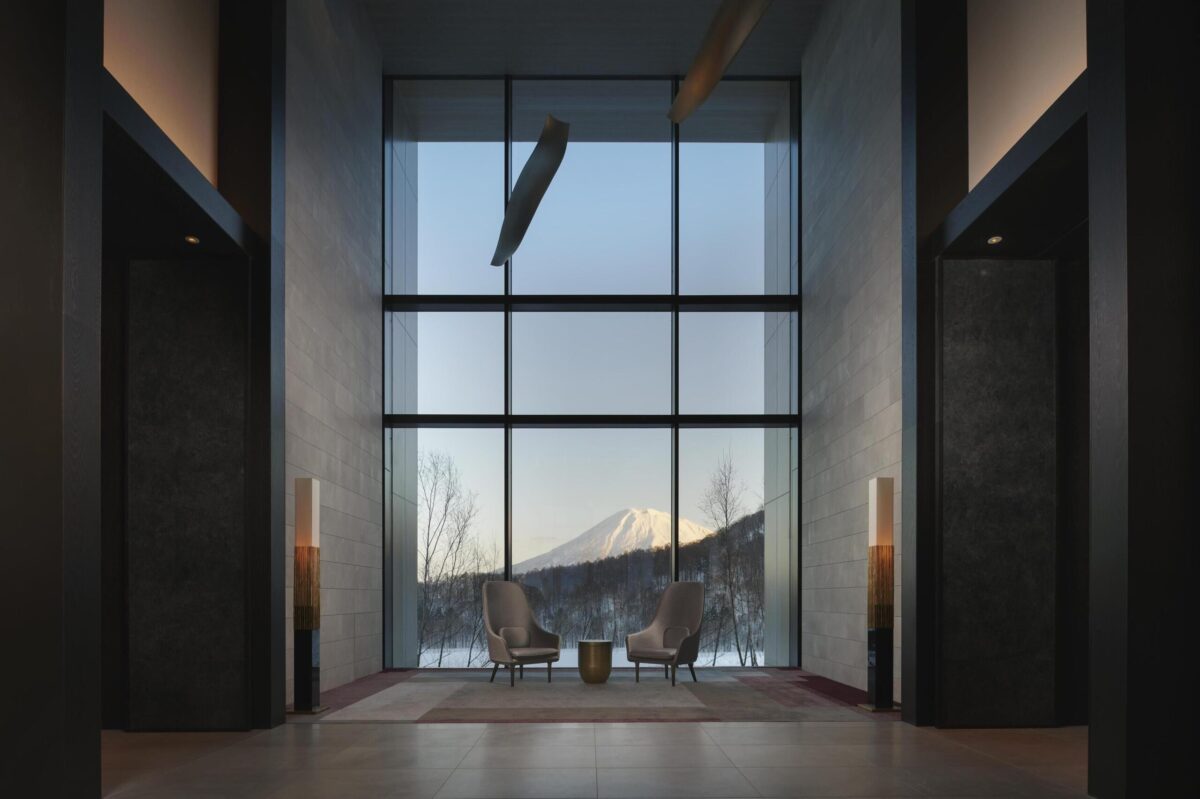
Guest rooms use timber, pale textiles and full-height windows without turning the interior into a stage set. The standard Deluxe categories are the entry point, while Takagamine Deluxe and Panorama Deluxe rooms place more emphasis on the view. The official room list also includes Onsen Garden Rooms, Poolside Terrace Rooms, the Peak Suite and the Roku Suite.
The choice is more consequential than a simple increase in floor area. An Onsen Garden Room adds a private hot-spring bath and garden; a Poolside Terrace Room puts the outdoor thermal pool directly beyond the terrace. The latter is convenient, but access to the pool still follows the hotel’s reservation and age rules. Travelers who value privacy may prefer the private onsen category, while those drawn to the shared pool should compare terrace access and room outlook carefully.
From Morning Light at TENJIN to a Late Drink at The Bar
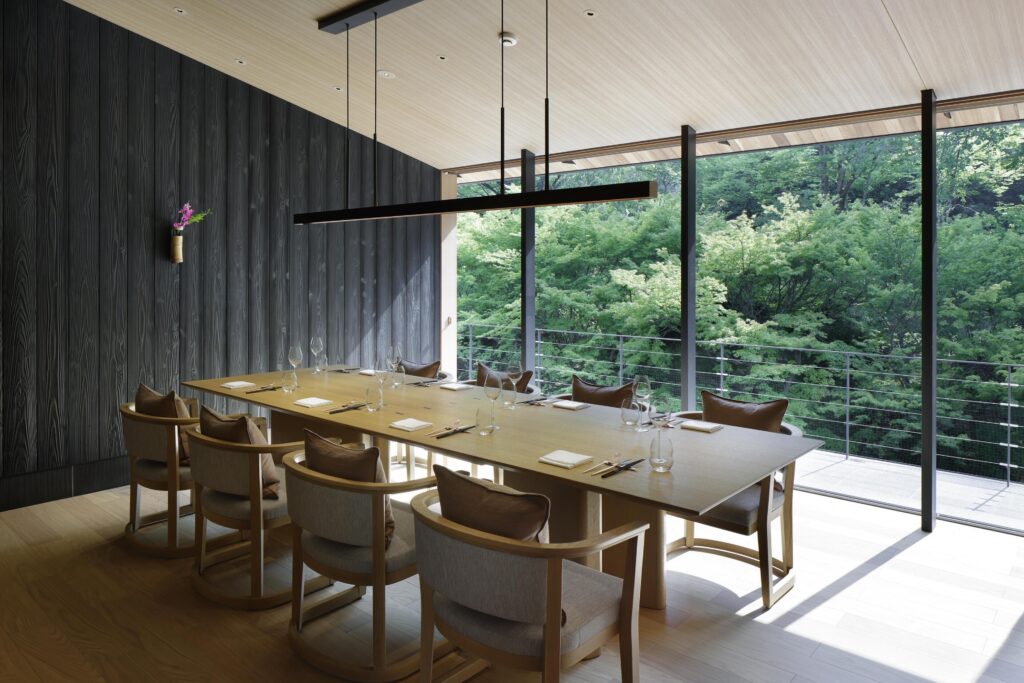
TENJIN is the hotel’s principal restaurant, organized into distinct dining areas. The All-Day Dining room serves breakfast, lunch, dinner and lighter dishes from 7:00 a.m. to 10:00 p.m., with seasonal menus built around locally sourced ingredients. The Bar opens from 5:30 p.m. to midnight, focusing on Japanese spirits, signature cocktails and light food.
Those hours support a resort-style stay, but guests planning several nights should note that the immediate surroundings do not offer the restaurant density of central Kyoto. Dining on property is therefore more likely to become part of the itinerary, not merely a fallback after sightseeing.
Koetsu, Rinpa and the Idea of an Artist’s Residence
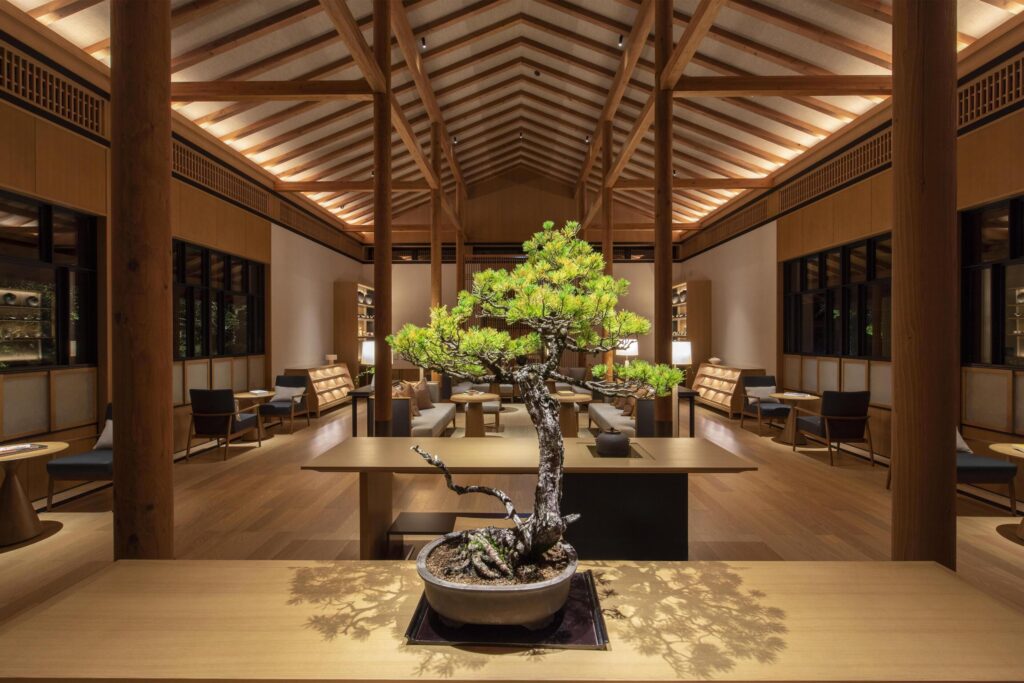
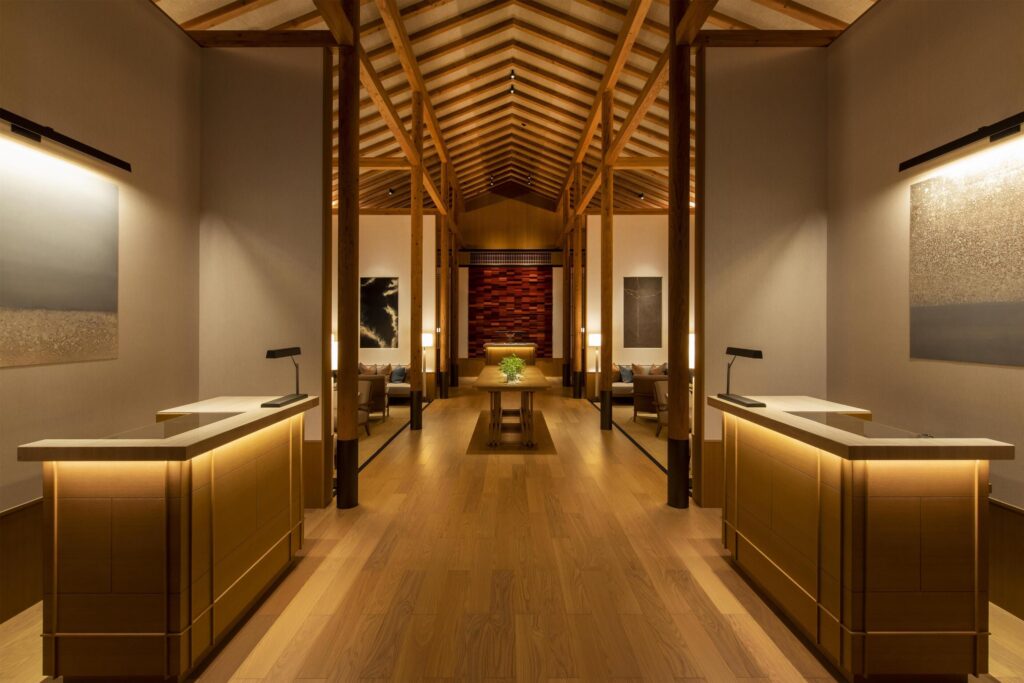
Takagamine is tied to Hon’ami Koetsu, the artist, calligrapher and tea practitioner whose community helped establish the Rinpa tradition around four centuries ago. ROKU KYOTO uses that history as a design framework. Lacquerware, bamboo work, ceramics and karakami paper appear across the property, while the overall plan takes the idea of an artist’s residence rather than reproducing a historic machiya.
The hotel also offers cultural programs that can include paper, bamboo, lacquer or ceramic work, as well as tea-related experiences. Programs change, so guests interested in a particular activity should confirm dates, availability and fees with the concierge before arrival.
See available ROKU KYOTO room plans on Expedia →(Paid link)
Thirty Minutes North of Kyoto Station
Hilton estimates about 30 minutes by taxi from Kyoto Station. A second option is the Karasuma subway line to Kita-Oji, about 13 minutes, followed by a taxi of roughly 10 minutes. Local bus access is possible, but the official route involves about 45 minutes to Kinkakuji-Michi and a further 15-minute walk.
For a short first visit focused on Gion, Kiyomizu-dera and central dining, that extra travel may outweigh the resort setting. ROKU KYOTO makes more sense for a return visit, a split stay with a central hotel, or an itinerary that reserves one or two days for the northern temples and time on property.
A Stay to Build Around, Not Simply Fit In
Choose ROKU KYOTO for its combination of northern Kyoto, spacious resort grounds and a year-round thermal pool. It is particularly well suited to couples who want to slow the pace of a temple-heavy itinerary, Hilton Honors members considering a luxury redemption, and travelers willing to trade central convenience for more time outdoors.
Look elsewhere if the priority is stepping out into Gion each evening, minimizing taxis, or moving quickly between attractions. The hotel is most persuasive when its location is treated as a feature rather than an inconvenience—and when the room category, pool reservation and dining plans are decided before arrival.
Planning a wider luxury journey through Japan?
Explore all of our curated hotel guides here → Luxury Hotel Guides in Japan