Check The Hotel Seiryu Kyoto Kiyomizu rates and availability on Expedia →(Paid link)
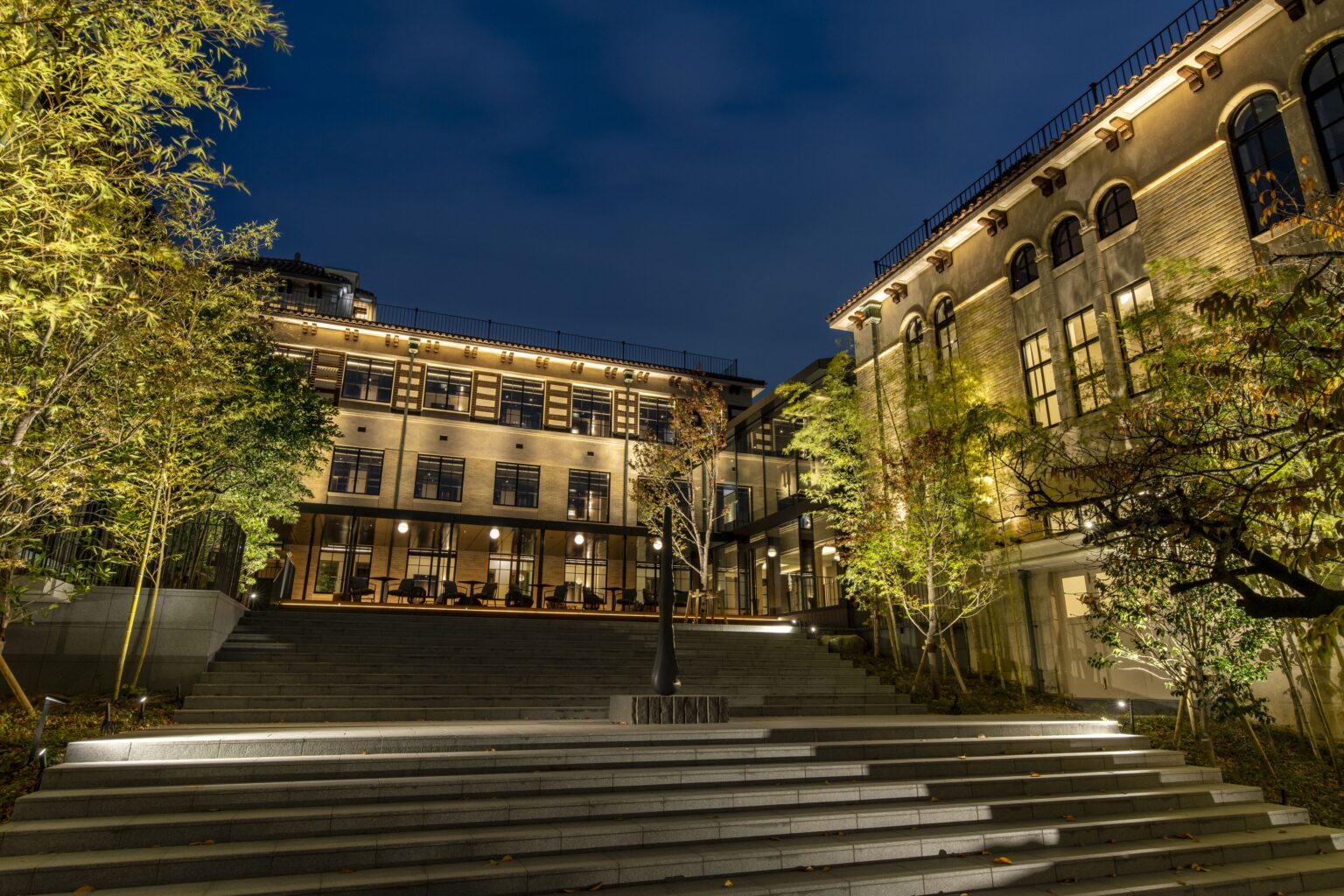
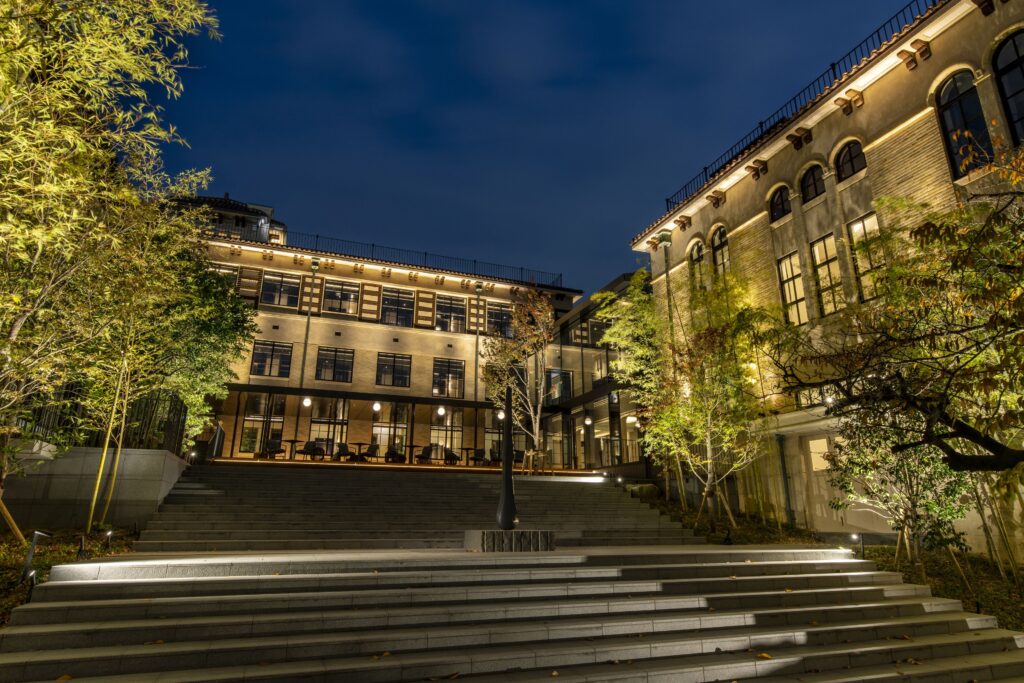
The Hotel Seiryu Kyoto Kiyomizu occupies one of Higashiyama’s most familiar kinds of building, though not the one visitors usually come to Kyoto to see. Behind its pale façade and arched windows is a former elementary school, rebuilt on this site in 1933 and adapted as a 48-room hotel in 2020.
The conversion retains the scale and rhythm of a civic school: generous corridors, high ceilings, old staircases, former classrooms and an auditorium that now holds the breakfast restaurant. Beyond the windows, Yasaka Pagoda appears unusually close. That meeting of schoolhouse architecture and a celebrated Kyoto silhouette—not a vague promise of “old and new”—is what distinguishes Seiryu.
It is also a hotel that rewards careful room selection. A pagoda view, private terrace and the clearest traces of the original school are not standard in every category. The address on Kiyomizu-zaka is exceptional for early walks, but it places guests amid one of Kyoto’s busiest daytime approaches. This review separates those pleasures from the practical qualifications.
Check current The Hotel Seiryu Kyoto Kiyomizu availability on Expedia →(Paid link)
A Schoolhouse From 1933, Recast Without Erasing It
The school’s history reaches back to the Shimogyo 27th District Elementary School, founded in 1869. Its surviving building dates from the 1933 relocation and reconstruction of Kiyomizu Elementary School, long a centre of neighbourhood life. The hotel has not attempted to disguise that past as a conventional machiya or ryokan.
Instead, the former classrooms, auditorium and circulation spaces give the property its order. The indoor K36 bar inhabits an old classroom. Restaurant Library occupies the auditorium. Large windows, high ceilings and broad passages supply a kind of openness that feels quite different from the deliberate intimacy of a traditional inn.
Contemporary interventions are plainly contemporary, which keeps the history legible rather than theatrical. Around 280 works by 22 artists with connections to Kyoto are displayed throughout the hotel. The result is best appreciated by travellers interested in adaptive reuse and modern Kyoto history, not only temple architecture.
See available The Hotel Seiryu Kyoto Kiyomizu room plans on Expedia →(Paid link)
Choose the Room for Its History—or Its View
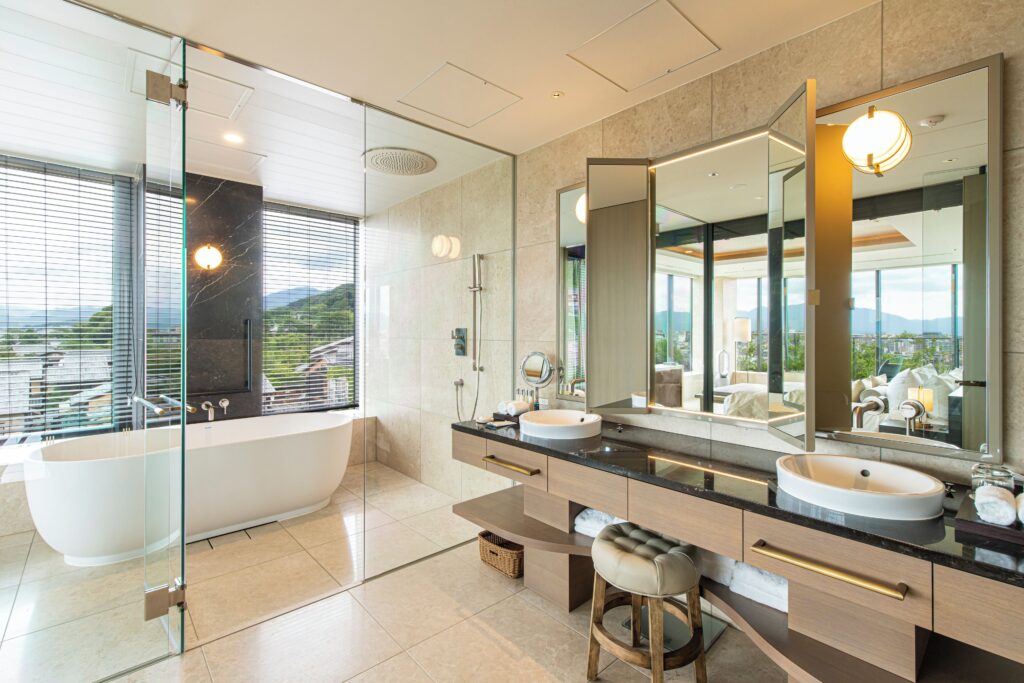
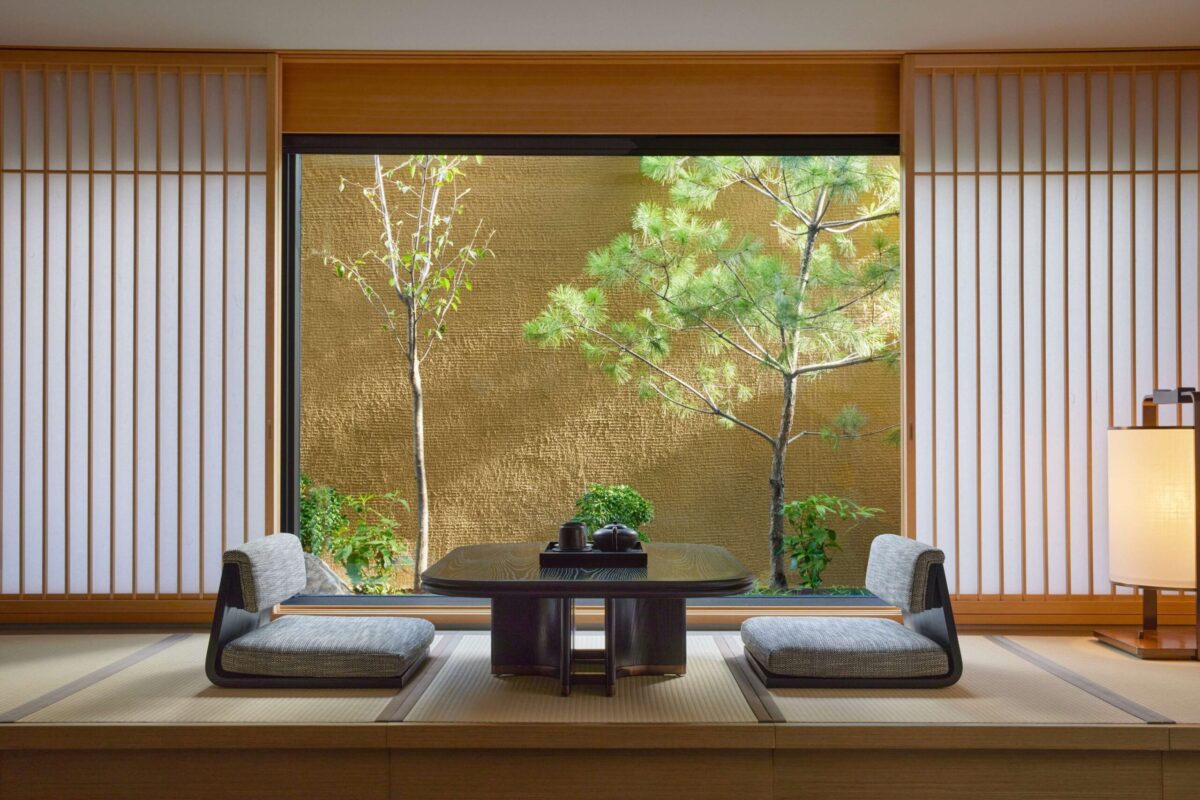
Seiryu has 48 rooms—30 kings and 18 twins—with an official average size of approximately 50 square metres. Even the 42–45-square-metre Deluxe King is generous by central Kyoto standards, while the single Panoramic Suite reaches 137 square metres.
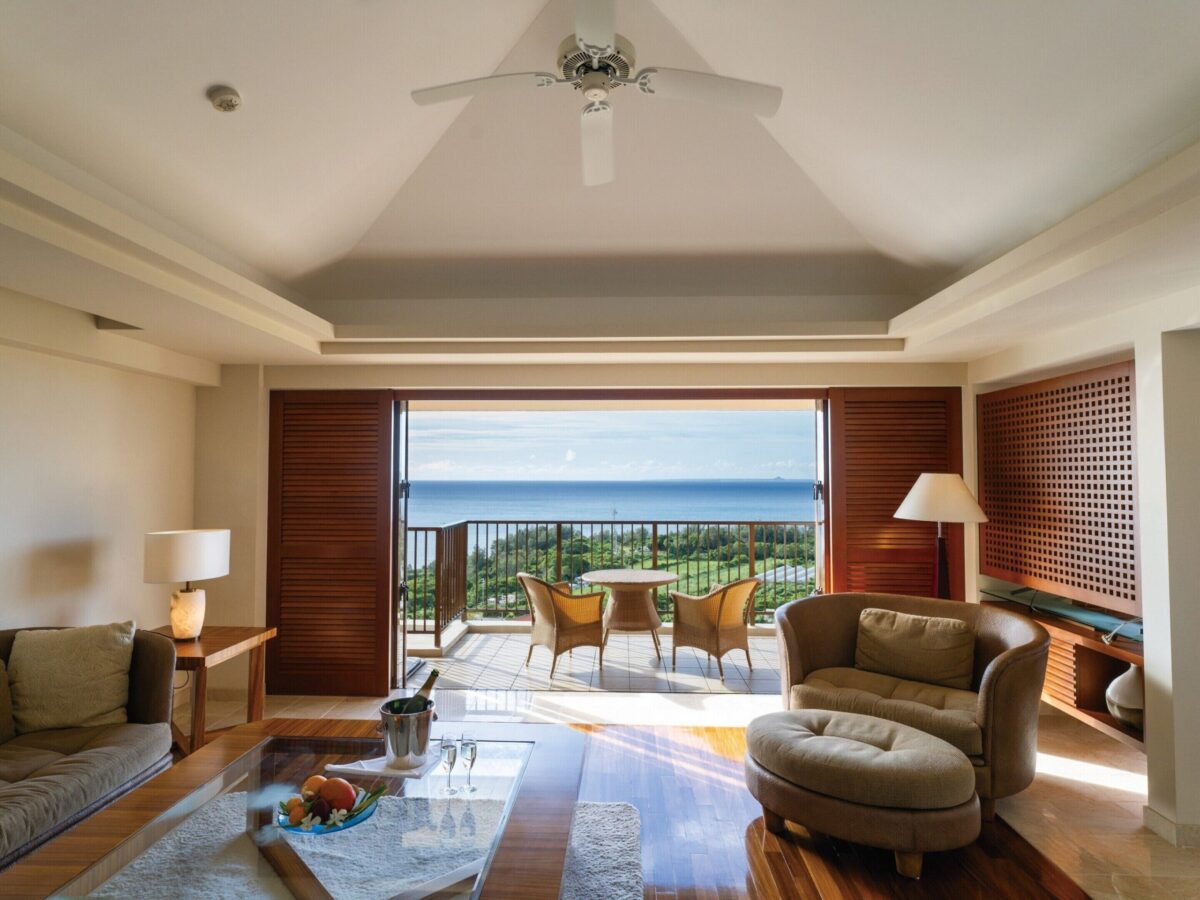
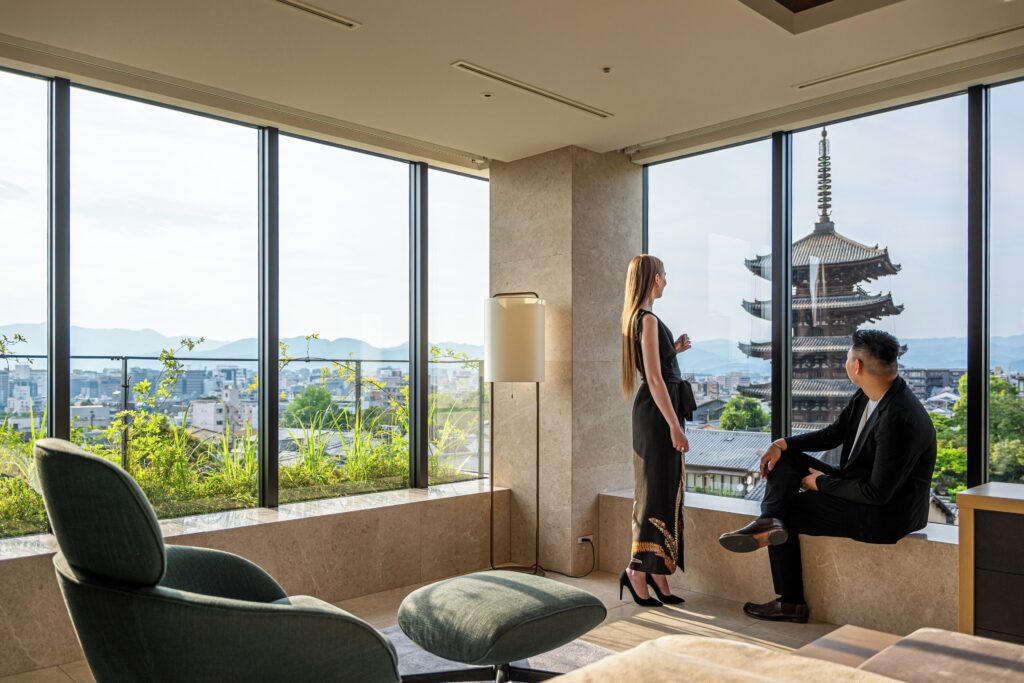
The room names matter. The 55–60-square-metre Panoramic Terrace Twin pairs a private terrace with a view of Yasaka Pagoda. The third-floor Panoramic Suite looks towards both the pagoda and the surrounding mountains. The 66-square-metre Executive King occupies a former classroom; the Deluxe King is also within the historic school building. Other categories emphasise space or bathing facilities instead: the Executive Twin measures 60–70 square metres, and the Premium Twin has a large bathtub and double basins.
It would be a mistake to read “schoolhouse hotel” or “pagoda views” as an all-room promise. Before booking, decide which element carries most weight: the fabric of the old building, the terrace, the landmark view or simply more floor area. Check the exact current room name as well; the hotel revised its category names in February 2025.
Yasaka Pagoda, Framed for Hotel Guests
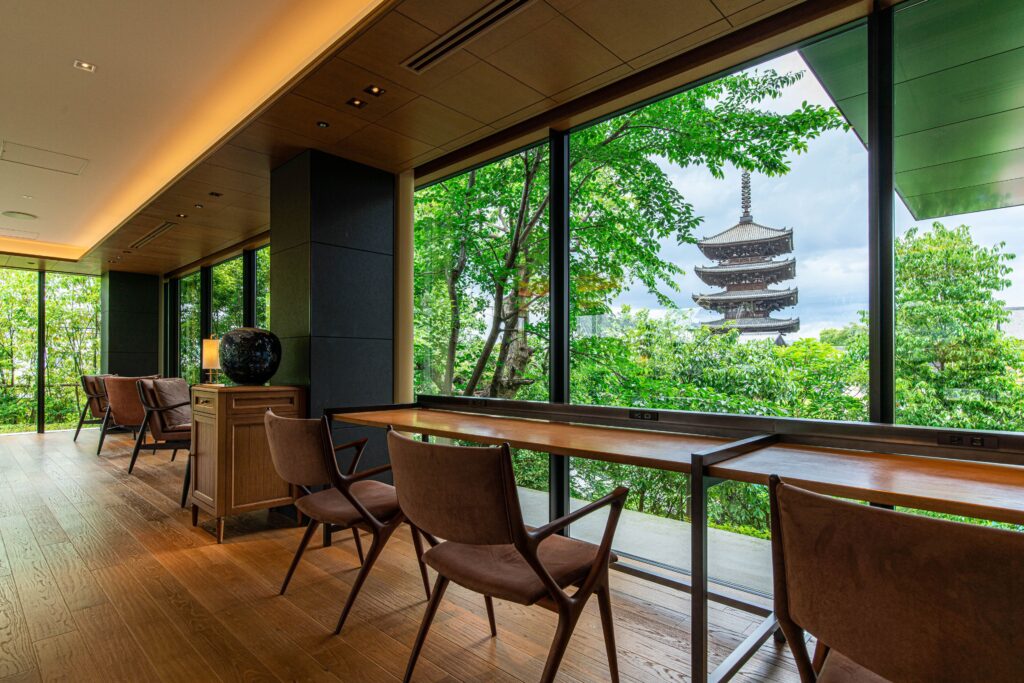
The guest lounge gives every staying guest access to the hotel’s defining view, regardless of room category. Through a wall of glass, the five-storey pagoda rises above tiled roofs and trees with very little visual distance between foreground and landmark. It is a composed view, almost like a hanging scroll enlarged to the width of the room.
The lounge is currently open from 9:00 a.m. to 10:00 p.m., with savoury bites, sweets and drinks included; alcoholic drinks begin at 3:00 p.m. Scheduled programmes for hotel guests include maiko performances, tea ceremony and koto music on particular days. These are useful additions, but the calendar can change. The constant privilege is simpler: a place to sit with the pagoda in view after the streets outside have filled.
Compare The Hotel Seiryu Kyoto Kiyomizu rates for your dates on Expedia →(Paid link)
Breakfast in the Old Auditorium; Sunset Above Higashiyama
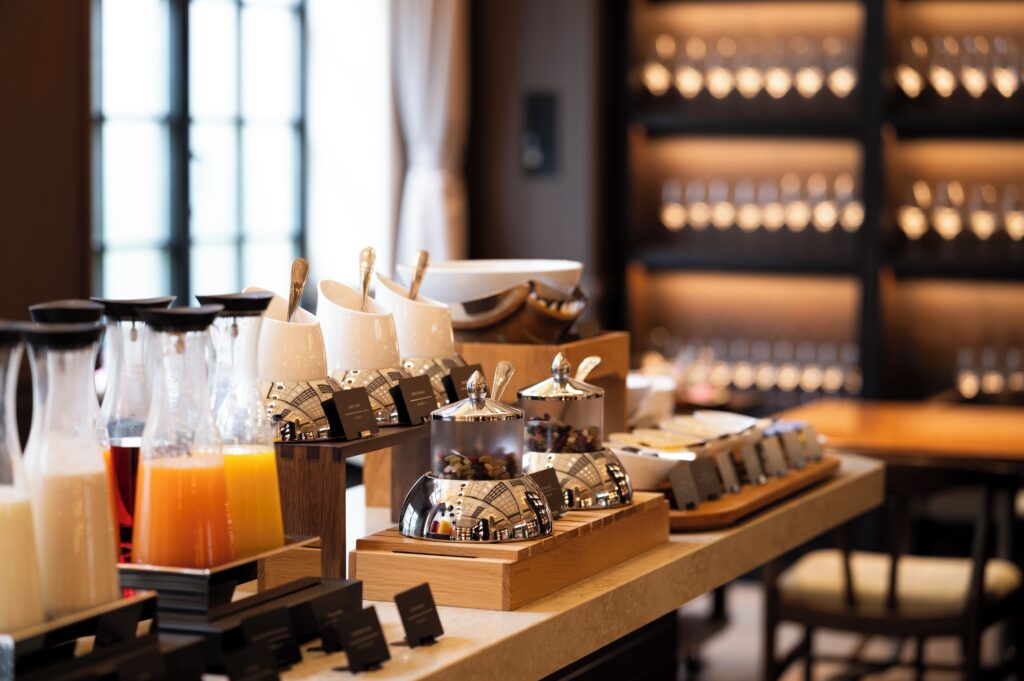
Restaurant Library makes the most direct use of the school’s interior history. The former auditorium keeps its height and breadth, while shelves holding approximately 1,100 books soften the scale. Breakfast combines a choice of main dish with a buffet. In the evening, the room becomes SUSHI-BAR@library, open to non-residents as well as hotel guests.
K36 The Bar & Rooftop occupies the fourth floor. The rooftop looks across Yasaka Pagoda towards the evening sky; inside, the bar returns to the smaller proportions of a former classroom. K36 is a partner venue run by a separate operator, rather than a hotel-operated bar, and reservations and seasonal hours should be checked directly.
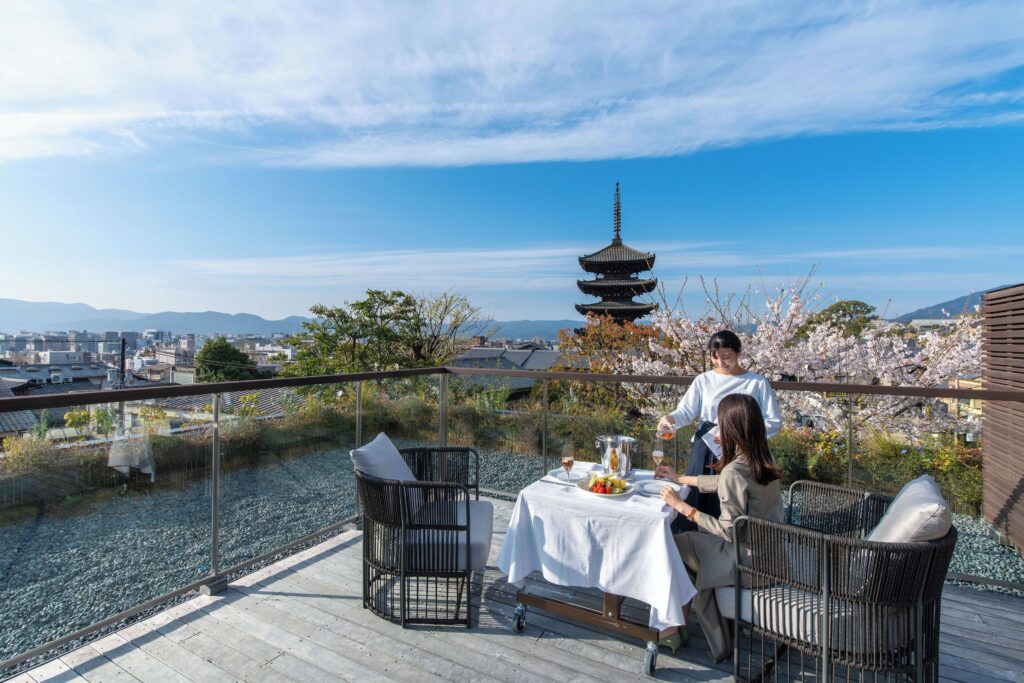
Benoit Kyoto, supervised by Alain Ducasse, stands in a separate building within the grounds. It too is partner-operated. Together, the three venues offer genuine variety, but guests seeking the seamless simplicity of several restaurants under one hotel operator may find the distinction worth noting.
The Private Bath Is a Separate Indulgence, Not an Onsen
Three private bathing rooms—Sakura, Yamabato and Kiyomizu—are available on the second floor. Each accommodates up to four people and must be reserved. Use is charged separately from the room rate.
The distinction is important: this is not an in-room bath, a communal spa or a natural hot spring. It is a spacious private bathroom intended for an unhurried soak. Travellers choosing a Kyoto hotel specifically for onsen water should look elsewhere; those who value bathing privacy may still find it appealing, provided they reserve and budget for it.
A first-floor fitness gym is also available, and the current English hotel information lists 24-hour access. Seiryu is not a full resort with a pool or extensive spa programme. Its most persuasive shared spaces remain the lounge, the preserved architecture and the rooftop outlook.
Kiyomizu-zaka at the Door: Beautiful Early, Busy by Day
The address is difficult to better for travellers who want Kiyomizu-dera, Ninenzaka, Sannenzaka and Yasaka Pagoda close at hand. The advantage is greatest at the edges of the day. Before shops open, stone slopes and tiled roofs regain their proportions; after the temple gates close, the approach gradually empties again.
By late morning, however, Kiyomizu-zaka can be densely crowded. Taxis are convenient but not immune to congestion and the one-way road pattern. The hotel has no private car park and directs staying guests to a partner facility. Kiyomizu-michi bus stop is about a four-minute walk, while Kyoto Station is approximately 15 minutes by taxi in normal traffic.
This is therefore an excellent base for exploring southern Higashiyama on foot, but less convenient for travellers making frequent rail day trips or anyone who finds slopes and busy pavements difficult. The location’s beauty and its friction come from the same source.
Who Will Appreciate Seiryu’s Particular Kind of Kyoto?
Seiryu suits travellers who want to begin and end the day in Higashiyama, and who notice the character of a building as much as its amenities. It is particularly compelling when a room with the desired architectural detail or pagoda view is available. The complimentary lounge ensures that even guests without that view in their room can enjoy the hotel’s closest visual relationship with Yasaka Pagoda.
It is a less obvious choice for someone expecting a ryokan, an onsen hotel or a secluded garden retreat. Nor is it the most efficient Kyoto address for repeated journeys from the station. Its appeal is more specific: a preserved school above one of the city’s most visited streets, offering a quieter vantage once the day’s crowds have passed.
Compare This Schoolhouse Stay With Other Kyoto Hotels
For another Higashiyama address with Yasaka Pagoda nearby, compare our Park Hyatt Kyoto review. The small-scale conversions in our Sowaka review and The Shinmonzen review offer two different relationships with Gion and its historic fabric.
Elsewhere in Kyoto, consider the garden setting in our Aman Kyoto review, the riverside position in The Ritz-Carlton Kyoto review, or the historic gardens discussed in our Four Seasons Hotel Kyoto review. Our Hotel The Mitsui Kyoto review and Hoshinoya Kyoto review cover two further alternatives away from the Kiyomizu crowds.
Planning beyond Kyoto? Browse our Luxury Hotel Guides in Japan.