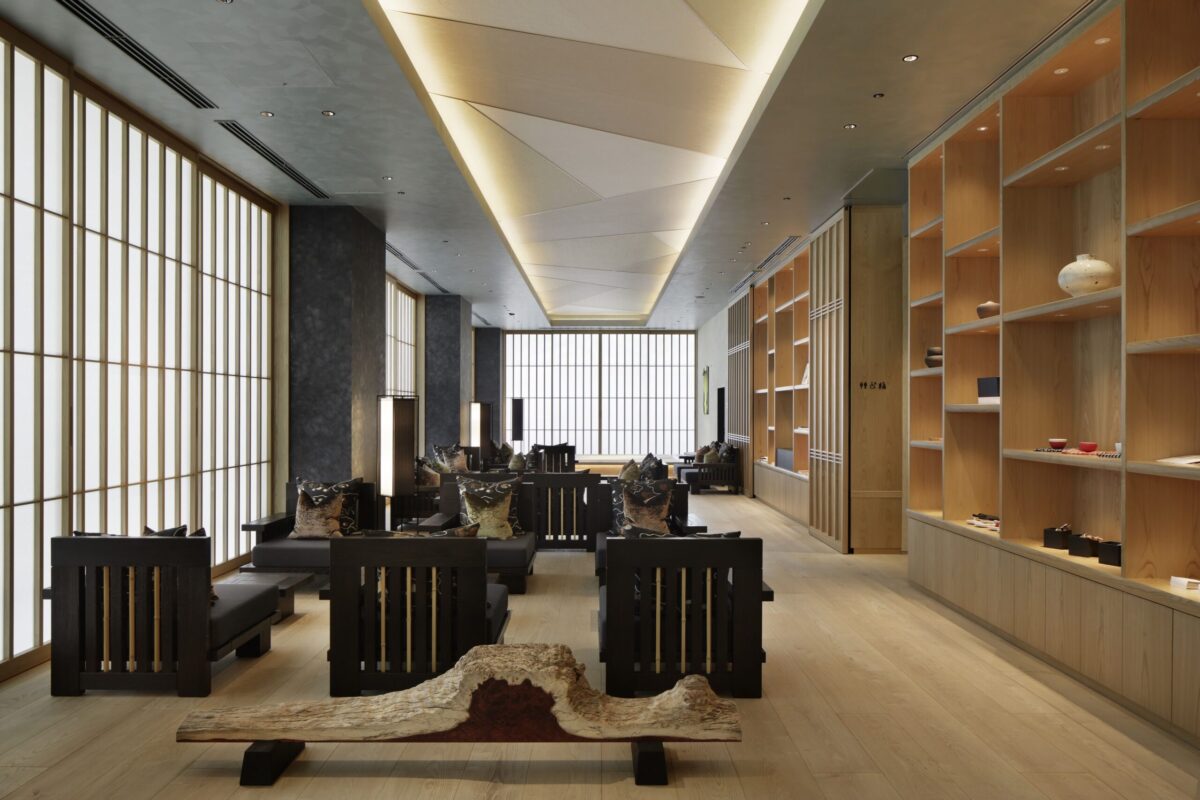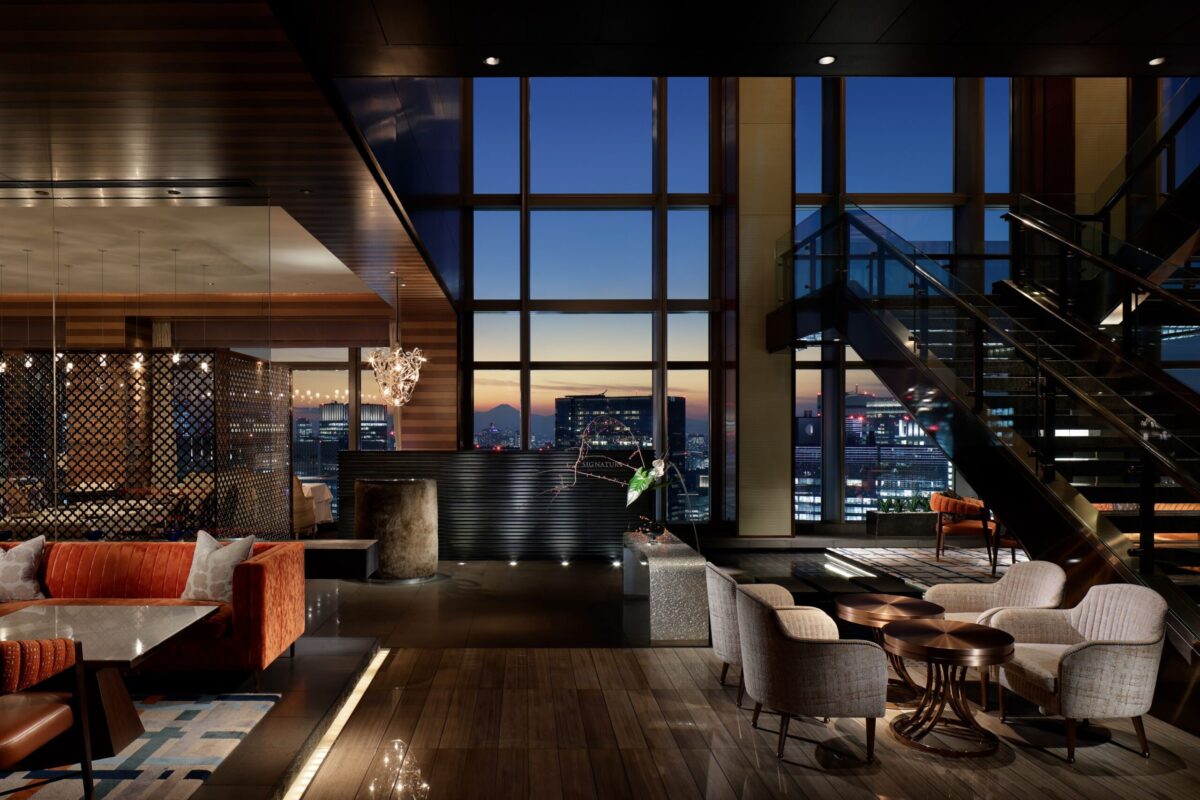
Before Aman Kyoto was a hotel, its garden belonged to an unrealised idea. A former owner spent years shaping the Takagamine site for a textile museum that was never completed, leaving stone walls, moss-covered slabs and paths through the forest. When architect Kerry Hill encountered the landscape, the response was not to clear it for a conventional resort. The 26 rooms and pavilions were kept low, allowing the inherited garden to remain the principal work.
That history gives Aman Kyoto a more precise identity than “a secluded hotel in the woods”. It is a retreat built around something that already existed, in a northern district associated with Honami Koetsu and the artistic community that helped form the Rinpa school. The setting is approximately 30 minutes by car from Kyoto Station and deliberately removed from the evening life of Gion and Kawaramachi.
The distance is either the point or the problem. Rooms begin at an unusually generous 60 square metres; breakfast, onsen access, refreshments and several daily rituals are included in standard stays. Yet there is no swimming pool or gym, and returning to central Kyoto repeatedly can blunt the pleasure of being here. Aman Kyoto makes most sense when the hotel—and the time left unscheduled within it—is a substantial part of the journey.
A Garden First Imagined for a Textile Museum
Aman’s official history describes the property as the fruition of a landscape first conceived as the garden of a textile museum. The museum remained a dream, but the groundwork survived: curving stone paths, substantial walls and slabs that have gradually become part of the moss and woodland. This is not a newly planted screen around a hotel. The architecture arrived after the garden had acquired its own age and logic.
Hill’s pavilions use dark timber, latticework and restrained geometry, drawing on the proportions of a ryokan without reproducing one. They sit in separate forest glades rather than forming a single grand building. The arrangement gives the resort its privacy, but also requires a different rhythm from a city hotel: moving between room, spa and dining is part of inhabiting the site rather than a quick lift ride.
The artistic connection continues beyond the property. Takagamine became an important creative community after Honami Koetsu settled here in the early seventeenth century, a history that informs Taka-An restaurant. This is a richer reason for the location than proximity to Kinkaku-ji alone.
Kerry Hill’s Pavilions Leave the Old Stones in Place
The resort’s contemporary character comes from what the buildings decline to compete with. Guest accommodation frames the forest through floor-to-ceiling windows, while natural wood, tatami and tokonoma alcoves supply recognisable ryokan references. The effect is not historical reconstruction. Rooms retain Aman’s broad planes, controlled palette and emphasis on space.
Without licensed photography, it would be easy to substitute vague visual romance for useful description. The official room specifications provide a firmer guide. Nara and Hotaru rooms measure 60 square metres and combine sleeping and living areas with hinoki baths and double vanities. Their orientation and position change the relationship to shrubs, maples, stone walls or the mountainside, so room selection should consider location as well as category name.
The architecture is at its most convincing when read as a frame for the existing ground. That also means seasonal conditions matter. Fresh green, autumn colour and winter quiet will change the garden more dramatically than any interior styling update.
Sixty Square Metres Is the Beginning; the Pavilions Change the Journey
A 60-square-metre entry room is already larger than many Kyoto luxury-hotel upgrades. For a couple planning to divide the day between the resort and sightseeing, it may be the most balanced choice: a proper living area, generous bathroom and hinoki bath without paying for rooms that remain unused.
The Takagamine Suite introduces a separate tatami room and more residential space. The two-bedroom Takagamine Pavilion expands to 226 square metres with a living room, tatami room, Western dining room, kitchen and two ensuite bedrooms. Its elevated position looks across the garden towards Mount Hiei. Washigamine Pavilion is larger still and occupies the property’s most secluded upper ground.
These are not merely larger versions of the same stay. The two-bedroom pavilions are designed for families, friends or travellers who will dine and spend meaningful time together indoors. They also carry specified transport benefits that do not automatically apply to every room category. The official rate details should therefore be read closely rather than allowing “Aman stay” to stand for one uniform package.
Breakfast, Matcha, Onsen: What the Standard Stay Already Includes
Aman Kyoto’s included elements make the entry categories more complete than the room rate alone suggests. Officially listed inclusions include daily breakfast, in-room refreshments and beverages, afternoon matcha with seasonal sweets, selected soft drinks at The Living Pavilion, an evening aperitif with small snacks, a guided tour of the secret garden and access to the Aman Spa’s hot-spring bathing facilities.
These are small pieces of the day, but together they reduce the need to leave the property for every meal or activity. The guided garden tour is especially relevant because the landscape’s history cannot be understood simply as scenery. Afternoon tea and aperitif also give shape to hours that might otherwise feel empty to travellers accustomed to a full sightseeing schedule.
Special packages may add dinner, transfers or other privileges, but their dates and inclusions change. They should not be confused with the standard stay. Compare the current official offer against the base rate rather than assuming that every attractive inclusion applies to every reservation.
Natural Hot Springs, but No Pool and No Gym
The onsen is genuine mineral-rich hot-spring bathing, offered in indoor and outdoor facilities. Aman Spa also contains three private treatment rooms and a relaxation area, with treatments drawing on Kyoto green tea, local sake, kuromame black beans and camellia oil. Yoga, mindfulness and forest bathing extend wellness into the garden.
Access is not completely casual: Aman limits the number of bathers and asks guests to reserve in advance. Anyone building the stay around onsen time should confirm arrangements rather than assuming unrestricted use throughout the day.
The resort explicitly states that it has no swimming pool and no gym. That omission matters at this price level. Travellers who want lap swimming, extensive fitness equipment or a broad urban spa may prefer another Kyoto hotel. Aman Kyoto instead concentrates on bathing, treatments and the woodland itself; that focus is persuasive only if it matches how the guest actually intends to spend time.
Taka-An Connects Dinner to Honami Koetsu’s Takagamine
The Living Pavilion is the resort’s social centre, with a fireplace, garden terrace and all-day menu spanning breakfast, Kyoto-inspired Western cooking and à la carte dishes. Ingredients gathered from the garden or surrounding satoyama—such as yuzu, sansho leaves, mushrooms and chestnuts—anchor its current culinary direction, though exact dishes change with the season.
Taka-An is the more formal counterpoint. Its omakase and kaiseki approach pays homage to Honami Koetsu, whose artistic legacy belongs to Takagamine rather than being imported as a decorative theme. The restaurant’s chef determines the meal through seasonal ingredients, so evergreen copy should not promise a fixed sequence of dishes.
Both restaurants can accept non-residents with advance reservations, subject to availability. For hotel guests, the practical decision is whether to remain within the forest for dinner or travel back into Kyoto. At least one meal at the property helps the retreat make sense as a whole; booking every dinner outside can turn the location into a repeated logistical cost.
Thirty Minutes From Kyoto Station Changes the Itinerary
Aman Kyoto lies at the foot of Hidari Daimonji in northern Takagamine, approximately 30 minutes by car from Kyoto Station. Kinkaku-ji is nearby, and the north-western temples can be combined naturally with the stay. Gion, Pontocho and the main evening districts are another matter: they require deliberate transport rather than an after-dinner walk.
This favours a slower itinerary. Two or three carefully grouped excursions leave room for the onsen, garden and meals; repeated returns to central Kyoto work against the reason for choosing the hotel. First-time visitors determined to cover temples from dawn to dusk may obtain more value from a central base and visit Aman Kyoto later in a longer journey.
For a honeymoon, anniversary or second visit to Kyoto, the distance can become an advantage. The city remains accessible, but it no longer dictates every hour. The strongest reservation case is therefore not prestige alone. It is the willingness to exchange convenience for time within this particular garden.
Choose Aman Kyoto for the Garden, Not as a Trophy Address
Aman Kyoto is best suited to couples and families who will use the room, bathing rituals and grounds as part of the trip. Its 60-square-metre starting point is generous, its standard inclusions are meaningful, and the textile-museum garden gives the resort a history that cannot be reduced to brand design.
It is less suitable for travellers who want Kyoto immediately outside the door, extensive fitness facilities or a large choice of restaurants. The absence of a pool and gym should not be romanticised, and the distance from central districts remains real. A high rate does not erase those trade-offs.
The hotel becomes convincing when those limits are accepted in advance. This is not the broadest luxury resort in Kyoto, nor the most efficient sightseeing base. It is a carefully restrained way to inhabit a garden that waited decades for the right buildings.
For a more central Kyoto stay, compare our Park Hyatt Kyoto review, The Ritz-Carlton Kyoto review and Four Seasons Hotel Kyoto review. Our Six Senses Kyoto review examines a wellness-led Higashiyama alternative, while Hilton Kyoto offers a pool and broad urban convenience. For another northern retreat, read our ROKU Kyoto review.