In Kyoto, the address begins shaping a stay before the room comes into view. Ninenzaka brings stone lanes and Yasaka Pagoda to the doorstep. The Kamogawa opens the city towards Higashiyama. Farther north, a forest garden absorbs the sound of the streets; in Arashiyama, the journey may continue by boat after the train has been left behind.
These eight hotels draw their character from those settings. Old gates, pond gardens, rivers and temple roofs are not decorative themes added after construction. They determine the approach, the view from the room and the hours that feel most natural to spend within the property.
Park Hyatt Kyoto: Ninenzaka and Yasaka Pagoda
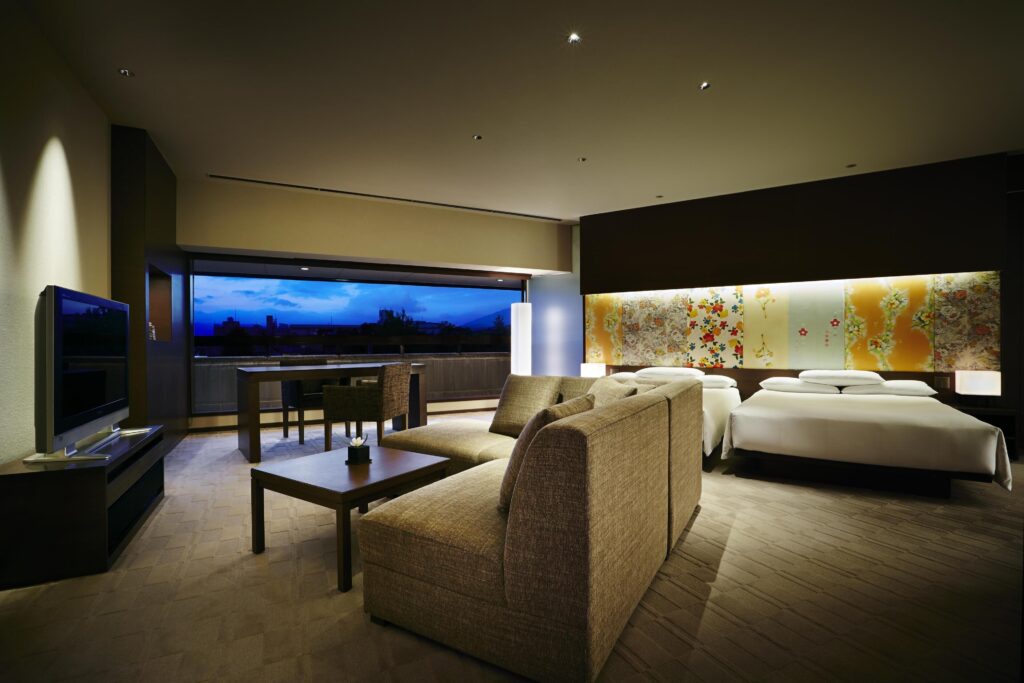
Park Hyatt Kyoto is set along Ninenzaka within Higashiyama’s preserved streets. The low-rise hotel holds 70 rooms, including nine suites, and standard categories begin at 45 square metres. Tamo wood, work by local artists and small gardens carry Kyoto craftsmanship indoors without loosening the hotel’s contemporary lines.
The view should be read in the room name. Pagoda View categories explicitly frame Yasaka Pagoda, while Garden Terrace rooms open to a private tsuboniwa. At dinner, Yasaka places a teppanyaki counter before the pagoda and city skyline. The neighbouring Kyoyamato ryotei, founded in 1877, brings kaiseki and its own historic buildings into the same hillside stay.
Read our Park Hyatt Kyoto story, or view current rooms and rates on Expedia →(Paid link)
Aman Kyoto: A Forest Garden Imagined for a Museum
The garden came first at Aman Kyoto. A former owner spent years shaping the Takagamine site for a textile museum that was never completed, leaving stone walls, moss-covered slabs and paths beneath maples. Architect Kerry Hill placed the later pavilions low within that inherited landscape.
Its 26 rooms, suites and pavilions begin at 60 square metres and look into woodland or secluded garden. Breakfast, refreshments, garden walks and access to the spa’s hot-spring onsen are included in current standard stays. About 30 minutes by car from Kyoto Station, the distance allows the afternoon to settle around tea, stone paths and the forest itself.
The Ritz-Carlton, Kyoto: Kamogawa Light
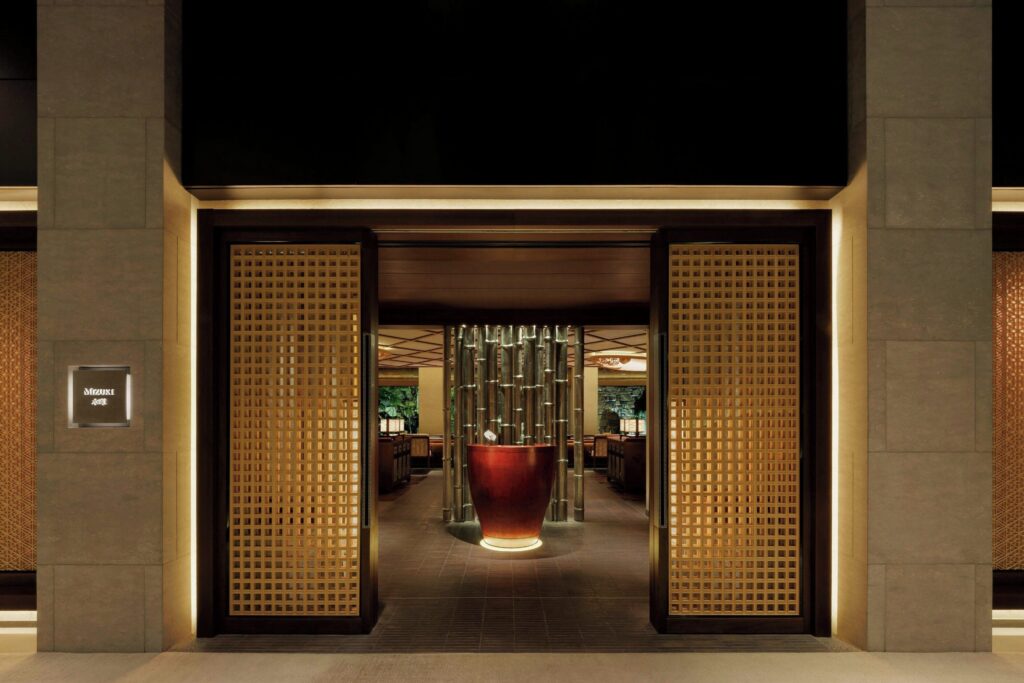
The Ritz-Carlton, Kyoto stands on the west bank of the Kamogawa near Nijo Bridge. Its five-storey scale stays close to the water, and selected rooms look east across the river towards the Higashiyama mountains. The 134 rooms and suites average about 50 square metres, with outlooks ranging from courtyard and private garden to river and mountain.
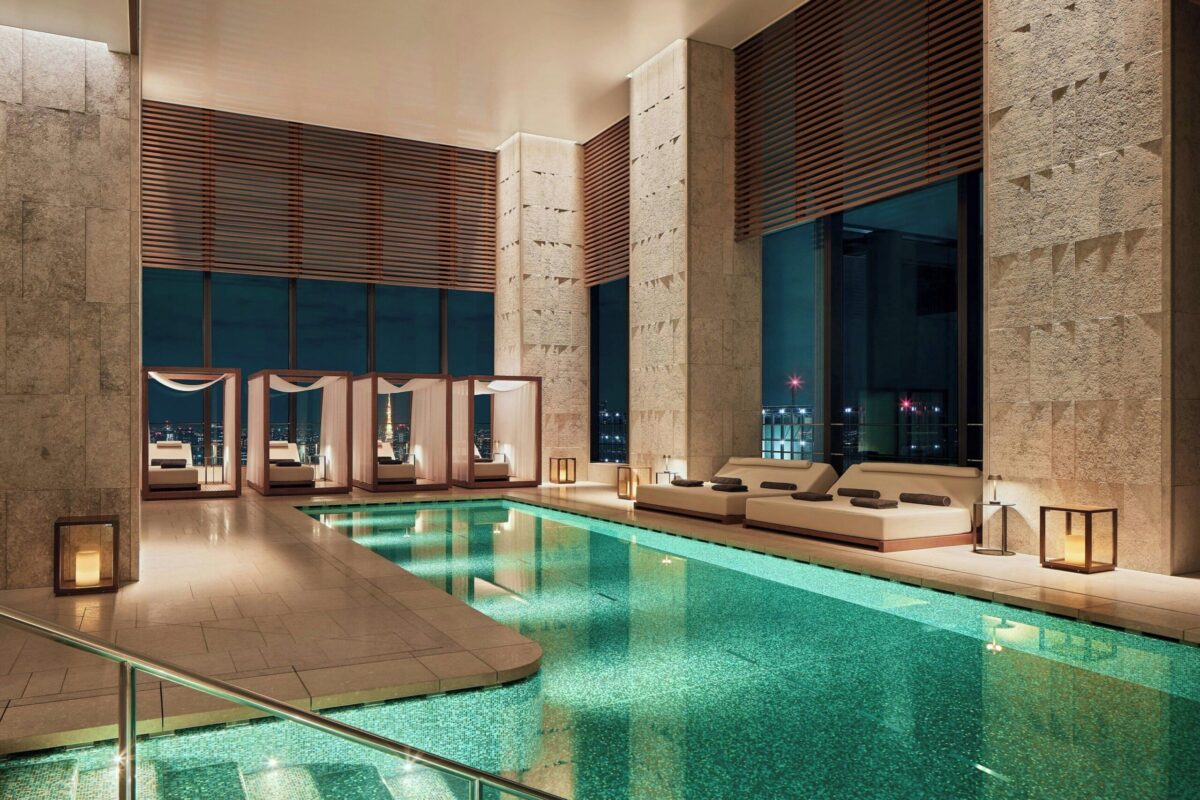
Inside, 409 works of modern Japanese art sit alongside pale timber, latticework and stone. Mizuki gives kaiseki, sushi, tempura and teppanyaki their own counters and rooms. La Locanda incorporates Ebisugawa-tei, a preserved villa dating from 1907, while the wellness floor adds a 20-metre indoor pool.
Read our Ritz-Carlton Kyoto story, or view current rooms and rates on Expedia →(Paid link)
Four Seasons Hotel Kyoto: Life Around Shakusui-en
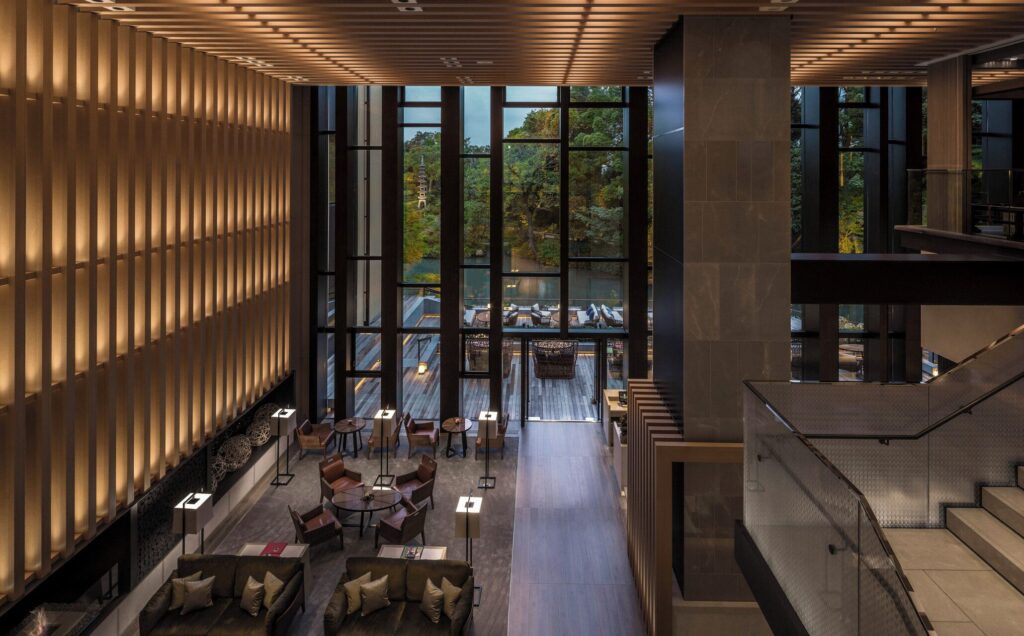
Shakusui-en gives Four Seasons Hotel Kyoto its centre. The pond garden is believed to date from the twelfth century and now lies within a property of 110 guest rooms, 13 suites and 57 residences. Lobby windows, garden-facing rooms and the tea house return the eye to the same water at different hours.
The building also contains the practical depth of a large modern hotel: a 20-metre indoor pool, ofuro, sauna, 24-hour fitness room and residences planned for longer stays. An evening can remain close to the pond, followed by an early walk towards Sanjusangen-do or Kiyomizu-dera through eastern Kyoto.
Read our Four Seasons Hotel Kyoto story, or view current rooms and rates on Expedia →(Paid link)
HOTEL THE MITSUI KYOTO: A 1703 Gate and Water Beneath the Site
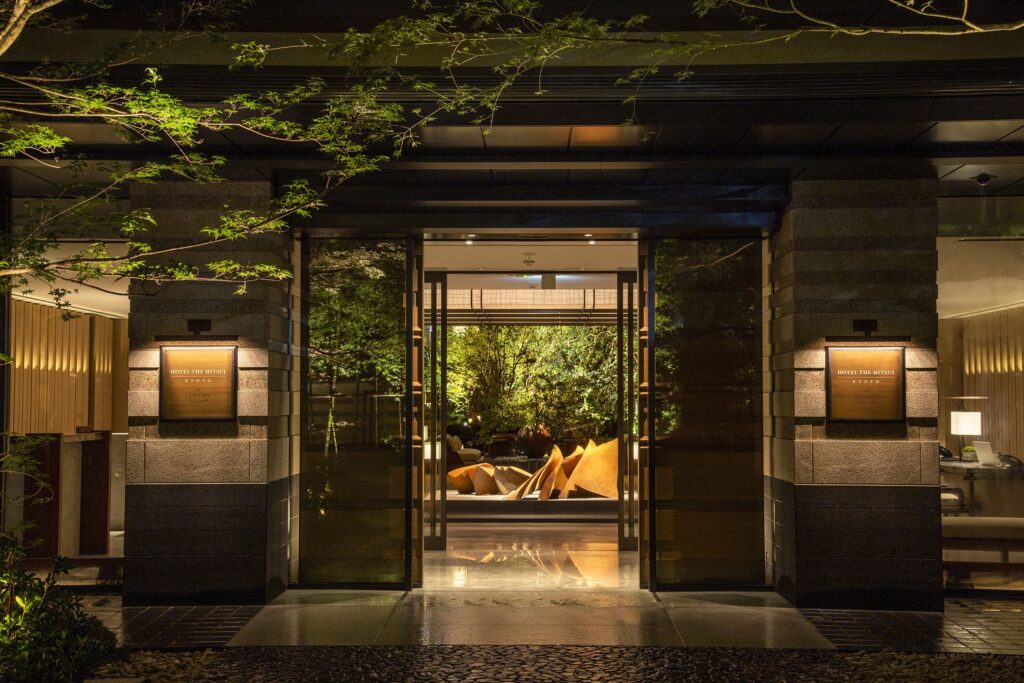
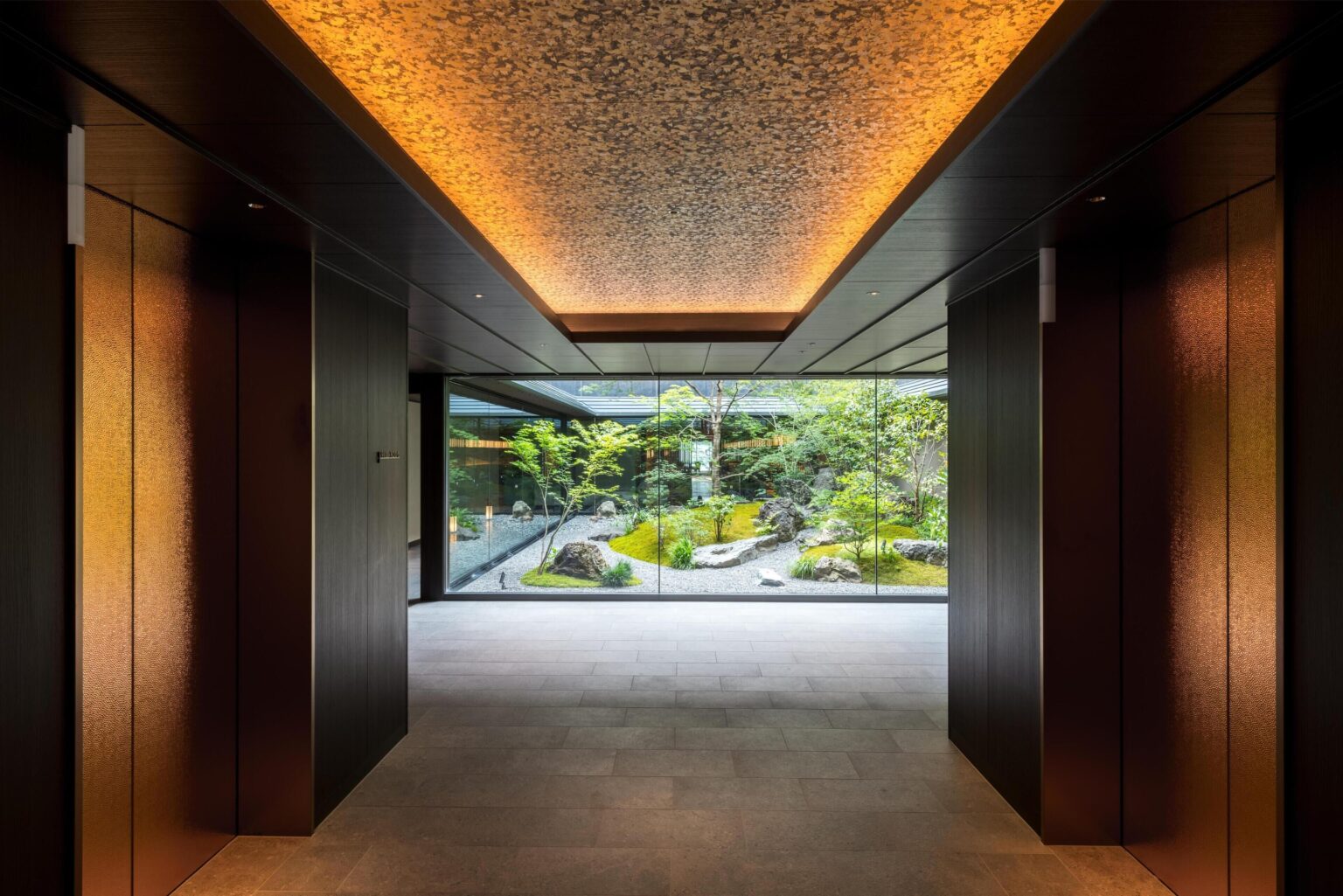
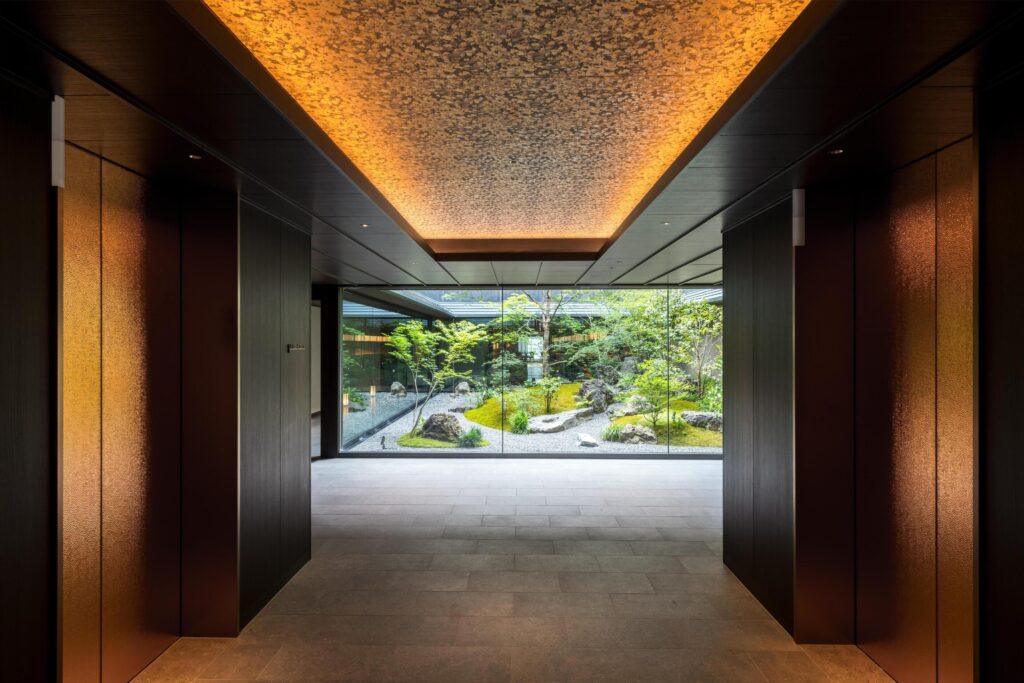
Across from Nijo Castle, HOTEL THE MITSUI KYOTO occupies land held for more than 250 years by the Kitake, the executive branch of the Mitsui family. The Kajiimiya Gate was built in 1703 and restored for the hotel; beyond it, 160 rooms gather around a contemporary courtyard garden.
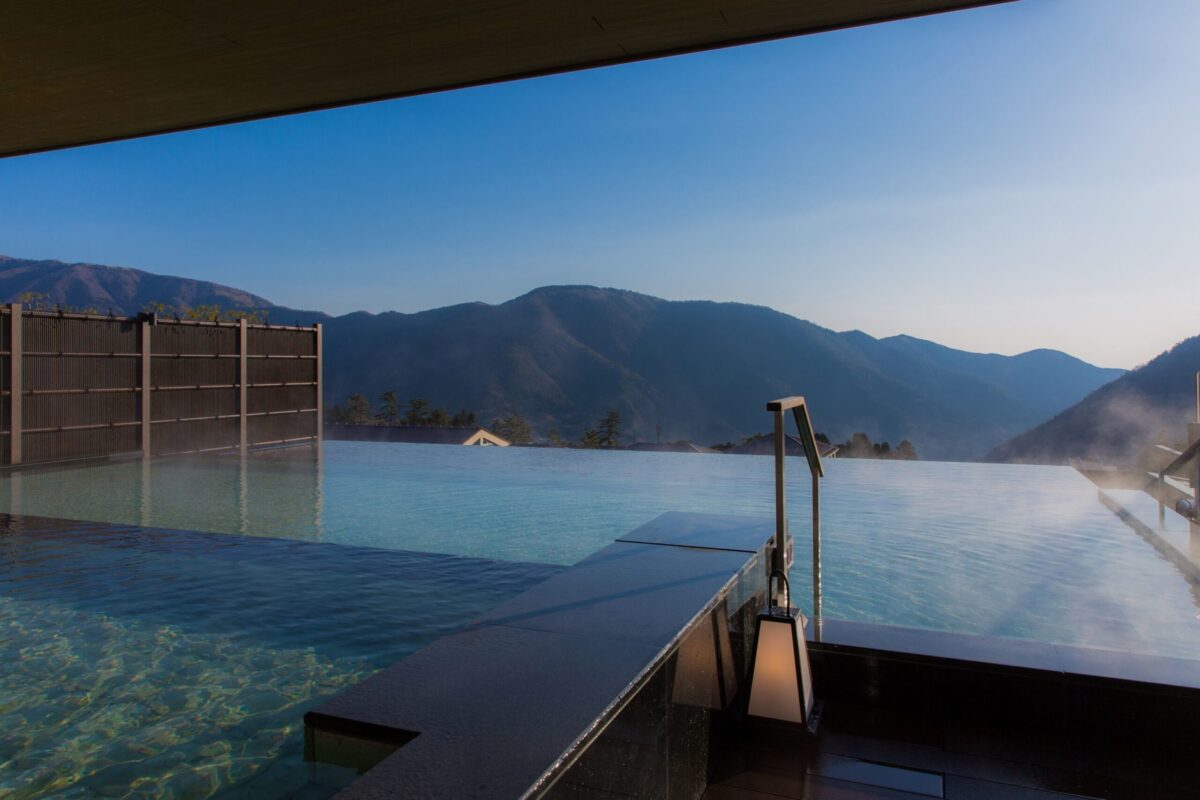
Natural hot-spring water is drawn from beneath the site for the Thermal Spring and selected private spaces. Garden stones and the rebuilt Shiki-no-ma formal room carry parts of the former estate into the present building. Nijo Castle remains across the road, so a morning at the gate can begin within minutes of leaving the room.
Read our HOTEL THE MITSUI KYOTO story, or view current rooms and rates on Expedia →(Paid link)
HOSHINOYA Kyoto: Fifteen Minutes Up the Oi River
HOSHINOYA Kyoto begins at a boat lounge near Togetsukyo Bridge. A reserved boat travels for about 15 minutes up the Oi River into Oku-Arashiyama, where a century-old riverside inn was adapted by architect Rie Azuma and opened under the HOSHINOYA name in 2009.
All 25 rooms face the Oi River and Mount Ogura. Their windows, Kyoto-style karakami paper and low views keep the valley close after the boat has departed. The transfer requires advance arrangement and may move to a hotel car when river conditions interrupt service, making the approach an essential part of planning the stay.
Read our HOSHINOYA Kyoto story
Suiran Kyoto: Onsen Rooms Beside the Hozu River
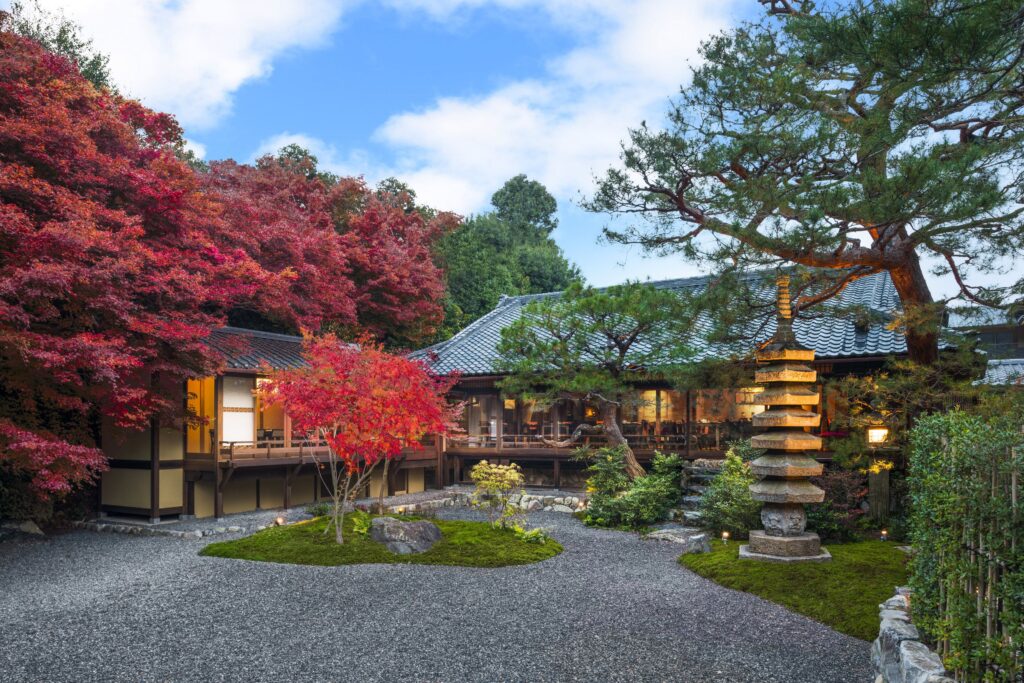
Suiran Kyoto stands where Arashiyama’s paths meet the Hozu River. The hotel has 39 rooms, including six specialty rooms; 17 contain their own hot-spring bath. The room category therefore decides whether the water remains private or is reserved for a booked spa room in the garden.
Kyo-Suiran occupies a building created as a summer residence during the Meiji period, while Café Hassui looks directly over the river from another century-old structure. Together with the garden and the wooded slopes across the water, those buildings let Arashiyama remain present after the daytime paths grow quiet.
Read our Suiran Kyoto story, or view current rooms and rates on Expedia →(Paid link)
Six Senses Kyoto: A Courtyard and Two Kinds of Water
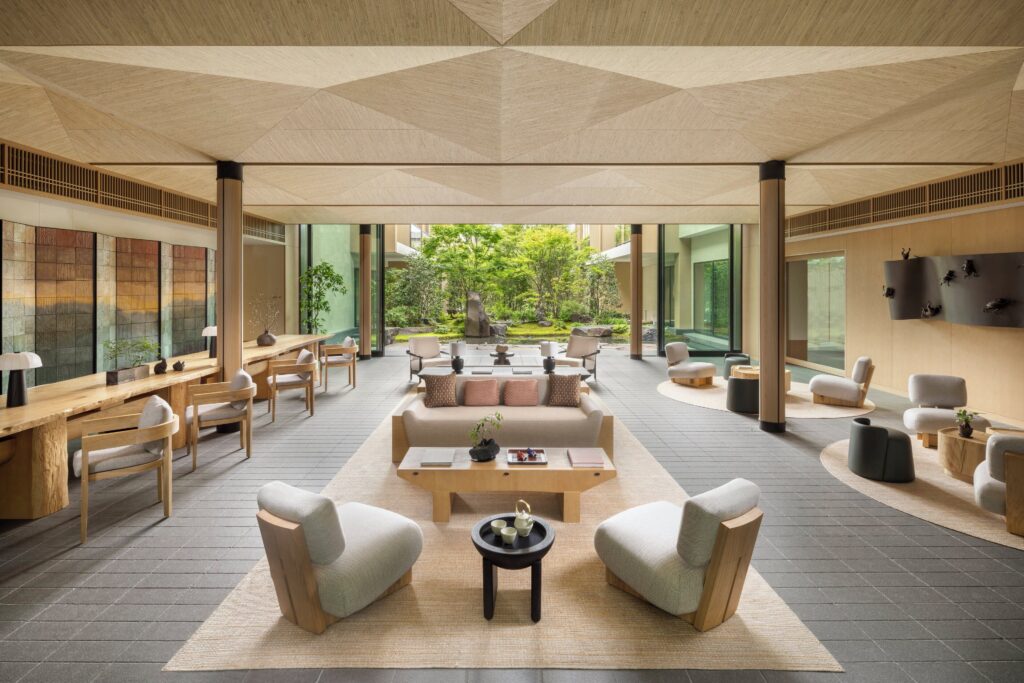
Six Senses Kyoto arranges 81 rooms and suites around a biophilic courtyard near Myoho-in, Sanjusangen-do and the Kyoto National Museum. Accommodation ranges from 42 to 238 square metres, with outlooks towards the courtyard, the gardens of Toyokuni Shrine or the rooftops and temples of the city.
The spa contains a conventional indoor swimming pool and a separate pool dedicated to Watsu aquatic bodywork, as well as Japanese-style bathhouses. Moon Rabbit and Tale of Genji motifs appear lightly through the interiors. Morning can begin in the water, then continue on foot into the temple quarter beyond the courtyard.
Read our Six Senses Kyoto story, or view current rooms and rates on Expedia →(Paid link)
Kyoto Continues Beyond the Door
At daybreak, each address releases the traveller into a different Kyoto: temple roofs above Ninenzaka, light moving along the Kamogawa, the gate of Nijo Castle or a boat returning through Arashiyama. A well-chosen room keeps part of that landscape inside, so the city does not disappear when the door closes.